
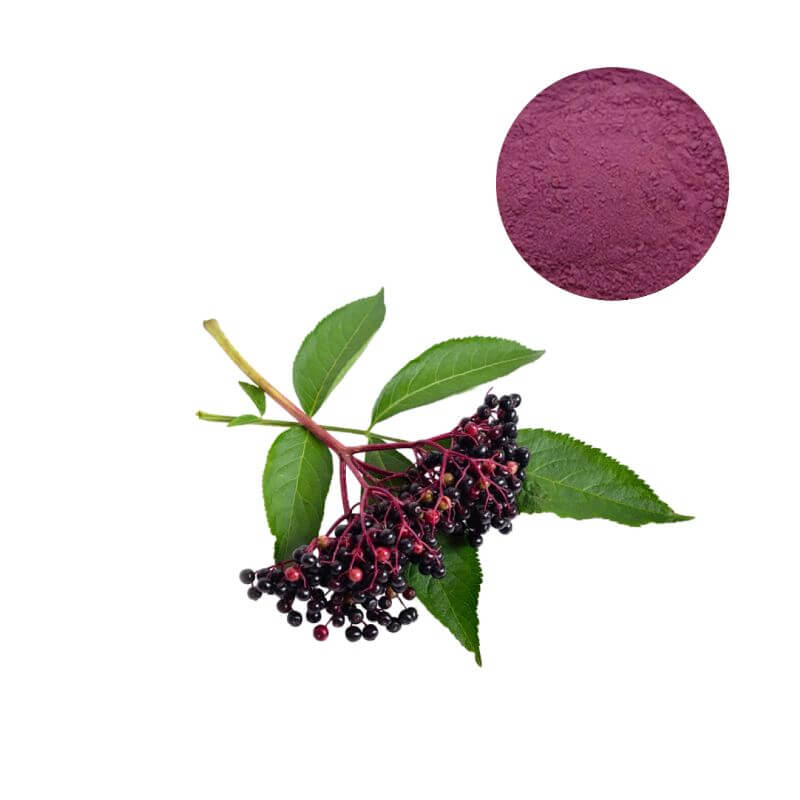
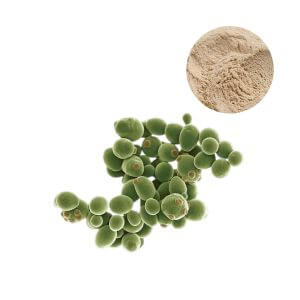
Elderberry Extract Powder
| Product Name | Elderberry Extract Powder |
| CAS Number | 84603-58-7 |
| Appearance | Dark purple to deep purplish-red fine powder |
| Purity (Anthocyanins) | 5%, 10%, 15%, 25% (by UV) |
| Packaging | 1 kg/bag, 5 kg/bag, 25 kg/drum |
| MOQ | 1 kg |
Elderberry Extract Powder (5%, 10%, 15%, 25% Anthocyanins by UV): Standardized Potency for Immune Support Formulations
For supplement brands facing increasing consumer demand for evidence-based immune health products, the core challenge is no longer “whether” to use elderberry, but “how” to select a grade that ensures batch-to-batch consistency, regulatory readiness, and real formulation compatibility. A premium bulk elderberry extract powder, available in 5%, 10%, 15%, and 25% total anthocyanins (by UV), offers a scientifically grounded foundation. Advanced chromatographic fingerprinting - standard practice among reliable GMP-certified partners - guarantees that each lot delivers predictable antioxidant activity, directly translating into finished products that meet label claims and build consumer trust. In an environment of intensifying regulatory scrutiny and me-too formulations, locking in a verified UV specification becomes a strategic barrier that supports premium pricing and reduces label-claim liability.
Scientific Mechanism: How Standardized Anthocyanins Support Immune Resilience
The bioactive signature of elderberry (Sambucus nigra L.) lies in its anthocyanin-rich polyphenolic profile. These compounds modulate oxidative stress pathways and influence the expression of pro-inflammatory cytokines, providing a balanced immune response rather than overstimulation. A 2021 systematic review concluded that elderberry supplementation may reduce the duration and severity of viral upper respiratory symptoms, while noting no evidence of excessive immune activation (BMC Complement Med Ther, 2021; doi: 10.1186/s12906-021-03283-5). This means that a well-standardized extract - such as the 25% anthocyanin grade - offers predictable efficacy without the safety concerns often associated with “immune boosters.” For procurement teams, this directly translates to a lower liability profile when launching products in regulated markets like the EU or North America. Key mechanism-driven benefits include:
- Oxidative balance: Anthocyanins scavenge free radicals, protecting cell membranes and supporting overall immune cell function.
- Cytokine modulation: Helps maintain a healthy inflammatory response, which is critical for short-term immune challenges.
- Viral adhesion interference: Some in vitro studies suggest elderberry flavonoids may inhibit hemagglutinin spikes, though human data remain the gold standard.
Thus, sourcing bulk elderberry extract powder raw material with a verified anthocyanin content is not merely a specification checkbox - it is a science-backed decision that determines how well your final product performs in real-world use. For brand developers, this level of validated UV consistency means faster clinical trial readiness and a stronger foundation for substantiated structure-function claims, directly shortening R&D timelines by eliminating raw-material variability.
Quality Benchmarks: Why “Standardized to Anthocyanins” Matters More Than a Single Purity Number
In the B2B trade of botanical extracts, the term “purity” can be misleading. For elderberry, the true measure of quality is the concentration of total anthocyanins, determined by validated methods. The recommended specification - 5%, 10%, 15%, or 25% anthocyanins by UV (a rapid, industry-accepted screening method) - offers a reliable safety net for wholesale elderberry extract buyers. For brands buying wholesale elderberry extract, insisting on a COA that reports the UV value, and requesting HPLC verification when available, is a critical risk-mitigation step. Consider the following comparison:
| Quality Attribute | Industry Standard for Premium Grade | Why It Matters for Your Formulation |
|---|---|---|
| Total Anthocyanins (UV) | 5.0%, 10.0%, 15.0%, 25.0% | Guarantees high active potency, reducing required fill weight per capsule. |
| USP Compliance (25% grade) | Complies with USP European Elder Berry Dry Extract monograph (NLT 17% total anthocyanosides, HPLC method) | HPLC |
| Loss on Drying | ≤5.0% | Low moisture content inhibits microbial growth and extends shelf life in humid environments. |
| Heavy Metals (Pb, As, Cd, Hg) | Complies with USP <2232> | Essential for regulatory acceptance in supplements, especially for exports to the EU and USA. |
A reliable GMP-certified elderberry distributor will provide a full Certificate of Analysis (COA) from an accredited lab, including pesticide residue screening and solvent residue data. For procurement teams, this directly translates to faster customs clearance and fewer compliance surprises during finished-product registration. A verified UV baseline eliminates the need for over-dosing to compensate for batch drift, reducing material waste and improving capsule-count accuracy.
Formulation in Practice: Stability, Synergy, and Delivery Forms
Even a perfectly standardized elderberry extract can fail if not handled correctly during manufacturing. Anthocyanins are sensitive to heat, alkaline pH, and prolonged light exposure. The most robust formulations maintain a final product pH below 4.5 (e.g., gummies, syrups, or chewable tablets) or use enteric coatings for capsules. For dry powder blends (sticks or sachets), it is essential to control environmental humidity below 50% during mixing to reduce clumping and degradation. An effective formulation requires careful attention to excipients:
- Acid stabilizers: Citric or ascorbic acid (vitamin C) (0.5-1.0%) can significantly slow anthocyanin degradation in liquid systems.
- Matrix synergy: Combining elderberry extract with zinc citrate and vitamin C is clinically plausible; vitamin C acts as both an antioxidant and pH adjuster.
- Delivery formats: The powder’s ≥95% through 80-mesh particle size ensures smooth encapsulation and even distribution in tablets without segregation.
High-anthocyanin extracts (25% grade) are more prone to electrostatic charging during blending. Using a small amount (0.2-0.5%) of silicon dioxide or microcrystalline cellulose as a glidant is a common industry fix. This insight allows brands to avoid costly rework or rejected batches. When sourcing bulk elderberry extract for gummy production, always request a stability study at 40°C/75% RH for three months - a routine service that de-risks product launch.
Mitigating Risk: The Checklist for Sourcing Elderberry Extract Powder
The botanical extract market is commoditized, but supplier documentation and consistency vary. For long-term immune health portfolios, sourcing should go beyond price per kilogram. Below is a procurement-focused checklist that every buyer should verify before placing a wholesale order:
- Full-panel COA for each batch: Includes anthocyanins (both UV and HPLC), heavy metals, microbial limits, and pesticide residues.
- GMP compliance certificate (NSF or equivalent) for the manufacturing facility - not just a generic statement.
- Traceability from field to finished powder: Ability to provide botanical origin (Sambucus nigra L., fruit) and harvest year.
- Stability data under accelerated conditions: Minimum 24-month shelf-life projection at 25°C/60% RH.
- Regulatory support documents: Allergen statement, non-GMO declaration, and (for EU) an E163 colorant compliance statement under Regulation (EC) No 1333/2008 and (EU) No 231/2012.
For procurement teams, this directly translates to a lower total cost of ownership: a slightly higher upfront price from a transparent elderberry extract supplier often eliminates hidden costs like failed lab tests, production delays, or rejected shipments. The 2025 comprehensive review on Sambucus nigra L. confirms that health-promoting mechanisms depend heavily on the integrity of the extract’s phytochemical profile (Journal of Functional Foods, 2025; doi: 10.1016/j.jff.2025.107025). Therefore, verifying the analytical methods and supply chain audits is not a bureaucratic step but a direct investment in efficacy and brand reputation. The small premium for a UV-verified batch reduces catastrophic failures such as out-of-specification imports and customs holds, which can cost more than ten times the raw-material savings from lower-grade alternatives.
Next Steps: Accelerate Your Product Development with Verified Raw Material
You now have the scientific, quality, and formulation framework to confidently integrate elderberry extract powder into your next immune support product. The remaining step is to experience the consistency firsthand. Request a complimentary 10-20g sample of the appropriate anthocyanin grade (5%, 10%, 15%, or 25%), together with the batch-specific COA and a formulation guidance note from a verified elderberry extract powder supplier. This allows your R&D team to run in-house stability tests and sensory evaluations before committing to large-scale production. Request your complimentary sample & complete technical dossier - your direct pathway to reducing development risk and accelerating time-to-market.
Frequently Asked Questions
Share this product
Related Products
Ready to get started?
Contact our team for technical specifications, pricing, and customized solutions.