
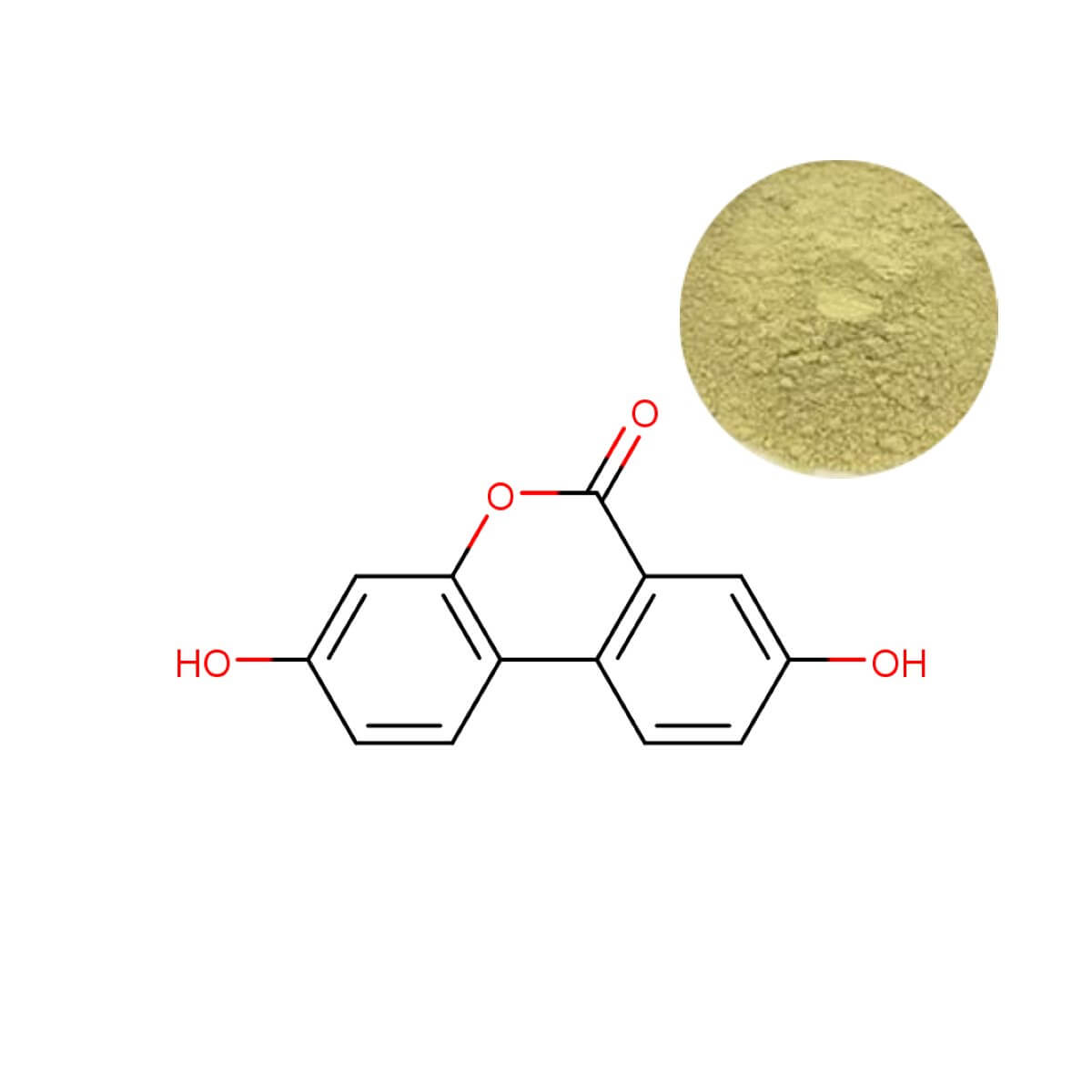
Urolithin A Powder
| Product Name | Urolithin A Powder |
| CAS Number | 1143-70-0 |
| Appearance | Off-white to light yellow fine powder |
| Purity | ≥ 98.0% (by HPLC) |
| Packaging | 1 kg/bag, 5 kg/bag, 25 kg/drum |
| MOQ | 1 kg |
Mitochondrial Health & Muscle Performance: Bulk Urolithin A Powder for Next-Generation Sports Nutrition
Clinical validation of mitochondrial mitophagy now creates a competitive edge for sports nutrition brands. Bulk Urolithin A Powder offers formulators a human-proven pathway to support muscle strength and aerobic capacity, while a reliable Urolithin A Supplier must provide lot-to-lot consistency backed by third-party COAs. From R&D bench to procurement, this ingredient's role in cellular energy recycling addresses both efficacy claims and supply chain integrity, forming the trust anchor for premium positioning in active nutrition.
Human Clinical Evidence Directs DTC Claim Strategy and Consumer Trust
A randomized, double-blind, placebo-controlled trial in middle-aged adults (NCT03464500) demonstrated that four months of Urolithin A intake improved leg muscle strength by approximately 12% and reduced plasma acylcarnitines and C-reactive protein (CRP) – biomarkers linked to mitochondrial efficiency and inflammation. These are not academic curiosities; they provide direct support for structure/function claims that resonate with health-conscious consumers. The 6-minute walk test improvements and acylcarnitine profiling offer concrete messaging for DTC marketing, shifting away from vague anti-aging narratives toward measurable mitochondrial efficiency.
Brand owners citing a peer-reviewed human trial (Cell Reports Medicine, 2022) position their products above competitors relying solely on in vitro data. Label copy and advertising can incorporate claims such as "supports muscle function during aging" and "promotes healthy mitochondrial turnover," all within FDA-compliant structure/function parameters. This clinical foundation justifies premium retail positioning and shortens the regulatory review window for new submissions, accelerating time-to-market for innovative formulations (Cell Reports Medicine, 2022; doi: 10.1016/j.xcrm.2022.100633).
Liposomal Encapsulation and Synergistic Blends Unlock Bioavailability for Premium Formats
Clinical efficacy established, the compound's high lipophilicity (logP ~2.3) and poor aqueous solubility introduce a formulation hurdle that, if not addressed, negates the very benefits confirmed in human trials. This bottleneck drives adoption of advanced delivery systems that render Urolithin A viable for capsules, softgels, and ready-to-drink beverages. The pH-driven liposomal encapsulation method yielded a 1.91-fold increase in oral bioavailability (AUC) over conventional thin-film dispersion, with reduced particle size and enhanced encapsulation efficiency compared to conventional methods.
Formulators can pair Urolithin A with synergistic co-ingredients such as Coenzyme Q10 Powder for complementary mitochondrial support, PQQ to further stimulate biogenesis, and trans-resveratrol for sirtuin pathway activation. These combinations create a differentiated "mitochondrial health stack" that commands premium pricing in the sports nutrition segment. Procurement and R&D teams adopting this liposomal platform eliminate costly solvent-based solubilizers, reduce batch-to-batch variability, and gain a ready-to-scale formulation blueprint that cuts development timelines by 8-12 weeks (International Journal of Biological Macromolecules, 2023; doi: 10.1016/j.ijbiomac.2023.127554).
Micronized Particle Engineering Enhances CMO Line Efficiency and Air-Freight Stability
Moving from lab-scale encapsulation to commercial production requires tight control over powder physical properties. Available micronized grades (offered by select suppliers) provide enhanced flow characteristics compared to standard material. Standard grades (≥95% through 80 mesh) frequently exhibit poor flowability and cohesive behavior, causing bridging and weight variation in high-speed capsule fillers. Micronization to D90 ≤10 μm improves blend uniformity and permits direct compression without granulation, reducing scrap rates and cleaning downtime at contract manufacturing organizations.
| Powder Property | Standard Grade | Micronized Grade (D90 ≤10μm) | CMO Impact |
|---|---|---|---|
| Particle Size (D90) | ≤180 μm | ≤10 μm | Eliminates slugging, reduces die fill variation |
| Bulk Density | 0.35-0.45 g/mL | 0.50-0.65 g/mL | Higher capsule weight consistency |
| Angle of Repose | >45° | ≤35° | Free-flowing for high-speed rotary presses |
Air freight introduces additional risks: low cabin pressure and temperature swings cause hygroscopic micronized powders to cake. Suppliers deploying triple-layer barrier packaging – foil inner bags with desiccants, sealed in HDPE drums – preserve physical integrity throughout transit, preventing costly rejections at destination. This packaging protocol directly reduces insurance claims and destination-port rejection rates, two variables that procurement departments frequently track as key performance indicators. For brand owners, predictable lead times, reduced insurance premiums, and just-in-time inventory capability follow without sacrificing quality, lowering total cost of ownership and protecting margin.
Multi-Platform Authentication and Impurity Profiling Build a Brand Protection Moat
CMO efficiency and stable logistics lose value if incoming material fails identity verification. The market has witnessed multimillion-dollar lawsuits against online sellers who marketed counterfeit Urolithin A products containing zero active ingredient, eroding consumer trust and brand equity. A robust QA/QC framework must therefore extend beyond HPLC area-percentage purity (≥98.0%) to include orthogonal confirmation techniques.
- LC-MS/MS – confirms the molecular ion [M-H]⁻ at m/z 227.0, distinguishing Urolithin A from isobaric interferences and structural isomers sharing similar retention times.
- ¹H-NMR spectroscopy – delivers definitive structural fingerprinting, detecting residual solvents and unexpected adducts that escape chromatographic methods.
- USP <467> residual solvents – enforces limits on toxic residues (e.g., dichloromethane, toluene) from substandard synthetic routes, with GC-HS detection ensuring compliance.
Procurement managers who demand COAs incorporating these three orthogonal tests establish a non-negotiable barrier against adulteration and create a fully traceable audit trail. This multi-layered approach protects brand reputation and streamlines supplier qualification – eliminating expensive independent re-testing and shortening vendor approval by several weeks.
Regulatory Roadmaps for US and EU Market Entry: GRAS Clearance and Novel Food Progress
Authentication and physical quality, however, cannot secure commercial distribution without a clear regulatory path. The regulatory landscape for Urolithin A is bifurcated; brand strategists must align market entry with each region's specific status. In the United States, FDA GRAS Notice No. 791 closed with "no questions" in December 2018, permitting use in protein powders, RTD beverages, nutrition bars, and yogurts at up to 1,000 mg per serving – a direct launch route for domestic brands.
| Region | Current Status | Permitted Use / Max Serving | Implication for Brand |
|---|---|---|---|
| USA (FDA) | GRAS – no objection (2018) | 500-1,000 mg/serving in multiple food categories | Immediate market entry, robust claim flexibility |
| EU (EFSA) | EFSA positive scientific opinion issued (2021); final authorisation regulation pending | Not yet authorized; waiting for Implementing Regulation | Entry pending final EC authorisation; EFSA safety assessment cleared |
| UK (ACNFP) | First review conducted Sept 2025 | Pending final decision | Follows EU trajectory; FSA final decision pending |
For European brands, the Novel Food dossier submitted by the pioneer company received a positive EFSA scientific opinion in 2021, yet the final authorisation regulation from the European Commission remains pending. While the ingredient cannot yet be marketed as a food ingredient in the EU, proactive brands are preparing supplement notifications under national frameworks, aligning with the anticipated approval. Procurement and legal teams must ensure supplier documentation includes traceability to the GRAS-compliant manufacturing process, facilitating dual-market sourcing strategies. This regulatory foresight mitigates compliance risk and positions brands for first-mover advantage once the EC authorises the ingredient, avoiding costly reformulation, with analytical benchmarks aligned to specification-grade material meeting Oclean Nutra quality standards.
Accelerate R&D Validation with Certificated Samples and Full Dossier
Translating these technical and commercial insights into a market-ready product demands efficient verification. Requesting a physical sample triggers release of a complete technical package – batch-specific COAs with HPLC, LC-MS/MS, and NMR data, residual solvent profiles, and GRAS compliance documentation. One action eliminates the typical R&D, QA, and procurement back-and-forth, compressing evaluation from weeks to days and enabling rapid prototyping with confirmed material.
Request bulk Urolithin A powder samples and experience how integrated quality, supply chain transparency, and regulatory readiness converge to accelerate your next sports nutrition launch.
Frequently Asked Questions
Share this product
Related Products
Ready to get started?
Contact our team for technical specifications, pricing, and customized solutions.