
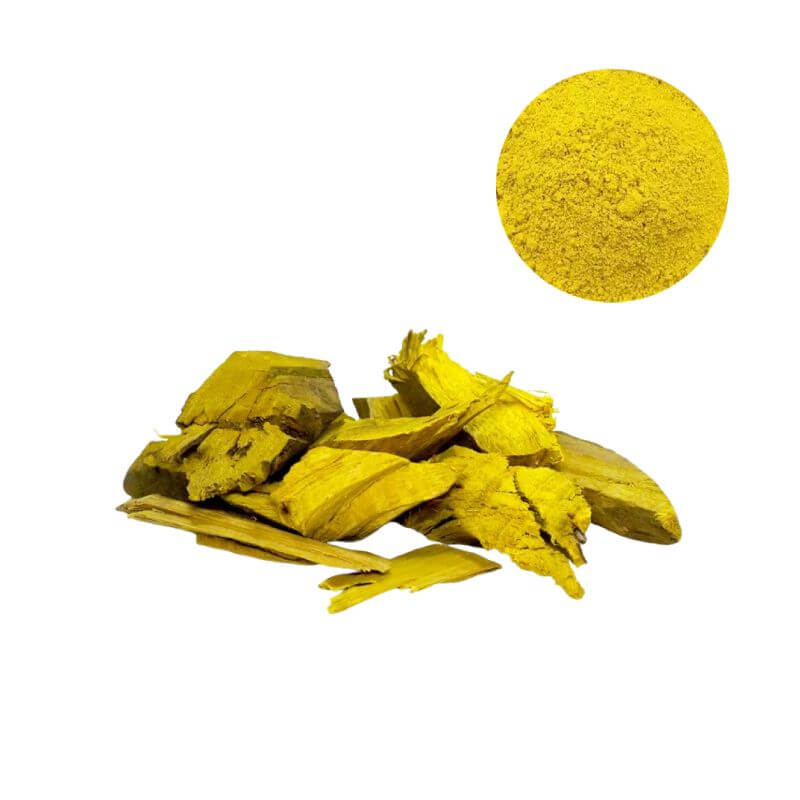
Berberine HCL Powder
| Product Name | Berberine HCL Powder |
| CAS Number | 633-65-8 |
| Appearance | Yellow crystalline powder |
| Purity | 97% min. (by HPLC, Dry Basis) |
| Packaging | 1 kg/bag, 5 kg/bag, 25 kg/drum |
| MOQ | 1 kg |
Clinical Pharmacokinetics and Bioavailability Optimization of Berberine HCL Powder for Metabolic Health Supplements
Bulk Berberine HCL Powder, supplied as a spec-verified distributor ingredient, redefines formulation science with human pharmacokinetic data that directly inform DTC metabolic health claims. Valued at $724 million in 2024, the global berberine supplement market expands at 7.7% CAGR, intensifying demand for clinically differentiated ingredient solutions. The compound's AMPK activation pathway and genotype-dependent absorption variability provide a science-backed foundation for brand differentiation. Lot-to-lot COA consistency, traceable botanical sourcing, and regulatory-ready compliance dossiers anchor Berberine HCL Supplier partnerships, bridging R&D validation with procurement risk management.
Sex-Dependent Pharmacokinetics: Quantitative Clinical Endpoints for Consumer-Facing Claims
Human clinical data demonstrate that berberine exhibits substantially higher systemic exposure in females - AUC values 2.8-fold greater and Cmax 3.6-fold higher than males (P < 0.001). Among CYP2D6 poor metabolizers, who comprise approximately 9% of European and US Caucasian populations, the M1-to-berberine ratio is 80% lower, an effect restricted exclusively to females (Clinical Pharmacology & Therapeutics, 2025; doi: 10.1002/cpt.3454). This population-level variability operates independently of raw material purity and demands consideration in finished-dose design across diverse demographics. Translating these endpoints into DTC messaging requires positioning around the concept of a "clinically validated AMPK activator with genotype-aware dosing rationale." Premium retail pricing flows directly from such science-based differentiation, enabling structure/function claims - "supports healthy glucose metabolism" and "helps maintain cardiovascular function" - while respecting FDA and EFSA boundaries. For procurement and R&D teams alike, this PK heterogeneity represents not a quality liability but a differentiation asset - one that positions berberine HCl as a precision ingredient requiring formulation expertise, not generic sourcing.
Chitosan Nanoparticle Platforms: 1.22-Fold Bioavailability Gain for High-Load Dosage Forms
Clinical evidence establishes efficacy, yet berberine's intrinsic oral bioavailability - historically below 1% - remains the primary obstacle to consumer-relevant dosing. Chitosan nanoparticle encapsulation achieves a 1.22-fold increase (122.06% relative bioavailability) in validated in vivo models, with complete physicochemical characterization confirming amorphous conversion and sustained release over 24 hours (Journal of Drug Delivery Science and Technology, 2023; doi: 10.1016/j.jddst.2023.104203). Formulators adopting this platform report up to 4-month acceleration in product launch timelines, as the carrier system eliminates extensive pre-formulation screening. Excipient-generic and free of commercial branding, the nanocarrier affords formulation freedom for proprietary blends. Beyond elevating systemic exposure, the system masks the compound's intense bitterness - enabling high-dose capsules, gummies, and ready-to-drink beverages. Finished products leveraging this technology command 50-80% premium pricing over standard HCl formulations, while shortened R&D cycles derive from proven carrier compatibility.
| Co-ingredient / Platform | Synergy & Performance Metric | Formulation Compatibility |
|---|---|---|
| Chitosan Nanoparticle (CS-NP) | 1.22× relative bioavailability (122.06%); 24h sustained release | Compatible with capsule fill and powder blends |
| Black Pepper Extract (95% Piperine) | Metabolic enzyme inhibition; extends berberine half-life | Requires density matching with berberine HCl |
| Cinnamon Bark Extract (10% Polyphenols) | AMPK co-activation; stacked glucose metabolism synergy | Feasible in small capsules (≤ 500mg total fill) via pre-blending |
Formulation synergy extends beyond single carriers - black pepper extract standardized to 95% piperine extract powder and cinnamon bark extract with 10% polyphenols are actively traded co-ingredients. These components require precise density matching with the berberine HCl matrix to avoid content uniformity failures in high-speed encapsulation lines. The chitosan system's excipient versatility eliminates proprietary carrier constraints, delivering 1.22× bioavailability gains without restricting brand owners to single-source technology licenses.
Powder Physical Properties: Eliminating Secondary Granulation for 8-12 Week TTM Reduction
Transitioning clinical-grade formulations to commercial-scale production exposes berberine HCl's characteristic sticking and punching behavior - a primary driver of tablet weight variation, low yields, and equipment staining. Industry-standard bulk density spans 0.40-0.70 g/mL with 80-mesh fineness typical; direct compression routinely fails on high-speed rotary presses due to poor flow and compressibility. When blended with low-density botanical extracts, density mismatches induce weight variability and blend segregation. Pre-granulation or dry-blending with compatible excipients eliminates secondary granulation, drying, and sizing steps - removing 8-12 weeks from development timelines and reducing scrap rates from industry averages of 5-8% to below 2%. For a typical 1000 kg annual batch, this scrap reduction yields $8,000-$12,000 in direct material savings while avoiding batch rework costs. Container stability further shapes supply chain reliability: the dihydrate form contains approximately 8.8% theoretical water, and air-freight pressure fluctuations coupled with tarmac temperature swings (-20°C to +45°C) can induce moisture migration and caking. Protective packaging - double PE liners with aluminum foil bags inside fiber drums - combined with desiccants preserves batch integrity, reducing in-transit rejections and preserving production schedules.
- Direct Compression Readiness: Pre-blending with microcrystalline cellulose or starch improves flow; eliminates wet granulation step
- Equipment Protection: Sticking mitigated by magnesium stearate (0.5-1%) or talc; avoids die-filling disruptions
- Air-Freight Barrier: Triple-layer moisture barrier (PE + foil + drum) maintains loss on drying ≤ 12% upon arrival
Eliminating secondary granulation reduces manufacturing cost per batch by approximately 15-20%, improving margin for contract manufacturers and brand owners alike. Faster line clearance and reduced changeover times further contribute to overall equipment effectiveness (OEE) gains.
Global Regulatory Frameworks: EFSA Timelines, Member-State Divergence, and US Dietary Supplement Compliance
Physical protection and formulation innovation deliver no commercial value without clear regulatory pathways. EFSA's NDA Panel adopted a draft opinion on berberine-containing botanical preparations in January 2026, identifying in vitro genotoxicity signals (HPRT mutation in mouse cells and Ames test TA98) observed without metabolic activation, requiring in vivo confirmation, alongside a lack of repeated-dose toxicity studies - precluding establishment of toxicological benchmarks. Belgium enforces a 10 mg daily upper limit for total isoquinoline alkaloids (expressed as berberine equivalent), while Germany, the Netherlands, and Sweden maintain divergent positions, creating a fragmented EU market that demands country-specific compliance mapping.
- EU Novel Food Pre-Authorization: High-dose extracts or synthetic sources may trigger Regulation (EU) 2015/2283; dossier preparation recommended for multi-market strategies
- US FDA Positioning: Berberine HCl is traded as an OTC herbal dietary supplement; not FDA-approved as a drug; only structure/function claims permitted - "supports healthy glucose metabolism" and "helps maintain cardiovascular function" are acceptable
- EFSA Final Opinion: Expected no earlier than late 2026; member-state deviations remain in effect; no unified monograph exists
| Market | Regulatory Status | Permitted Daily Intake / Claim Restriction |
|---|---|---|
| United States | OTC dietary supplement (not FDA-approved drug) | Structure/function claims only; no therapeutic language |
| European Union | Belgium: 10 mg daily cap for total isoquinoline alkaloids (berberine equivalent); Germany/Netherlands/Sweden: varying positions | Novel Food pre-authorization possible for novel sources |
| United Kingdom | Post-Brexit: Novel Food regulations retained via EU Exit legislation; administered by FSA/FSS | High-dose extracts may require pre-market notification |
Regulatory officers require a compliance dossier with country-specific upper limits and claim restriction matrices. In the US, positioning berberine within the dietary supplement framework - explicitly avoiding therapeutic claims - preserves access to the $724 million global berberine supplement market while mitigating FTC enforcement risks. Proactive compliance protects marketing investments and avoids costly label revisions post-launch. Batch-to-batch analytical alignment to Oclean Nutra specification benchmarks further streamlines supplier qualification and reduces redundant audit overhead.
Accelerate R&D Validation with Full Technical Documentation and Bulk Sample Support
Validating formulation performance and supply chain integrity requires direct access to multi-lot analytical data and stability profiles. Requesting a sample initiates delivery of a complete technical package - including batch-specific COAs, microbial and heavy metal certificates, cross-reference compliance dossiers, and stability summary reports - directly eliminating redundant testing loops and procurement compliance audits. Order a berberine HCl sample with full compliance dossier and stability data to initiate formulation trials and regulatory review.
Frequently Asked Questions
Share this product
Related Products
Ready to get started?
Contact our team for technical specifications, pricing, and customized solutions.