
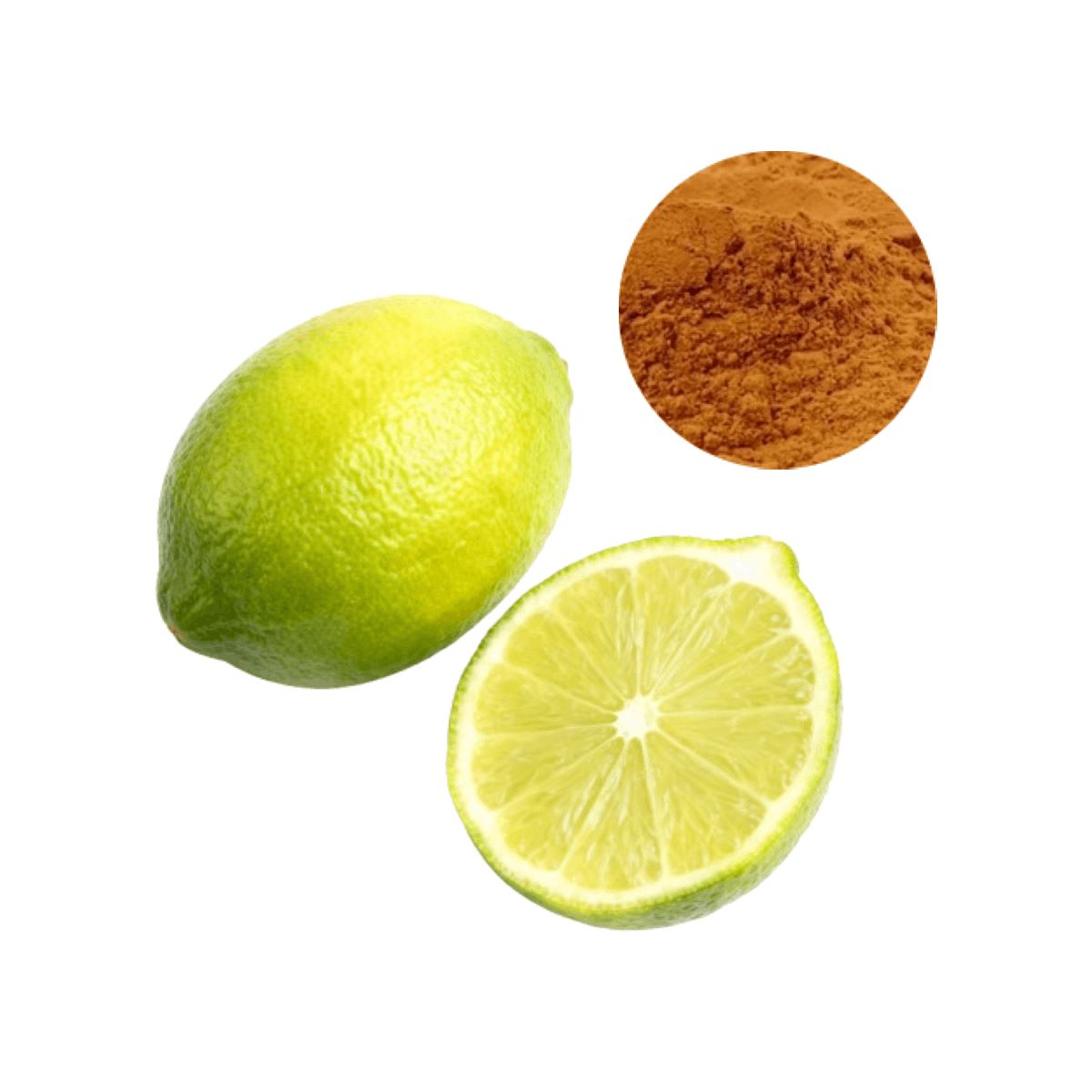
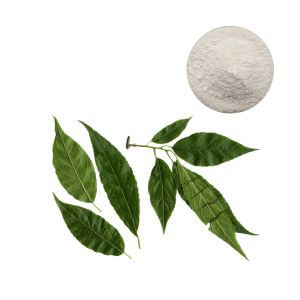
Citrus Bergamot Extract Powder
| Product Name | Citrus Bergamot Extract Powder |
| CAS Number | 89957-91-5 |
| Appearance | Brownish yellow fine powder |
| Purity | 30%, 40%, 50% Total Polyphenols (by HPLC) |
| Packaging | 1 kg/bag, 5 kg/bag, 25 kg/drum |
| MOQ | 1 kg |
Standardized Bergamot Polyphenol Extract for Premium Cardiovascular Formulations
Bulk Citrus Bergamot Extract Powder redefines lipid support through rigorous clinical validation, directly enabling brand owners to substantiate premium DTC health claims. Moving beyond generic fruit powders, this standardized ingredient addresses the formulation bottlenecks of hygroscopicity and tableting failure, while its verifiable supply chain and batch-to-batch HPLC fingerprinting deliver audit-ready compliance. The ingredient functions not merely as a functional additive, but as a strategic asset for reducing R&D validation cycles and securing retailer shelf placement through consistent, spec-verified quality from any qualified Citrus Bergamot Extract Powder supplier.
Clinical Validation Anchoring DTC Cardiovascular Claims
The transition from raw material to consumer trust hinges entirely on quantifiable human outcomes. A 12-week randomized, double-blind, placebo-controlled trial provides the central pillar of evidence for this ingredient, demonstrating that 375 mg/day of a standardized bergamot extract (providing 150 mg total flavonoids) produces clinically meaningful lipid improvements. For brands seeking to differentiate in the crowded heart health category, this data provides the foundational bedrock for label claims that resonate with efficacy-focused consumers while remaining firmly within regulatory boundaries.
| Clinical Endpoint | Change vs. Placebo (150 mg/day) | Statistical Significance |
|---|---|---|
| LDL-Cholesterol | ↓ 11.5% | p < 0.05 |
| Total Cholesterol | ↓ 8.8% | p < 0.05 |
| HDL-Cholesterol | ↑ 5.5% | trending toward significance |
Coupling this precision with documented improvements in lipid panel markers transforms a Citrus Bergamot Extract Powder wholesale procurement decision into a marketing asset. By anchoring finished product claims to specific numerical outcomes—rather than vague qualitative descriptors—brands can command premium retail pricing in the $35-$50 per bottle segment. The documented reduction in LDL-C and total cholesterol provides a defensible scientific foundation for DTC campaigns, effectively closing the loop between laboratory rigor and consumer purchase intent (Foods, 2024; doi: 10.3390/foods13233883).
Overcoming Hygroscopicity for Next-Generation Delivery Formats
While clinical efficacy establishes the "why," successful commercialization demands solving the "how." The inherent hygroscopicity of bergamot flavonoids presents a well-documented tableting challenge, often resulting in caking and flow failure that disrupts high-speed manufacturing. However, strategic formulation science has effectively neutralized this physical limitation, opening the door to a diverse array of finished dosage forms that extend far beyond standard hard-shell capsules.
- Direct-Compression Tablets: Leveraging dry granulation and high-porosity excipients (e.g., Aerosil) to bypass wet granulation, protecting thermolabile polyphenols.
- Powder Sticks & Sachets: Employing low-moisture carriers to maintain free-flowing characteristics, ideal for on-the-go hydration mixes.
- Gummy Innovations: Utilizing specialized coating technologies to isolate the active from moisture, enabling high-potency delivery in chewable formats.
The water-soluble nature of bergamot polyphenols also ensures compatibility with beverage mixes and powder sticks—a formulation advantage over many lipophilic cardiovascular ingredients. Addressing this physical barrier allows brand owners to bypass costly secondary processing steps, directly compressing time-to-market by an estimated 8-12 weeks. Furthermore, emerging encapsulation technologies applied to bergamot by-products have demonstrated significant bioavailability enhancements in preclinical models, enabling formulators to craft both fast-acting and sustained-release profiles, ensuring that the chosen delivery system not only maintains stability but actively enhances systemic absorption. A Citrus Bergamot Extract Powder supplier becomes an essential partner for R&D teams aiming to launch consumer-centric, high-compliance products under tight development windows (Pharmacological Reports, 2025; doi: 10.1007/s43440-025-00758-x). For comprehensive metabolic support, formulators often pair this extract with niacin-bound chromium or red yeast rice alternatives to create synergistic lipid-management blends, broadening the product's appeal.
Authenticity and Source Traceability as a Brand Equity Shield
With clinical data and formulation pathways established, the focus shifts to supply chain integrity—a domain where adulteration can rapidly erode brand equity. Over 90% of the world's bergamot supply is concentrated in Italy's Calabria region, creating a high-value target for fraudulent substitution with cheaper citrus varieties. However, advanced analytical chemistry provides an impenetrable defense against this risk.
| Authentication Marker | Detection Limit | Adulterant Detection Capability |
|---|---|---|
| Neoeriocitrin (HPLC) | 0.7 mg/L | Detects fraudulent addition of bergamot to lemon juice at 1-2% levels |
| Naringin (HPLC) | 1.0 mg/L | Identifies cross-contamination with generic citrus varieties |
| HPTLC Fingerprint | Qualitative pattern | Distinguishes genuine C. bergamia from hybrids |
By mandating IGP-approved sourcing (Italian Ministry of Agriculture, February 2026; EU registration pending) and batch-specific HPLC fingerprinting—which can detect fraudulent addition of bergamot to other citrus juices at 1-2% levels—a Citrus Bergamot Extract Powder wholesale program transforms quality assurance into a competitive moat. Such rigor prevents the reputational damage seen in sectors where, as highlighted in an industry-wide survey of 28 essential oil brands in the EU, 100% of bergamot oil samples tested showed signs of adulteration (APRC, 2026). For procurement directors, this traceability framework ensures every lot meets USP <61> and <62> microbial standards, safeguarding the brand's premium positioning and consumer trust from manufacturing through to end-user consumption. The ingredient's regulatory standing is further reinforced by its inclusion in FDA 21 CFR 182.20 as GRAS for its intended use, providing brand owners with a clear and established compliance pathway for US market entry.
Particle Physics Driving CMO Line Efficiency and Global Logistics
Authenticity and stability guarantee what the ingredient is; physical specifications dictate how efficiently it can be utilized. The specific particle size distribution (≥95% through 80 mesh) and bulk density (0.3-0.6 g/cm³), with a Carr's index typically in the 15-25% range indicating acceptable flow properties suitable for high-speed tableting operations that guarantee consistent die fill and minimal weight variation during high-speed rotary tableting, directly reducing scrap rates, are not arbitrary metrics but critical parameters that determine CMO production efficiency. These characteristics directly influence die fill uniformity in capsule machines and compression behavior in rotary tablet presses, with suboptimal values leading to significant downtime and rejected batches.
- Flowability and Compressibility: Hausner ratio analysis ensures consistent powder flow, eliminating the need for costly secondary granulation steps.
- Air-Freight Resilience: Specialized protective packaging (double PE liners + aluminum foil) mitigates the impact of low atmospheric pressure and extreme tarmac temperature fluctuations.
- Shelf-Life Stability: Maintaining low moisture content (≤5.0%) and water activity through vacuum-sealed technology extends shelf life to 24 months.
Integrating these physical parameters into the procurement specification enables Contract Manufacturing Organizations to achieve zero sticking and minimal scrap rates, effectively reducing total cost of ownership (TCO) and compressing development timelines. The ability to ship globally via air freight without compromising physical stability ensures that international supply chains remain resilient, reinforcing the reliability expected from specification-grade material meeting Oclean Nutra quality benchmarks.
Accelerate R&D Qualification with Verified Technical Dossiers
Validating a new ingredient stream often represents the most significant bottleneck in product development. To eliminate this friction, prospective partners can initiate the qualification process immediately through a structured sampling program. Each sample is accompanied by a comprehensive compliance dossier, including lot-specific COAs, HPLC chromatograms for identity verification, and full heavy metal (ICP-MS) panel results, along with residual solvent (USP <467>) and pesticide screens, ensuring compliance with global pharmacopoeias and avoiding import delays. Proactive disclosure of this nature allows R&D teams to bypass lengthy vendor assessment cycles and proceed directly to pilot-scale feasibility trials. Secure bulk Citrus Bergamot Extract Powder samples with full technical compliance documentation and immediately de-risk the transition from concept to clinical-grade production.
Frequently Asked Questions
Share this product
Related Products
Ready to get started?
Contact our team for technical specifications, pricing, and customized solutions.