
Maximizing Glutathione Bioavailability: How Synergistic Formulations Drive Brand Differentiation
Oral glutathione faces severe bioavailability hurdles due to enzymatic degradation. This guide analyzes how synergistic matrices with Vitamin C and ALA protect the molecule, enhance absorption, and help brands move from generic to high-efficacy products.
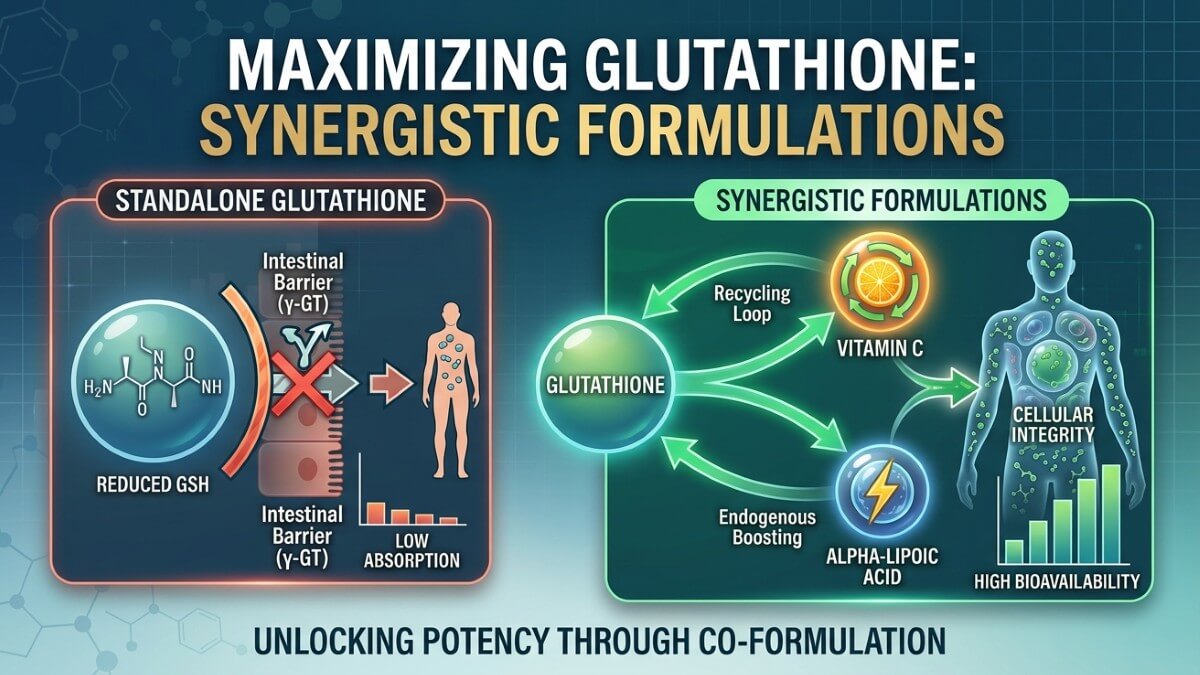
Despite being called the “master antioxidant,” oral glutathione supplements often fail to deliver meaningful systemic increases. For formulators and R&D leaders, the core challenge isn’t the ingredient’s potency—it’s its notoriously low oral bioavailability. This article moves beyond isolated ingredient sheets and examines how synergistic combinations with vitamin C and alpha-lipoic acid can transform a problematic formula into a science-backed, market-differentiating product. You will learn the biochemical mechanisms, quantitative formulation parameters, and evidence-based strategies to turn glutathione’s weakness into your brand’s strength.
The Bioavailability Bottleneck: What Every Formulator Must Know
Reduced L-glutathione (GSH) is a tripeptide with potent antioxidant functions, yet when taken orally, its systemic absorption is severely limited. The primary obstacle is enzymatic degradation by intestinal γ-glutamyltransferase, which hydrolyzes GSH before it can reach the bloodstream. This metabolic reality means that simply increasing the dosage of Reduced L-Glutathione Powder does not linearly translate into better efficacy. Instead, formulators must adopt a matrix approach—combining GSH with compatible actives that protect, recycle, or boost its endogenous levels. What this means for brand owners: Competing on higher milligram labels is a losing strategy. The real differentiation lies in formulation intelligence, not brute strength.
| Parameter | Quantitative Value / Description | Clinical Impact |
|---|---|---|
| Intestinal hydrolysis rate | >90% degraded by γ-GT | Minimal intact GSH reaches portal circulation |
| Oral bioavailability (standard powder) | <1%–10% (highly variable) | Low and inconsistent systemic exposure |
| Plasma peak time (Tmax) | ~1.5–2 hours | Rapid clearance limits duration of action |
| Stability in solution (pH 2–7, 25°C) | t½ = 2–4 hours (oxidation to GSSG) | Processing and storage require strict controls |
Recognizing these limitations, innovative brands are moving away from single-ingredient glutathione products and embracing formulations that enhance their functional bioavailability through synergistic networks. The takeaway: If your product still uses glutathione as a standalone hero ingredient, you are leaving up to 90% of its potential on the table.
Synergy #1: Vitamin C – The Essential Recycling Partner
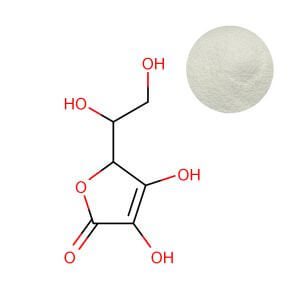
Vitamin C is not merely an additive; it plays a critical biochemical role in maintaining glutathione in its reduced (active) state. When GSH neutralizes a free radical, it becomes oxidized glutathione disulfide (GSSG). Vitamin C readily regenerates GSH by reducing GSSG back to GSH, effectively enabling a recycling loop. This partnership has been demonstrated in human endothelial cells: even in the presence of a vast molar excess of glutathione, vitamin C remains essential for cellular antioxidant defense. For product developers looking to harness this synergy, high-purity Vitamin C (Ascorbic Acid) is a foundational ingredient.
This synergy translates into quantifiable formulation advantages:
- Enhanced stability: Ascorbic acid helps protect the thiol group of GSH from premature oxidation during manufacturing and shelf life.
- Lower effective GSH dose: With recycling support, brands may achieve the same clinical endpoint with lower GSH levels, improving cost efficiency.
- Label-friendly pairing: Vitamin C is widely recognized by consumers, making it easier to communicate the “active matrix” concept.
Why this matters strategically: A GSH+vitamin C formulation does not just work better—it also costs less to produce per unit of biological effect. That is a rare win-win: superior efficacy and healthier margins.
Synergy #2: Alpha-Lipoic Acid – The Endogenous Booster
Alpha-lipoic acid (ALA) offers a different but equally valuable mechanism. As a naturally occurring cofactor for mitochondrial enzymes, ALA directly regenerates not only vitamin C and vitamin E but also intracellular glutathione. Moreover, ALA upregulates the expression of CD98, a key amino acid transporter that facilitates cellular uptake of cysteine—the rate-limiting precursor for GSH synthesis. A 2024 cell study confirmed that adding α-lipoic acid to a blend of cysteine, ascorbic acid, and pyridoxine significantly enhanced glutathione production in both keratinocytes and 3D human skin models (doi: 10.3177/jnsv.70.454).
Formulation parameters for ALA when combined with Reduced Glutathione:
- Solubility: ALA is lipophilic (log P ~1.7) while GSH is hydrophilic; use of co-solvents or emulsifiers may be required in liquid formats.
- Stability: ALA is sensitive to light and heat; opaque, nitrogen-flushed packaging is recommended.
- Typical ratio in synergistic blends: GSH : ALA = 3:1 to 5:1 (by weight) based on published in vitro synergy models.
For brands targeting premium segments, combining reduced glutathione with Alpha Lipoic Acid (ALA) Powder creates a dual-pathway proposition: direct radical scavenging plus endogenous recycling enhancement. What this enables: You can now claim “supports your body’s own glutathione systems” rather than just “delivers glutathione”—a far more credible and regulator-friendly message.
When to Use NAC – A Complementary Strategy (and What It Means for Your Portfolio)
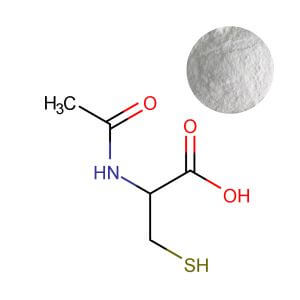
Although N-Acetyl-L-Cysteine (NAC) is not a direct formulation partner with GSH in the same capsule (they are redundant when used together), understanding its role helps brand owners decide between “direct glutathione supply” and “precursor support.” NAC is an orally bioavailable cysteine donor that boosts intracellular GSH synthesis. For brands concerned about the low absorption of reduced glutathione, NAC offers an alternative mechanism. However, NAC does not provide the direct extracellular antioxidant activity that GSH does. Therefore, a decision matrix is necessary:
| Criteria | Direct Reduced Glutathione | NAC (Precursor) |
|---|---|---|
| Speed of action | Fast (direct extracellular antioxidant) | Delayed (requires intracellular synthesis) |
| Bioavailability proof | Low but measurable; enhanced by synergy | High oral absorption of NAC itself |
| Formulation stability | Susceptible to oxidation | More stable but distinct sulfur odor |
| Ideal for | Acute antioxidant support, skin health, ingestible beauty | Chronic liver support, respiratory health |
Most premium skin health and anti-aging supplements choose reduced glutathione over NAC because consumers directly recognize “glutathione” as the active ingredient. NAC is better positioned as a separate line or as a complementary SKU. The portfolio insight: Rather than choosing one, leading brands often offer two distinct products—one GSH-based for immediate antioxidant and skin brightening benefits, and one NAC-based for long-term cellular support. This covers two different consumer needs while sharing the same scientific story.
Quantitative Formulation Guidelines for GSH+Vitamin C+ALA Blends
To achieve a stable and effective synergistic formulation, R&D teams must respect specific physicochemical parameters. Below are industry benchmarks derived from stability studies and bioavailability trials:
- Optimal pH range for liquid formulations: 3.5–4.5 (maximizes GSH stability; vitamin C is also stable at this pH).
- Purity specifications for raw materials: Reduced GSH ≥98.0% by HPLC; Ascorbic Acid ≥99.0%; ALA ≥99.0%.
- Recommended daily dosage per serving: GSH 250–500 mg, Vitamin C 100–200 mg, ALA 50–100 mg.
- Packaging requirements: HDPE bottles with induction seal, oxygen absorber sachet, and desiccant.
When sourcing high-quality ingredients, request COAs (Certificate of Analysis) that include heavy metal screening (Pb ≤0.5 ppm, As ≤1.0 ppm) and residual solvent reports. A reliable supplier of bulk Reduced Glutathione Powder should provide particle size distribution (90% through 80 mesh for encapsulation) and microbiological purity (TPC ≤1000 cfu/g).
Why these numbers are non-negotiable: Every deviation from this range adds variability to your final product’s performance. In a category where consumers already doubt oral glutathione, batch-to-batch consistency is your first line of defense against bad reviews.
Market Trends That Reward Synergistic Formulations
Consumer demand for “clean label” and “science-backed” antioxidant products is accelerating. According to SPINS 2023 data, the ingestible beauty category grew by 22% year-over-year, with glutathione as a top-searched ingredient on e‑commerce platforms. However, customer reviews often complain about “no noticeable effects” from low-quality GSH-only products. This gap creates an opportunity for brands that can validate their synergistic formulas with clinical or in vitro evidence (like the 2024 study from J Nutr Sci Vitaminol). The implication: The market is already crowded, but it is crowded with me-too products. A synergistic formulation backed by published mechanistic data is a genuine competitive moat—not just a label claim.
Furthermore, regulatory trends in the EU and North America increasingly require substantiation for antioxidant claims. A formulation that relies on a well-documented synergy between vitamin C and glutathione is easier to support than an unsubstantiated single-ingredient high dose. Forward-looking brands interpret this not as a hurdle, but as a filter: it will weed out underperforming products, leaving more shelf space for scientifically credible ones.
Conclusion: From Ingredient Supplier to Formulation Partner
The era of simply putting reduced glutathione into a capsule is over. Brands that succeed will adopt a holistic formulation strategy—combining GSH with proven synergists like vitamin C and alpha-lipoic acid—to overcome bioavailability limitations and deliver real consumer-perceptible benefits. This approach not only differentiates your product line but also builds trust with educated buyers.
The final takeaway for decision-makers: Your choice of raw material supplier is no longer just about price and purity—it is about whether they can provide formulation guidance, synergy data, and regulatory support. The brands that treat suppliers as partners will own the next generation of antioxidant products.
Ready to develop your next-generation antioxidant formula? Explore our technical dossiers and request samples of our high-purity ingredients. Our team provides full formulation support, stability data, and regulatory documentation.
Share this article
Found this helpful? Share it with others!
Related Products
Products mentioned in this article

Want to learn more?
Explore our products or contact our team for personalized solutions and expert advice.