
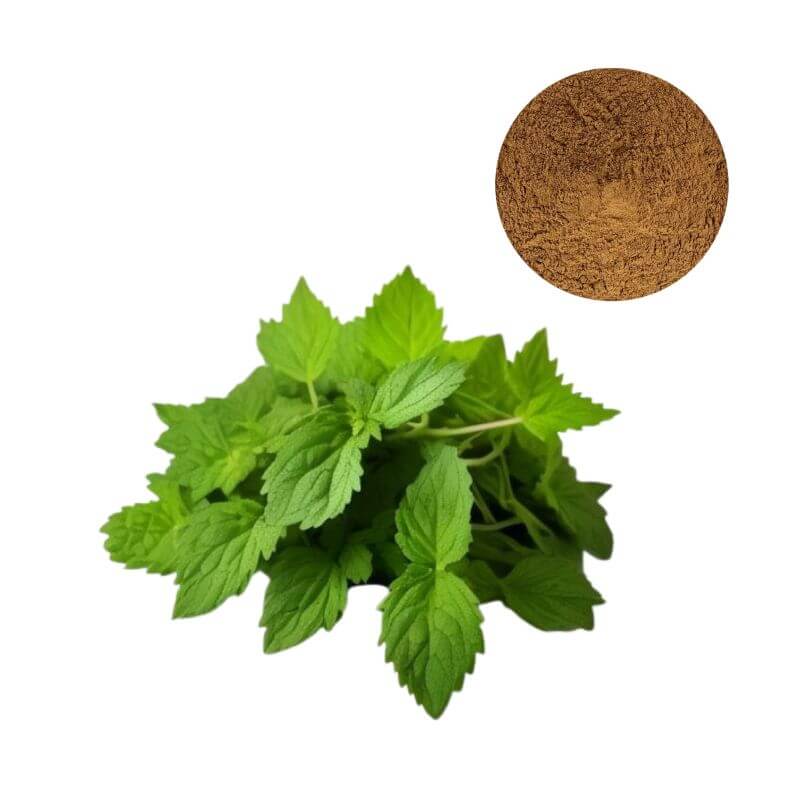
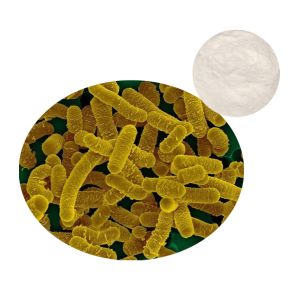
Agastache Rugosa Extract Powder
| Product Name | Agastache Rugosa Extract Powder |
| Appearance | Brownish-yellow fine powder |
| Extract Ratio | 10:1, 20:1 (by TLC) |
| Active Markers | Acacetin, Rosmarinic acid, Tilianin |
| Packaging | 1 kg/aluminum bag, 25 kg/drum |
| MOQ | 1 kg |
Agastache Rugosa Extract: Clinically‑Validated Support for Immune & Digestive Health Formulations
For brands aiming to differentiate their portfolios in the crowded immunity and gut health segments, relying on generic ingredients is no longer sufficient. Today’s informed consumers demand multifunctional solutions rooted in traditional use and validated by modern science. Agastache rugosa (Korean mint) extract, standardized to its key bioactive markers—acacetin, rosmarinic acid, and tilianin—offers formulators a dual‑action ingredient backed by emerging clinical evidence. With recent human bioavailability data and in vivo efficacy studies, this extract moves beyond heritage to become a traceable, batch‑consistent component for premium dietary supplements. The following insights translate these scientific advances into actionable criteria for sourcing, formulating, and positioning Agastache rugosa‑based products—empowering brands to make informed decisions that drive market success.
Tri‑Active Mechanism: Supporting Immune Vigilance and Gastrointestinal Comfort
For product developers, the distinct pathways of Agastache rugosa offer a rare opportunity to address two high‑demand health targets—immune defense and digestive comfort—with a single ingredient. Understanding these mechanisms is the first step in positioning a finished product effectively. Recent research highlights three complementary pathways through which this extract supports human health. First, a 2025 study demonstrated that a hot water extract of Jeju Agastache rugosa significantly enhances innate immune responses. In an immunosuppressed mouse model, the extract restored spleen cellularity, boosted natural killer (NK) cell activity against tumor cells by over 200%, and promoted lymphocyte proliferation—effects comparable to, and in some metrics exceeding, those of the normal control group (doi: 10.3390/ph18081129). For a brand, this translates into a clinically defensible claim that can distinguish the product in a saturated immunity category.
Second, the extract modulates gastrointestinal motility, a core function for digestive wellness. Using network pharmacology and zebrafish assays, researchers identified nine efficacy‑related chemical markers—including acacetin, rosmarinic acid, and tilianin—that contribute to its smooth muscle‑regulating effects (doi: 10.1016/j.jpba.2025.116680). For product developers, this means the same extract can support both immune and digestive claims, enabling streamlined inventory and versatile finished products—a distinct advantage for brands looking to consolidate SKUs while expanding therapeutic reach.
Third, the clinical relevance of these mechanisms is underpinned by human bioavailability data. A preliminary human trial confirmed that after oral intake, the key polyphenols—rosmarinic acid, acacetin, and tilianin—enter the bloodstream, with acacetin showing sustained absorption over six hours (doi: 10.1039/D3FO02665E). For R&D teams, this bioavailability data provides confidence that the active compounds will reach their intended targets, directly supporting investment in formulation development. It answers the fundamental question for any oral supplement—“Does it reach systemic circulation?”—with a clear “yes,” providing a solid foundation for efficacy claims that resonate with discerning consumers.
Beyond Purity: Key Quality Benchmarks for Agastache Rugosa Extract
For procurement professionals sourcing bulk Agastache rugosa extract, relying solely on a high extract ratio (e.g., 10:1 or 20:1) is insufficient to guarantee functional consistency. Premium extracts are defined by their full phytochemical fingerprint, particularly the profile of marker compounds linked to efficacy. The aforementioned study on gastrointestinal modulation established a quantitative assay‑multi‑component (QAMS) method to simultaneously quantify nine active markers, offering an economically viable yet robust quality control protocol. A responsible supplier should provide a Certificate of Analysis (COA) that includes at minimum:
- Active marker quantification (acacetin, rosmarinic acid, tilianin, and other newly validated compounds) by HPLC.
- Particle size distribution (≥95% through 80 mesh) to ensure flowability and blend uniformity.
- Microbiological purity (absence of pathogens, low TAMC/TYMC) in line with USP standards.
- Heavy metal testing (Pb, As, Cd, Hg) via ICP‑MS, complying with global supplement limits.
These benchmarks are non‑negotiable; they directly impact product safety, shelf life, and batch‑to‑batch reproducibility—factors that ultimately protect brand reputation. From a total cost of ownership perspective, investing in a fully documented extract reduces the risk of costly regulatory setbacks or consumer complaints. Additionally, GMP‑certified facilities will provide documentation on residual solvents and stability data. For a pure extract intended for functional foods or supplements, these quality indicators form the foundation of a reliable supply partnership.
Formulation Considerations: Maximizing Stability and Bioavailability
To translate clinical promise into a stable, consumer‑accepted supplement, formulators must navigate a few key variables. Incorporating Agastache rugosa extract into finished products requires attention to its physicochemical characteristics. The brownish‑yellow fine powder is freely soluble in hydroalcoholic solutions but may present challenges in aqueous formulations. Based on the bioavailability study, the absorption kinetics of its polyphenols differ: rosmarinic acid appears rapidly, while acacetin persists longer. This suggests that for sustained‑release applications (e.g., time‑release capsules), the native extract may already offer inherent prolonged activity. For immediate‑release formats like stick packs or beverages, formulators might consider co‑delivery with natural absorption enhancers, though no specific synergy has been clinically validated.
When developing solid dosage forms (capsules, tablets), the following practices are recommended:
- Moisture control: The extract is hygroscopic; maintain relative humidity below 45% during granulation to prevent clumping.
- Light protection: Use opaque blister packs or amber bottles, as some flavonoids may degrade under UV exposure.
- Synergistic blends: The immunoenhancing effects observed with the hot water extract align well with other immune‑support ingredients such as zinc, vitamin C (Ascorbic Acid), or beta‑glucans. A combination product could leverage the extract’s NK‑cell activation alongside antioxidant co‑factors.
By following these guidelines, brands can ensure that the biological activity demonstrated in clinical studies is preserved in the final product. Practically speaking, the choice between a 10:1 and a 20:1 extract depends on dosage form and target potency. A 20:1 concentration reduces excipient load—ideal for small capsules—while a 10:1 may be more economical for bulk powder blends. Both can be standardized to the same marker content, ensuring efficacy regardless of ratio, giving formulation teams the flexibility to tailor products for different market tiers.
Sourcing with Confidence: A Checklist for Procurement Professionals
Selecting a supplier for Agastache rugosa extract is a strategic decision that impacts product launch timelines and ongoing quality assurance. Beyond price, evaluate potential partners against an objective sourcing checklist:
- Comprehensive COA: Does it include quantitative data for all key markers (acacetin, rosmarinic acid, tilianin) and not just the extract ratio?
- GMP certification: Is the facility certified to current GMP standards, ensuring adherence to hygienic design and process controls?
- Supply chain traceability: Can the supplier provide documentation on the botanical origin (e.g., Jeju Island, China) and harvest season, which affect phytochemical profiles?
- Stability studies: Are there real‑time or accelerated stability data supporting a 24‑month shelf life under recommended storage conditions (cool, dry, protected from light)?
- Regulatory support: Does the supplier offer dossiers for NDI notifications or Novel Food applications, facilitating market entry in the US and EU?
- Total cost of ownership: Factor in the cost of quality failures—rejected batches, consumer complaints—rather than focusing solely on per‑kilogram price. A slightly higher investment in a fully documented extract mitigates long‑term risk.
Applying this checklist not only ensures regulatory compliance but also minimizes the total cost of ownership by avoiding batch rejections and supply disruptions. By using this framework, brands can secure a reliable supply of certified Agastache rugosa extract that meets both functional and compliance requirements, ultimately protecting their investment and market position.
Next Steps for Your Product Development
Agastache rugosa extract bridges the gap between ethnobotanical tradition and modern nutritional science, offering a clinically‑informed ingredient for immune and digestive health applications. With validated bioactivity, defined quality markers, and human absorption data, it provides the transparency and efficacy today’s premium brands require. To move from concept to clinically‑supported product with confidence, the next step is to evaluate the ingredient firsthand. We invite you to request a complimentary sample along with the full technical dossier—including batch‑specific COAs and stability summaries—so your R&D team can assess its quality markers, formulation compatibility, and regulatory documentation in your own lab. Request Your Complimentary Sample & Technical Dossier and begin developing your next market‑differentiated product with confidence.
Frequently Asked Questions
Share this product
Related Products
Ready to get started?
Contact our team for technical specifications, pricing, and customized solutions.