
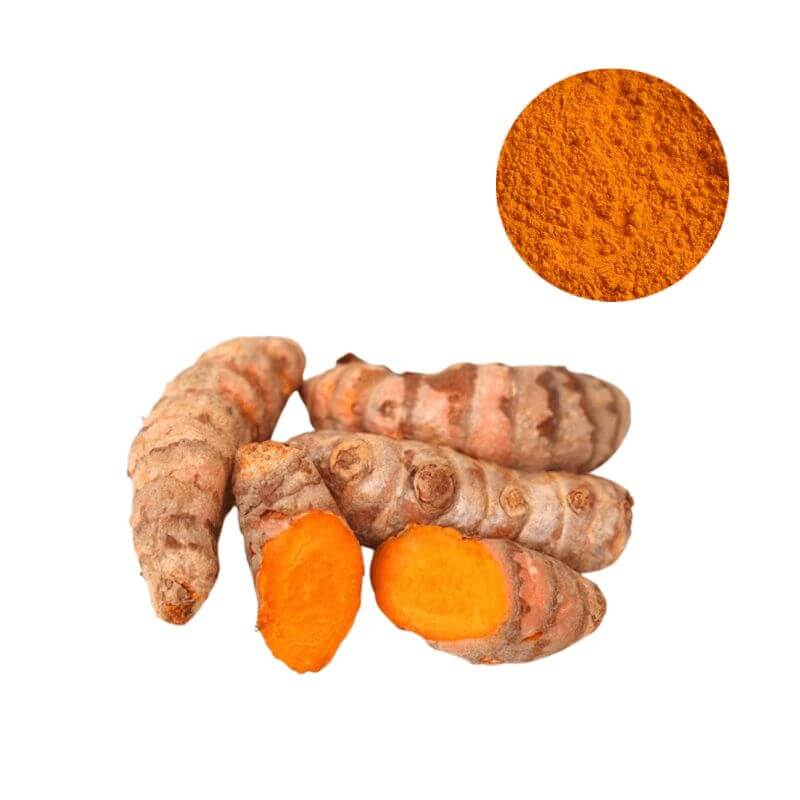
Turmeric Extract Powder
| Product Name | Turmeric Extract Powder |
| CAS Number | 84775-52-5 / 458-37-7 |
| Appearance | Fine orange-yellow powder |
| Purity | Total Curcuminoids ≥ 95.0% (by HPLC) |
| Packaging | 1 kg/bag, 5 kg/bag, 25 kg/drum |
| MOQ | 1 kg |
Clinical Bioavailability and Formulation Versatility of Turmeric Extract Powder 95% Curcuminoids for Premium Supplement Lines
Nano-liposomal and NADES-based delivery systems have redefined the utility of bulk Turmeric Extract Powder across joint health, metabolic support, and inflammatory-response formulations. Any Turmeric Extract Powder supplier must provide lot-to-lot HPLC confirmation of ≥95% total curcuminoids, coupled with independent HPTLC fingerprinting and DNA barcoding - industry-wide adulteration rates exceeding 20% as documented by comprehensive 2026 BAPP review make identity verification non-negotiable. Audit-ready traceability with batch-specific compliance dossiers compresses R&D validation cycles and accelerates formulation-to-market lead times while insulating brand equity from quality-related reputational damage.
Clinical Pharmacokinetics and Dose-Response Trust Architecture
Premium DTC claims depend on human pharmacokinetic data that translates curcuminoid content into consumer-relevant efficacy metrics. A randomized double-blind trial compared double-layered nano-liposomal curcumin (400 mg) against free curcumin (2,000 mg) in healthy volunteers, quantifying a dose-normalized Cmax increase of 53-fold and an AUC0-t elevation of 23.2-fold, with Tmax advancing from 3.3 hours to 0.86 hours. These parameters establish a bioavailability advantage that directly supports structure-function positioning - "supports a healthy inflammatory response" and "promotes joint mobility" - with quantifiable human evidence.
- Dose-normalized Cmax: 1.06 ng/mL/mg (nano-liposomal) vs. 0.02 ng/mL/mg (free curcumin) - a 53-fold gain.
- Dose-normalized AUC0-t: 5.00 vs. 0.22 ng.h/mL/mg - a 23.2-fold improvement in systemic exposure.
- Actual plasma Cmax: 423 ng/mL from 400 mg nano-liposomal vs. 34 ng/mL from 2,000 mg free curcumin.
- Tmax reduction from 3.3 hours to 0.86 hours, supporting faster systemic uptake and earlier peak plasma concentration.
Head-to-head human data of this caliber anchors premium tier positioning: brands justify enhanced-bioavailability pricing where 20-30x absorption improvements support 2-3% annual retail price inflation, while value-tier products remain flat. The quantified PK metrics also provide defensible substantiation for FDA NDI submissions, reducing warning-letter exposure and streamlining GRAS self-affirmation pathways (Scientific Reports, 2026; doi: 10.1038/s41598-026-53709-8).
Formulation Synergy and Dosage Form Innovation for Consumer Adherence
Clinical efficacy established, the engineering challenge shifts to curcumin's hydrophobic nature (logP ~3.2) and limited alkaline pH stability - barriers to consumer-preferred formats such as gummies, softgels, and instant beverages. The same nano-liposomal and NADES platforms that enhanced bioavailability enable stable incorporation into these formats without compromising release kinetics. For formulators, choline chloride-lactic acid NADES systems have demonstrated a 20-fold solubility enhancement over conventional ethanol-based carriers, enabling higher curcumin loading in gummy and beverage matrices without compromising organoleptic properties. Liposomal encapsulation sustains high encapsulation efficiency and retains radical-scavenging activity over extended storage periods.
| Format | Bioavailability Technology | Key Performance Metric |
|---|---|---|
| Gummies | NADES + liposomal co-encapsulation | Enhanced solubility, high EE, 30-day stability |
| Softgels | Lipid-based micelles (Tween-80) | 88-fold AUC increase vs. free curcumin (human) |
| Beverage powders | gamma-Cyclodextrin inclusion | 30-fold AUC improvement, rapid dissolution |
Piperine co-administration further enhances absorption, while omega-3 and ginger extract function as complementary anti-inflammatory agents that expand claimable benefits. With gummies projected as the fastest-growing format at 8.82% CAGR through 2031 (Mordor Intelligence, 2026), this formulation flexibility eliminates complex multi-step granulation, compresses time-to-market, and supports clean-label positioning - attributes that resonate strongly with DTC consumers (Food and Bioprocess Technology, 2026; doi: 10.1007/s11947-026-04233-0).
Identity Verification and Adulteration Shield for Brand Protection
Once formulation feasibility is confirmed, the critical risk migrates from performance to authenticity. Turmeric ranks among the most adulterated botanicals in the US market, with approximately 20% (and dietary supplements at 22%) of commercial curcumin products failing to accurately reflect label claims - either through curcuminoid overstatement or species substitution (e.g., Curcuma zedoaria replacing Curcuma longa). Documented adulterants include lead chromate (industrial pigment containing ~64% lead), metanil yellow azo dye, and starch/cellulose fillers that dilute active content while passing routine heavy metal panels. Supplier COAs alone do not satisfy 21 CFR Part 111; independent lot-release testing using orthogonal methods is required.
- HPTLC fingerprinting - characteristic retention factors (Rf) and spot intensity ratios evaluated against USP reference standards; this fingerprint distinguishes genuine Curcuma longa from substituted species such as Curcuma zedoaria, providing brands with a defensible identity record that withstands FDA audit scrutiny.
- HPLC assay - quantification of individual curcuminoids with expected ratio ~77:17:6 for curcumin, demethoxycurcumin, and bisdemethoxycurcumin.
- DNA barcoding (ITS2 + psbA-trnH) - species-level identification mandated by FDA's 2026 import guidance, accounting for 13.9% of analytical methods in adulteration studies.
Multi-layered identity testing produces a verifiable quality dossier that survives Tier-1 brand audits and prevents Amazon listing suspensions, FDA warning letters, and recall events. Brands implementing independent identity screening reduce exposure to reputational harm and revenue loss from forced delistings, while the traceable fingerprint functions as a proprietary anti-copycat asset that differentiates their supply chain from commodity competitors. This testing protocol aligns with specification-grade material benchmarks as characterized by the Oclean Nutra analytical framework for identity verification. For EU-bound formulations, EFSA's ADI of 3 mg/kg body weight (~210 mg/day for a 70 kg adult) sets a clear upper boundary for per-serving curcuminoid content in finished products.
Powder Engineering and Manufacturing Line Adaptability
Identity confirmed, the powder's physical attributes determine whether formulations scale efficiently to commercial production. Low bulk density (0.35-0.55 g/mL), poor flow, and hygroscopicity requiring stringent moisture control during warehousing introduce capping and lamination risks during direct compression - particularly when active loading exceeds 15% of tablet core weight. A two-step glidant mixing process with HPMC-coated curcumin and sodium stearyl fumarate improves powder flow sufficiently, enabling direct-compression tableting while eliminating secondary granulation - a step that typically adds 8-12 weeks to product launch timelines.
- Two-step glidant mixing reduces capping/lamination reject rates and supports >95% through 80 mesh particle size for uniform blend distribution.
- Carrier coatings (e.g., spray-dried phytosomes with maltodextrin) improve flow and hygroscopic stability, mitigating clumping during air freight (low pressure + tarmac temperature fluctuations).
- Nitrogen flushing, desiccant packets, and vacuum-sealed foil liners within 25 kg drums maintain 24-month shelf life under controlled storage conditions.
Eliminating granulation compresses development lead time by 8-12 weeks and lowers total cost of ownership through reduced raw material waste, higher production yields, and fewer line stoppages. Consistent powder flow supports high-speed encapsulation and tableting, enabling contract manufacturers to meet throughput targets without quality deviations. The cumulative effect is a resilient supply chain that protects margin, accelerates retail entry, and ensures finished-product consistency across batches - a prerequisite for scaling DTC and retail distribution.
Accelerated R&D Qualification and Procurement Risk Reduction Through Sample Evaluation
Verifying HPLC-confirmed curcuminoid content, HPTLC identity, flowability, and moisture stability before full-scale commitment prevents downstream manufacturing surprises. Sample-based evaluation allows formulation teams to test compatibility with specific excipients and process equipment, while procurement gains confidence in supply reliability and documentation integrity. Each sample request includes full technical dossiers - batch-specific COAs, identity fingerprints, and regulatory summaries - enabling simultaneous R&D and quality assurance review within a single workflow.
To initiate verification and obtain a complete compliance package for your next formulation project, request a certified evaluation sample today. Each sample shipment includes full technical dossiers—batch-specific COAs, identity fingerprints, and regulatory summaries—enabling simultaneous R&D and quality assurance review within a single workflow.
Frequently Asked Questions
Share this product
Related Products
Ready to get started?
Contact our team for technical specifications, pricing, and customized solutions.