
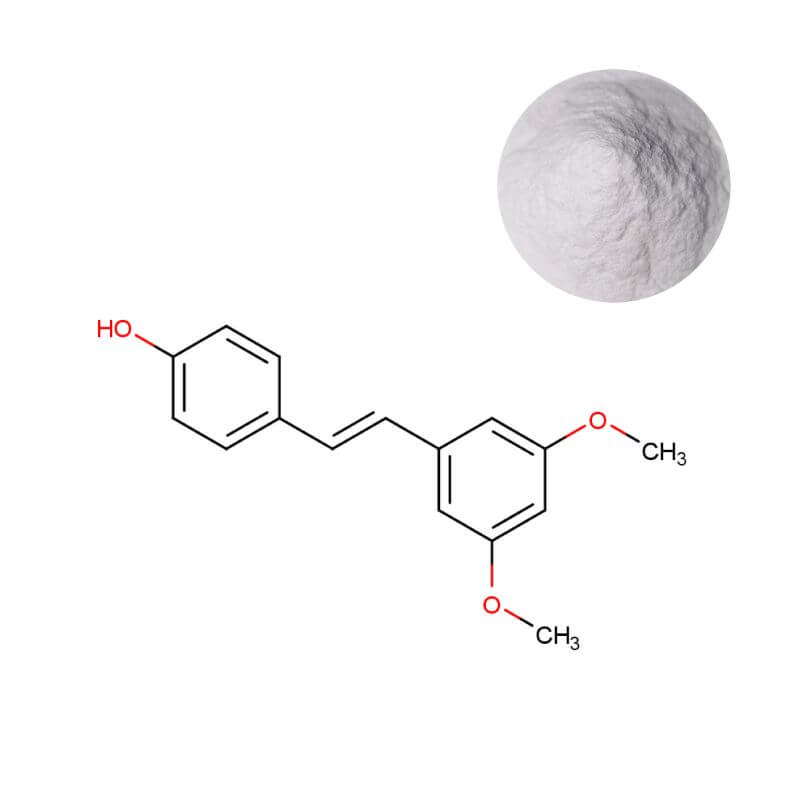
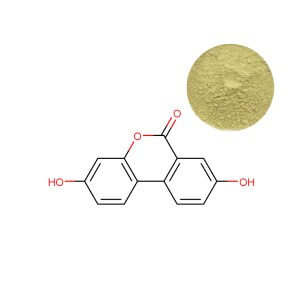
Pterostilbene Powder
| Product Name | Pterostilbene Powder |
| CAS Number | 537-42-8 |
| Appearance | White to off-white crystalline powder |
| Purity | 99.0% min. (by HPLC) |
| Packaging | 1 kg/bag, 5 kg/bag, 25 kg/drum |
| MOQ | 1 kg |
High-Purity Pterostilbene Powder for Nutraceutical Formulations
The intrinsic needle-like morphology and electrostatic behavior of bulk Pterostilbene Powder directly dictate its downstream processing economics, particularly in high-speed tableting and encapsulation. Each lot is released with a full USP-compliant analytical dossier, including HPLC purity profiles and residual solvent scans, ensuring that incoming material consistently matches the original qualification batch. Controlling particle morphology and electrostatic behavior at source establishes a competitive edge in finished dosage uniformity and consumer trust, directly supporting premium pricing.
EU Novel Food Classification and Oclean Nutra Specification Alignment
Regulatory assessment of pterostilbene varies significantly between jurisdictions, with the EU framework representing the most clearly defined boundary for market access. The 2026 EFSA Novel Food Catalogue classifies pterostilbene (as an isolated and concentrated substance, ≥99% purity) as a Novel Food, meaning that under the EU regulatory framework, it requires prior authorization for food supplement use unless a traditional food exemption applies. For markets outside the EU, the Oclean Nutra specification is manufactured to align with internationally recognized quality standards for dietary supplement ingredients, including heavy metal controls (Pb ≤2.0 ppm, As ≤1.0 ppm, Cd ≤1.0 ppm, Hg ≤0.1 ppm) and residual solvent compliance per USP <467>. Qualifying against these internationally aligned specifications streamlines customer qualification and reduces the risk of port-of-entry holds.
| Quality Parameter | Oclean Nutra Specification | EU Novel Food (2026) |
|---|---|---|
| Purity by HPLC | ≥99.0% | Not applicable – requires authorization |
| Heavy Metals | Pb ≤2.0 ppm, As ≤1.0 ppm, Cd ≤1.0 ppm, Hg ≤0.1 ppm | Regulatory threshold not established |
| Residual Solvents | Complies with USP <467> | Not applicable |
| Typical Finished Dose | 100–250 mg/day (formulator-recommended range) | Not permitted without authorization |
This compliance framework ensures that material meets the quality expectations of global brand owners while clearly delineating the regulatory boundaries for EU market access.
Piperine, Phytosome, and Quercetin: Formulation Synergies for High-Bioavailability Delivery
Despite superior LogD, Pterostilbene's crystalline nature hinders aqueous dispersion, limiting use in liquids and fast-release formats. Strategic co-formulation with piperine (a glucuronidation inhibitor), purified phosphatidylcholine powder (for phospholipid complexation), and quercetin (a complementary Nrf2 activator) overcomes this barrier. Each synergy targets a distinct bottleneck: piperine reduces intestinal efflux, phytosome increases apparent solubility 4-fold, and standardized quercetin dihydrate powder extends the antioxidant action window through sustained Nrf2 degradation inhibition. The table below summarizes critical processing constraints for each combination.
| Co-Ingredient | Functional Mechanism | Critical Processing Limit |
|---|---|---|
| Piperine (≥95%) | UGT enzyme inhibition | Final blend Mg-St ≤1.0%; pre-mix with MCC for 15 min |
| Phosphatidylcholine (PC≥70%) | Lipid complexation, 4× solubility gain | Molar ratio 1:2; process under nitrogen, moisture ≤0.5% |
| Quercetin (≥95%) | Nrf2 stabilization (dual pathway) | Dry blend only; maintain pH below 6.5 to avoid pink discoloration |
- Piperine sequential addition: Direct contact with magnesium stearate reduces HPLC recovery by 8-12%; always add piperine extract powder after the PTS-MCC pre-mix.
- Phytosome moisture sensitivity: The complex is hygroscopic – processing humidity must stay below 30% RH to prevent agglomeration.
- Quercetin pH constraint: Alkaline excipients trigger color shift; adjust buffer systems to keep final blend pH ≤6.5.
- High-load softgel fills: A 50% PTS load in MCT with 2% lecithin remains physically stable for 36 months at 25°C without recrystallization.
Validated co-formulations, particularly when processed under the Oclean Nutra specification, eliminate wet granulation, reducing CMO trials from 6 to 2 batches and cutting development costs.
Needle-Crystal Morphology and Air-Freight Stress: Eliminating Sticking, Bridging, and In-Transit Degradation
The acicular crystal habit and triboelectric charging behavior are the primary culprits behind production line inefficiencies. In rotary tablet presses, this combination elevates tablet weight RSD from 1.2% to over 4.5% within 45 minutes, forcing a 15-minute cleaning cycle every hour – a 25-30% throughput loss. Similarly, in capsule fillers, static bridging causes fill-weight fluctuations exceeding ±15% of target, generating reject rates as high as 2.8%.
| Production Disruption | Direct Cause (PTS Physical Property) | Quantified Line Impact |
|---|---|---|
| Punch sticking | Needle-edge adhesion + static charge | Stoppage every 45-60 min; 25-30% output loss |
| Hopper bridging | Poor flow + electrostatic aggregation | Weight RSD >4.5% (vs. USP limit of ≤3.0%) |
| Fill weight variation | Low bulk density and irregular particle packing | 2.8% reject rate on 500 mg capsule fills |
- Anti-static HDPE liners: Surface resistivity ≤1011 Ω/sq effectively dissipates static charge during handling and transit.
- Multi-layer vacuum foil: PET/Al/Ny/PE construction (12/9/15/100 µm) withstands 75 kPa cabin pressure without seal failure and reflects tarmac heat spikes up to 70°C.
- Molecular sieve desiccant: 2.0 g per bag reduces internal water activity below 0.15, preserving flow properties to within ±1.5° of the factory COA.
- Air-jet classification: Post-milling ensures ≥95% passes 80 mesh, eliminating oversized needles that exacerbate bridging.
These countermeasures ensure powder at CMO hopper matches batch-release flow properties, verified by six-cycle simulation (-20°C to +65°C) – D50 shift <±2.1 µm and repose angle within spec. Result: uninterrupted runs and 60-70% less cleaning downtime.
Methoxy-Driven Permeability and Intracellular Antioxidant Superiority: Quantitative Evidence
Methoxy groups elevate LogD and membrane permeability above resveratrol, quantified by shake-flask and uptake assays. This structural advantage produces a 2-fold higher intracellular accumulation and significantly stronger ROS-neutralizing capacity in both intestinal epithelial and muscle cells, as demonstrated in the comparative study (J Nutr Biochem, 2026; doi:10.1016/j.jnutbio.2025.110095). The superior permeability also means that lower per-serve doses achieve the same cellular exposure as higher doses of resveratrol, reducing raw material cost per unit while maintaining robust label support for cellular defense positioning. Quantifying membrane permeation against resveratrol enables formulators to downsize tablets for improved swallowability while maintaining predictable systemic exposure across production lots.
HPLC Fingerprinting and Carbon-14 AMS: Dual-Layer Adulteration Protection for Incoming QC
Counterfeit stilbenoid materials – often diluted with resveratrol or reprocessed extraction residues – pose a significant supply-chain risk. HPLC-DAD at 306 nm provides a characteristic retention-time fingerprint; under standard C18 conditions, Pterostilbene elutes at approx. 7.2 min, while resveratrol appears at 5.8 min. Any extraneous peak exceeding 0.5% area triggers immediate batch rejection. For conclusive identification, LC-MS/MS confirms the parent ion [M-H]− at m/z 255.1 with specific fragments (223.1 and 195.1), ensuring absolute structural verification. Beyond chromatography, AMS radiocarbon analysis per ASTM D6866 measures the biobased carbon fraction (pMC) – synthetic material yields pMC≈0, while genuine plant-derived PTS registers ≥100 pMC. Setting an incoming specification of pMC ≥98 provides incontrovertible proof of natural origin, eliminating the legal and reputational costs of fraudulent substitution. With an HPLC LOD of 0.05% area, even trace adulterants are flagged before they reach production, protecting brand integrity and avoiding expensive finished-product recalls. Deploying chromatographic identity plus isotopic verification shortens customs release cycles and provides documented evidence for audit trails, reducing regulatory friction at multiple ports.
Strategic Inventory Management: Securing Spec-Verified Pterostilbene Powder with Full Technical Dossier
Given that a significant portion of global capacity is concentrated in a single region, maintaining a validated safety stock is no longer a discretionary choice. Early engagement with a spec-verified distributor ensures uninterrupted manufacturing; the complete analytical package pre-qualifies material for FSVP and cuts inspection workload by over 60%. Securing a spec-verified safety stock hedges against supply volatility and morphology-linked production rejects, stabilizing total landed cost projections. Secure spec-verified Pterostilbene sample with full technical dossier and lock in supply chain resilience before the traditional Q4 capacity squeeze.
Frequently Asked Questions
Share this product
Related Products
Ready to get started?
Contact our team for technical specifications, pricing, and customized solutions.