
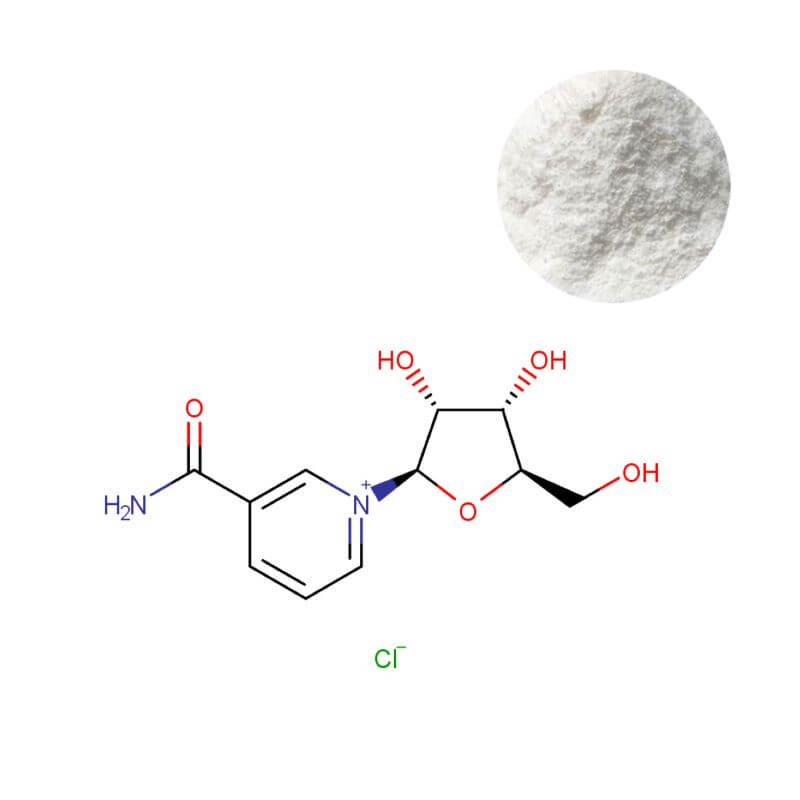
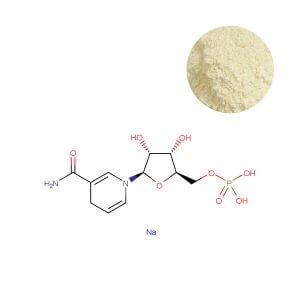
Nicotinamide Riboside Chloride Powder
| Product Name | Nicotinamide Riboside Chloride Powder |
| CAS Number | 23111-00-4 |
| Appearance | White to off-white crystalline powder |
| Purity | ≥ 98.0% (by HPLC) |
| Packaging | 1 kg/bag, 5 kg/bag, 25 kg/drum |
| MOQ | 1 kg |
NR Chloride Powder - High-Purity NAD+ Precursor for Premium Supplement Brands
Bulk Nicotinamide Riboside Chloride Powder represents the most rigorously validated NAD+ precursor for premium dietary supplements, offering brand owners a regulatory-secure foundation for longevity formulations. Sourcing from a qualified NR Chloride Powder supplier eliminates the quality variability that has undermined consumer trust across the NAD+ category. This ingredient combines human clinical endpoints with FDA GRAS and EU Novel Food clearances, establishing a low-risk pathway for global market entry. Lot-to-lot COA consistency and full traceability documentation complete the procurement trust framework.
Human Clinical Data That Defends Premium Positioning and DTC Claims
Scientific substantiation differentiates successful supplement brands from commodity competitors. A double-blind placebo-controlled trial (n=40, Nature Aging, 2024) demonstrated that NR Chloride Powder reduced sputum IL-8 by 52.6% at week 6 (P=0.030) and 63.7% by week 12 (P=0.034), while elevating whole-blood NAD+ more than twofold. IL-8 reduction carrying a 95% confidence interval of -75.7% to -7.6%, providing statistical rigor that directly strengthens the legal defensibility of DTC claims under FTC substantiation standards. These quantifiable human endpoints provide the legal defensibility required for structure/function claims under current regulatory scrutiny - unlike competitors relying on mechanistic or in vitro data alone.
- 52.6% IL-8 reduction at week 6 provides direct support for "supports healthy inflammatory response" claims under FDA structure/function guidelines.
- More than twofold NAD+ elevation translates to "supports cellular NAD+ production" in consumer-facing messaging without overstepping therapeutic boundaries.
- Genomic integrity pathway upregulation observed in the trial offers secondary scientific support for healthy aging positioning.
For brand owners, this clinical dataset justifies premium retail pricing and enables DTC messaging that survives regulatory review. The biomarker-to-benefit translation that NARB mandates is precisely what this trial delivers - quantitative endpoints with demonstrable consumer relevance (Nature Aging, 2024; doi: 10.1038/s43587-024-00758-1).
Lipid-Based Delivery Systems That Unlock Premium Dosage Formats
Translating clinical efficacy into commercial success demands dosage forms that maintain compound integrity while meeting consumer preferences. NR Chloride Powder cannot be incorporated into ready-to-drink beverages or high-water-activity foods due to inherent aqueous instability - a constraint that has historically limited the ingredient to basic capsules. The NR trioleate chloride derivative (NRTOCl) overcomes this barrier entirely: in oil-in-water emulsions at 35°C over 12 weeks, NRTOCl retained 95% stability versus 62% for unmodified NRCl.
In beagle dog pharmacokinetic studies, NRTOCl demonstrated 3.8-fold higher AUC and Cmax elevation from 4.2 µM to 12.8 µM, confirming superior bioavailability. These metrics enable premium formats including liposomal softgels, liquid-filled capsules, and anhydrous stick packs - segments that command 30-50% price premiums over standard powders. Synergistic pairing with pterostilbene powder or trans-resveratrol powder activates SIRT1 through complementary pathways, delivering "NAD+ plus sirtuin activation" positioning that justifies premium tier pricing (Nutrients, 2022; doi: 10.3390/nu14010113).
Regulatory Certainty That Protects Market Access and Brand Investment
Regulatory fragmentation has undermined several NAD+ precursor categories, making compliance clarity the most critical procurement criterion for global brand owners. Nicotinamide Riboside Chloride Powder holds FDA GRAS status (multiple notices) and NDI approvals including NDI 1134 - Kingdomway received additional NDI clearance in January 2026. The European Union authorized NRCl as a Novel Food under Commission Implementing Regulation (EU) 2020/16, establishing a clear 300 mg/day ADI for adults, with residual solvent limits per ICH Q3C (acetone ≤5,000 ppm, methanol ≤1,000 ppm) that define the purity threshold for import clearance and batch acceptance across all major territories. The USP published an official monograph for NR Chloride in April 2026, effective October 2026.
- USP monograph compliance eliminates QC specification ambiguity across multiple contract manufacturing sites.
- FDA GRAS plus NDI dual pathway provides regulatory durability for multi-year product lifecycle planning.
- EU Novel Food authorization (300 mg/day ADI) establishes an unambiguous formulation ceiling that protects against enforcement actions.
- NRCl retains dietary supplement status across all major markets while NMN powder faces fragmented FDA interpretation.
Brand owners gain a single formulation serving North America, Europe, and Asia-Pacific simultaneously - eliminating costly reformulation for region-specific regulatory requirements. This compliance framework directly reduces TTM for multi-market launches while shielding brand equity from the commercial damage of enforcement actions.
Authentication and Impurity Control That Build Consumer Trust
Market surveillance reveals systemic quality failures across the commercial supply chain. In a ChromaDex analysis of 39 commercial NR products, only 13% met label claims; separate testing identified 11 products with zero detectable NAD+. Among seven suspected counterfeit samples, five contained no NR whatsoever. These failures directly erode consumer trust - brands ultimately bear the reputational cost when products fail to deliver. Quality assurance built on USP monograph compliance, third-party HPLC-COA verification, and NMR structural confirmation provides the protective barrier that maintains market reputation.
Premium procurement requires auditable traceability from raw material through finished batch release, supported by independent testing that reports LOD/LOQ levels for heavy metals and residual solvents. This documentation enables rapid response to regulatory inquiries and satisfies Tier-1 retailer audit requirements. Procurement specifications for NR Chloride Powder that meet Oclean Nutra analytical benchmarks include full NMR structural confirmation and ICP-MS heavy metal panels with LOD at 0.1 ppm for lead and arsenic. Suppliers delivering this level of transparency enable brand owners to differentiate through quality assurance - transforming the compliance burden into a competitive advantage that commands premium pricing and builds lasting consumer trust.
Physical Powder Engineering That Eliminates Production Bottlenecks
Clinical efficacy and regulatory compliance deliver no commercial value if the raw material cannot be processed efficiently on production lines. Nicotinamide Riboside Chloride Powder exhibits intrinsic hygroscopicity: at RH above 40%, flowability degrades; above 60% RH, the crystalline structure transitions to a sticky semi-solid mass, reaching critical moisture within 48 hours without dehumidification. The ≥98% purity specification with ≥95% through 80 mesh sizing enables direct compression tableting - eliminating the granulation step that typically adds 2-3 weeks to production timelines.
| Physical Parameter | Specification | Production Impact |
|---|---|---|
| Particle Size | ≥95% through 80 mesh | Direct compression capability reduces processing time by 2-3 weeks |
| Loss on Drying | ≤1.0% | Ensures tablet hardness and batch-to-batch consistency |
| Bulk Density | 0.2-0.5 g/mL | Optimizes hopper fill for high-speed encapsulation lines |
Air freight introduces additional risks: cabin pressure differentials (0.75 atm) alter moisture behavior, while tarmac temperature swings from -20°C to 50°C induce condensation. High-barrier foil liners (WVTR ≤0.01 g/m²/day) with inert gas flushing and desiccants maintain integrity throughout logistics. The documented process efficiency gain lowers per-unit manufacturing overhead by 8-12% on high-speed encapsulation lines. These physical protections eliminate 8-12 week shipment delays and revenue loss associated with in-transit degradation, directly impacting the procurement team's total cost of ownership calculation.
Accelerate Formulation Development with Certified Samples
Every week consumed by R&D validation delays revenue generation and increases capital tied up in pre-launch inventory. A certified sample package delivered with complete technical documentation - HPLC chromatograms, NMR spectra, ICP-MS heavy metal panels, residual solvent profiles per ICH Q3C, and USP-compliant COAs - eliminates the verification cycles that typically consume 4-6 weeks of development time. Procurement simultaneously gains lot-to-lot consistency data and audit-ready documentation satisfying Tier-1 retailer requirements. The combined effect compresses the critical path from ingredient selection to commercial launch by 6-8 weeks, accelerating time-to-market and reducing capital exposure.
Request a certified Nicotinamide Riboside Chloride Powder sample to initiate formulation work immediately with full technical validation.
Frequently Asked Questions
Share this product
Related Products
Ready to get started?
Contact our team for technical specifications, pricing, and customized solutions.