
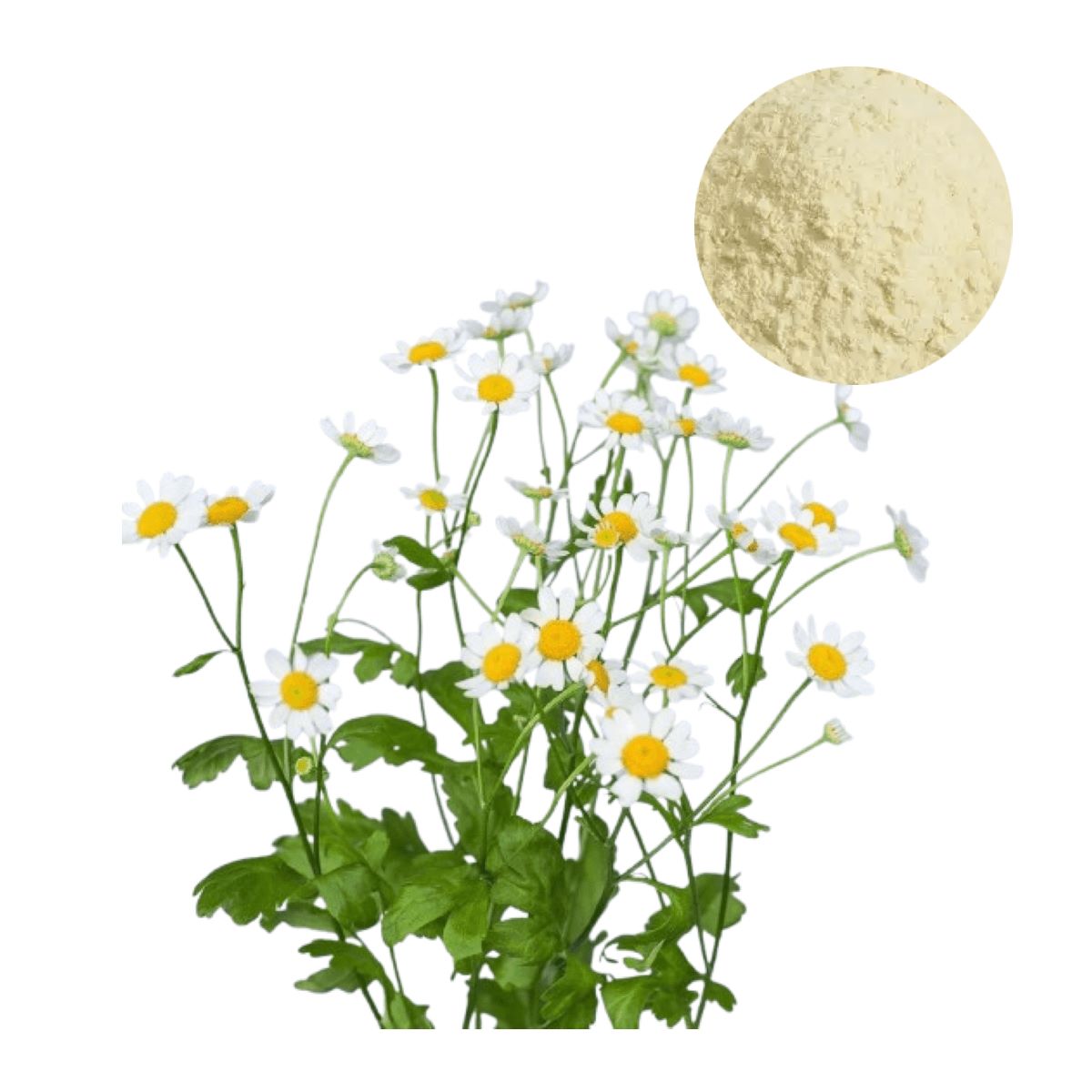
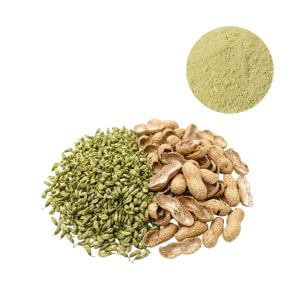
Apigenin Extract Powder
| Product Name | Apigenin Extract Powder |
| CAS Number | 520-36-5 |
| Appearance | Pale yellow to light yellow fine powder |
| Purity | 98.0% min. (by HPLC) / 1.2% min. (by HPLC) |
| Packaging | 1 kg/bag, 5 kg/bag, 25 kg/drum |
| MOQ | 1 kg |
GABA-A Modulating Apigenin Extract Powder: Clinical Validation to Premium Sleep & Longevity Formulations
Bioavailability engineering breakthroughs have repositioned Bulk Apigenin Extract Powder as a strategic raw material for brand owners competing in the high-margin sleep and cognitive health segments. Spec-verified apigenin extract powder supplier portfolios now prioritize lot-to-lot consistency as a non-negotiable baseline, supported by audit-ready traceability and comprehensive COA packages that compress R&D verification cycles and procurement risk assessment into a single streamlined workflow.
Clinical Evidence Architecture: Translating GABA-A Modulation into Defensible DTC Claims
Commercial trust in apigenin-based formulations rests on quantifiable human-relevant endpoints, not preclinical speculation. Systematic aggregation of multiple animal models and human intervention studies confirms that apigenin-mediated GABA-A receptor positive allosteric modulation suppresses oxidative stress biomarkers (SOD, MDA, GSH-Px) in aging models and demonstrates sleep-promoting effects in rodent paradigms (Frontiers in Nutrition, 2024; doi: 10.3389/fnut.2024.1359176). This evidence base supports structure/function claims such as "supports relaxation" and "promotes healthy sleep cycles," while steering clear of drug-like assertions that invite FDA enforcement action. Brand PMs gain a compliant DTC narrative that differentiates apigenin from melatonin-based products, leveraging the "no next-day grogginess" consumer insight as a distinct competitive advantage.
| Biomarker / Endpoint | Quantified Improvement | Relevance to DTC Claims |
|---|---|---|
| Sleep latency (mouse model) | Reduction in sleep-onset latency | Supports "fall asleep faster" messaging |
| Serum SOD activity (aged rats) | Elevated versus model group | Supports "cellular antioxidant defense" |
| Serum MDA (lipid peroxidation) | Reduced versus model group | Supports "oxidative stress management" |
Premium finished products (retail $25-40 per bottle) derive their pricing power directly from these quantified biomarkers, deployed across educational content and product storytelling without overstepping regulatory boundaries. A transparent acknowledgement of the human RCT gap for pure apigenin monomer-rather than a liability-strengthens scientific credibility among discerning R&D teams who value intellectual honesty over marketing hyperbole.
Bioavailability Breakthrough: SNEDDS Formulation as the Gateway to High-Load Finished Dosages
Clinical mechanism alone does not guarantee commercial viability when intrinsic BCS Class II properties-aqueous solubility approximately 1.35-2.34 μg/mL and small intestinal absorption rate of 5-10% in humans-create a severe absorption bottleneck. Formulation engineering closes this gap through a self-nanoemulsifying drug delivery system (SNEDDS) that has demonstrated a 3.8-fold and 3.3-fold increase in oral relative bioavailability for GTP2575 and GTP3070 formulations, respectively, with Tmax reduced from 2.5 h to 0.9 h (Scientific Reports, 2024; doi: 10.1038/s41598-024-84063-2). The SNEDDS pre-concentrate consisting of Gelucire 44/14, Tween 80, and PEG 400 in mass ratios of 25:37.5:37.5 (GTP2575) or 30:35:35 (GTP3070) runs on standard softgel filling lines, while spray-dried liposomal powders enable ready-to-mix beverage sachets. This formulation flexibility gives brand owners a choice between softgels, gummies, and powder stick packs-each carrying distinct DTC appeal and margin structures.
- Softgel encapsulation - Direct fill of SNEDDS concentrate, 6-month accelerated stability (40°C/75% RH) showing particle size change <5% and potency retention >95%.
- Liposomal spray-dried powder - Easily blended with L-theanine (high-purity, ≥98%) and magnesium glycinate for "calm + sleep" dual-action powders.
- Gummy integration - Requires flavor masking with natural fruit extracts and careful moisture management to avoid degradation.
Pre-validated formulation strategies compress development timelines while supporting 2-3× price premiums over generic botanical supplements. The synergy with co-ingredients such as L-theanine powder (high-purity, ≥98%) and magnesium (chelated forms) broadens application scope and creates cross-category product line opportunities without compromising formulation integrity.
Powder Physical Properties & Production Line Adaptation: Eliminating CMO Inefficiencies
Even a well-formulated finished-dosage concept fails commercially if the raw material cannot run consistently on high-speed encapsulation or tableting lines. The 98.0% purity grade-defined by ≤0.5% residue on ignition (minimal inorganic lubricants) and ≥95% through 80 mesh-exhibits inherent flowability challenges: elevated angle of repose, poor Carr's Index, and a tendency to force CMOs into secondary granulation. That detour adds 8-12 weeks to time-to-market and inflates scrap rates. Empirical data from glycyrrhizin-apigenin spray-dried solid dispersions confirm that flow properties (Hausner Ratio, Carr's Index) can be optimized to meet direct-compression standards, eliminating extra processing steps entirely.
| Parameter | Typical Challenge | Optimized Solution | Business Impact |
|---|---|---|---|
| Flowability (Angle of Repose) | High → poor die filling | Pre-blend 0.5-1.0% SiO2 or Mg stearate | Reduces scrap from 3-5% to <1% |
| Bulk density / compressibility | Low Carr's Index | Spray-dried co-processing | Enables direct compression, saves 8-12 weeks TTM |
| Air-freight caking risk | Moisture uptake under low pressure/high humidity | Aluminum foil bags + nitrogen flushing + desiccants | Protects batch integrity, avoids rejection losses |
For procurement directors, the TCO arithmetic is immediate and compelling: avoiding secondary granulation cuts manufacturing costs per finished unit by 15-20%, while scrap minimization protects margin. The recommended air-freight protocol-triple-layer aluminum foil with desiccant and humidity indicator cards-neutralizes the physical stress of low pressure (equivalent to 2400 m altitude) and tropical tarmac conditions (40°C/95% RH), safeguarding batch quality from origin to warehouse. These efficiencies directly compress the finished-goods cost structure, freeing working capital for consumer-facing investments.
EU Novel Food & FDA Compliance: Navigating Regulatory Red Lines for Market Access
Clinical proof and production readiness are insufficient if global market entry remains blocked by unresolved regulatory pathways. The December 2025 update to the EU Novel Food catalogue explicitly lists Apigenin (Citrus grandis Osbeck / Naringin-derived, ≥98%) as a plant-derived polyphenol assessed as novel and not authorized for use in food or food supplements unless a pre-market authorisation is granted under Regulation (EU) 2015/2283. For the 1.2% chamomile-derived grade (Matricaria chamomilla L.), the regulatory path differs significantly. Under FDA jurisdiction, structure/function claims such as "supports calmness" remain permissible, yet disease-related statements trigger enforcement action-including warning letters against companies positioning apigenin as a drug. The CJEU ruling (Case C-386/23, April 2025) reinforces that health claims for botanicals cannot appear in commercial advertising without prior authorisation, unless permitted under a transitional regime.
- EU strategy - Submit a Novel Food application (budget €50k-150k, timeline 12-24 months) or source from GRAS-listed chamomile extract (1.2% grade) to avoid high-purity classification.
- US strategy - Self-affirm GRAS for chamomile-derived apigenin; maintain rigorous documentation to defend against FDA scrutiny.
- Label claims safe zone - Use "promotes relaxation," "supports healthy sleep," "helps maintain normal stress response"-never "treat," "cure," or "prevent."
For brand compliance officers, the commercial roadmap is unambiguous: selecting the appropriate purity grade (1.2% for EU-ready, 98.0% for US-focused with Novel Food preparation) and maintaining batch-specific COAs with heavy metals (Pb ≤2 ppm, As ≤1 ppm) and residual solvents (USP <467>) renders the supply chain audit-ready and defensible, reducing exposure to costly import detentions and reputational damage, with analytical and documentation standards meeting the Oclean Nutra quality framework for seamless integration into existing quality systems.
Accelerate R&D Validation with Full Technical Dossiers & Sample Trials
Transitioning from specification review to commercial production demands a sample-based evaluation model that eliminates internal validation delays. Each sample shipment includes a comprehensive technical package: 3-lot COAs, accelerated stability data, and a compliance dossier covering USP/EP test methods, heavy metal profiles, and microbial limits. This approach empowers both R&D and procurement to make data-driven decisions within days-not months-while de-risking supply chain decisions from the first batch. Secure apigenin extract powder sample and experience the traceability and quality consistency that define an efficient, low-risk sourcing pathway.
Frequently Asked Questions
Share this product
Related Products
Ready to get started?
Contact our team for technical specifications, pricing, and customized solutions.