
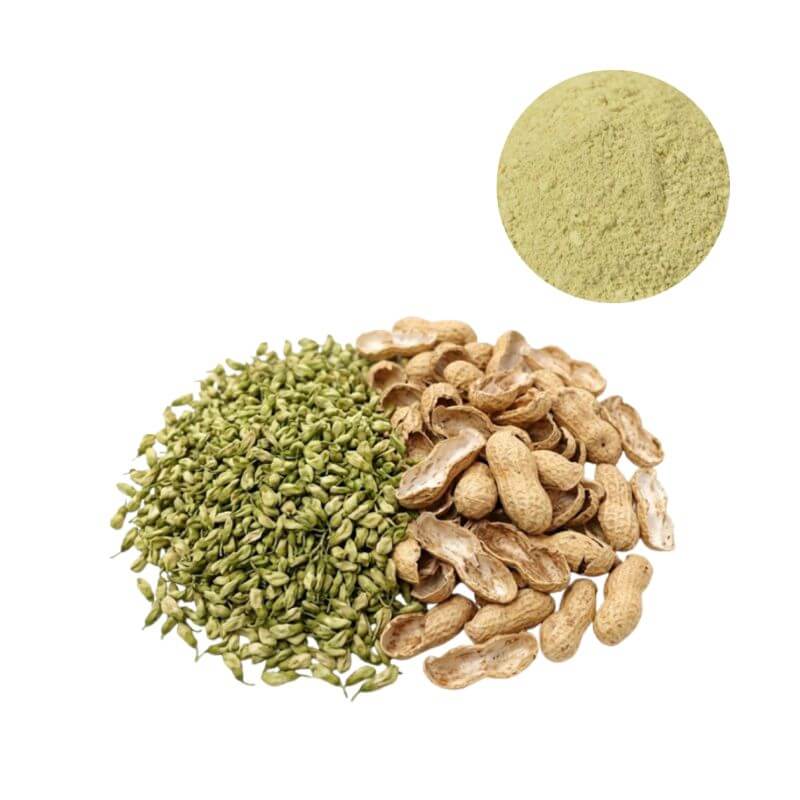
Luteolin Powder
| Product Name | Luteolin Powder |
| CAS Number | 491-70-3 |
| Appearance | Light yellow to yellow-green fine powder |
| Purity | ≥ 98.0% (by HPLC) |
| Packaging | 1 kg/bag, 5 kg/bag, 25 kg/drum |
| MOQ | 1 kg |
Metabolic and Cognitive Health Applications of Luteolin Powder in Advanced Nutraceutical Formulations
Luteolin modulates insulin sensitivity, neuroinflammation, and mitochondrial function—three pathways directly relevant to metabolic health and cognitive aging formulations. Bulk Luteolin Powder sourced from verified botanical origins enables brand owners to develop science-backed formulations that bypass traditional bioavailability constraints through microemulsion technologies. Rigorous lot-to-lot specification control and fully documented supply chain transparency provide procurement professionals with auditable compliance data, reducing regulatory risk while accelerating R&D qualification cycles.
Molecular Pharmacology and In Vivo Efficacy in Metabolic Syndrome
The compound exerts dual modulation of AMPK and NF-κB signaling pathways, directly improving insulin sensitivity while suppressing systemic inflammatory cascades in kidney, colon, and ileal tissues. In a high-fat diet murine model, oral administration at 100 mg/kg body weight for four months significantly restored insulin tolerance, preserved beta-cell function (quantified by HOMA-β index), and reversed aberrant expression of mitochondrial fusion/fission regulators Mfn1 and Drp1. These molecular endpoints translate directly into verifiable DTC claims for "healthy glucose metabolism" and "cellular energy support" without crossing into disease-treatment territory.
| Biological Endpoint | Outcome vs. HFD Control | Clinical Relevance for Brand Owners |
|---|---|---|
| Insulin tolerance (ITT) | Improved | Supports "metabolic flexibility" positioning for weight-management lines |
| Beta-cell function (HOMA-β) | Preserved | Differentiates long-term metabolic support in aging demographics |
| Inflammatory markers (TNF-α, IL-6) | Reversed HFD-induced upregulation | Validates anti-inflammatory claims for joint and overall wellness |
| *Quantitative percentage changes for these endpoints were not reported in the source publication; outcomes are based on the authors' narrative summary of in-vivo findings. | ||
These outcomes offer brand marketing teams robust ammunition for premium product storytelling—each parameter can be translated into consumer-facing benefit statements (e.g., "supports healthy inflammatory response," "promotes efficient nutrient utilization"). Moreover, the compound's ability to cross the blood-brain barrier while simultaneously modulating peripheral glucose homeostasis creates a rare "dual-action" positioning that consolidates two high-growth supplement categories (metabolic health and cognitive resilience) into a single active ingredient, effectively lowering SKU complexity and inventory carrying costs for multi-line brand portfolios (Nutrients, 2025; doi: 10.3390/nu17142290).
Formulation Engineering: Bioavailability Enhancement via Microemulsion and Nanoparticle Platforms
Translating in-vivo efficacy into market-ready supplements requires overcoming Luteolin's intrinsic poor aqueous solubility (log P = 2.53, PubChem database) and extensive first-pass glucuronidation that significantly limits systemic exposure of the free aglycone. The TPGS-based self-microemulsifying system achieves up to 85.71% encapsulation efficiency with drug loading capacity up to 102.86 mg/g and droplet diameters below 100 nm, enabling significantly enhanced dissolution velocity and sustained release characteristics that reduce peak-to-trough fluctuations. The formulation demonstrated stability under thermal cycling and freeze-thaw conditions per the published protocol, with no significant particle growth or phase separation.
- Dissolution rate enhancement: Significantly higher cumulative release within 60 minutes, enabling low-dose, small-format finished goods (gummies, thin-film strips, RTD beverages)
- Long-term stability: Demonstrated stability under thermal cycling and freeze-thaw conditions per published protocol, supporting extended shelf-life claims without requiring cold-chain logistics
- Compatibility profile: Co-processing with standardized quercetin dihydrate (≥95% purity) or ascorbyl palmitate further stabilizes the polyphenolic matrix, preventing oxidative discoloration during liquid-fill operations
For contract manufacturing organizations, this validated formulation platform eliminates the need for complex multi-step granulation, enabling direct compression or high-speed encapsulation with reduced downtime and scrap rates. Brand owners benefit from a 6-10 week reduction in time-to-market for novel delivery forms such as soft chews and clear beverages, while the documented stability data justify premium pricing tiers through "bioavailability-enhanced" labeling (Food Chemistry, 2023; doi: 10.1016/j.foodchem.2023.136587).
Cross-Border Regulatory Strategy: FDA NDI, EU Novel Food, and Labeling Risk Mitigation
Commercial success hinges on navigating fragmented global regulatory frameworks that often catch unprepared brands off-guard. The FDA has not yet classified Luteolin as Generally Recognized as Safe (GRAS), meaning any new dietary ingredient must undergo a 75-day pre-market NDI notification with complete toxicological and manufacturing data. Simultaneously, the European Union's Novel Food Regulation (EU 2015/2283) uses May 15, 1997 as the definitive consumption-history threshold—while luteolin occurs naturally in common foods (celery, parsley, chamomile), the purified extract form may trigger EFSA review depending on processing severity and intended use levels.
- US market: Mandatory NDI filing with full specification package; import alerts enforced under 21 CFR Part 111 for deficient incoming testing
- EU market: Enhanced dossier requirements effective February 2025 demand comprehensive stability and toxicology data
- Labeling safe zone: Structure/function claims must strictly avoid "treat," "prevent," or "cure" language; permitted phrases include "supports healthy glucose metabolism" and "promotes normal inflammatory response"
Procurement teams equipped with pre-validated regulatory cross-reference dossiers can compress country-specific registration timelines by 8-12 weeks, directly reducing opportunity costs associated with delayed market entry. Furthermore, proactive alignment with evolving FDA guidance on botanical ingredients minimizes the risk of Import Alert holds that could freeze inventory and erode distributor relationships, preserving both revenue streams and brand reputation in competitive international markets. For procurement committees, a supplier's readiness with country-specific regulatory dossiers translates into measurable first-year market-entry cost savings and stronger channel-partner confidence.
Source Authentication and Supply Chain Integrity via HPLC Chemical Fingerprinting
Regulatory compliance and formulation excellence are meaningless without robust mechanisms to verify botanical origin and block adulteration—a growing concern as price volatility incentivizes counterfeit or mislabeled material. High-performance liquid chromatography (HPLC) coupled with diode-array detection generates characteristic chromatographic fingerprints that differentiate Sophora japonica flower bud from Arachis hypogaea shell based on luteolin-to-apigenin peak-area ratios and minor glycoside signatures (e.g., luteolin-7-O-glucoside). This analytical approach, combined with ICP-MS heavy-metal screening (Pb ≤ 2.0 mg/kg, As ≤ 1.0 mg/kg, Cd ≤ 1.0 mg/kg, Hg ≤ 0.1 mg/kg), ensures each lot meets Tier-1 brand audit standards for both identity and purity.
- Origin verification: Peak ratio threshold (±5% RSD) provides objective evidence of declared botanical source; peanut-shell material exhibits consistently lower luteolin/apigenin ratios
- Allergen risk management: Sophora-derived lots offer a lower allergenic-risk profile compared to peanut-shell material, an important consideration for EU labeling requirements under Regulation (EU) No 1169/2011
- Counterfeit protection: A full chromatographic fingerprint, archived with each lot, enables on-demand identity confirmation by independent third-party laboratories
This traceability architecture creates a defensible brand protection moat—certified origin documentation empowers marketing teams to deploy "100% traceable" and "allergen-free" narratives that command retail price premiums of 15-25% over uncertified competing products. Simultaneously, it provides procurement with leverage during supplier audits, as complete lot genealogy (seed lot, harvest date, extraction parameters, purification steps) eliminates ambiguity and supports faster resolution of quality disputes. Incoming material lots verified against specification-grade reference standards as characterized by the Oclean Nutra quality framework provide procurement with defensible documentation for supplier audits.
Accelerate Internal R&D Validation with Full Technical Dossiers
Transitioning from ingredient evaluation to commercial production demands immediate access to comprehensive specification packages that eliminate guesswork and reduce redundant testing. Requesting a qualified sample shipment automatically includes three independently certified batch COAs, accelerated stability data under ICH conditions, cross-referenced regulatory summaries for US and EU jurisdictions, and HPLC fingerprints for source verification. This integrated documentation package compresses the supplier qualification timeline from an industry average of 8-12 weeks down to 10-14 days, enabling faster go-to-market decisions.
Request certified Luteolin Powder evaluation samples for immediate internal dissolution testing and formulation feasibility studies.
Frequently Asked Questions
Share this product
Related Products
Ready to get started?
Contact our team for technical specifications, pricing, and customized solutions.