
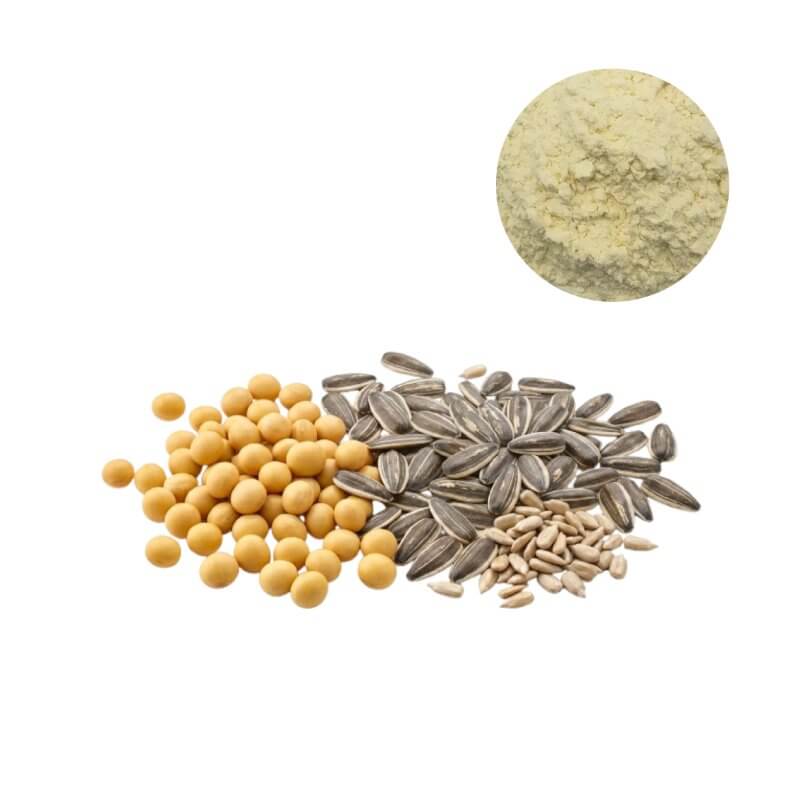
Phosphatidylserine (PS) Powder
| Product Name | Phosphatidylserine Powder |
| CAS Number | 51446-62-9 |
| Appearance | Off-white to light yellow fine powder |
| Purity | 20%, 50%, 70% (by HPLC) |
| Packaging | 1 kg/bag, 5 kg/bag, 25 kg/drum |
| MOQ | 1 kg |
Phosphatidylserine (PS) Powder (20%-70%): Evidence-Based Cognitive Support for Premium Nootropic & Functional Food Formulations
As consumer demand shifts from general "brain health" claims to measurable cognitive benefits, formulators face a critical challenge: selecting a phosphatidylserine ingredient that balances clinical credibility, formulation stability, and regulatory acceptance. Standardized PS powder (20%, 50%, 70% by HPLC) derived from non-GMO soy or sunflower provides a proven phospholipid backbone for memory support, stress adaptation, and neuroprotection. Unlike transient stimulants, PS integrates into neuronal membranes to support long-term synaptic function - a distinction that directly influences formulation strategy and end-product differentiation. In a crowded nootropic market where label claims are increasingly scrutinized, offering a clinically graded PS (20%/50%/70%) allows brands to build a defensible science-backed positioning and command premium pricing based on verifiable dosage precision.
Clinically Validated Mechanisms: How PS Supports Memory and Cognitive Resilience
Phosphatidylserine is a naturally occurring phospholipid concentrated in mammalian brain tissue, where it modulates membrane fluidity, neurotransmitter release, and signal transduction pathways. A 2025 randomized double-blind placebo-controlled trial involving 190 Chinese older adults with mild cognitive impairment demonstrated that a PS-containing supplement (31.5 mg PS per capsule) significantly improved arithmetic testing (β=0.688, 95% CI: 0.103-1.274) and short-term memory (β=0.600, 95% CI: 0.399-0.800) over 12 months. Serum levels of n-3 PUFAs (ALA, DHA, EPA) and neurotransmitters (acetylcholine, GABA, 5-HT) also increased, with ALA mediating 19.7% of the memory improvement effect (Journal of Affective Disorders, 2025; doi: 10.1016/j.jad.2024.09.131). From a strategic formulation perspective, this indicates that PS not only provides standalone cognitive benefits but also synergizes with omega-3s - a combination that can be leveraged to create differentiated, multi-pathway brain health products. What this clinical evidence translates into for brands is a directly marketable outcome: consumers experience tangible memory improvement, which drives repeat purchases and higher customer lifetime value - a critical ROI factor often overlooked in ingredient selection.
Beyond memory, PS helps regulate the hypothalamic-pituitary-adrenal (HPA) axis, attenuating cortisol spikes after physical or psychological stress. For sports nutrition brands, this translates into recovery-focused formulations that support both mental clarity and training adaptation. Key clinical outcomes consistently observed with PS supplementation include:
- Reduced perceived stress and improved mood in high-demand populations
- Maintenance of daily functioning in mild cognitive impairment (MCI)
Practically speaking, the choice of purity grade directly influences not just cost but also the dose required per serving - a factor that shapes capsule count, tablet size, and ultimately consumer compliance.
Quality Benchmarks: What Defines a Premium Phosphatidylserine Supplier for GMP-Compliant Brands
Sourcing bulk phosphatidylserine requires more than a COA; it demands a deep understanding of manufacturing controls and analytical methods. PS powder typically features HPLC-ELSD assay to confirm purity (20%, 50%, or 70%), loss on drying ≤2.0%, residue on ignition ≤3.0%, bulk density 0.40-0.60 g/ml, and heavy metals controlled at Pb ≤1.0 mg/kg, As ≤1.0 mg/kg, Cd ≤1.0 mg/kg, Hg ≤0.1 mg/kg. For procurement teams, this directly translates to the need for a supplier that provides batch-specific COAs including:
- Residual solvents (complies with USP <467>)
- Microbiological purity (TPC ≤1,000 CFU/g, absence of E. coli and Salmonella)
- Peroxide value (≤10 meq/kg) to confirm oxidative stability
It's worth noting that many suppliers claim "high purity" but fail to control acetone-insoluble matter - a critical parameter for 50% and 70% grades. An effective quality agreement should mandate third-party testing for these parameters. Below is a quick reference for evaluating PS lots based on intended application:
| Purity Grade | Typical Use Case | Critical Quality Focus |
|---|---|---|
| 20% PS | Mass-market functional beverages, snack bars | Oxidative stability, cost-efficient blending |
| 50% PS | Standard capsules, tablets for daily cognitive support | Acetone-insolubles, consistent particle size |
| 70% PS | Premium nootropic stacks, high-potency softgels | Residual solvents, heavy metals (Pb ≤1.0 mg/kg) |
This level of specification rigor means that brand developers can avoid the costly cycle of batch rejection and re-formulation - directly protecting production timelines and profit margins.
Formulation in Practice: Stability, Synergy, and Delivery Solutions for PS Powder
Incorporating PS powder into finished products requires attention to its amphiphilic nature and sensitivity to heat, moisture, and oxygen. While PS is stable at pH 6-8 and below 80°C, prolonged exposure to high shear or humidity above 45% can accelerate degradation. For solid dosage forms such as tablets or capsules, direct compression with minimal lubricant (e.g., magnesium stearate ≤1%) preserves PS integrity. For powder drink mixes, pre-blending PS with a free-flowing carrier (e.g., tapioca maltodextrin or inulin) prevents clumping and ensures uniform dispersion.
One of the most effective synergistic pairs is PS combined with omega-3 DHA/EPA. As noted in the 2025 trial, the increase in serum n-3 PUFAs after PS supplementation suggests a complementary mechanism: DHA enhances PS incorporation into neural membranes, while PS supports DHA's anti-inflammatory effects. Typical formulation ratios range from 1:1 to 2:1 (PS:DHA). Other compatible ingredients include:
- Phosphatidic acid (PA): Demonstrated to support mood and daily functioning when combined with PS (300 mg PS + 240 mg PA) in elderly populations.
- Premium L-theanine or high-purity GABA: For stress-relief formulations targeting cortisol modulation.
- Standardized Bacopa monnieri extract or Ginkgo biloba extract: For multi-pathway cognitive stacks, though compatibility testing is advised.
From a strategic formulation perspective, selecting the right purity grade reduces total formula cost and improves consumer experience: a 70% PS powder requires only 143 mg to deliver 100 mg of active PS versus 500 mg of 20% grade. A 2022 formulation study demonstrated that PS improves emulsion physical stability through smaller particle size, higher ζ-potential, and lower centrifugal stability constants, with PS emulsions enhancing spatial learning and memory in mice via BDNF/TrkB and Nrg-1/ErbB4 signaling pathways (Journal of Agricultural and Food Chemistry, 2022; doi: 10.1021/acs.jafc.1c07403).
Mitigating Risk: A Sourcing Checklist for Certified Phosphatidylserine Suppliers
Global brands increasingly demand supply chain transparency and regulatory alignment. A certified PS supplier should not only provide a COA but also demonstrate adherence to GMP, HACCP, and, where applicable, Kosher/Halal certifications. For buyers sourcing PS wholesale, the following checklist helps screen partners objectively:
- Regulatory readiness: Does the supplier provide documentation for GRAS (FDA GRN No. 197), EU Novel Food compliance (Regulation EU 2015/2283), and China's Novel Food approval (daily limit 600 mg)?
- Traceability: Can they deliver a batch-specific audit trail from raw material (non-GMO soy or sunflower lecithin) to finished powder?
- Stability data: Does the COA include 24-month accelerated stability studies under recommended storage (cool, dry, sealed, <20°C)?
- Custom services: Are blending, encapsulation, or private label options available without compromising quality?
For procurement teams, this directly translates to lower supply interruption risk and faster time-to-market. A responsible distributor will offer free samples (10-20 g) for internal R&D evaluation. Moreover, flexibility in MOQ (starting at 1 kg) allows both emerging and established brands to test formulations before scaling.
Adopting a Total Cost of Ownership (TCO) lens: A supplier that provides full stability data and traceability prevents catastrophic batch failures and regulatory holds - costs that far exceed any upfront price premium.
Next Steps: De-Risk Your Cognitive Health Product Launch
Building a successful nootropic or functional food line around phosphatidylserine requires more than a raw material - it requires a reliable phosphatidylserine supplier that ensures batch-to-batch consistency, regulatory support, and formulation agility. By choosing a validated PS powder (20/50/70%) from a GMP-compliant supply chain, you reduce development uncertainty and accelerate your path to market. Request your complimentary sample and full technical dossier today to conduct in-house stability and dissolution testing. Our team provides batch-specific COAs, blend-compatibility guidance, and regulatory documentation - all delivered within one business day.
Frequently Asked Questions
Share this product
Related Products
Ready to get started?
Contact our team for technical specifications, pricing, and customized solutions.