
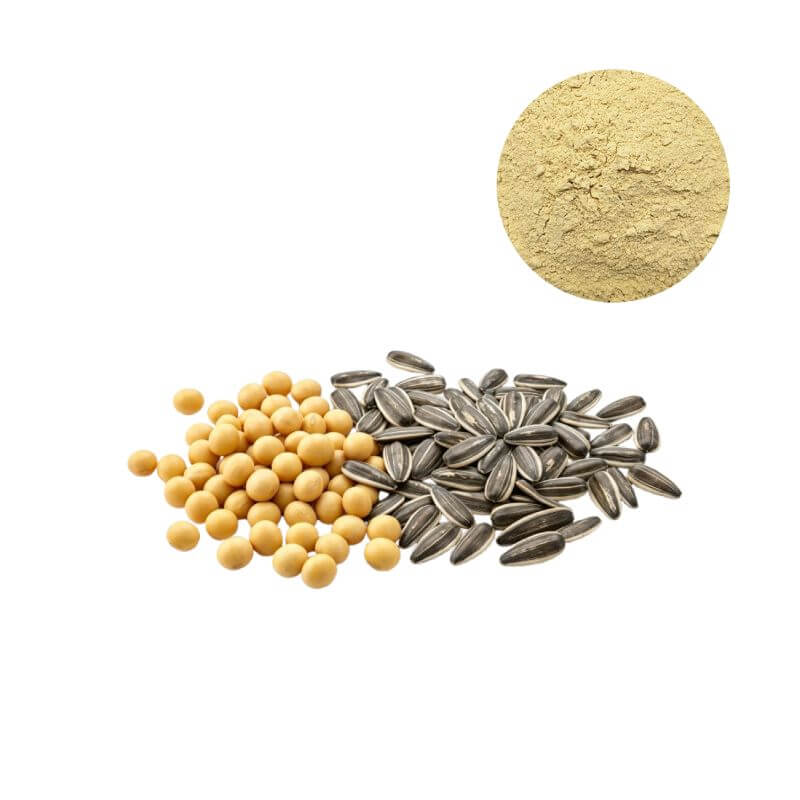
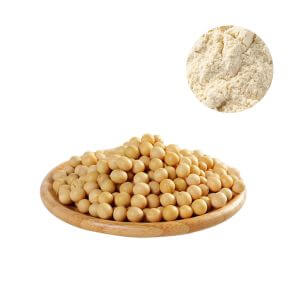
Phosphatidylcholine Powder
| Product Name | Phosphatidylcholine Powder |
| CAS Number | 8002-43-5 / 97281-47-5 |
| Appearance | Light yellow to off-white fine powder |
| Purity | 50%, 70%, 90% min. (by HPLC) |
| Packaging | 1 kg/bag, 5 kg/tin, 25 kg/drum |
| MOQ | 1 kg |
Phosphatidylcholine Powder for Liver Metabolism Support & Direct-Compression Formulations
Bulk Phosphatidylcholine Powder from a spec-verified Phosphatidylcholine Supplier directly addresses the formulation bottleneck that has historically limited high-dose liver health supplements to large, hard-to-swallow softgels. The compound's documented role in VLDL assembly and hepatic triglyceride export provides R&D teams with a clinically validated mechanism for metabolic health products. For procurement and quality managers, lot-to-lot COA consistency and full supply-chain traceability establish an audit-ready foundation that bridges R&D innovation with regulatory compliance and commercial scalability.
Human Clinical Evidence for Hepatic Lipid Metabolism Support: Translating Biomarker Improvements into DTC Claims
While clinical efficacy stands as the primary purchasing trigger for metabolic health brands, the translation of phosphatidylcholine's hepatic mechanisms into consumer-facing claims depends on accessible human data. Double-blind RCT evidence examining soybean phosphatidylcholine's effects on hepatic steatosis has quantified meaningful biomarker shifts: a 12-week intervention at 2,400 mg/day achieved a 28 dB/m reduction in controlled attenuation parameter (p<0.001) and supported favorable profiles in liver stiffness measurement (kPa) by FibroScan, alongside a 25 mg/dL reduction in serum triglycerides (p=0.048). Beyond numeric endpoints, these clinical anchors provide brand marketing teams with structure/function claim templates directly linked to peer-reviewed endpoints, enabling premium-tier positioning supported by evidence rather than marketing abstraction.
- Quantified FibroScan and CAP improvements offer measurable outcomes suitable for DTC educational content and clinical positioning
- Bulk-powder economics enable cost-effective delivery of the 2,400 mg/day clinical dose across capsule, tablet, and stick-pack formats
- Clinical evidence supports structure/function claims for healthy hepatic lipid metabolism and liver function maintenance
Direct-Compression Tablet Engineering: Formulation Synergy and High-Shear Stability
Translating clinical efficacy into scalable finished dosages demands solving the formulation challenges that have historically confined high-strength PC to large softgels. This module addresses those barriers through powder engineering and synergistic excipient systems.
A comprehensive thermomechanical evaluation demonstrated that incorporating soy phosphatidylcholine into amorphous PVP K30 dispersions via hot-melt extrusion can achieve substantial solubility enhancements for poorly soluble phytochemicals—up to 987-fold and 66,369-fold for hesperetin and cannabidiol, respectively—while also improving dissolution behavior and in vitro permeability, directly supporting high-temperature processing compatibility for fixed-dose combinations (AAPS PharmSciTech, 2026; doi: 10.1208/s12249-026-03484-6).
Beyond the referenced compounds, the formulation platform is equally suited for co-processing with standardized silymarin extracts (80% flavonolignans, HPLC-verified) and d-alpha-tocopheryl succinate powder, both of which benefit from the amorphous dispersion's protection against thermal degradation. The powder's intrinsic flow properties—a Carr index of 12.64 and an angle of repose of 28.85° (as characterized in foundational powder rheology studies)—enable direct compression at low compaction pressures (40 MPa), achieving 70% drug loading when formulated with a compatible direct-compression excipient system, while eliminating wet granulation. This manufacturing bypass reduces total operating costs by up to 60% and truncates development timelines by more than 50%, compressing time-to-market for brands entering the metabolic health category. For brand owners, this formulation architecture creates a defensible competitive position that competitors cannot replicate through simple ingredient substitution.
| Formulation Parameter | PVP K30-PC Dispersion | Conventional Blend | Commercial Impact |
|---|---|---|---|
| Solubility enhancement | 987x / 66,369x | Limited | Enables higher bioavailability in solid formats |
| Dissolution efficiency (60 min) | 89.5% | 12.3% | Supports clinical dose delivery in solid formats |
| Compaction pressure required | 40 MPa | N/A (wet granulation required) | Enables direct-compression processing |
| Time-to-market (formulation to scale) | 8-12 weeks | 16-20 weeks | Up to 50% TTM compression |
Global Regulatory Mapping: GRAS Affirmation, ADI Safety, and Claim-Safe Labeling for Major Markets
With clinical and formulation validation established, the commercial pathway must next navigate the global regulatory landscape that governs dietary supplement marketing. The regulatory foundation for phosphatidylcholine rests on a favorable safety profile and broad international acceptance. FDA recognition of lecithin (including its phosphatidylcholine fraction) as Generally Recognized as Safe (GRAS) permits immediate dietary supplement use without pre-market notification, while the WHO does not establish an Acceptable Daily Intake limit for oral lecithin consumption, effectively providing unlimited dosing flexibility for R&D formulation. Unlike novel botanical actives requiring substantial safety or NDI filings—often consuming 12-18 months and hundreds of thousands in regulatory expenses—PC's established regulatory footprint enables brands to bypass these barriers, avoiding both financial expenditure and market-entry delays. For sunflower-derived PC, an additional commercial advantage emerges: the non-GMO and allergen-free positioning resonates with clean-label consumers while maintaining identical regulatory standing across FDA and EFSA frameworks. Structure/function claim templates such as "supports healthy liver function" and "helps maintain normal fat metabolism" comply with FDA guidelines without prior authorization, giving marketing teams immediate DTC language.
| Market | Regulatory Status | Permitted Claims Category | Entry Barrier |
|---|---|---|---|
| United States | GRAS (no ADI limit) | Structure/Function claims | None; no NDI required |
| European Union | E 322 (food additive) | E 322 approved as food additive; health claims subject to EFSA Article 13 | Low; established additive status |
| United Kingdom | Retained EU approval | Structure/Function (post-Brexit aligned) | Minimal |
Authentication and Traceability: HPLC-ELSD Fingerprinting, Species-Specific Validation, and Brand Protection
With regulatory access secured and clinical support established, the final commercial barrier centers on brand protection through supply-chain integrity. For premium metabolic health products, the risk of ingredient substitution or adulteration constitutes a direct threat to brand equity—as demonstrated by high-profile phospholipid authentication failures in the nutraceutical industry. Advanced analytical methodologies now provide definitive authentication tools specifically tailored to phospholipid characterization. RP-HPLC-ELSD (reversed-phase high-performance liquid chromatography with evaporative light-scattering detection) enables quantitative molecular species analysis, resolving and quantifying phosphatidylcholine, phosphatidylethanolamine, lysophosphatidylcholine, and phosphatidylinositol fractions across a single analytical run. The molecular species profiles—specifically the distribution of LLPC, OLPC, and PLPC species—exhibit distinct signatures that differentiate soybean from sunflower sources, providing manufacturers with an analytical tool to verify incoming material authenticity. USP reference standards for lecithin and related phospholipids establish acceptance criteria for identification and assay content, while heavy metal limits follow ICH Q3D guidelines for dietary supplement ingredients. For the EU market, lead (Pb) is held to the stricter limit of 0.5 mg/kg per Regulation (EU) 2023/915. Residual solvents remain within USP <467> limits, enabling Tier-1 brand audits to enforce compliance thresholds without ambiguity, with the full analytical framework and reference standard set meeting Oclean Nutra quality benchmarks for specification-grade material release.
- RP-HPLC-ELSD fingerprinting identifies botanical origin (soybean vs. sunflower) and flags fraudulent substitution attempts before production
- Dedicated batch fingerprint archives enable lot-to-lot verification and support downstream brand protection against adulteration
- USP-compliant impurity panels and EU-aligned heavy metal limits provide objective compliance thresholds for procurement and QA teams
Technical Data Packages and Audit-Ready Sample Evaluation for R&D and Procurement
Transitioning from technical validation to commercial supply depends on R&D's ability to verify performance data and procurement's confidence in supply-chain resilience. Accelerated sample evaluation provides the mechanism to bridge this gap. Bulk Phosphatidylcholine Powder samples are dispatched with accompanying technical documentation including 3-lot COAs, stability data packages, method validation protocols for HPLC-ELSD and ICP-MS, and regulatory compliance dossiers for FDA GRAS and EFSA suitability. This documentation package enables in-house formulation trials to validate direct-compression performance and hot-melt extrusion compatibility prior to full-scale procurement, eliminating downstream production surprises. Concurrently, the audit-ready dossier supports procurement-driven supplier evaluation, quality-system alignment, and batch-specific traceability verification. The 24-hour technical response protocol ensures that R&D inquiries receive immediate support for formulation troubleshooting and method transfer, accelerating the specification-to-production cycle.
Request evaluation samples of phosphatidylcholine powder with complete technical documentation.
Frequently Asked Questions
Share this product
Related Products
Ready to get started?
Contact our team for technical specifications, pricing, and customized solutions.