
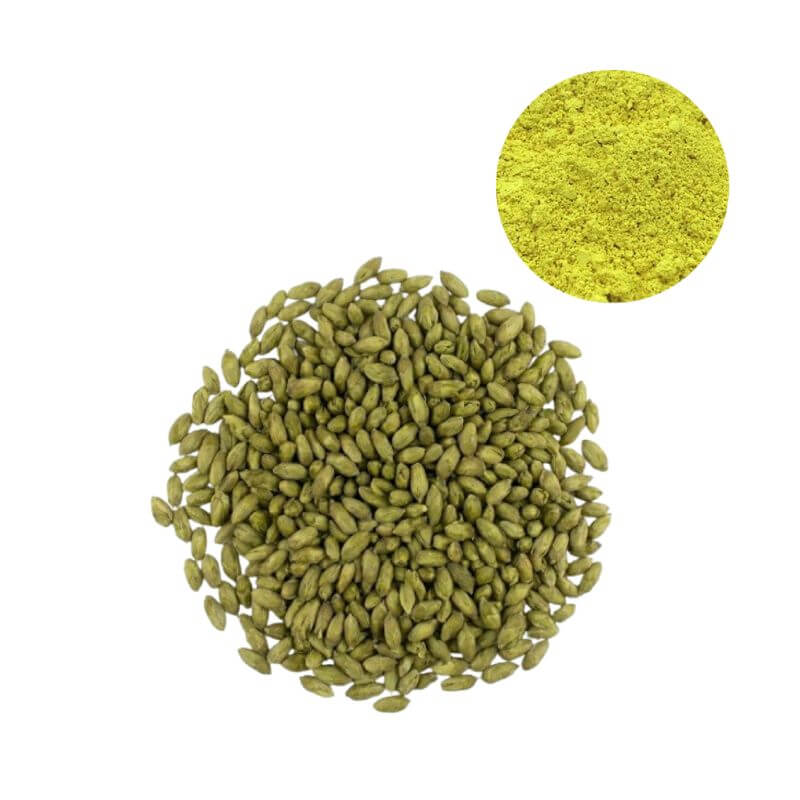
Quercetin Dihydrate Powder
| Product Name | Quercetin Dihydrate Powder |
| CAS Number | 6151-25-3 |
| Appearance | Yellow to Greenish-Yellow Fine Powder |
| Purity | ≥ 95.0% (by HPLC) |
| Packaging | 1 kg/bag, 5 kg/bag, 25 kg/drum |
| MOQ | 1 kg |
Clinically Validated Quercetin Dihydrate Powder – Bioavailability Breakthrough for Premium Nutraceutical Formulations
Bulk Quercetin Dihydrate Powder from a spec-verified supplier delivers the only dihydrate crystalline form backed by a randomized human crossover trial demonstrating 18.6-fold free Cmax and 62-fold total AUC gains – quantitative metrics that directly transform finished product positioning. Beyond clinical proof, lot-to-lot COA consistency and audit-ready traceability protocols ensure R&D validation aligns with procurement risk control, establishing the scientific credibility required for premium market entry.
Human Clinical Proof as the Commercial Anchor for DTC Differentiation
A human double-blinded crossover trial on quercetin dihydrate in a self-emulsifying hydrogel recorded 18.6-fold free Cmax gain and 62-fold total AUC increase versus unformulated dihydrate, with 96x solubility enhancement and 183.6 nm particle size. These directly translatable PK endpoints can be embedded into product dossiers and DTC marketing claims. The compound's dihydrate stoichiometry (10.0%–12.0% loss on drying) was the exact reference material in this trial, confirming that the crystalline form itself carries the absorption potential when paired with appropriate delivery systems (ACS Omega, 2022; doi: 10.1021/acsomega.2c05929).
From this clinical dataset, brand owners can construct shelf-ready marketing assets: the claim “62x higher total bioavailability versus standard quercetin” provides a quantifiable differentiator that commands premium retail pricing – phytosome-based finished goods at US$35-50 per bottle versus US$15-25 for generic forms. The trial's crossover design offers regulatory defensibility under FDA structure/function guidelines, supporting claims such as “supports healthy immune cell function” and “helps maintain normal inflammatory response”.
Formulation Engineering – Converting PK Gains into Commercial Dosage Forms
CMOs must preserve the 18.6-fold absorption gain across gummies and capsules. Matching the crystalline dihydrate with proven delivery platforms that operate within standard GMP production lines is the essential next step.
| Delivery Platform | Bioavailability Gain (vs. Unformulated) | Commercial Products in Market | CMO Production Compatibility |
|---|---|---|---|
| Phytosome (phospholipid complex) | 20-fold higher absorption | Phytosome-based commercial product; mainstream phytosome product | Standard blending, encapsulation, tableting lines |
| Liposomal (enhanced delivery) | Significantly enhanced bioavailability (p<0.001 at 500–1000 mg) | Branded high-absorption quercetin product | Liquid incorporation; spray-drying for powder fills |
| Self-emulsifying hybrid-hydrogel | 62-fold total AUC increase | Commercial self-emulsifying system | Wet granulation; fluid-bed processing |
Each platform addresses the compound's inherent poor aqueous solubility – the clinical trial documented a 96-fold improvement – while preserving dihydrate integrity, a critical factor since anhydrous conversion alters dissolution kinetics. For gummy applications, lipid-based carriers mask the natural bitterness while improving dispersion in gelatin or pectin matrices. For high-dose capsules (500–1000 mg per serving), phytosome technology cuts the required fill weight by 50–70%, enabling smaller capsule sizes that improve consumer compliance.
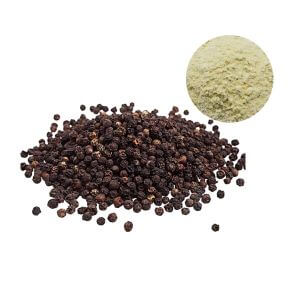
Beyond delivery platforms, bioavailability can be further amplified through synergistic co-formulation. Piperine extract inhibits intestinal glucuronidation and P-glycoprotein efflux, delivering measurable absorption gains in quercetin-based finished goods. Bromelain powder supports protein complex disruption and complements quercetin's anti-inflammatory profile – a combination widely adopted in commercial immunity-focused SKUs. Resveratrol polyphenol contributes complementary antioxidant kinetics and has been evaluated in combination with quercetin for synergistic free-radical scavenging activity. Each co-ingredient introduces distinct formulation considerations, from dosage ratio optimization to matrix compatibility, all of which can be addressed during the prototype development phase.
Bulk Powder Engineering – Eliminating CMO Line Failures to Accelerate TTM
Clinical datasets and formulation designs are irrelevant if raw powder cannot feed a high-speed press. Standard quercetin dihydrate – bulk density specified at ≥0.10 g/cc as a minimum, angle of repose >45°, and needle crystals causing capping/delamination – yields 8–12% scrap rates and adds 4-6 weeks for wet granulation optimization.
- Carrier-free direct-compression (DC) grade – Through proprietary fluid-bed crystal aggregation, needle morphology is re-engineered into dense spherical agglomerates achieving bulk density ≥0.45 g/mL and angle of repose optimized for uniform gravity feeding, eliminating pre-mixing, wet granulation, and drying steps entirely.
- Clean-label enabler – Traditional granulation requires maltodextrin or microcrystalline cellulose carriers that pollute the Supplement Facts panel; DC-grade powder allows brands to declare “quercetin dihydrate” as the sole ingredient, directly supporting minimalist labeling preferred by premium consumers.
- Air-freight resilience – The dihydrate form offers distinct processing characteristics compared to anhydrous grades; preventing cargo condensation during maritime transit at 75–85% RH requires only standard double-lined HDPE drums with desiccant packs, avoiding costly refrigerated or nitrogen-flushed containers.
By eliminating wet granulation, CMOs reduce processing time by 5-7 days per batch and lower energy costs by 30–40% – savings that brand owners capture as margin expansion without retail price increases. For emerging brands targeting a 6-month launch timeline, this condensed manufacturing schedule shaves 3-4 weeks from the critical path. The carrier-free DC grade aligns with the “clean-label” premium segment, where products command 20–35% higher unit pricing compared to conventional formulations containing synthetic excipients. Lower scrap rates and reduced processing cycles convert directly into gross margin expansion for the brand owner, independent of finished-product retail pricing.
Regulatory Compliance Roadmap – Global Market Access Without Customs Delays
The previous two modules solved the “how to formulate” and “how to manufacture” challenges, but commercial expansion demands parallel navigation of regulatory fragmentation: the same quercetin dihydrate powder that qualifies as GRAS in the U.S. is classified as a Novel Food in the EU when sourced from Sophora japonica L. at ≥95% purity.
- U.S. regulatory clearance – FDA GRAS Notice No. 341 (2010) permits use in beverages, grain products, processed fruit, and chewing gums at ≤500 mg per serving, with a proposed ADI of 19–22 mg/kg bw/day as cited in the GRAS notice. Structure/function claims such as “supports healthy histamine balance” and “maintains normal inflammatory response” are permissible without pre-approval, providing immediate route-to-market for finished goods.
- EU Novel Food status – The January 2025 Novel Food Catalogue explicitly lists quercetin (≥95%) from Sophora japonica as unauthorized; pre-market authorization is mandatory. A separate Novel Food application for quercetin from Dimorphandra mollis (EFSA application PC-1946, recommended daily intake of 500 mg) is currently undergoing public consultation – the ingredient is not yet authorized for EU market placement.
- Dosage design window – EU authorities generally cap quercetin at 860 mg/day, while the GRAS notice specifies up to 500 mg per serving with a proposed ADI of 19–22 mg/kg bw/day for safety assessment. This 74% difference directly impacts label claims: brands targeting both markets must either formulate two SKUs or adopt a 500 mg per serving limit that satisfies the stricter EU threshold.
Supplier qualification demands lot-specific documentation confirming the botanical source (Sophora japonica vs. Dimorphandra mollis), HPLC purity (95% with 10.0%–12.0% loss on drying), and residual solvent profiles meeting USP <467> Class 3 limits – non-negotiable elements of any audit-ready compliance dossier. Procurement teams that engage a spec-verified distributor—one maintaining analytical standards aligned with the Oclean Nutra quality framework—eliminate 4-6 weeks of qualification time and reduce exposure to customs holds that can cost USD 15,000-25,000 per container in demurrage and storage charges.
Accelerating R&D Validation and Procurement Qualification with Verified Samples
Transitioning from specification review to production commitment requires tangible validation: 1-kg samples of Quercetin Dihydrate Powder shipped with a comprehensive technical package containing 3-lot COAs, full heavy metal panels (Pb ≤1.0 ppm, As ≤1.0 ppm, Cd ≤1.0 ppm, Hg ≤0.1 ppm by ICP-MS), residual solvent GC-HS profiles, and stability data confirming 24-month shelf life under ambient storage conditions. This eliminates redundant in-house testing cycles – typically 2-3 weeks of R&D bench work – and provides procurement teams with audit-ready documentation for supplier qualification without additional contract manufacturer delays. Request a Quercetin Dihydrate sample package.
Frequently Asked Questions
Share this product
Related Products
Ready to get started?
Contact our team for technical specifications, pricing, and customized solutions.