
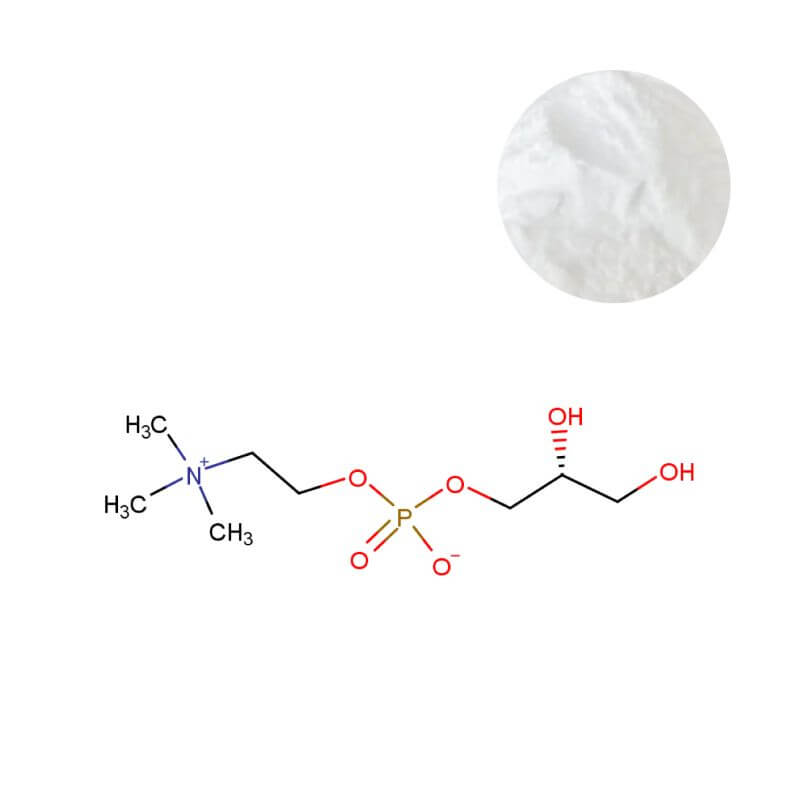
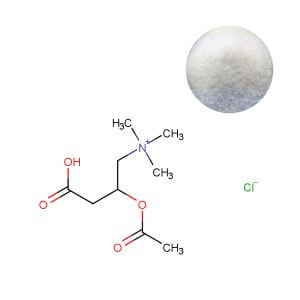
Alpha GPC Powder
| Product Name | Alpha GPC Powder |
| CAS Number | 28319-77-9 |
| Appearance | White to off-white crystalline powder |
| Purity | 50.0% min., 99.0% min. (by HPLC-ELSD) |
| Packaging | 1 kg/bag, 5 kg/bag, 25 kg/drum |
| MOQ | 1 kg |
Clinically Validated Alpha GPC Powder for Premium Cognitive Supplements and Stable Liquid Formulations
For spec-verified distributors of Bulk Alpha GPC Powder, the commercial imperative extends beyond simple purity metrics to encompass formulation versatility and clinical credibility. Valued at $80.8 million in 2025, the global Alpha GPC market is expanding at a 6.1% CAGR, with the softgel sub-segment growing at 12.4% annually—rewarding suppliers who provide robust lot-to-lot COAs and stability data. This profile transforms raw physicochemical traits into commercial levers, enabling premium retail positioning while ensuring audit-ready traceability for procurement teams.
Human Clinical Endpoints Quantify Cognitive Performance Gains and DTC Claim Substantiation
Quantifiable cognitive enhancement directly supports premium DTC brand positioning. A randomized, double-blind, placebo-controlled crossover trial with 20 resistance-trained males demonstrated that a single 630 mg dose of Alpha GPC improved the Stroop total score by 13.0 points (p=0.013). This level of quantified human proof directly shortens the R&D validation cycle and reduces the brand owner's risk in committing to a product launch, a critical factor for procurement and R&D alignment. Anchored in specific human performance metrics rather than subjective self-reports, this clinical evidence gives downstream brand owners validated, defensible claims for memory and focus support. Premium retail price points are clearly attainable, with branded finished products commanding $49.95+ per unit—well above non-clinically positioned alternatives. No serious cognitive health marketing strategy can proceed without this level of human evidence (Nutrients, 2024; doi: 10.3390/nu16234240).
LFHC Encapsulation and Carrier Synergies Overcome Hygroscopicity-Driven Formulation Barriers
Translating these clinical benefits into consumer-friendly finished formats demands mitigating the extreme hygroscopicity of high-purity Alpha GPC. The LFHC platform employs a non-aqueous fill matrix that physically isolates the active from ambient moisture, eliminating the risk of capsule shell softening. The 2023 Journal of Pharmaceutical Investigation study on liquid-filled hard capsules (LFHC) documents a robust industrial solution: >95% in vitro release within 30 minutes and maintained assay content above 97% after six months of accelerated stability testing at 40°C/75% RH. The resulting beagle dog pharmacokinetic profile—Cmax of 6.53 μg/mL and Tmax of 1.17 hours—confirms efficient systemic absorption. For formulators, strategic co-processing with high-purity L-Theanine powder and standardized L-Tyrosine in LFHC or softgel formats unlocks synergistic nootropic effects while protecting the active ingredient from moisture-induced degradation (Journal of Pharmaceutical Investigation, 2023; doi: 10.1007/s40005-023-00618-x).
| Dosage Form | In Vitro Release | Accelerated Stability (40°C/75% RH, 6M) | Key PK Parameter (Beagle) |
|---|---|---|---|
| Liquid-Filled Hard Capsule (LFHC) | >95% at 30 min | >97% Assay Retention | Cmax: 6.53 μg/mL |
| Standard Powder Blend (50% Carrier) | Dependent on carrier (DCP vs. Silica) | Requires strict <35% RH handling | Variable release profiles |
Carrier Selection and Particle Physics Dictate CMO Line Efficiency and Time-to-Market Compression
With the dosage form determined, the critical bottleneck shifts to the raw material's physical behavior on CMO production floors. The 99% assay grade converts to a sticky gel within minutes when exposed to >20% relative humidity, seizing automatic encapsulation pins and causing catastrophic line stoppages. A single gelation-induced line stoppage can cost a CMO over $2,000 per hour in lost productivity, rapidly eroding brand margins. The 50% granular specification, in contrast, uses strategic carrier systems: DCP (dibasic calcium phosphate) provides a bulk density of 0.60-0.80 g/mL and a brittle fracture mechanism ideal for direct compression tableting, while silica carriers (0.40-0.55 g/mL) offer superior flow but suffer from poor compressibility, risking capping and weight variation. Selecting the DCP-based 50% granulation eliminates secondary granulation steps, compressing TTM by 8-12 weeks and reducing scrap rates—while maintaining batch-to-batch analytical consistency as characterized by the Oclean Nutra quality framework. Raw material specification thus becomes a direct margin protection strategy for the brand owner.
- R&D Formulation and Process Adaptation Checklist: Confirm carrier type (DCP for tableting, Silica for capsule filling). Verify production suite humidity is maintained below 35% RH. Implement immediate resealing protocols (nitrogen flushing) for bulk containers post-use.
- CMO Line Optimization: Validate hopper flow rates and compression force parameters based on specific carrier bulk density to prevent die sticking and ensure uniform tablet weight.
Global Regulatory Frameworks Define ADI Limits and Brand Protection Safety Zones
Once physical and formulation challenges are resolved, global market access depends on strict regulatory adherence. In the US, FDA GRAS status (GRN No. 419) sets an upper daily intake limit of 196.2 mg/person/day, while the European Food Safety Authority adopted a positive safety opinion in 2026, proposing a maximum of 203.7 mg/day for food supplements under the Novel Food framework. The US FDA's NDI notification (No. 1269) further provides a clear pre-market compliance pathway, shielding brands from enforcement actions. Crucially, the FDA issued warning letters in 2019 to brands making disease-treatment claims (e.g., "preventing cognitive decline"), mandating that marketing language remain strictly within structure/function boundaries like "supports memory and focus." Canada has approved it as a Natural Health Product, and China authorized it as a Novel Food raw material in 2024 (National Health Commission Announcement No. 2 of 2024), with a recommended daily intake of ≤600 mg and restrictions for infants, pregnant, and lactating women. This complex regulatory matrix demands meticulous label claim engineering to avoid misbranding penalties and protect brand equity.
| Market | Regulatory Status | Daily Intake Limit (ADI) | Critical Claim Restriction |
|---|---|---|---|
| United States | GRAS (GRN 419) / NDI 1269 | 196.2 mg | No disease prevention/treatment claims |
| European Union | Novel Food (EFSA Opinion 2026) | 203.7 mg | Pending final authorization; strict novel food compliance |
| Canada | Natural Health Product (NHP) | Varies by monograph | Compliant with NHP license requirements |
| China | Novel Food Resource (Approved 2024) | ≤600 mg/day | Not for infants, pregnant, or lactating women |
Strategic Procurement TCO Model: Eliminating Secondary Processing for Margin Expansion
The complete commercial picture is finalized through a total cost of ownership (TCO) analysis, where supply chain resilience meets operational efficiency. With China and Europe dominating global production (>50% combined capacity, with a single major manufacturer producing 500 tons annually), sourcing stability is paramount. The 50% DCP-granulated specification directly lowers TCO by eliminating costly secondary granulation and solvent refining steps at the CMO level, reducing waste and machine downtime. As the market scales from $80.83 million (2025) to a projected $121.8 million by 2032, securing a stable supply of the correct physical specification ensures uninterrupted growth. Sourcing a granulated, carrier-optimized format delivers immediate margin release through reduced scrap rates, faster time-to-market, and exemption from costly in-house milling or granulation equipment investments.
- Procurement and TCO Cost-Saving Funnel: Avoid CMO surcharges for secondary granulation. Minimize production line stoppage costs associated with sticky hygroscopic powders. Reduce scrap rates from weight variation and capping failures.
- Supply Chain Intelligence: Pre-qualify suppliers with demonstrated capacity to deliver consistent lot-to-lot COA specifications for the chosen carrier system.
Accelerate R&D Validation and Secure Supply Chain Resilience
Transitioning from specification review to commercial production requires definitive material verification. Requesting a development sample eliminates the ambiguity of theoretical data, allowing in-house R&D to validate compressibility, hygroscopicity thresholds, and compatibility with target excipients under actual factory conditions. Each sample request triggers a comprehensive technical response package—including three-lot COAs, accelerated stability summaries, and full regulatory dossiers—directly addressing the R&D validation bottleneck and procurement's due diligence requirements. This rigorous pre-screening process de-risks the scale-up phase and ensures seamless technology transfer.
Request a verified Alpha GPC sample with HPLC-ELSD spec sheet.
Frequently Asked Questions
Share this product
Related Products
Ready to get started?
Contact our team for technical specifications, pricing, and customized solutions.