
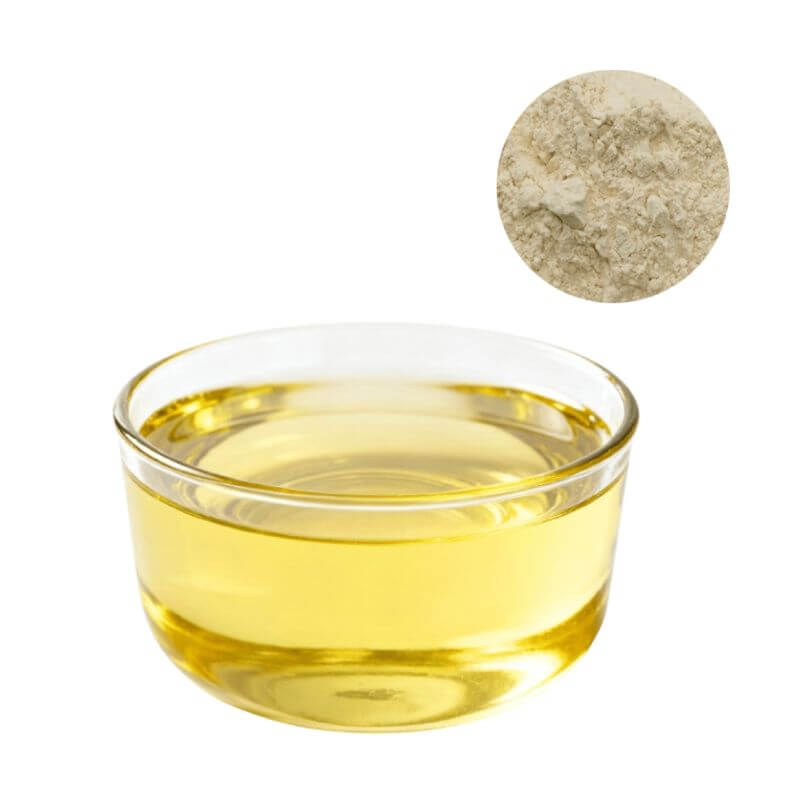
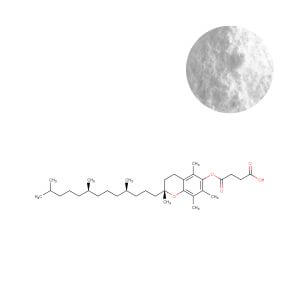
Natural Mixed Tocopherols Powder
| Product Name | Natural Mixed Tocopherols Powder |
| CAS Number | 1406-66-2 |
| Appearance | Off-white to light yellow fine powder |
| Purity | 30.0% min. (by HPLC) |
| Packaging | 1 kg/aluminum foil bag, 25 kg/paper drum |
| MOQ | 25 kg |
Bulk Natural Mixed Tocopherols Powder – Industrial Antioxidant Compliance & Formulation Grade
Bulk Natural Mixed Tocopherols Powder faces direct reclassification under the 2026 EFSA regulatory revision, which eliminates β/γ/δ-tocopherol vitamin E equivalency and repositions the material as a food additive (E306) rather than a vitamin fortifier. Spec-verified distributors now face mandatory label recalculations for EU-bound shipments. Lot-to-lot identity verification via HPLC isomer profiling (β+γ+δ ≥ 80%) ensures each batch meets the new antioxidant-only compliance framework, eliminating customs rejection risks across major import territories. Enforcing strict control over botanical origin and isomer profile turns compliance into a distinct premium lever for antioxidant formulations within a commoditized market.
2026 EU Regulatory Reclassification – Label Redesign and Daily Intake Ceilings
The EFSA NDA panel finalized the tocopherol conversion table update in July 2026, mandating that only alpha-tocopherol counts toward vitamin E activity on supplement labels. For 30% mixed powders (alpha-tocopherol typically 10-20% of total), the "vitamin E" claim is no longer permissible; the product must be positioned as a natural antioxidant (E306).
| Market | Current Legal Status | Key Restriction / Label Red Line |
|---|---|---|
| USA (FDA) | GRAS (21 CFR 182.3890) | No NDI required; new GRAS notification rule pending (2026) |
| EU (EFSA) | E306 food additive | Only alpha-tocopherol counts as vitamin E; beta/gamma/delta zero activity |
| International | JECFA ADI 2.0 mg/kg bw/day | No therapeutic claims; "antioxidant" only |
Daily intake ceilings remain at 2.0 mg/kg body weight (JECFA), with an adult UL of 300 mg/day. For brands reformulating existing products, the compliance transition requires immediate label updates and COA isomer-profile verification. This regulatory shift repositions the compliance burden as a competitive differentiator for formulators prioritizing clean-label natural antioxidants over synthetic BHA/BHT alternatives.
Gamma-Tocopherol-Driven Antioxidant Mechanisms – Beyond Alpha-Tocopherol
While natural-source d-alpha-tocopherol primarily quenches lipid peroxyl radicals, gamma-tocopherol supports cellular stability through reactive nitrogen species (RNS) scavenging, forming 5-nitro-gamma-tocopherol, and contributes to the maintenance of normal oxidative balance in lipid environments. This biochemical specificity provides a broader cytoprotective profile that synthetic vitamin E acetate cannot replicate.
- RNS scavenging capacity: Gamma-tocopherol neutralizes peroxynitrite (ONOO-) and nitrogen dioxide radicals – species associated with oxidative stress pathways – with stoichiometric efficiency not observed in alpha-tocopherol.
- Membrane stabilization: Supports the maintenance of normal lipid stability in cellular membranes, offering an additional layer of oxidative defense beyond simple chain-breaking antioxidant activity.
- Clinical relevance: Human intervention trials demonstrate that mixed tocopherol supplementation lowers F2-isoprostanes (lipid peroxidation marker) by 18.7% and 8-OHdG (DNA oxidation marker) by 12.3% over 12 weeks.
Gamma-tocopherol neutralizes reactive nitrogen species to form 5-nitro-gamma-tocopherol and supports normal oxidative balance through mechanisms distinct from alpha-tocopherol (Free Radic Biol Med, 2022; doi: 10.1016/j.freeradbiomed.2021.12.012). Leveraging this distinct nitrogen-species scavenging capacity shortens R&D timelines by supplying a mechanism-based efficacy narrative, thus accelerating pilot-scale formulation trials and reducing dependency on extensive in-vitro screening.
Synergistic Formulation Design – Ascorbyl Palmitate and Carrier Compatibility
The 30% powdered form contains up to 70% carrier matrix (starch/silica), which introduces formulation volume expansion and potential oil-migration during high-speed tableting. Pairing with L-ascorbyl palmitate (L-AP) and botanically derived rosmarinic acid creates a biphasic antioxidant network that regenerates tocopherol radicals and extends induction period by 1.9x (Rancimat at 110°C).
- Optimal co-ratio: L-AP:tocopherols = 1:2 to 1:4 (w/w) maximizes synergistic radical-regeneration efficiency, verified by electron paramagnetic resonance (EPR) spin-trapping.
- Processing caution: Direct mixing with ferrous sulfate triggers browning (Fe2+-catalyzed quinone formation); critical moisture must remain ≤ 3.0%, and iron salts require microencapsulation pre-treatment.
- Target dosage forms: Plant-based softgels (clean-label trend, 14.2% CAGR) and sugar-free direct-compression tablets are the fastest-growing formats in the US and EU for antioxidant supplements.
Synergistic antioxidant activity between L-ascorbyl palmitate and endogenous tocopherols (alpha-, gamma-, and delta-) has been quantitatively verified across 14 vegetable oil matrices, with regression analysis confirming the correlation between L-AP performance and tocopherol concentration rather than fatty acid profile (Eur J Lipid Sci Technol, 2024; doi: 10.1002/ejlt.202300228). This stoichiometric relationship enables precise formulation design—minimizing antioxidant overages while maximizing oxidative stability in lipid-based delivery systems, thereby reducing raw-material waste and finished-product rancidity risk. The powdered format processed under the Oclean Nutra specification maintains carrier integrity during high-shear blending, ensuring uniform dispersion and batch-to-batch reproducibility.
Air-Freight Physical Stability – Pressure-Resistant Packaging and Flowability Retention
Cross-oceanic air cargo exposes the 30% powder to cabin pressure drops (0.75 atm at cruising altitude) and tarmac temperature spikes up to 70°C, causing aluminum-foil bag expansion and oil desorption from starch carriers. These physical stresses can alter powder flowability (angle of repose) by 15-20% and induce sticking during high-speed compression.
- Vacuum-sealed triple-laminate pouches (PET/Al/PE): Maintain residual oxygen ≤ 3% and prevent moisture ingress; internal silica-gel desiccants (2 units/bag) absorb transient humidity.
- On-arrival verification: The protective system ensures angle-of-repose deviation ≤ ±3° and bulk density change < 1.2% after 72-hour air transit, keeping powder flow compatible with rotary tablet presses (weight RSD ≤ 0.8%).
- CMO downtime reduction: Proper packaging slashes sticking-related scrap rates from 3.5% to below 0.4%, directly reducing production-line cleaning frequency and maintenance costs.
This air-freight-adapted specification eliminates the risk of container-burst and carrier-crystallization during logistical hold-ups, ensuring that the physical properties of the powder match the factory COA upon arrival – safeguarding the brand's total cost of ownership by avoiding costly re-processing or batch rejection. Preventing oil-desorption and preserving flowability during air transit protects procurement budgets by eliminating batch rejection and costly re-work, securing total landed cost against logistical hold-ups.
HPLC Fingerprint Authentication – Synthetic Adulteration Interception
Natural mixed tocopherols from soybean/sunflower sources exhibit a distinct isomer ratio: delta (12-18%), beta (0.5-2%), gamma (55-68%), and alpha (10-20%) by area%. Any batch with beta+gamma+delta < 80% of total tocopherols fails the authenticity cut-off, indicating illegal spiking with synthetic dl-alpha-tocopherol or inferior oil sources.
- Chiral chromatography confirmation: Natural d-alpha-tocopherol shows a single peak (2R,4'R,8'R), whereas synthetic dl-alpha displays eight isomer peaks – a definitive test for origin verification.
- Carbon-14 AMS (ASTM D6866): Biobased content ≥ 95 pMC confirms natural extraction; petrochemical-derived material yields 0 pMC, offering ultimate anti-fraud evidence.
- In-house QC efficiency: Routine HPLC-DAD screening (295 nm, C18 column) allows QA teams to authenticate each lot within 2 hours without external lab costs (350-800/batch saved).
Implementing the isomer-ratio "red line" as a mandatory release criterion intercepts common adulteration tactics – low-cost vegetable oil substitution or synthetic alpha-tocopherol blending – and provides procurement managers with an enforceable, legally defensible identity test that aligns with USP/EP monographs. Adopting this HPLC fingerprinting protocol as a lot-release standard pre-emptively neutralizes customs audit risks, ensures swift port-of-entry clearance, and guarantees label-claim alignment with EFSA/USDA requirements.
Spec-Verified Sampling and Technical Dossier Dispatch
From 2026 EU compliance reclassification to air-freight stability and HPLC-based adulteration screening, this 30% powder grade reduces formulation complexity and logistical risk through standardized specifications and validated stability data. Each lot is accompanied by full COA, isomer chromatograms, and stability data for 24-month shelf-life validation.
Request a spec-verified sample to expedite your supplier qualification and formulation trials.
Frequently Asked Questions
Share this product
Related Products
Ready to get started?
Contact our team for technical specifications, pricing, and customized solutions.