
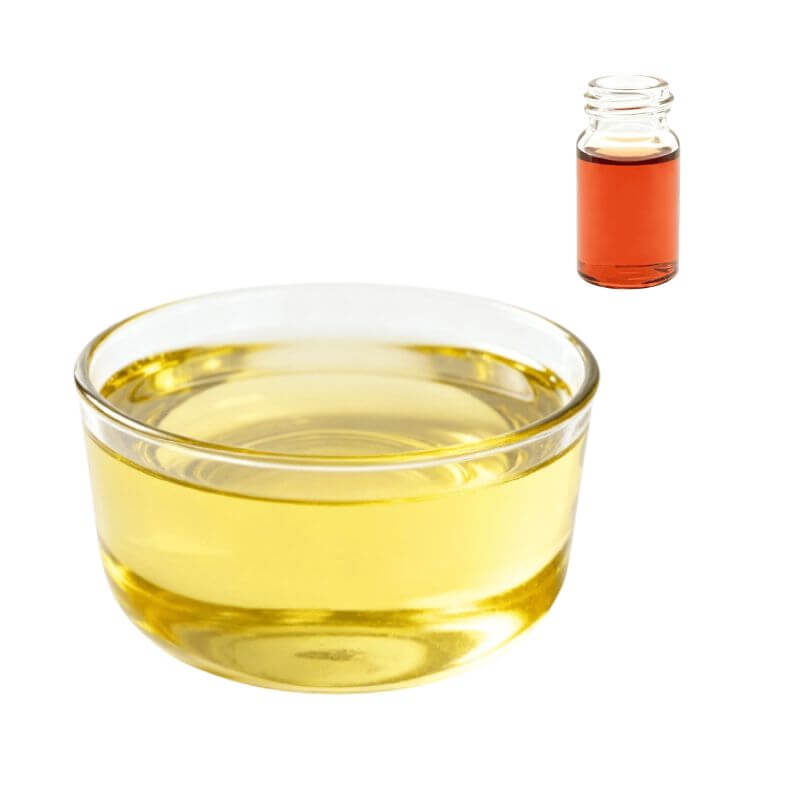
Natural Mixed Tocopherols Oil
| Product Name | Natural Mixed Tocopherols Oil |
| CAS Number | 1406-18-4 / 1406-66-2 |
| Appearance | Reddish-brown to dark brown viscous oil |
| Purity | 50%, 70%, 90%, 95% Total Tocopherols (by HPLC) |
| Packaging | 20 kg/drum, 190 kg/drum |
| MOQ | 20 kg |
From Antioxidant Efficacy to Commercial Shelf-Life Security: The B2B Value Proposition of Natural Mixed Tocopherols Oil
Isomer-specific stabilization breakthroughs extend product lifecycles and premium retail positioning, while bulk Natural Mixed Tocopherols Oil sourcing demands lot-to-lot oxidative suppression consistency that dictates waste rates and sensory rejection. 2026 "Green-Label" mandates accelerate adoption across high-fat snacks and premium edible oils. This performance and traceability foundation supports margin expansion for brand owners.
Isomer-Specific Antioxidant Mechanisms and the Scientific Basis for DTC Premium Claims
Mixed Natural Vitamin E's superiority over synthetic α-tocopherol lies in the synergistic redox potentials of its four isomers. A 2023 quantitative evaluation established that a 7:1 α-to-δ-tocopherol ratio at a 200 ppm dosage depresses hydroperoxide generation by over 50% and thiobarbituric acid reactive substances (TBARS) by more than 45% in sunflower oil under accelerated storage at 60°C for 15 days (International Journal of Molecular Sciences, 2023; doi: 10.3390/ijms24021113). These quantitative markers form the scientific foundation for DTC brands to leverage "full-spectrum protection" claims that command a premium - IndexBox data shows Non-GMO/organic grades achieve 15-25% premium over conventional tocopherol products (IndexBox, 2026).
| Isomer Profile | Relative Antioxidant Capacity (Olive Pomace Oil, 200 ppm) | Commercial DTC Claim Opportunity |
|---|---|---|
| δ-Tocopherol | Potent peroxyl radical scavenger in lipid matrices | "Advanced free radical quenching power" |
| α:δ (7:1) Blend | PV reduction >50% / TBARS reduction >45% | "Advanced oxidative stability for high-fat foods" |
The validated isomer blend allows R&D teams to bypass extensive efficacy trials, shortening time-to-market (TTM) by removing the need for additional synergist validation. This inherent chemical fingerprint underpins robust finished product stability while giving procurement departments a quantifiable basis to reject lower-priced, less-effective synthetic substitutes - protecting brand equity from sensory degradation failures.
Strategic Formulation Synergy and Clean-Label Processing for Functional Applications
While isomer science establishes efficacy, incorporating lipophilic tocopherols into aqueous matrices often derails development; leveraging the proven synergy with enzyme-modified high-PE lecithin (MHPEL) resolves this bottleneck. Co-application of 300 μmol/kg Natural Mixed Tocopherols with 1500 μmol/kg MHPEL in O/W emulsions extends the hydroperoxide lag phase by 3 days at pH 4, and 2 days at pH 7, maintaining emulsion integrity without synthetic surfactants (Journal of Agricultural and Food Chemistry, 2022; doi: 10.1021/acs.jafc.2c05182).
- Softgel & RTD Beverage Adaptability: Pre-blending with MHPEL or medium‑chain triglycerides (MCT) mitigates phase separation, allowing for high‑load encapsulation up to 95% purity without compromising fill viscosity.
- Bakery & Frying Applications: Formulating with citric acid as a metal chelator synergistically enhances the tocopherol effect, reducing the required active concentration by up to 15% to achieve the same OSI (Oil Stability Index) value.
- TTM & TCO Impact: This readily transferable formulation variable eliminates extended CMO troubleshooting related to emulsifier screening, directly accelerating the scale-up phase.
Procurement managers will recognize a cost-benefit matrix where the slightly higher initial cost of bulk Natural Vitamin E Mixed Tocopherols is offset by total cost of ownership (TCO) savings - specifically through reduced additive inventory complexity and lower waste rates during initial pilot runs. This clarity enables brand owners to launch clean-label products with concise consumer-facing ingredient decks.
Interfacial Engineering and Colloidal Stability for Extended Shelf-Life Assurance
Effective emulsion systems require precise droplet size distribution (D90 < 500 nm) and Zeta potential measurements exceeding 30 mV to ensure electrostatic repulsion. Quantitative testing confirms that a creaming index below 2% over 12 weeks at ambient conditions verifies physical integrity, while nitrogen blanketing of the aqueous phase during production effectively suppresses aldehyde formation and rancidity.
| Stability Parameter | Critical Commercial Specification | Impact on Brand Revenue |
|---|---|---|
| Creaming Index | Result is < 2% (12 weeks) | Prevents customer returns due to visual defects |
| Peroxide Value (PV) | Maintained ≤ 5.0 meq/kg | Extends sensory freshness, reducing off-flavor complaints |
| Droplet Size (D90) | < 500 nm | Ensures consistent dosage and bioavailability batch-to-batch |
Interfacial metrics translate into commercial leverage directly for brand procurement teams: demanding verification of these physical parameters insulates buyers against the financial drag of destroyed inventory. Maintaining this physical stability ensures that the antioxidant efficacy validated in earlier R&D stages is not lost during high-shear processing or long-haul shipping, securing the brand's investment in premium ingredient sourcing. Faster regulatory clearance and reduced time-to-market for finished formulations follow as a direct result.
Global Regulatory Navigation and ADI Compliance for Unrestricted Market Access
The ingredient holds FDA GRAS status and carries the EU E306 additive designation. JECFA established a group ADI of 0.15-2 mg/kg body weight for dl-alpha-tocopherol and d-alpha-tocopherol; EFSA did not set a numerical ADI for E306 but established a UL of 300 mg/day for vitamin E. Maximum authorized use levels range between 200-500 mg/kg depending on food categories, while Latin American markets (ANVISA/COFEPRIS) recognize Codex standards but enforce specific labeling thresholds (RDC 241/2018 in Brazil).
- USA Route: GRAS determination eliminates the need for NDI filing for conventional foods.
- EU Route: Compliance with Regulation 1333/2008; Note the specific 2.0 µg/kg Benzo(a)pyrene limit (per EU Reg. (EC) 1881/2006 for oils and fats).
- Asia-Pacific: Clean-label and Non-GMO verification are prerequisites for premium tier access in Japan and South Korea.
Sourcing strategy alignment with a supplier providing batch-specific compliance dossiers across these regional variances effectively turns regulatory navigation into a revenue accelerator. It prevents costly customs holdups (typically 2-4 weeks of delay) and allows brand marketing teams to confidently state "Compliant with International Safety Standards" on packaging. This proactive compliance architecture converts what is typically a fixed cost center (legal review) into a variable competitive advantage that accelerates speed-to-shelf.
Authenticity Verification, Chiral Tracing, and Anti-Adulteration Brand Safeguards
Procurement risk management's final frontier is verifying Sunflower Mixed Tocopherols' natural origin against cheaper synthetic dl-α-tocopherol imposters; synthetic α-tocopherol has eight stereoisomers (including 2R/2S), while natural RRR-α-tocopherol is a single stereoisomer. This distinction is identifiable via chiral-phase HPLC fingerprinting. Deodorizer distillate supply is concentrated in major vegetable oil-producing regions, creating opportunities for adulteration in supply chains lacking rigorous traceability.
Brand owners gain a strong anti-adulteration barrier through seed-to-shipment traceability and carbon-14 isotopic confirmation. This level of due diligence satisfies top-tier retailer audit requirements (e.g., Walmart, Carrefour) and directly supports a 15-25% pricing premium by certifying the ingredient's "natural" provenance. Procurement managers benefit from this stringent verification process by mitigating the risk of regulatory fines and brand defamation associated with synthetic contamination scandals, securing long-term brand equity. These authentication capabilities, verified through chiral-phase separation and isotopic confirmation, represent specification-grade material meeting Oclean Nutra quality benchmarks for identity-preserved supply chains.
Accelerate R&D Validation and Secure Supply Chain Integrity with Certified Samples
Moving from specification review to commercial-scale adoption requires eliminating time-consuming qualification barriers. Requesting a pilot sample initiates a streamlined technical validation cycle, allowing formulation scientists to directly stress-test oxidation parameters against their specific fat systems while bypassing the standard bureaucratic procurement hurdles. Each sample shipment includes cross-referenced COAs, heavy metal quantification (Pb ≤ 1.0 mg/kg, As ≤ 1.0 mg/kg per USP-grade specification), and isomer-profiling data. Secure certified Natural Mixed Tocopherols Oil samples to bridge the gap between laboratory efficacy and high-yield, stable commercial production.
Frequently Asked Questions
Share this product
Related Products
Ready to get started?
Contact our team for technical specifications, pricing, and customized solutions.