

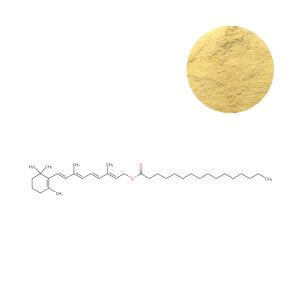
Beta-Carotene Powder
| Product Name | Beta-Carotene Powder |
| CAS Number | 7235-40-7 |
| Appearance | Red-brown to dark red-brown powder or beadlets |
| Purity | 1%, 10%, 20% CWS Powder/Beadlet (by HPLC) |
| Packaging | 1 kg/bag, 5 kg/bag, 25 kg/drum |
| MOQ | 1 kg |
Fermentation-Derived Beta-Carotene CWS Beadlets: Clinical Bioavailability and Premium Dosage Form Engineering
Bulk Beta-Carotene Powder is supplied as fermentation-sourced, cold-water-dispersible (CWS) beadlets with provitamin A activity validated through human pharmacokinetic trials. The raw material's inherent sensitivity to oxidative degradation and BCMO1-dependent conversion efficiency directly dictates formulation strategies that bypass enzymatic bottlenecks. Rigorous lot-to-lot COA compliance and full traceability from fermentation through microencapsulation establish the procurement-grade confidence required for global brand launches under USP, EP, and FCC monographs.
BCMO1 Polymorphism and Matrix-Driven Bioavailability: Translating Human Clinical Data into DTC-Ready Health Claims
Beta-Carotene's absorption is not a fixed parameter; it is governed by BCMO1 gene polymorphisms (rs6564851, rs11645428) that reduce BCMO1 catalytic activity by up to 59% in approximately 45% of the population. This inter-individual variance renders one-size-fits-all dosing commercially obsolete for premium brands targeting performance-driven or aging demographics. A double-blind three-arm crossover human trial quantified the impact of food matrix on beta-carotene bioavailability: the dairy-based meal significantly depressed 10h-postprandial plasma beta-carotene response compared to olive oil digestion (European Journal of Nutrition, 2024; doi: 10.1007/s00394-024-03423-w). From this clinical evidence, DTC brands obtain the ammunition to deploy EFSA-aligned structure/function claims: "Vitamin A contributes to the maintenance of normal vision" and "Vitamin A contributes to the normal function of the immune system." When this pharmacokinetic data is embedded into product listings, quantifiable physiological outcomes effectively reduce consumer skepticism while supporting premium retail positioning.
CWS Beadlet Matrix Engineering for Synergistic Co-Encapsulation and Gummy/Tablet Performance
With the role of lipid carriers established in maximizing systemic exposure, the formulation challenge pivots to stabilizing this sensitive lipophilic compound within high-shear, high-moisture finished dosage forms - gummies, chewables, and fast-disintegrating tablets. A co-encapsulation study demonstrated that Pickering emulsions loaded with 10% beta-carotene and a curcumin-standardized extract (minimum 95% total curcuminoids) processed at high-pressure microfluidization achieved a synergistic increase in DPPH radical scavenging activity over individual encapsulations (Food Hydrocolloids, 2022; doi: 10.1016/j.foodhyd.2021.107064).
| Finished Dosage Form | Beadlet Grade | Performance Metric | Production Bottleneck Solved |
|---|---|---|---|
| High-Speed Tablets (Direct Compression) | 20% CWS Beadlet | Flowability (Angle of Repose ~35°) | Eliminates wet granulation, reducing TTM |
| Starch-Based Gummies | 10% CWS Powder | Heat stability at 65°C for 30 min | Enables hot pour processing without active degradation |
| Hard Shell Capsules | 20% CWS Beadlet | Uniform fill weight (RSD < 2.5%) | Enables high-speed dosators with zero die sticking |
Standard starch-molding equipment becomes a viable production route for gummy formulations, courtesy of the heat stability demonstrated at 65°C, bypassing the capital expenditure of cold-extrusion lines and accelerating development timelines. Co-processing with high-purity mixed tocopherols oil (minimum 70% total tocopherols) further extends shelf-life beyond 30 months, enabling brands to launch premium multivitamin gummies with a validated antioxidant cascade claim - a decisive differentiator in the crowded children's nutrition segment.
Physical Powder Dynamics: Bridging Bulk Density, Direct Compression Efficiency, and Air-Freight Integrity
The prior design of gummy and tablet formulations now confronts the realities of powder conveyance: Beta-Carotene CWS beadlets must maintain a bulk density of ~0.6 g/mL and particle size distribution with ≥90% through 40 mesh (USP <786>) to ensure seamless integration into high-speed rotary presses at CMO facilities. Free-flowing beadlet morphology with an angle of repose of 32-36° prevents bridging in feed hoppers, eliminating line stoppages and reducing scrap rates. Direct compressibility (without added excipients) facilitates rapid changeovers between tablet and capsule production, enhancing contract manufacturing flexibility.
- CMO Line Adaptability: Direct compressibility eliminates secondary granulation, enabling rapid changeovers and greater production schedule flexibility.
- Air-Freight Protection: Low moisture content (≤5.0%) and aluminum-lined foil bags with oxygen scavengers protect against cargo hold pressure variations and tarmac temperature fluctuations, ensuring no clumping or potency loss upon arrival.
Secondary granulation and dedicated conditioning facilities become unnecessary at the CMO site, reducing manufacturing overhead. The oxygen-barrier packaging further reduces exposure to in-transit photodegradation, minimizing the risk of batch rejection and protecting margin integrity.
Global Regulatory Architecture: Navigating GRAS, E160a(iii), and ADI Redlines for Market Access
With manufacturing robustness secured, the go-to-market timeline hinges entirely on compliance clearance. Beta-Carotene is GRAS-listed under 21 CFR 73.95 (synthetic) and 21 CFR 73.1095 (natural). FDA exempts beta-carotene from batch certification when used as a color additive under 21 CFR 73.95; separate compliance applies for dietary supplement use. The EU E160a(iii) monograph (applicable to fermentation-sourced beta-carotene from Blakeslea trispora) enforces total coloring matter ≥96% and lead ≤2 mg/kg. Procuring a single fermentation-derived CWS grade that meets both US GRAS and EU E160a(iii) limits allows brands to standardize one formulation globally, reducing SKU complexity and eliminating the cost and delay of region-specific revalidation.
- North America: GRAS self-affirmation is sufficient, yet maintaining USP-NF compliance offers a defense against FDA Form 483 citations during facility inspections.
- European Union: Regulation (EU) No 231/2012 mandates sulfated ash ≤0.1% and hexane residues <25 mg/kg - a common failing point for low-cost imports.
- UK & EFTA: The UK EVM sets a specific upper limit of 7 mg/day for supplement-derived beta-carotene, imposing a critical labeling threshold for high-dose SKUs.
For a US-based brand, the absence of an FDA ADI provides dosing flexibility, yet to qualify for EFSA health claims (e.g., "contributes to normal vitamin A levels"), the product must align with strict EU purity parameters. Concurrent North American and European launches become achievable through this regulatory convergence, compressing the international rollout timeline relative to single-market-first strategies.
Total Cost of Ownership (TCO) and Supply Chain Resilience Procurement Analysis
Compliance-driven formulation stabilization and global market access converge at the final procurement decision point: total landed cost and supply chain defense against price volatility. A measurable net savings is revealed in the TCO model when adopting a spec-verified CWS beadlet supplier, beyond the quoted raw material price. The fermentation-based production model (Blakeslea trispora) further strengthens supply chain resilience, decoupling it from climate-sensitive agriculture and petrochemical inputs.
| Cost Component | Standard Supplier Scenario | Spec-Verified CWS Supplier | Procurement Savings |
|---|---|---|---|
| Raw Material (per effective kg) | Standard market rate | Competitive contract pricing | Reduced material cost |
| In-Process Scrap Loss | Higher scrap rate (sticking/clumping) | Lower scrap rate (flow-optimized) | Yield improvement |
| Secondary Processing | Granulation required | Direct compression (no granulation) | Processing cost elimination |
| Air-Freight & Storage | Higher moisture-related loss | Barrier packaging reduces loss | Risk reduction |
By securing a diversified fermentation capacity across ISO-22000 certified facilities, brands reduce exposure to single-source disruptions. This financial architecture provides procurement with a defensible business case for long-term supply agreements, locking in both price stability and batch-to-batch consistency, a hallmark of specification-grade material meeting Oclean Nutra quality benchmarks.
Accelerate R&D Formulation Trials with Complete Technical Documentation
Moving from procurement analysis to tangible product development requires immediate access to batch-specific validation data. Requesting a pre-production sample automatically unlocks a comprehensive dossier containing 3-lot COAs, stability studies under ICH conditions, and a cross-reference compliance matrix for US, EU, and UK regulations. The formulator's need for precise powder rheology data and the regulatory team's requirement for ADI compliance thresholds are both met by this package, condensing the project evaluation phase substantially. Request Beta-Carotene CWS 10% sample with full analytical dossier to initiate immediate CMO line trials.
Frequently Asked Questions
Share this product
Related Products
Ready to get started?
Contact our team for technical specifications, pricing, and customized solutions.