
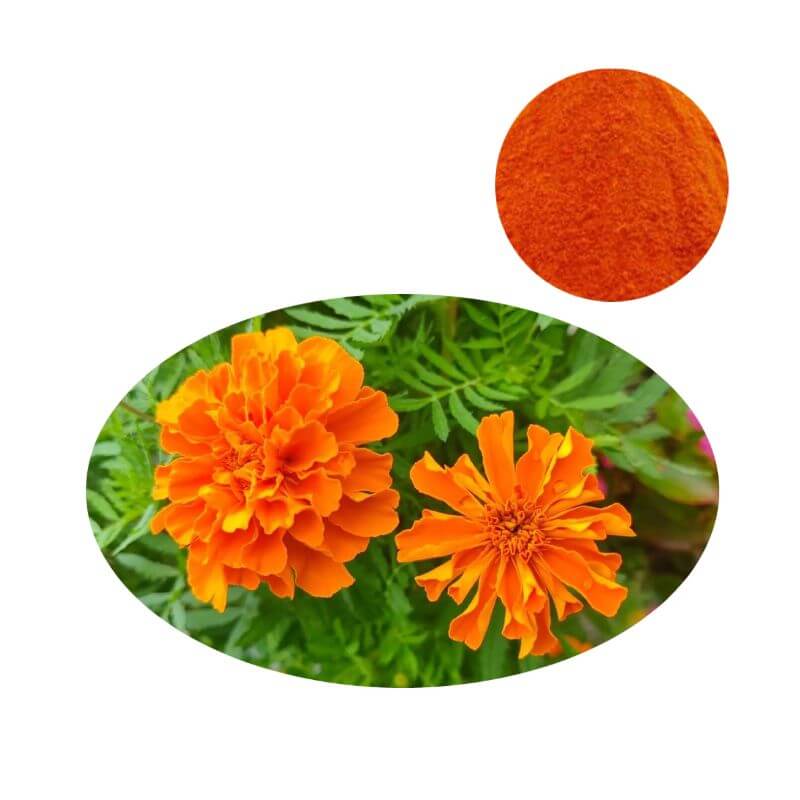
Zeaxanthin Powder
| Product Name | Zeaxanthin Powder |
| Appearance | Orange-red to red-brown fine powder |
| Packaging | 1 kg/bag, 5 kg/bag, 25 kg/drum |
Zeaxanthin Powder (Marigold Extract): A Strategic Antioxidant for Vision & Cognitive Longevity Formulas
Formulating a standout eye health or healthy aging product demands more than a standard antioxidant package. Today's educated consumers look for ingredients with targeted mechanisms—those that offer measurable protection against blue light and oxidative stress. Zeaxanthin, a carotenoid that naturally concentrates in the macula, provides exactly that. Premium Zeaxanthin Powder from marigold extract, available in 5%, 10%, 20% CWD/Beadlets and 50%, 70% Standard Powder (oil-soluble), delivers batch-to-batch consistency verified by HPLC. For brands seeking a bulk Zeaxanthin source, the choice of Zeaxanthin supplier directly impacts formulation flexibility and regulatory confidence. Opting for a multi-purity portfolio – 5%, 10%, or 20% – allows brands to precisely align ingredient cost with target clinical endpoints, a key lever for portfolio differentiation.
The Science of Macular Protection: Why Zeaxanthin Outperforms Generic Antioxidants
Zeaxanthin selectively accumulates in the retina's center, where it acts as a physical blue-light filter and a resident antioxidant. Unlike water-soluble antioxidants that recycle quickly, Zeaxanthin remains embedded in cell membranes, providing sustained protection against photo-induced lipid peroxidation. A 2024 systematic review and network meta-analysis of 38 RCTs confirmed that formulations containing lutein+zeaxanthin rank highest for improving macular pigment optical density (SUCRA 99.3%) and also show superior effects on photostress recovery time (HR = -5.75) (Advances in Nutrition, 2024; doi: 10.1016/j.advnut.2024.100216). From a strategic formulation perspective, this means that incorporating a standardized Zeaxanthin powder ingredient not only elevates a product's antioxidant claim but also delivers a clinically measurable end benefit—reduced visual fatigue and enhanced contrast sensitivity—that consumers can actually experience.
Key clinical insights from the meta-analysis:
- MPOD as a biomarker: Higher macular pigment density directly correlates with better glare recovery and protection against age-related macular decline.
- Dose-response clarity: Even moderate daily doses (5-10 mg Zeaxanthin) in combination protocols shift MPOD within 6 months.
- Secondary benefits: Improvements in photostress recovery time translate to real-world benefits like faster adaptation after bright light exposure—a tangible selling point for digital eye strain formulas.
For procurement teams, this directly translates to a lower risk of launching a "me-too" product. Instead, a Zeaxanthin-enriched formula provides a distinct, peer-reviewed performance edge in the crowded vision health category. For R&D leaders, leveraging a standardized Zeaxanthin with published meta-analysis data cuts months off clinical validation timelines, accelerating time-to-market for premium eye health SKUs.
Beyond the COA: Critical Quality Benchmarks for a Premium Zeaxanthin Powder Supplier
When evaluating a certified Zeaxanthin supplier, a single purity number is insufficient. For marigold-derived Zeaxanthin, three quality dimensions determine real-world performance: (1) isomer profile, (2) residual solvent control, and (3) heavy metal limits. Premium GMP Zeaxanthin powder lots maintain all-trans-zeaxanthin as the dominant isomer (>98%), because isomerization to meso- or 9-cis forms reduces biological activity. Additionally, a comprehensive COA for Zeaxanthin must report limits for lead (≤1.0 mg/kg), inorganic arsenic (≤1.0 mg/kg), and cadmium (≤1.0 mg/kg) via ICP-MS.
| Quality Attribute | Why It Matters for Your Formulation | Typical Specification (Premium Grade) |
|---|---|---|
| All-trans-zeaxanthin content | Directly correlates with in vivo efficacy; less stable isomers degrade faster. | >98% of total zeaxanthin |
| Residual solvents (acetone, hexane) | Affects taste, safety, and regulatory acceptance (USP <467>). | Complies with USP <467> |
| Loss on drying | Excess moisture accelerates oxidation and caking. | ≤5.0% |
For brands sourcing bulk Zeaxanthin, requesting batch-specific COAs that include these parameters reduces two major risks: regulatory rejection and field stability failures. It's worth noting that many suppliers only list total zeaxanthin by HPLC, omitting isomer ratios—a red flag for high-end ocular formulas. A responsible Zeaxanthin distributor will provide full isomer data upon request without delay. For Zeaxanthin wholesale procurement, isomer transparency ensures your finished product meets evolving EU and FDA scrutiny—preventing costly delays.
Formulation in Practice: Stability, Synergy, and Delivery Solutions for Zeaxanthin Powder
Zeaxanthin's lipophilic nature and sensitivity to light and oxygen demand deliberate formulation engineering. For standard solid dosages (tablets, hard capsules), microencapsulation or beadlet technology prevents surface oxidation—critical when sourcing bulk Zeaxanthin for high-speed lines. Key considerations for R&D teams:
- Moisture control: Keep relative humidity below 45% during blending; use desiccant-equipped packaging.
- Antioxidant synergy: Combine Zeaxanthin with Natural Mixed Tocopherols (Non-GMO) (200 ppm) or rosemary extract to extend shelf life by 30-50%.
- Common co-ingredients: Lutein (works synergistically, complementary absorption profiles), vitamin C (protects in formulation), and zinc (supports visual cycle).
A proven synergistic combination strategy:
- Zeaxanthin 10% + Marigold-Derived Lutein 10% + Omega-3 oil: Used in AREDS2-inspired softgels; each ingredient enhances overall macular pigment density via different transport pathways.
- Zeaxanthin 20% + European Bilberry Extract (25% Anthocyanins) + Vitamin E: Targets digital eye strain; bilberry provides anthocyanins that improve microcirculation, while Zeaxanthin offers direct blue-light protection.
From a strategic formulation perspective, investing in a stable, encapsulated form of Zeaxanthin powder reduces post-production degradation risk, which directly translates to lower product returns and stronger consumer trust. A 2024 AREDS2 post-hoc analysis (published in Ophthalmology, July 2024) demonstrated that oral antioxidant supplements containing lutein/zeaxanthin slow geographic atrophy progression towards the fovea by approximately 30% (80.1 μm/year vs 114.4 μm/year, P=0.011) (Ophthalmology, 2024; doi: 10.1016/j.ophtha.2024.07.014). For brands developing advanced vision support formulas, this endpoint is a powerful clinical differentiator.
Mitigating Risk: A Procurement Checklist for Sourcing Bulk Zeaxanthin
Selecting a wholesale Zeaxanthin powder partner is a decision that affects your brand's compliance, product launch timeline, and reputation. The following checklist represents industry best practices for evaluating a Zeaxanthin exporter or manufacturer:
- Full traceability: Supplier must provide farm-to-final documentation for marigold origin, extraction process, and purification steps.
- Third-party audits: Look for GMP (NSF or TGA) and FSSC 22000 certifications; these ensure consistent quality systems.
- Regulatory support: For the US market, confirm that the supplier can supply an NDI dossier (if needed) or evidence of prior use; for the EU, verify that the marigold extract is not treated as a Novel Food (traditional botanical use is generally accepted).
- Supply chain resilience: Ask about safety stock and secondary marigold sourcing. In 2026, FDA GRAS recognition (GRN 1300) for fermentation-derived Zeaxanthin signals emerging supply diversification.
For procurement teams, this avoids costly delays—particularly as synthetic Zeaxanthin export prices fluctuated from $200/kg to $93/kg (2025-2026), underscoring the need for supplier pricing transparency. Such transparency often reveals how a supplier manages critical parameters like moisture during storage—a hidden factor behind caking and potency drift. From a total cost of ownership perspective, a supplier's ability to maintain <5% loss on drying across batches directly lowers your in-plant rejection rate and preserves batch-release profitability. A reliable buy Zeaxanthin partner will provide a full technical dossier within 24 working hours, including stability data, heavy metal profiles, and batch COAs. Practically speaking, always request a 10-20g sample to run in-house stability tests under your intended fill conditions—this small step reveals whether the powder will maintain its orange-red hue and potency through your production line.
Next Steps: De-risk Your Development with a Technical Sample & Full Dossier
Building a clinically credible eye health or healthy aging formula starts with the right ingredient partner. Suppliers provide Zeaxanthin powder in 5%, 10%, 20% CWD/Beadlets and 50%, 70% Standard Powder (oil-soluble), each with complete COAs, isomer profiles, and regulatory documentation. Request a free sample and the full technical datasheet today to evaluate how batch-to-batch consistency can accelerate your product launch. Request Your Complimentary Sample & Technical Dossier
Frequently Asked Questions
Share this product
Related Products
Ready to get started?
Contact our team for technical specifications, pricing, and customized solutions.