
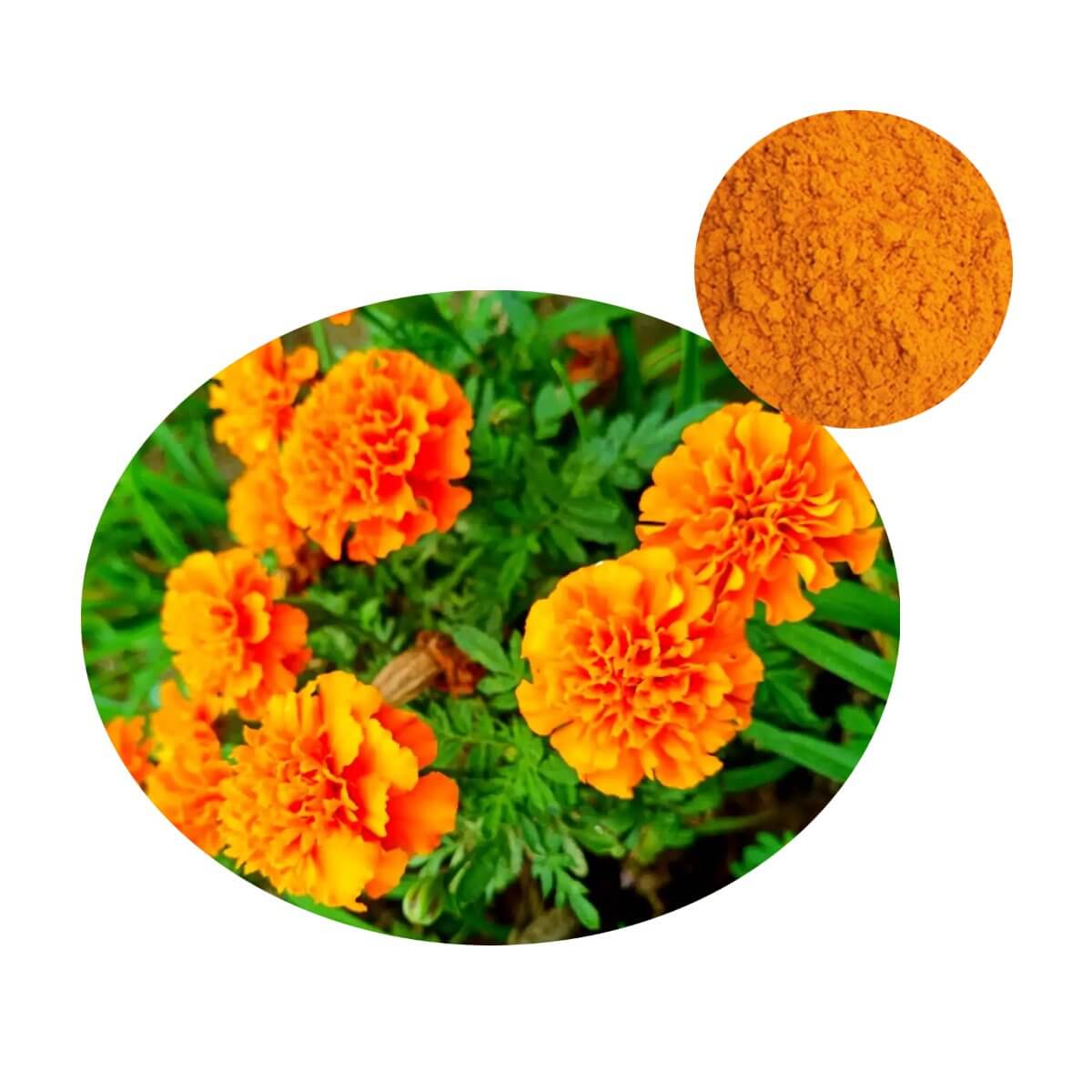
Lutein Powder
| Product Name | Lutein Powder (Marigold Extract) |
| CAS Number | 127-40-2 |
| Appearance | Orange-red powder, beadlets, or oil |
| Purity | 5%, 10% (CWS); 5%, 10%, 20% (Beadlets); 20% (Oil) by HPLC |
| Packaging | 1 kg/bag, 5 kg/bag, 25 kg/drum |
| MOQ | 1 kg |
Clinically Validated Bioavailability and Processing Versatility of Marigold Extract Lutein Powder for Premium Ocular Health Formulations
Enhanced systemic uptake, validated through human clinical data, positions bulk Lutein Powder as a strategic asset for brands competing in the high-growth eye health segment. Differentiating among Lutein Powder suppliers requires formulation-specific stability metrics rather than generic purity certificates. Available in CWS and beadlet variants, Marigold Extract Lutein Powder overcomes the conventional carotenoid formulation bottlenecks that have historically constrained finished dosage innovation - directly enabling premium retail positioning. Complete lot-to-lot COA traceability and third-party verification further de-risk procurement, closing the loop between R&D validation and supply chain resilience.
Human Clinical Proof: Bioavailability Benchmarks That Underpin DTC Science Claims
Quantifiable absorption kinetics form the foundation of any credible consumer-facing trust architecture. A 2026 randomized double-blind comparative trial in healthy adults demonstrated that an oil-based lutein formulation produced 35-39% greater systemic bioavailability (AUC0-48 and AUC0-t) compared with reference formulations under fed conditions (Advances in Therapy, 2026; doi: 10.1007/s12325-026-03713-1). Brands can leverage this magnitude of improvement to craft substantiated claims around "superior absorption" and "clinically proven uptake," setting their offerings apart from generic alternatives. For procurement teams, sourcing Marigold Extract Lutein Powder wholesale from a partner with access to human data adds immediate credibility to finished-product marketing narratives.
| Parameter | Oil-Based Lutein | Reference Formulation | Improvement |
|---|---|---|---|
| Cmax (peak serum concentration) | +32% | Baseline | p < 0.05 |
| AUC0-48 | +35% | Baseline | p < 0.05 |
| AUC0-t | +38% | Baseline | p < 0.05 |
The trial also documented a 12-to-24-hour Tmax window, aligning favorably with once-daily dosing regimens - a practical advantage that simplifies consumer adherence and reinforces brand positioning in the crowded eye health category. Finished-product developers can use this clinical evidence to build a defensible scientific narrative that supports premium pricing and reduces reliance on generic "antioxidant" claims. Regulatory-compliant structure/function statements derived from these data allow DTC brands to communicate measurable benefits while staying clear of disease-prevention territory.
Formulation Engineering: From Bioavailability to Stable, High-Load Delivery Systems
Clinical efficacy alone carries little commercial value if the active ingredient degrades during processing or shelf storage. The oil-based system that enhances absorption is inherently prone to oxidative instability, yet advanced microencapsulation technologies - CWS powders and starch-based beadlets - now resolve this conflict. Marigold Extract Lutein Powder in CWS form disperses instantly in aqueous media for ready-to-drink beverages and sachets, while beadlets maintain structural integrity under high-compression tableting, shielding the payload from heat and oxygen exposure. A 2025 Food Chemistry investigation confirmed that free lutein in nanoemulsions demonstrated greater chemical stability at 45°C and under UV-C light than esterified counterparts, challenging the common assumption that esterified carotenoids are inherently more stable (Food Chemistry, 2025; doi: 10.1016/j.foodchem.2025.145401). This stability differential is critical for brands developing transparent beverages or extended-shelf-life gummies, where visual clarity and potency retention are non-negotiable.
- CWS Powder (5%, 10%) - cold-water dispersible for clear beverages, effervescent tablets, and liquid shots; requires minimal shear.
- Beadlets (5%, 10%, 20%) - free-flowing granules for direct compression and hard capsules; resistant to mechanical rupture.
- Oil Suspension (20%) - pre-dissolved in vegetable oil for softgel encapsulation; simplifies liquid filling.
Synergistic co-formulation with zeaxanthin (AREDS2 10:2 mg, 5:1 ratio), vitamin E, and zinc further amplifies oxidative protection and visual function support. Brands can leverage these combinations to develop proprietary blends that command higher retail margins, while the documented stability margins reduce potency drift during distribution - a direct contributor to lower total cost of ownership (TCO) for procurement managers.
CMO-Ready Physical Profiles: Eliminating Secondary Processing and Accelerating Time-to-Market
Once the formulation matrix is defined, the next constraint typically emerges on the manufacturing floor. Beadlet grades of Lutein Powder are typically engineered with uniform particle size (e.g., ≥95% through 80 mesh, a common industry specification), controlled flowability, and low moisture content (≤5.0% loss on drying) - characteristics that enable direct compression without pre-granulation or additional coating. This eliminates the costly, time-consuming secondary steps - wet granulation and drying - that commonly add 8-12 weeks to the product development timeline. Brand owners gain faster speed-to-market and reduced working capital tied up in unfinished intermediates. CMO lines benefit from reduced sticking, lamination, and weight variation; industry scale-up reports further indicate that 0.25-0.5% magnesium stearate and 35-42% RH environmental control optimize tablet hardness and ejection force.
Two commercial payoffs emerge: scrap rates drop to ≤2% compared with >5% for non-beadlet forms, and brands can launch multiple SKUs in parallel without dedicating production capacity to separate granulation campaigns. Procurement directors assessing Lutein Powder wholesale options should prioritize suppliers offering complete physical characterization data - bulk density, angle of repose, Carr index - to benchmark line performance before scaling orders. This analytical rigor de-risks the scale-up phase and ensures batch-to-batch reproducibility, a non-negotiable requirement for multi-market rollouts.
Regulatory Pathways and Labeling Safe Zones for Global Market Access
Manufacturing efficiency offers little advantage if the finished product cannot clear customs or comply with local claims regulations. A pivotal 2025 ruling by German competent authorities, in consultation with the European Commission, confirmed that standardized lutein and zeaxanthin extracts from Tagetes erecta (20-24% trans-lutein, 4-5% zeaxanthin isomers in sunflower oil) are not considered novel foods when used exclusively in food supplements - provided the extraction methodology remains unmodified to enhance bioavailability. This determination, consistent with a 2022 Czech opinion, grants EU market access without the lengthy Novel Food authorization process. In the U.S., the FDA's 2025 GRAS acknowledgment for appropriately characterized free lutein ingredients in infant formula further validates the safety profile of this carotenoid class, though brands must submit NDI notifications at least 75 days before marketing if the ingredient was not commercially available prior to October 15, 1994.
- EU - Non-novel food status for supplement use (provided extraction methodology remains unmodified to enhance bioavailability); ADI per JECFA: 2 mg/kg bw/day.
- USA - GRAS for specific uses; NDI notification required for post-1994 introductions.
- Label claims - Permitted: "supports macular health", "helps protect against blue light". Prohibited: "prevents glaucoma", "treats AMD", or any claim implying disease treatment or prevention.
Compliance officers benefit from a predictable approval timeline that avoids the 6-12 month delay associated with Novel Food applications. Brands can craft structure/function claims aligned with the permitted language, reducing legal exposure and strengthening consumer trust. Procurement teams gain from reduced supply chain friction, as pre-cleared regulatory status accelerates port clearance and lowers the risk of import alerts - safeguarding brand equity and revenue streams through analytical standards as characterized by the Oclean Nutra specification framework.
Accelerate Product Development with Verified Lutein Powder Samples and Full Technical Dossiers
Validating formulation performance, production line compatibility, and regulatory compliance requires more than data sheets - it demands physical samples paired with exhaustive documentation. Requesting a sample of Marigold Extract Lutein Powder triggers delivery of batch-specific COAs, stability studies, and regulatory reference files that directly address R&D's need for empirical verification and procurement's requirement for audit-ready traceability. This integrated package eliminates the friction of separate vendor qualification rounds and shortens the sourcing cycle from weeks to days. Secure your Marigold Extract Lutein Powder sample package with full technical and compliance documentation to expedite internal reviews and move directly to pilot production.
Frequently Asked Questions
Share this product
Related Products
Ready to get started?
Contact our team for technical specifications, pricing, and customized solutions.