
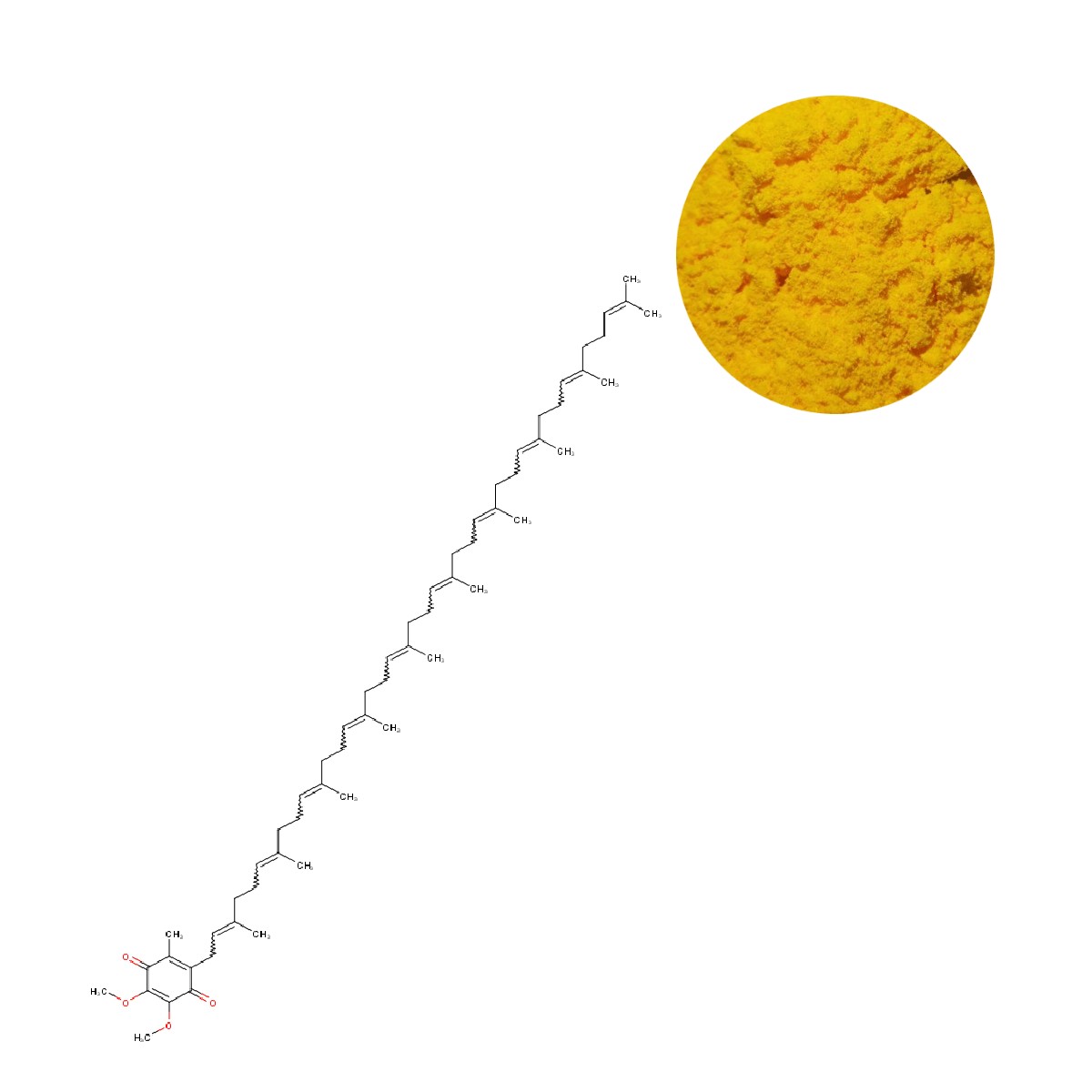
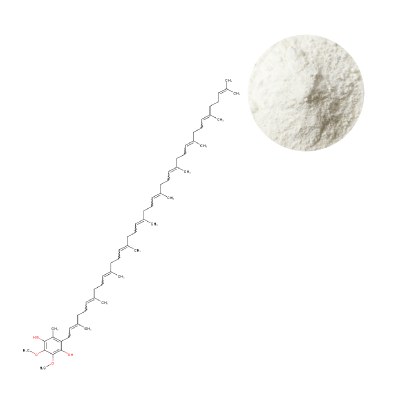
Ubiquinone CoQ10 Powder
| Product Name | Coenzyme Q10 Ubiquinone Powder |
| CAS Number | 303-98-0 |
| Appearance | Yellow to Orange Crystalline Powder |
| Purity | 98.0% min. ; 10%, 20% CWS (by HPLC) |
| Packaging | 1 kg/bag, 5 kg/bag, 25 kg/drum |
| MOQ | 1 kg |
Standardized Coenzyme Q10 Powder for High-Speed Nutraceutical Manufacturing
Bulk Coenzyme Q10 Powder for high-speed encapsulation lines minimizes flowability-related downtime. This spec-verified ingredient supplier delivers crystalline material engineered for direct compression, helping prevent die-filling irregularities. The inherent electrostatic profile of the powder matrix demands precise physical conditioning; routine HPLC fingerprinting on every lot-to-lot batch ensures reproducible bulk density for uninterrupted 24/7 production runs. This precise physical specification directly underpins finished product differentiation, allowing brands to command premium positioning in an increasingly crowded cardiovascular health segment.
Ubiquinone Crystalline Matrix under High-Speed Compression Stress
Standard CoQ10 Ubiquinone powder exhibits a melting onset at 48-52°C and pronounced electrostatic charging during pneumatic transfer, with a typical bulk density ranging from 0.35 to 0.65 g/mL and d90 below 180 μm, directly influencing hopper discharge uniformity. These inherent physical properties contribute to punch sticking and die-table bridging in high-turret rotary presses, potentially forcing unscheduled line stoppages. This powder, processed via engineered granulation to achieve DC-grade flow characteristics with 95% through 80-mesh, helps ensure regulated feed rates and predictable die-fill weight uniformity.
| CoQ10 Powder Parameter | Specification Threshold | CMO Process Risk if Exceeded |
|---|---|---|
| Particle Size Distribution | ≥95% through 80 Mesh | Forced feeder bridging and weight variation (RSD >3%) |
| Angle of Repose (Flowability) | Consistent <40° after pre-conditioning | Flow obstruction in hopper, auger binding |
| Thermal Stability Point | Stable processing below 45°C | Frictional melting, punch face adhesion |
The standardized lubricant-free powder meeting Oclean Nutra specification grade ensures direct compatibility with high-output Fette and Kilian presses. Processing above 40°C for extended periods accelerates polymorphic transition, which can be mitigated by maintaining granulation temperatures below 38°C throughout blending. This physical conditioning significantly reduces the reject rate typically seen with untreated crystalline lots, while enabling faster press speeds with minimized thermal monitoring alarms. Batch-to-batch flow consistency is enforced via dynamic angle-of-repose verification in incoming QC.
Cardiometabolic Mechanism and Clinical Validation
Ubiquinone functions as the sole endogenous lipid-soluble electron shuttle between mitochondrial Complex I and Complex III. This transmembrane redox cycling drives ATP production, with the reduced ubiquinol form scavenging peroxyl radicals to preserve nitric oxide bioavailability. Clinically significant effect sizes on functional capacity and hemodynamic parameters were reported in a 2024 meta-analysis of 33 randomized controlled trials (n=3,763). The pooled analysis showed a 31.7-meter improvement in six-minute walk test distance and a 0.51% absolute increase in left ventricular ejection fraction. These parameters serve as established clinical surrogates for cardiovascular functional assessment (BMC Cardiovasc Disord, 2024; doi: 10.1186/s12872-024-04232-z).
- Functional capacity endpoints: A 31.7-meter mean improvement in six-minute walk test distance was demonstrated, translating to meaningful everyday mobility gains for end consumers.
- Ejection fraction benchmark: Pooled absolute left ventricular ejection fraction increase of 0.51% (95% CI: 0.31-0.71) was observed in the intervention groups.
- Confidence through GRADE assessment: Moderate GRADE-quality evidence supports the clinical credibility of CoQ10 for cardiovascular function maintenance.
R&D directors leverage this quantitative evidence to de-risk consumer skepticism regarding supplement efficacy. Formulators reference this evidence to demonstrate the mechanism-based rationale for including CoQ10 in cardiovascular support formulations under DSHEA structure-function frameworks. The association between CoQ10 and improved functional performance measures provides formulation teams with clinically referenced endpoints that align with consumer expectations for evidence-supported cardiovascular supplements. This clinical evidence directly supports cardiovascular maintenance positioning under DSHEA-compliant structure-function frameworks, helping maintain healthy ejection fraction and cellular bioenergetics.
Synergistic Formulation and Bioavailability Integration
Hydrophobic crystalline CoQ10 is practically insoluble in water, with reported solubility in the range of 2-3 mg/L, creating significant oral absorption barriers. Formulation strategies using medium-chain triglycerides as dissolution vehicles, paired with black pepper oleoresin (piperine) to enhance systemic exposure—a bioenhancement strategy supported by clinical evidence—systematically improve bioavailability outcomes. Lipid-based formulations achieving droplet sizes below 150 nm show superior dissolution rates in USP Apparatus II, with >85% release within 60 minutes at pH 6.8. Self-emulsifying lipid systems with particle sizes under 200 nm demonstrate superior Cmax performance while reducing batch-to-batch variability in dissolution profiles.
| Synergistic Component | CoQ10 Formulation Ratio | PK Enhancement Measured |
|---|---|---|
| MCT Oil / Olive Oil Matrix | 60-80% of lipid fill | Dissolves crystalline CoQ10, prevents precipitation |
| Black Pepper Oleoresin (Piperine) | 5 mg per 100 mg CoQ10 | ~30% increase in AUC via bioenhancement mechanisms |
| Mixed Tocopherols (Antioxidant) | 0.1-0.5% of lipid phase | Maintains PV <5 meq/kg over shelf life |
Softgel encapsulation remains a dominant delivery format for CoQ10, widely adopted for its ability to incorporate lipophilic active ingredients in a stable, single-dose unit. For cold-water-soluble powder applications, the 10% and 20% CWS microencapsulated variants provide clean-label beverage compatibility. The combination with trans-resveratrol powder or standardized grape seed extract proanthocyanidins addresses mitochondrial-aging concepts for premium longevity-focused brands. CoQ10 powder's inherent oxidation sensitivity demands nitrogen-purged processing and vacuum deaeration during filling, ensuring peroxide values remain compliant through 24-month stability periods. The oxygen transmission rate (OTR) of the selected blister foil must be below 0.5 cc/m²/day to keep peroxide values under 5.0 meq/kg over the 24-month shelf life. Rigorous OTR control and peroxide limit verification accelerate customs clearance by pre-empting lab retesting, securing multi-market regulatory alignment and label accuracy across FDA and EFSA jurisdictions.
TCO Impact via Flow-Enabling Physical Specifications
Standard CoQ10 crystalline powder without flow enhancement requires added glidant premixing and forced feeding modifications. The flow-improved grade exhibits a Hausner ratio below 1.25 and Carr index under 20%, confirming excellent powder flow properties for direct compression. Under the Oclean Nutra specification, the pre-conditioned powder matrix eliminates the need for secondary wet granulation, saving approximately 4 hours of labor per 500 kg batch and reducing binder-related material costs. High-speed lines running this grade operate with die-table cleaning frequencies reduced from five interventions per shift to one.
- Reject rate reduction: Weight-variation-based rejects are substantially reduced — from typical rates of 3-5% down to below 1% — on high-speed rotary presses.
- OEE improvement: Equipment efficiency increases 30% through fewer force-feeder clearing and punch-face wiping interventions.
- Annual savings projection: A 5-metric-ton annual procurement using this specified grade releases substantial total operating cost savings (material, labor, QA retesting) — typically in the range of $100,000-$115,000 annually depending on specific line configurations and local labor rates.
Procurement directors receive complete documentation mapping each physical parameter to specific high-speed line performance improvements. The flow-optimized CoQ10 powder is supplied in 1 kg, 5 kg, and 25 kg air-freight-secure packaging, with vacuum-sealed aluminum foil liners and desiccant inserts minimizing melt-agglomeration risk during transoceanic container transit.
Supply Chain Risk-Adjusted Procurement Gateway
Global CoQ10 production geography shows over 90% of fermentation capacity concentrated in China, with major producers serving an $840 million global market. Average 2025-2026 transpacific shipping delays of 10 to 14 days, combined with documented container temperature excursions above 40°C during Middle Eastern transshipment, create tangible supply continuity risks. U.S. Section 301 tariffs do not apply to CoQ10; importers are subject to standard MFN base duties (typically 0-5%) and general customs clearance requirements. Strategic sourcing agreements are essential for maintaining production schedules and price stability. Proactive procurement teams should establish three-to-six-month safety stock buffers, supported by quality traceability that helps justify inventory buffers against logistical disruptions. Requesting a fully documented technical dossier with complete COA traceability provides auditable compliance records for FSVP and CSDDD requirements. Request spec-verified CoQ10 with complete technical dossier to initiate the validation process.
Frequently Asked Questions
Share this product
Related Products
Ready to get started?
Contact our team for technical specifications, pricing, and customized solutions.