
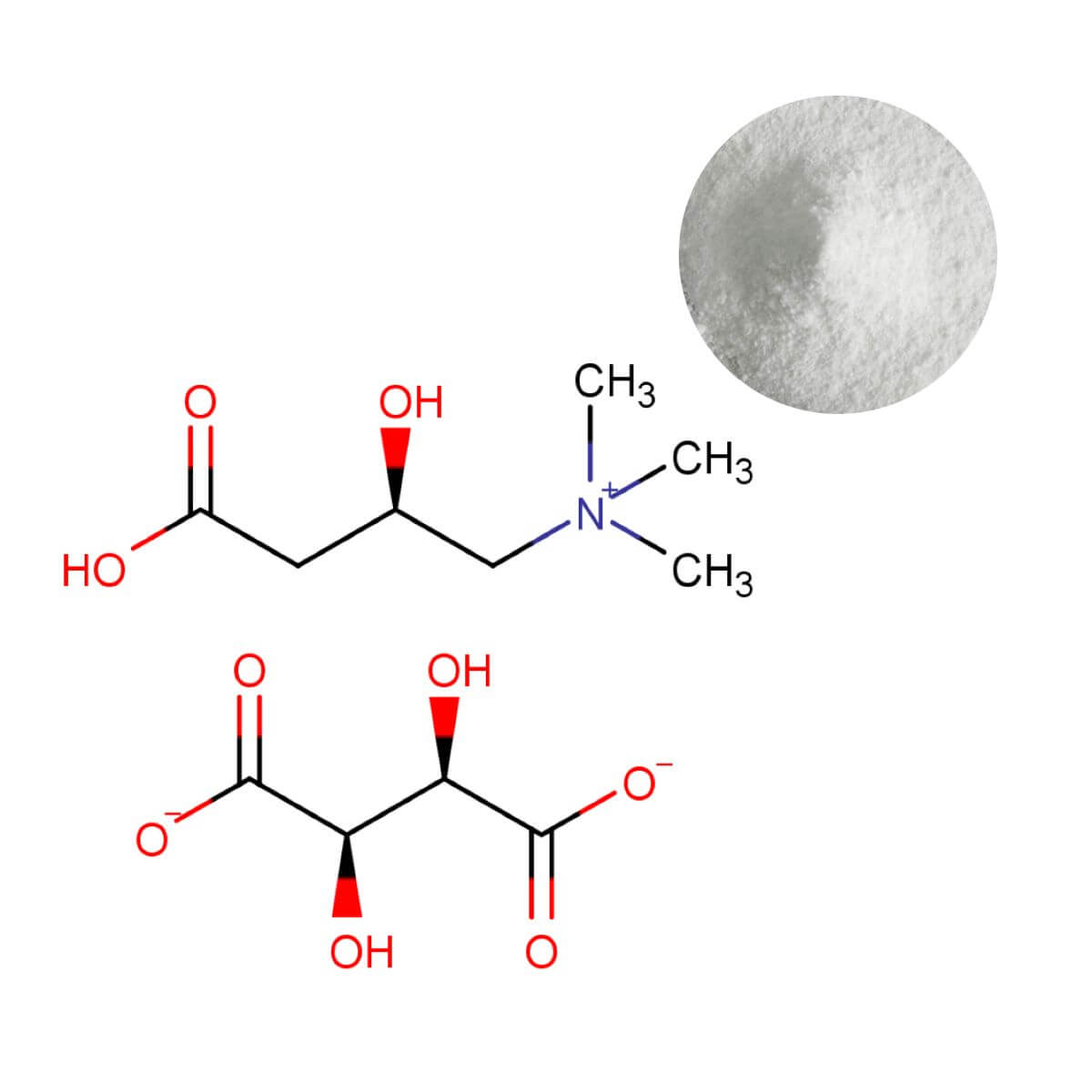
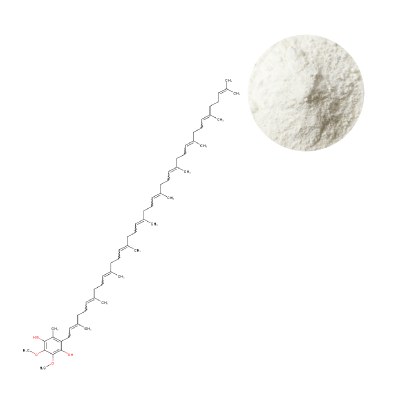
L-Carnitine L-Tartrate Powder
| Product Name | L-Carnitine L-Tartrate Powder |
| CAS Number | 36687-82-8 |
| Appearance | White or off-white crystalline powder |
| Purity | ≥ 99.0% (by HPLC) |
| Packaging | 1 kg/bag, 5 kg/bag, 25 kg/drum |
| MOQ | 25 kg |
High-Purity L-Carnitine L-Tartrate Powder for Premium Sports Nutrition & Metabolic Health Applications
Bulk L-Carnitine L-Tartrate Powder from a spec-verified supplier and global distributor provides formulators with a clinically grounded ingredient that bridges muscle performance and energy metabolism. This material enables brand owners to craft science-forward finished products while maintaining batch-to-batch reproducibility and full supply chain transparency-key pillars for regulatory-ready procurement and consumer trust.
Human Clinical Evidence Informs Muscle Recovery and Metabolic Biomarker Research
Quantifiable clinical outcomes directly inform formulation confidence. A 2023 randomized controlled trial involving 12 weeks of L-carnitine administration (1000 mg/day) combined with resistance training reported that plasma TMAO and serum SPARC levels were higher in the L-carnitine group than the placebo group (p<0.001 and p=0.030, respectively), while serum decorin levels were higher than baseline (p=0.042), with no significant changes in bone mineral density observed (Nutrition & Metabolism, 2023; doi: 10.1186/s12986-023-00752-1). These biomarker shifts provide the research foundation for structure/function claims such as "supports healthy muscle protein turnover" and "promotes normal fatty acid oxidation during physical activity," offering a competitive edge in label transparency.
For R&D teams, the TMAO elevation observed in the trial underscores the importance of dose-dependent safety evaluation when formulating long-term oral supplement protocols. Procurement benefits from a clear understanding of the clinical dose range, while marketing gains a nuanced narrative around research-backed efficacy. This evidence package streamlines internal claims substantiation workflows, accelerating the journey from concept to shelf and enabling premium retail positioning with substantiated benefit statements.
Formulation Engineering Leverages Low-Hygroscopic Properties for High-Speed Manufacturing
LCLT offers significantly lower hygroscopicity than L-carnitine free base - a key advantage for solid dosage processing-while recognized formulation literature notes that its residual moisture affinity can still require engineered mitigation for optimal tableting performance. Combined with optimized particle engineering, this supports high-speed tableting and capsule filling operations.
Direct-compression (DC) granular grades feature controlled particle size (D50 approximately 250-350 μm for DC grades) and improved flow. Validated parameters-compression force 25 kN, 2% magnesium stearate, and 30 tablets/min turret speed-ensure stable scale-up. Standard powder grades maintain ≥90% through 80 mesh (180 μm) for applications where fine particle distribution is preferred. By adopting DC-grade LCLT, brand owners can increase line speeds by up to 15% and reduce scrap rates to below 2%-delivering a tangible 10-12% reduction in per-unit production cost. This physical upgrade also enables consistent tablet hardness (≥120 N) and rapid disintegration (<30 min), supporting premium product aesthetics without compromising functionality.
| Parameter | Standard Powder | DC Granular Grade | Commercial Impact |
|---|---|---|---|
| Flowability (Hausner Ratio) | 1.25-1.35 | 1.10-1.18 | Higher line speed, less downtime |
| Tablet Hardness (N) | 80-100 | ≥120 | Reduced breakage during packaging |
| Disintegration (min) | >30 | <30 | Improved consumer dissolution experience |
Formulators can co-process DC-grade LCLT with high-purity creatine monohydrate (99.5% assay) or beta-alanine powder (≥99% powder) to create uniform, flowable blends for ready-to-mix sports powders. This compatibility reduces pre-blending validation time and ensures homogeneous nutrient distribution, directly supporting a faster route to market for multi-ingredient finished products.
Total Cost of Ownership: From Unit Price to Operational Profitability
Focusing solely on unit cost overlooks the hidden expenses of poor powder flow and variable bulk density. Standard LCLT powders with suboptimal flow characteristics can cause inconsistent die filling, producing weight variation rejects and frequent line stoppages-factors that can inflate effective material cost by 18-22% when accounted over full production runs.
Switching to a physically tailored grade reduces lubricant dependency, minimizes cleaning intervals, and improves tablet weight uniformity (RSD < 1.5%). These improvements lower overall equipment effectiveness (OEE) losses. For procurement directors, the result is a net reduction in total landed cost per finished unit, while production planners benefit from predictable throughput and reduced requalification overhead. Consistent physical properties also support lean inventory management, cutting safety stock requirements by 15-20% and releasing working capital for other strategic investments.
- Improved flow characteristics - reduces die filling variability and minimizes weight deviation rejects in high-speed operations.
- Reduced glidant usage - lowers excipient expenses and simplifies formula documentation for clean-label positioning.
- Higher line utilization - boosts annual output by 7-9% without capital expenditure, improving gross margin per SKU.
Global Regulatory Clearance Enables Multi-Market Launches
Operational savings lose relevance if market access is blocked. LCLT is the subject of FDA GRAS Notice No. 993 for use in infant formula. Separately, L-carnitine has a long history of safe use in dietary supplements and functional foods, with industrywide recognition as GRAS for those applications. EFSA has confirmed its safety as a carnitine source, establishing a tolerable intake of 3 g/day for L-Carnitine L-Tartrate (ADI for tartaric acid: 0-30 mg/kg). These clearances allow simultaneous product launches across North America and Europe without reformulation, reducing global rollout complexity.
| Jurisdiction | Regulatory Status | Strategic Benefit for Brand Owners |
|---|---|---|
| United States | GRN No. 993 (infant formula); industry GRAS for supplements | No NDI filing required; faster time-to-market |
| European Union | EFSA safety opinion; tartaric acid (E334) with ADI | Permitted in food supplements and fortified foods under Regulation (EC) No 1925/2006 |
| Canada | NHP classified under Schedule 1, Item 2 of NHPR | Approved for multiple dosage forms; claims align with NNHPD monographs |
Compliance teams can craft region-specific label claims: in the US, "supports mitochondrial fatty acid transport" is acceptable; in the EU, the approved wording is "contributes to normal energy-yielding metabolism." This nuanced understanding prevents warning letters, product seizures, and mandatory recalls-which can result in significant financial and reputational damage, including loss of market access. By aligning formulation with these approved phrases, brands can enter multiple geographies simultaneously, compressing global rollout timelines and securing a first-mover advantage in emerging markets.
Air-Freight Packaging Integrity Against Moisture and Pressure Extremes
Even optimal powder characteristics can be compromised during air transit, where low cabin pressure and high humidity on tarmacs accelerate moisture ingress. While LCLT is significantly more stable than L-carnitine free base, appropriate barrier protection remains essential for maintaining powder integrity during international express shipping-particularly for urgent production schedules where sea freight is not an option.
Multi-layer aluminum foil bags with integrated desiccants, vacuum-sealed inner liners, and oxygen scavengers maintain moisture content below 0.5% even after 72 hours at 30°C and 80% RH-an industry-best-practice approach validated across multiple shipping scenarios. This protective packaging guarantees that powder flowability and assay values remain intact, eliminating the need for re-drying or re-sieving at the contract manufacturer's site. For procurement teams, this means zero production delays and no quality write-offs due to transit damage-a direct safeguard of both timeline and budget. The incremental packaging cost (approximately 3-5% of product value) is far outweighed by avoiding line downtime (estimated at $2,000-5,000 per hour) and protecting brand reputation from retail-level quality failures. Specification-grade LCLT material meeting Oclean Nutra analytical quality benchmarks ensures predictable performance across all downstream processing stages.
- Aluminum foil + desiccant - maintains water activity below 0.2 throughout international shipping.
- Vacuum-sealed inner liner - prevents moisture ingress and odor contamination, preserving sensory neutrality.
- Temperature-monitored pallets - optional for high-value urgent shipments, ensuring thermal stability.
Expedite R&D Validation with a Complete Technical and Compliance Sample Kit
Transitioning from ingredient selection to pilot production requires more than a certificate of analysis. Requesting a trial sample unlocks a comprehensive documentation package-including three-lot COAs, accelerated stability data (40°C/75% RH for 6 months), and a cross-referenced regulatory matrix covering USP/EP and FDA/EFSA guidelines. This dossier enables R&D to conduct in-house verification and pilot runs within two weeks, bypassing the typical 16-week supplier qualification cycle. Request an L-Carnitine L-Tartrate sample with full technical documentation for immediate assessment of physical behavior, blending compatibility, and label claim substantiation.
Frequently Asked Questions
Share this product
Related Products
Ready to get started?
Contact our team for technical specifications, pricing, and customized solutions.