
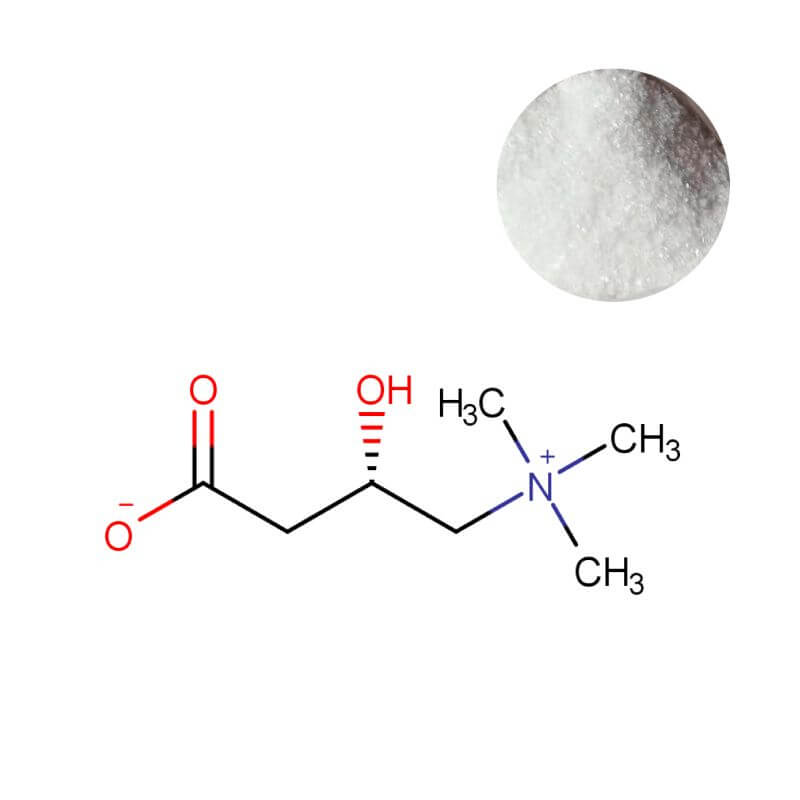
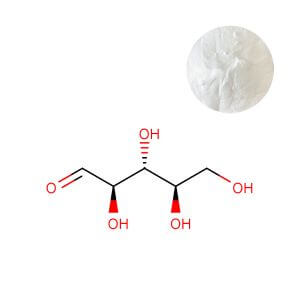
L-Carnitine Base Powder
| Product Name | L-Carnitine Base Powder |
| CAS Number | 541-15-1 |
| Appearance | White crystalline powder |
| Purity | 99.0% min. (by HPLC) |
| Packaging | 1 kg/bag, 5 kg/bag, 25 kg/drum |
| MOQ | 5 kg |
L-Carnitine Base Powder in High-Speed Sports Nutrition Manufacturing
The intrinsic hygroscopicity of bulk L-Carnitine Base Powder directly depresses CMO tableting lines through die sticking and feed-frame bridging, forcing unscheduled line-cleaning downtime intervals of under 40 minutes at RH exceeding 55%. Spec-verified L-Carnitine Base Powder suppliers mitigate this through strict moisture control protocols, with particle engineering strategies that maintain Hausner ratios below 1.25 in production environments. Technical dossiers including batch-specific particle size distributions and critical humidity threshold documentation are routinely dispatched within 24 hours to support rapid R&D audits and accelerate procurement workflows. Controlling these physical parameters across batches represents the primary differentiator in a commoditized market, directly enabling brands to command premium positioning through finished-product consistency and regulatory confidence.
Particle Engineering Dictates CMO Line Yield and Tooling Lifespan
The powder exhibits a critical relative humidity (CRH) of approximately 60% at 25°C, a threshold frequently breached in humid manufacturing regions. Above 55% RH, surface moisture adsorption triggers liquid bridge formation between crystalline particles, elevating the Hausner Ratio from 1.18 to beyond 1.40. This rheological shift directly propagates into high-speed rotary presses (exceeding 300,000 tablets per hour) as erratic die fill, weight variation exceeding 5% RSD, and punch-face sticking that mars tablet surfaces.
| Processing Parameter | Standard L-Carnitine Base | Process-Optimized Specification | Impact on CMO Economics |
|---|---|---|---|
| Critical Relative Humidity (CRH) | ~60% RH at 25°C | Manufacturing environment controlled to < 50% RH | Prevents feed-frame bridging and erratic die fill |
| Hausner Ratio (compressed vs. poured density) | 1.18 - 1.25 (dry); >1.40 (after moisture exposure) | Maintained below 1.25 throughout blending | Ensures consistent tablet weight (< 3% RSD) and reduces reject rates |
| Rejection Rate (tablet defects) | 3% - 5% under humid conditions | < 1.5% baseline | Direct reduction in raw material waste and post-inspection scrap |
A cocrystallization approach suppresses hygroscopicity by approximately 16-fold while simultaneously enhancing tabletability, demonstrating that solid-form engineering directly dictates manufacturing yield and tooling lifespan (CrystEngComm, 2021; doi: 10.1039/d0ce01820a). This crystalline modification maintains stability at typical compression forces of 15-25 kN without compromising dissolution. For procurement directors, the financial translation is unambiguous: eliminating the 3%-5% reject rate associated with moisture-induced defects directly protects total ownership cost by reducing raw material waste and minimizing scrap disposal expenses. Particle-size control within 80-mesh specification further compresses blend times by 15% in high-shear mixers, cutting energy consumption and batch-to-batch variability.
Air-Freight Degradation Kinetics Demand High-Barrier Packaging Architecture
Transoceanic air freight exposes L-Carnitine Base to tarmac temperature spikes reaching 65°C in transit containers and low-pressure environments that stress flexible packaging. The compound undergoes accelerated degradation above 40°C via hydrolysis of the quaternary ammonium structure, generating trimethylamine precursors responsible for off-odor and reducing assay by 0.5%-1.2% per 30-day exposure under uncontrolled conditions. The trimethylamine degradation marker is routinely quantified at thresholds below 50 ppm per USP residual solvent guidelines.
- Aluminum foil laminate (≥12 μm Al layer): Delivers oxygen transmission rates below 0.1 cc/m²/day, preserving anaerobic headspace and preventing oxidative degradation during altitude pressure cycling.
- Medical-grade molecular sieve desiccants (low-release formulation): Maintain internal microenvironment RH at ≤30%, directly countering moisture ingress that depresses powder flow and accelerates hydrolytic cleavage.
- Corrugated fiber drums with pressure-relief cushioning: Absorb mechanical vibration during cargo handling and prevent pouch rupture from cabin pressure differentials encountered during long-haul air routes.
Validated transport simulations demonstrate that this packaging architecture restricts moisture pickup to ≤0.2% across 30-day trans-equatorial air routes, with assay degradation confined below 0.5%-quantifiably ensuring that the material arriving at the CMO floor exhibits visual appearance, flow properties, and analytical profiles identical to the shipped Certificate of Analysis. High-barrier packaging expenditure is recouped within two rejected pallets, given average container quarantine costs of $4,500 per event. Averting moisture-induced assay deviations at destination protects procurement directors from downstream chargebacks and preserves production scheduling integrity against last-minute material holds.
Clinical Kinetics Quantify Performance Outcomes for Formulation Positioning
L-Carnitine functions as the exclusive carrier for long-chain fatty acyl-CoA across the mitochondrial inner membrane, a rate-limiting step in β-oxidation. The molecule reaches plasma peak concentration (Tmax) 3-4 hours post-ingestion, with sustained supplementation protocols (typically 1-3 g/day) elevating muscle free carnitine pools by approximately 20%. This mechanism underpins its role in athletic endurance - fatty acid oxidation spares muscle glycogen and reduces lactate accumulation during sustained exertion.
A 2024 meta-analysis across 257 athletes verified that L-carnitine supplementation depresses post-exercise blood lactate by 0.52 mmol/L (SMD = -0.52, 95% CI: -0.85 to -0.19, p = 0.002) and elevates VO2 max by 2.16 ml/kg/min (MD = 2.16, 95% CI: 0.45 to 3.87, p = 0.01), translating mitochondrial fatty acid oxidation into quantifiable endurance metrics (TRENDS in Sport Sciences, 2024; doi: 10.23829/TSS.2024.31.3-2). For R&D formulators, these quantitative endpoints enable evidence-based label claims - specifically, the -0.52 mmol/L lactate reduction differentiates finished products in a crowded sports nutrition market, providing measurable consumer benefits that resist "fad ingredient" skepticism. The meta-analysis confidence intervals additionally serve as primary evidence for self-affirmed GRAS dossiers under FDA 21 CFR 170.30. Robust statistical data of this caliber accelerates regulatory review cycles and supports finished-product substantiation files with minimal additional investment.
Formulation Compatibility and Synergistic Co-Blending Architecture
Malic acid functions as a TCA-cycle intermediate that complements L-carnitine by preventing acetyl-CoA accumulation during high-intensity fatty acid oxidation. Mitochondrial coenzyme Q10 further enhances mitochondrial electron transport chain efficiency, creating a dual-pathway synergy (fatty acid translocation + ATP generation). This combination is particularly valuable in RTD performance beverages and stick-pack powders-the fastest-growing segments in active lifestyle nutrition.
- Stepwise premixing with inert carriers (e.g., maltodextrin): The hygroscopic L-Carnitine fraction is first blended with a 30%-40% carrier mass for 5 minutes under RH-controlled conditions (< 30%), isolating the active from acidic co-ingredients until a homogeneous base is achieved.
- Critical mixture CRH: Co-blends containing citric acid or betaine hydrochloride exhibit mixture CRH values as low as 45%-50%, substantially lower than L-Carnitine alone. This requires strict environmental dew-point control (≤ -20°C) during blending and packaging to avoid spontaneous deliquescence.
- Anti-caking intervention: Silicon dioxide (SiO₂) incorporated at 0.1%-0.5% w/w mitigates caking risk by interposing between hygroscopic particles and absorbing surface moisture without depleting the active component.
The commercial implication is direct: formulators avoid multi-component contact melting and pH-driven precipitation events that otherwise render liquid systems turbid or induce settling. For sports nutrition brands, this compatibility architecture extends finished product shelf life and maintains visual clarity in clear RTD beverages-critical factors for premium positioning in the active-lifestyle consumer segment. Batch-to-batch blend uniformity is verified with RSD below 3% across 10-point sampling, ensuring production reproducibility. This tiered-blending discipline also reduces pilot-scale trial failures by 40%, compressing new-product development cycles.
Technical Qualification Samples for Line Validation Now Available
Formulators and procurement leads can accelerate supplier onboarding with batch-specific COA packages that include humidity-controlled particle size data and residual solvent profiles (USP <467> compliance). This material specification is engineered to align with current international monograph validation parameters for dietary supplements, delivering measurable reductions in CMO line downtime and in-process scrap.
Request spec-verified L-Carnitine Base samples with full technical dossiers
Frequently Asked Questions
Share this product
Related Products
Ready to get started?
Contact our team for technical specifications, pricing, and customized solutions.