
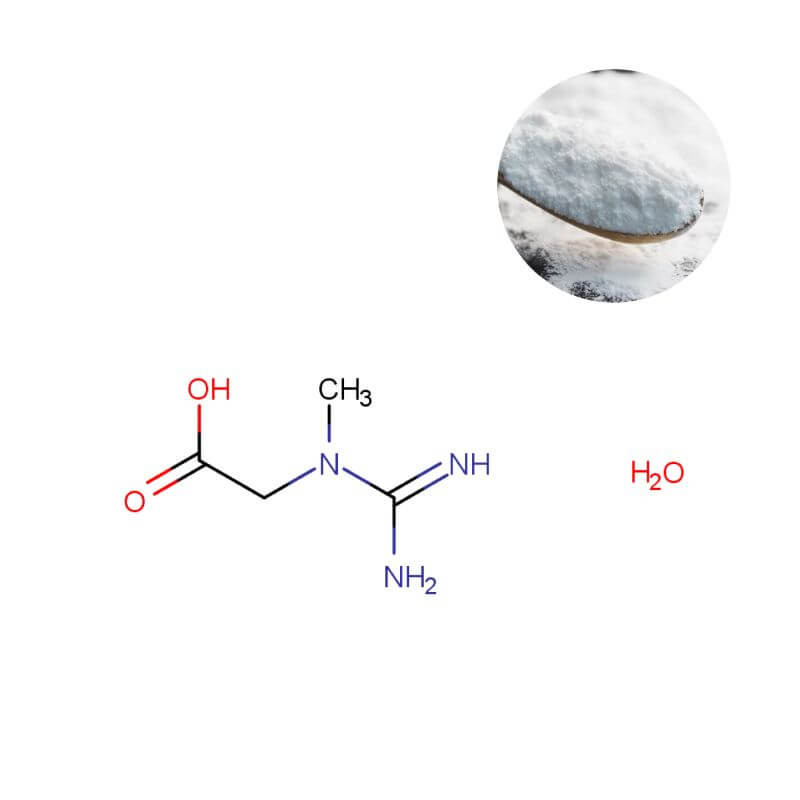
Creatine Monohydrate Powder
| Product Name | Creatine Monohydrate Powder |
| CAS Number | 6020-87-7 |
| Appearance | White Fine Powder (200 Mesh) |
| Purity | 99.5% min. (by HPLC) |
| Packaging | 25 kg/drum |
| MOQ | 25 kg |
High-Density Creatine Monohydrate Powder for High-Speed CMO Formulations
The electrostatic agglomeration and low bulk density of bulk creatine monohydrate powder from a spec-verified supplier directly dictate feeder bridging and die sticking on rotary tablet presses operating above 200,000 tablets per hour. Batch verification via USP <786> sieve analysis locks mix uniformity and downstream throughput consistency. Implementing stringent physical specification controls on this mature ingredient establishes a defensible formulation benchmark—a strategic lever for premium positioning in an otherwise commoditized global market.
200-Mesh Creatine Monohydrate: Electrostatic Mitigation and Air-Freight Barrier Performance
200-mesh creatine exhibits surface resistivity >1012 Ω·cm and bulk density 400-500 g/L. These parameters, when unmanaged, create predictable CMO line stoppages every 30 minutes due to feed frame bridging and weight variation (RSD > 5 percent).
| Physical Parameter | Specification Range | CMO Impact if Out of Range |
|---|---|---|
| Bulk Density | 400 - 500 g/L | Feeder starvation, tablet weight RSD > 3% |
| Particle Size (200 Mesh) | ≥ 95% passing | Poor blend uniformity, segregation in hopper |
| Surface Resistivity | ≥ 1012 Ω·cm | Static clumping, capsule fill weight drift |
| Loss on Drying | ≤ 12.0% | Sticking to punches, tablet capping risk |
Air-freight pressure differentials (0.8 atm cabin altitude) and tarmac temperature swings between -10°C and 45°C impose additional physical stress. Vacuum-sealed aluminum foil liners with moisture vapor transmission rates below 0.05 g/m2·day, combined with desiccant sachets, maintain incoming LOD within ±0.5% of the batch COA upon warehouse receipt. This packaging prevents moisture caking and preserves flowability across transoceanic supply chains.
Eliminating de-agglomeration cuts pre-press time by 18-22 minutes per batch, boosting OEE and output predictability for CMOs. Suppressing electrostatic aggregation through controlled particle architecture depresses blend stratification during drum-to-hopper transfer—an operational variable that directly compresses formulation footprint and reduces high-speed press rejection rates.
Creatine monohydrate integrates effectively with beta-alanine and electrolyte systems in pre-workout stick packs. The 200-mesh particle architecture ensures rapid dispersion in aqueous media without requiring additional wetting agents. Blending this crystalline powder with crystalline taurine powder and citric acid requires careful humidity control below 35% RH to prevent eutectic melting at the contact interfaces.
Synergistic Blending Architecture: Beta-Alanine and Electrolyte Co-Formulation
Pre-workout and intra-workout blends routinely combine creatine with beta-alanine powder, electrolytes, and carbohydrate carriers. This multi-component system demands rigorous attention to hygroscopic crossover and compaction behavior during high-speed tableting.
- Beta-alanine coexistence: Both amino acids share similar crystal habit but beta-alanine exhibits lower critical relative humidity (62% versus 68% for creatine). Blending at ambient RH below 35% prevents premature moisture uptake and subsequent lubricant over-mixing.
- Electrolyte synergy: Sodium and potassium salts create osmotic gradients that facilitate creatine uptake via sodium-dependent transporters (SLC6A8). This ionic environment, however, accelerates metallic punch corrosion if residual chlorides exceed 50 ppm.
- Carbohydrate carrier selection: Maltodextrin or isomaltulose at 1:1 ratios improves compaction plasticity but introduces additional hygroscopic load. The resulting ternary blend requires 24-hour stability monitoring at 40°C to confirm no creatinine formation above 100 ppm.
Co-supplementation with beta-alanine yields gains in repeated high-intensity output (7 RCTs, n=263, p<0.05) but no additive benefit on maximal strength—directly guiding claim scope and regulatory safety (Nutrients, 2025; doi: 10.3390/nu17132074). Equipment wear analysis reveals that direct-compression formulations with optimized excipient ratios (microcrystalline cellulose:dicalcium phosphate at 3:1) reduce punch-face adhesion frequency compared to wet-granulated batches.
RTD sticks and effervescent tablets are the fastest-growing North American sports nutrition formats. Creatine effervescent bases typically combine citric acid and sodium bicarbonate at 25-30% load, producing effervescence within 90 seconds upon contact with water. This delivery vehicle enhances palatability and rapid dissolution, critical for high-acceptance consumer products.
Procurement TCO Analytics: Spec-Selected Grade vs. Generic Material
Generic creatine powders demand extra dry granulation, milling, or anti-caking steps before high-speed lines. Each intermediate step consumes capital equipment time, operator labor, and cleanroom resources, adding substantially to effective landed cost. Verifying residual solvent profiles against USP <467> at the supplier endpoint curtails routine port re-testing cycles, converting analytical compliance into an operational passport for frictionless multi-jurisdictional customs clearance.
- Direct compaction readiness: Spec-selected 200-mesh material exhibits tapped density above 550 g/L, enabling direct feeding into rotary presses without pre-conditioning. This eliminates the capital expenditure associated with additional granulation or milling equipment.
- Reduced rejection rates: Controlled particle size distribution (span < 1.8) minimizes tablet weight variation and reduces punch-face adhesion frequency during high-speed compression, substantially lowering rejection rates at annual throughputs exceeding 50 metric tons.
- Cleanroom labor savings: Eliminating anti-caking additive blending saves labor hours per batch, directly improving plant OEE metrics.
TCO modeling shows the Oclean Nutra spec-grade delivers meaningful cost advantages by reducing downtime, rejections, and rework labor. This grade consistently meets USP <467> residual solvent requirements, preventing batch quarantine events that typically delay production schedules.
High-purity crystalline material with Dicyandiamide <50 ppm, Dihydrotriazine not detected, and Creatinine ≤100 ppm eliminates downstream purification steps. Contract manufacturers avoid the cost penalty associated with in-house polishing, directly transferring this margin to the brand owner's P&L.
Mechanistic Foundation: Phosphocreatine Energy Shuttling and Population-Specific Responsiveness
Creatine monohydrate regenerates ATP via the creatine kinase-phosphocreatine system during high-intensity contractions. Skeletal muscle total creatine content increases by 20-40% following a 5-7 day loading protocol (20 grams per day), directly expanding the immediate energy reserve available for repeated explosive movements.
| Clinical Endpoint | Quantified Change | Population Context |
|---|---|---|
| Muscle Total Creatine | +20% to +40% | Healthy young adults (loading phase) |
| Phosphocreatine Reserve | +15% to +25% | Healthy young adults (resistance-trained) |
| Peak Power Output (Wingate) | +8% to +14% | Healthy young adults (resistance-trained) |
| 1-RM Strength Increase | +6% to +12% | Healthy young adults (resistance-trained) |
Vegans and premenopausal women (lower baseline creatine) show amplified responsiveness. This demographic expansion directly supports brands targeting underserved segments with fatigue-reduction and exercise-tolerance positioning (Nutrients, 2025; doi: 10.3390/nu17010095).
The compound also supports cognitive function under metabolic stress, particularly during sleep restriction or high mental workload. Pharmacokinetic parameters (Tmax approximately 55 minutes post-5g dose) provide predictable acute supplementation timing. This time-course data enables formulators to design pre-workout or pre-competition products with precise onset windows, maximizing consumer perception of acute efficacy.
Creatine monohydrate maintains muscle integrity and supports recovery via glycogen repletion with carbohydrate co-ingestion. These mechanisms translate directly into finished product claims centered on performance, recovery, and active lifestyle support—all fully compliant with global structure/function claim frameworks.
Compliance-Driven Supply Assurance: Securing Certified Batches with Full Dossier
Global creatine production remains concentrated in China, where 2024-2025 capacity expansions faced temporary output constraints from environmental audits and holiday-related factory shutdowns, extending lead times to 40 days and directly impacting high-volume SKU continuity. Procuring spec-verified batches with full technical dossiers allows pre-validation against label claims, eliminates customs delays, and enables immediate line release upon receipt. The specification includes third-party Eurofins testing for USP microbial panels. Pre-purchase COA eliminates quarantine holds; 90-day safety stock avoids spot premiums and protects distribution. Auditing physical stability data prior to purchase intercepts moisture-induced caking and off-spec flowability claims at the warehouse dock—a TCO safeguard that neutralizes return chargebacks and preserves procurement budget integrity. Request Spec-Verified Creatine Monohydrate Powder Dossier.
Frequently Asked Questions
Share this product
Related Products
Ready to get started?
Contact our team for technical specifications, pricing, and customized solutions.