
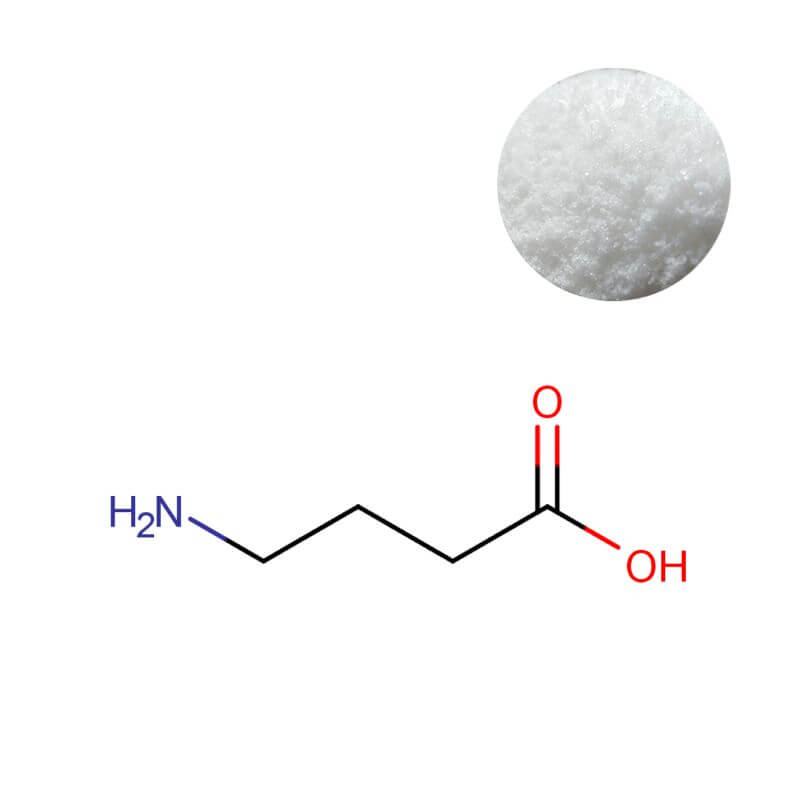
GABA Powder
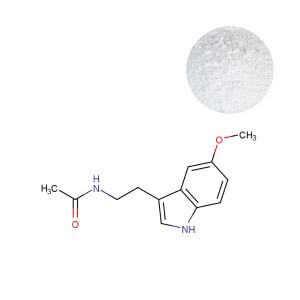
| Product Name | GABA Powder |
| CAS Number | 56-12-2 |
| Appearance | White crystalline powder |
| Purity | 99.0% min. (by HPLC) |
| Packaging | 25 kg/drum |
| MOQ | 25 kg |
GABA powder: solving hygroscopicity-driven manufacturability risks for cognitive health blends
Gamma-aminobutyric acid (GABA) is the primary inhibitory neurotransmitter in the mammalian central nervous system, widely formulated into sleep, stress-reduction, and nootropic supplements. However, its well-documented hygroscopicity and variable powder rheology create hidden processing costs for contract manufacturers (CMOs) - from hopper bridging to capsule weight drift. High-purity GABA powder (≥99% by HPLC) with controlled particle engineering supports uninterrupted high-speed encapsulation, preserves activity in multi-ingredient formulas, and survives cross-continental logistics without caking. Technical dossiers including batch-specific flow characterisation are available for R&D audits. Mastering GABA's particle engineering thus becomes a strategic lever for brands to differentiate finished cognitive health products in an increasingly crowded premium supplement landscape.
Particle engineering GABA for zero-defect high-speed encapsulation lines
For a brand’s procurement and formulation team, the true cost of an amino acid is not its price per kilogram but its total cost of ownership (TCO) on the production floor. GABA’s natural affinity for moisture (critical relative humidity ~62-65%) means that uncontrolled particle size distribution or residual surface moisture directly translates into sticking, binding, and frequent line stoppages on rotary capsule fillers (5,000-12,000 units/min).
| Flow property | Specification (GABA, 99% powder) | Commercial impact on CMO line |
|---|---|---|
| Loss on Drying (LOD) | ≤ 0.5% | Reduces die-filling variability and prevents adhesion to encapsulation pins; extends runtime between cleaning cycles. |
| Particle size (≥95% through mesh) | 80 mesh (standard); 60-120 mesh optional | Narrow distribution eliminates electrostatic segregation and ensures uniform auger fill - cuts weight-related rejects by an estimated 15-20%. |
| Bulk density / tapped density | 0.45-0.55 g/mL (untapped) | Predictable density profile allows direct-to-hopper feeding without recalibration, reducing labour and raw material waste. |
- Moisture control as a throughput lever – Every 0.2% increase in LOD above 0.5% triples the risk of powder adhering to encapsulation pins. Standardising GABA to ≤0.5% LOD protects against humidity spikes during warehouse storage.
- Particle shape & fines management – Fermentation-derived crystalline GABA naturally forms uniform, free-flowing particles with low fine content (<10% below 120 mesh). This morphology eliminates electrostatic segregation and supports consistent auger fill across 80-mesh standard screens without requiring additional anti-caking agents.
Thermal gravimetric analysis confirms that fermentation‑derived crystalline GABA (≥99% purity) exhibits a decomposition onset above 300°C, a margin that assures formulators the compound withstands typical processing windows of gummy deposition (70‑85°C) and hot-fill beverages without degradation. This thermal resilience directly preserves neuro-regulatory activity throughout production - a key advantage for brands launching heated functional matrices. For a high-volume encapsulation facility, this thermal stability margin translates into fewer compression tool replacements and an estimated 8-10% gain in overall equipment effectiveness across warm‑season production runs.
Formulation compatibility & anti-eutectic blending strategies for cognitive stacks
GABA’s near-neutral pH (1% solution pH 6.5-7.5) and exceptional water solubility (130 g/100 mL) make it broadly compatible, yet improper pairing with acidic or highly hygroscopic co-ingredients can trigger moisture migration, discolouration, or texture changes. The table below maps safe synergy zones and risk-prone combinations in typical sleep and stress formulas.
| Co-ingredient | Compatibility level | Formulation advice & risk mitigation |
|---|---|---|
| L-theanine powder, magnesium bisglycinate, 5-HTP | High synergy | Direct blending at ambient RH ≤50%; maintain water activity (aw) ≤0.25 to prevent caking. Complementary mechanisms: GABA inhibits neuronal excitation, L-theanine elevates brain GABA. |
| Ascorbic acid (vitamin C, pH <3.5) | Moderate risk | Extended contact (>6 months) at elevated aw may cause Maillard-type yellowing; use separate layers or desiccant-equipped packaging. |
| Potassium chloride, betaine HCl | High risk (deliquescent) | Avoid direct mixing without immediate encapsulation or use of anti-caking agents (0.5-1.0% SiO₂). |
- Gummy & soft chew guardrails – GABA tolerates short-term heating at 70-85°C (10-20 min). For extended exposure (>30 min) or high-acid formulations (pH <4), post-cooling addition (below 60°C) is advised. For blends with complementary ingredients like Griffonia-derived 5-HTP, preliminary compatibility screening is recommended.
- Solid beverage stick packs – Low water activity (aw ≤0.20) combined with inert gas flushing (nitrogen) maintains GABA’s white appearance and free-flowing character for 24 months.
By controlling water activity below 0.25 and avoiding prolonged high-shear mixing with strongly acidic excipients, brands maintain GABA’s crystalline identity and full bioactivity. This formulation intelligence directly reduces batch rejection rates and accelerates time-to-market for products like overnight recovery gummies, stress-management sticks, and RTD relaxation shots – all high-growth categories in the global cognitive health space.
Degradation kinetics & logistics engineering: protecting GABA from “container rain”
The single largest chemical threat to bulk GABA during ocean freight is not thermal degradation but moisture-induced physical degradation – caking, agglomeration, and loss of flowability. Intermodal containers experience daily temperature cycling (day-night ΔT up to 30°C), leading to condensation (“container rain”) directly contacting hygroscopic powders. Standard 25 kg fibre drums with double PE liners provide baseline protection, but high-humidity routes (Asia-Europe, Asia-US West Coast) demand additional engineering.
| Logistics stage | Primary risk factor | Engineering control in GABA supply chain |
|---|---|---|
| Ocean freight (25-45 days) | RH 70-95% + temperature swings → caking, flowability loss | Double PE liner + desiccant packs (2-4 units/drum); optional vacuum-sealed aluminium bag for high-risk lanes. |
| Air freight (5-10 days) | Pressure alternations (cabin altitude up to 8,000 ft) may stress unvented packaging | Use of breather valves or micro-perforated liners; avoid over-tight sealing. |
| Warehouse storage (post-delivery) | Local humidity >60% accelerates moisture pick-up after drum opening | Recommend silica gel canisters and immediate re-sealing after partial use; store at <25°C. |
- Quantified shelf-life extension via barrier engineering – Nilkamheang et al. demonstrated that non-encapsulated GABA stored at 35°C in open containers degraded to unacceptable levels within 18 days, whereas encapsulated material remained stable for 42 days – a 2.3× extension (Molecules, 2024; doi: 10.3390/molecules29215119). This directly validates the protective role of high-barrier liners, vacuum sealing, and container desiccants.
- Commercial translation – For a buyer importing 10 metric tons from China to Europe, a 2.3× stability margin means reduced safety stock, lower insurance premiums for climate-damage claims, and consistent line performance even when containers sit in tropical ports for weeks.
By combining low initial LOD (≤0.5%), narrow particle distribution (80 mesh), and logistics-grade moisture barriers, bulk GABA powder transforms from a hygroscopic commodity into a predictable manufacturing asset. Each lot is accompanied by a full COA including water activity, flow properties (Carr’s index, Hausner ratio), and heavy metal clearance (Pb ≤1 ppm, As ≤1 ppm, Cd ≤1 ppm, Hg ≤0.1 ppm). Such pre-shipment analytical rigor shortens port-side quarantine windows and provides multi-market entry compliance-directly reducing administrative friction for global procurement teams.
Taking a total-cost-of-ownership perspective, strict control over GABA's initial moisture content and barrier packaging eliminates the risk of 20-30% flowability loss during tropical-route shipments - a hidden write-off that procurement directors can now audit before signing long-term supply agreements.
Validate GABA’s process behaviour with a technical qualification sample
Optimised particle size, formulation compatibility maps, and validated logistics protocols eliminate hidden costs from your cognitive health supply chain. Move beyond a standard COA: request a batch-specific technical dossier that includes flow characterisation, water activity data, and encapsulation-grade particle distribution.
Request a 20g qualification sample of 99% HPLC-verified GABA powder with full rheology and stability report to validate its performance in your high-speed encapsulation trials and multi-ingredient relaxation blends.
Frequently Asked Questions
Share this product
Related Products
Ready to get started?
Contact our team for technical specifications, pricing, and customized solutions.