
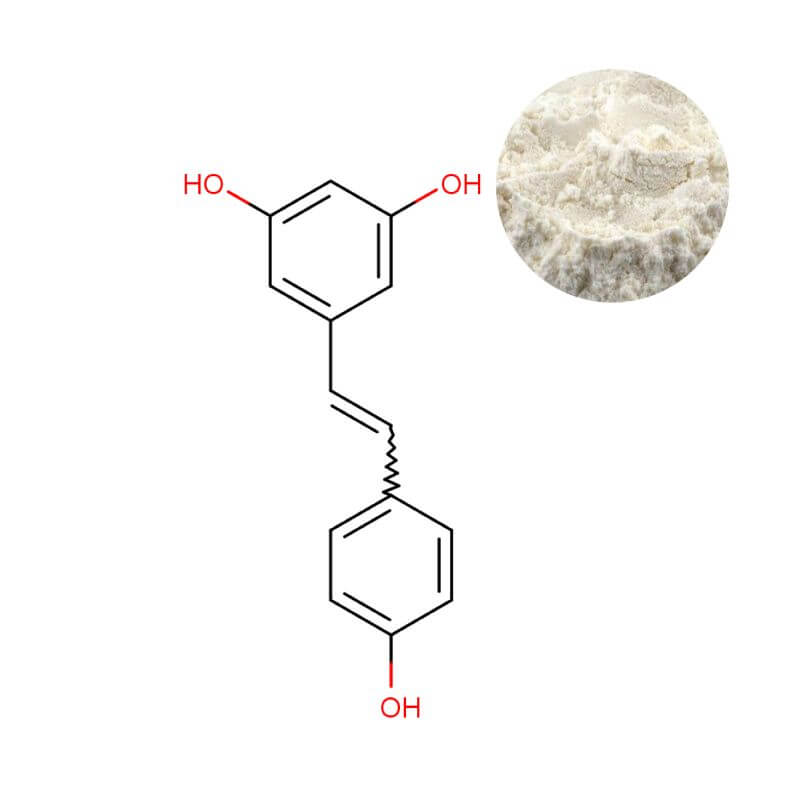
Resveratrol Powder
| Product Name | Trans-Resveratrol Powder |
| CAS Number | 501-36-0 |
| Appearance | White to off-white fine crystalline powder |
| Purity | ≥ 98.0% (by HPLC) |
| Packaging | 1 kg/bag, 5 kg/bag, 25 kg/drum |
| MOQ | 1 kg |
Standardized Trans-Resveratrol Powder 98% for Bioavailability-Optimized Supplement Formulations
The extensive first-pass glucuronidation profile of bulk Resveratrol Powder directly invalidates conventional powder-in-capsule approaches that assume linear dose-response, compelling formulation teams to prioritize bioavailability-enabling delivery architectures rather than relying on raw material purity alone. This metabolic reality transforms from a footnote into a constraint demanding rigorous raw material characterization to ensure predictive performance across production lots. Batch-specific COA verification, including heavy metal ICP-MS validation and USP-compliant particle size and residual solvent profiling, provides the documented traceability required to maintain lot-to-lot consistency and de-risk scale-up for commercial production.
Clinical Validation and Metabolic Considerations: What 98% Trans-Resveratrol Offers Formulators
For R&D teams tasked with developing products that stand up to scrutiny, the starting point is irrefutable clinical evidence. Trans-resveratrol, the predominant bioactive isoform, has been extensively studied for its role in supporting cellular defense mechanisms. It activates key pathways such as SIRT1 and AMPK, which are central to mitochondrial function and inflammatory balance. Recent randomized controlled trials have explored skin health applications when trans-resveratrol is delivered through optimized formulations, supporting multimodal delivery strategies for beauty-from-within claims. For brands sourcing bulk Resveratrol Powder, partnering with a Resveratrol Powder supplier that provides Resveratrol Powder 98% with third-party verified purity is essential for premium product development.
However, the clinical translation of resveratrol's benefits is intricately linked to its metabolic fate. A 2024 meta-analysis of 84 oral administrations reported a mean Cmax of 31.07 ng/mL, with free resveratrol exposure increasing linearly with dose, confirming extensive first-pass metabolism where the compound is rapidly conjugated by phase II enzymes in the gut and liver (Phytotherapy Research, 2024; doi: 10.1002/ptr.8379). For the formulation scientist, this is not a deterrent but a critical parameter to address. It underscores the importance of selecting a high-purity, trans-isomer-rich Resveratrol Powder raw material as the starting point, and then strategically designing delivery systems or co-ingredients to enhance bioavailability. Practically speaking, this means that brands sourcing bulk Resveratrol Powder for premium lines should view purity (≥98%) not as an end in itself, but as the essential foundation upon which effective formulation strategies are built.
Defining Quality: Critical Parameters for Sourcing Premium Resveratrol
When evaluating certified Resveratrol Powder suppliers, the COA serves as the primary window into raw material integrity. For a premium-grade ingredient derived from Polygonum cuspidatum (Japanese Knotweed) root, several parameters deserve particular scrutiny beyond the basic assay:
- Isomeric Purity (Trans- vs. Cis-): Only the trans-isomer possesses the documented biological activity. A specification of "≥98% trans-resveratrol by HPLC" ensures you are sourcing the active form, not an inactive mixture. For product developers, this means your label claims can be accurately supported. Emodin content should be controlled at ≤0.5% to minimize anthraquinone-related safety concerns.
- Residual Solvent Profile: Ethanol and ethyl acetate are commonly used in extraction; a compliant COA will confirm they meet USP <467> limits, safeguarding product safety for global markets. This is especially critical for brands exporting to regions with strict residual solvent regulations.
- Heavy Metal and Elemental Impurities: ICP-MS testing for lead, arsenic, cadmium, and mercury (with limits of Pb≤1.0, As≤1.0, Cd≤1.0, and Hg≤0.1 mg/kg) is non-negotiable for regulatory acceptance and consumer safety.
It is worth noting that a comprehensive COA also includes microbiological data (absence of pathogens like E. coli, Salmonella spp., and Staphylococcus aureus) and physical characteristics such as particle size (≥95% through 80 mesh), which directly influences flowability during capsule filling or blending. For brands seeking a wholesale Resveratrol Powder partner, requesting a full batch-specific COA before commitment is a low-effort, high-impact due diligence step. This level of transparency essentially de-risks the procurement process and ensures the ingredient you receive matches the specifications used in your own stability and efficacy trials. Experienced procurement teams know that a supplier's willingness to share detailed COAs often correlates with overall quality management.
Formulation Strategies to Overcome Bioavailability Hurdles
The metabolic challenges described earlier compel formulators to move beyond simple powder-in-capsule approaches. Effective product development requires multi-faceted co-formulation with natural bioavailability enhancers. Standardized piperine extract, a compound from black pepper, has been shown to inhibit glucuronidation, thereby increasing circulating levels of resveratrol metabolites. Similarly, quercetin dihydrate powder can compete for the same conjugation pathways, potentially extending the compound's half-life. A 2025 randomized crossover study in 12 healthy subjects demonstrated that modified formulations achieved a 4.8-fold increase in Cmax and a 1.7-fold increase in AUC0-t compared to conventional formulations (Scientific Reports, 2025; doi: 10.1038/s41598-025-08665-0).
| Co-Ingredient | Proposed Synergy | Typical Use Level (Relative to Resveratrol) |
|---|---|---|
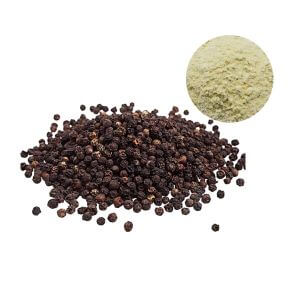
| Piperine Black Pepper Extract | Inhibits phase II metabolism, enhancing bioavailability | 5-10 mg per 100-250 mg resveratrol |
| Quercetin Dihydrate Powder | Competes for conjugation, may improve half-life | 1:1 to 2:1 (quercetin:resveratrol) |
| Lipid-based delivery (e.g., phytosomes) | Increases lymphatic uptake, bypassing first-pass metabolism | Proprietary carriers |
Trans-resveratrol is sensitive to light and humidity, so maintaining controlled environments with minimal moisture exposure during production can prevent caking and degradation more effectively than final packaging alone. For brands developing precise-dose products such as single-ingredient capsules, partnering with a bulk Resveratrol Powder supplier that provides consistent particle size and low moisture content (≤0.5% loss on drying) translates directly into reduced manufacturing variability and longer finished product shelf life.
Ensuring Supply Chain Integrity: A Checklist for Risk Mitigation
The total cost of owning an ingredient extends far beyond its price per kilogram. Supply disruptions, quality deviations, and compliance failures can erase months of development work. When evaluating a Resveratrol Powder supplier or domestic partner, consider the following risk-mitigation framework - a checklist used by sophisticated sourcing teams:
- Traceability & Documentation: Does the supplier provide full traceability back to the botanical source (e.g., Polygonum cuspidatum region of origin)? Can they supply a detailed, batch-specific COA within 24 hours of request? This capability directly impacts your speed to market when qualifying new materials.
- Regulatory Alignment: Is the ingredient produced in a GMP-compliant facility suitable for dietary supplements? Has the synthetic or naturally sourced trans-resveratrol been evaluated for key markets (e.g., EFSA Novel Food authorization for synthetic and microbial-source versions, or compliance with FDA cGMPs)? For brands eyeing international expansion, this pre-validation is invaluable.
- Supply Reliability: Does the supplier maintain safety stock or dual-sourcing arrangements to buffer against raw material shortages? This is particularly relevant for P. cuspidatum-derived material, which can face seasonal or environmental variability. A supplier with robust inventory management reduces your exposure to market volatility.
By applying this checklist, brands can differentiate between transactional sellers and strategic Resveratrol Powder suppliers who act as true partners in product development. The latter will not only deliver consistent material but also provide technical support to troubleshoot formulation challenges, ultimately accelerating your time to market and protecting brand reputation.
Regulatory Compliance Validation for Cross-Border Resveratrol Procurement
Regulatory alignment and formulation reproducibility with trans-resveratrol demand documented traceability from botanical sourcing through finished product release. Given current tightening of import documentation requirements for Polygonum cuspidatum-derived materials across EU and Asian markets, coupled with extended maritime logistics lead times from primary production regions, establishing a qualified compliance inventory prior to commercial production is essential to avoiding costly line stoppages. Secure spec-verified samples with complete COA packages to verify botanical origin documentation, residual solvent compliance, and heavy metal ICP-MS alignment with your target market's monograph requirements before scaling procurement.
Frequently Asked Questions
Share this product
Related Products
Ready to get started?
Contact our team for technical specifications, pricing, and customized solutions.