
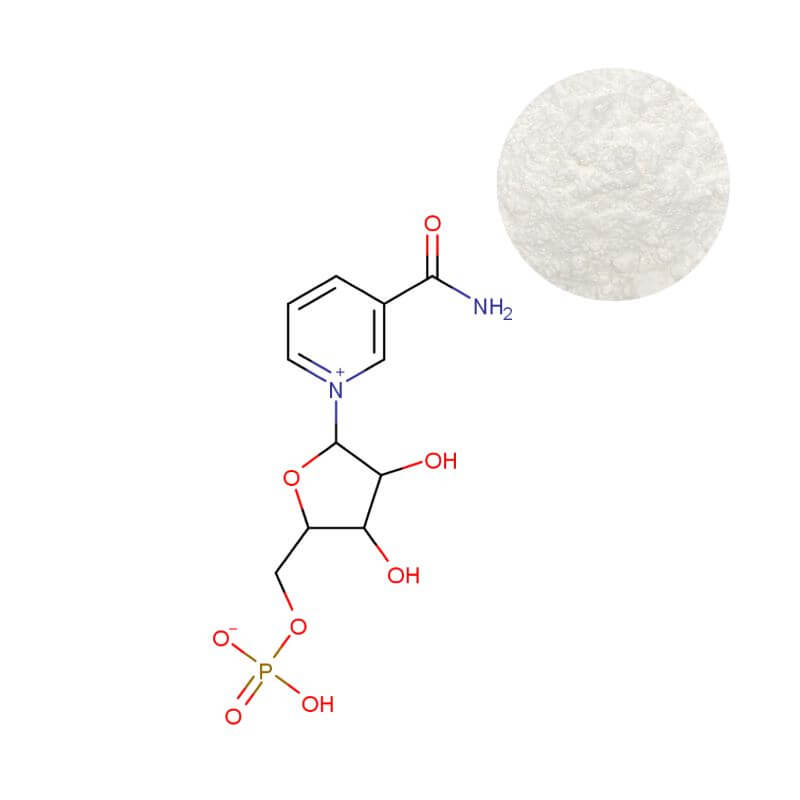
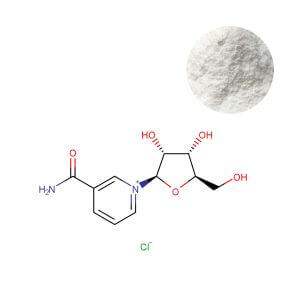
NMN Powder
| Product Name | NMN Powder (β-Nicotinamide Mononucleotide) |
| CAS Number | 1094-61-7 |
| Appearance | White to off-white crystalline powder |
| Purity | ≥ 99.0% (by HPLC) |
| Packaging | 1 kg/bag, 5 kg/bag, 25 kg/drum |
| MOQ | 1 kg |
Clinical-Verified β-Nicotinamide Mononucleotide Powder for Premium Longevity Supplements
A core differentiator for premium formulations, with the global NMN supplement market (retail finished products) projected by Verified Market Reports to reach $4.2 billion by 2033, with premium-priced products capturing a disproportionately large revenue share relative to their unit volume, the commercial imperative for clinically-validated material is clear. Beta-Nicotinamide Mononucleotide (NMN Powder) directly addresses cellular NAD+ decline through validated enzymatic pathways. Engaging a verified NMN Powder supplier ensures access to material that supports robust structure/function claims for healthy aging. Bulk NMN Powder procurement must prioritize clinical substantiation and lot-to-lot consistency, forming the audit-ready traceability foundation essential for R&D verification and procurement risk mitigation.
Quantifiable NAD+ Elevation and Functional Endpoints from Human Clinical Trials
Rather than relying on mechanistic speculation, consumer trust is built on human dose-response data. A multicenter randomized controlled trial (N=80) demonstrated statistically significant NAD+ elevation (p<0.001) and functional improvement (p<0.01), providing formulators with validated endpoints that directly underpin substantiated label claims and justify premium retail pricing. This quantitative anchor establishes a direct relationship between oral intake and systemic NAD+ availability.
- Oral NMN administration produced statistically significant dose-dependent NAD+ increases across all treatment groups, with the highest blood NAD+ concentrations recorded in the 600 mg and 900 mg cohorts.
- Subjects receiving NMN demonstrated statistically significant improvement in the 6-minute walk test compared to placebo (p<0.01), offering a tangible functional metric for performance-oriented formulations.
Brand owners leverage this clinical profile to structure precise dosage rationales for product labels, translating academic rigor into retail differentiation. The 600 mg dosage emerges as the optimal balance point for maximal NAD+ elevation and functional gain, providing a clear anchor for formulation development and consumer-facing efficacy narratives (GeroScience, 2023; doi: 10.1007/s11357-022-00705-1).
Overcoming Instability with Advanced Nano-Encapsulation for Superior Bioavailability
Once clinical efficacy is established, preserving that potency across shelf life and gastrointestinal transit becomes the primary formulation challenge. NMN's inherent hygroscopicity and N-glycosidic bond hydrolysis susceptibility demand strategies beyond simple powder-in-capsule approaches - particularly for brands pursuing premium liquid or solid dosage formats.
| Formulation Metric (OFNP Nano-system) | Quantified Improvement |
|---|---|
| Encapsulation Efficiency & Loading Capacity | High efficiency with outstanding entrapment capability |
| Anti-Aging Phenotypes (C. elegans Model) | Lifespan +3 days (28-31 days); Progeny +26%; Body length +12% |
| Stability & Cellular Protection | Superior thermal stability; effective mitigation of D-galactose-induced cellular senescence via ROS reduction and SA-β-gal attenuation |
The OFNP system also exhibited sustained release characteristics, supporting extended-release profiles and once-daily dosing convenience - a key driver for consumer adherence. This nano-delivery evidence integrates directly with co-formulation strategies. For instance, incorporating resveratrol (sirtuin activation) alongside quercetin and apigenin extends the synergistic framework. Notably, both quercetin and apigenin inhibit CD38 to preserve NAD+ pools—a complementary mechanism that further amplifies NMN's NAD+ elevation potential. Degradation risks are mitigated while exclusive DTC narratives around "next-generation bioavailability" and "patent-protected delivery systems" become accessible, driving premium retail margins through validated technological differentiation rather than price competition (Food Chemistry, 2023; doi: 10.1016/j.foodchem.2023.135982).
Powder Physics Optimization for High-Speed CMO Line Integration
Scaling from prototype to production demands alignment between formulation design and commercial manufacturing equipment. The physical characteristics of NMN Powder wholesale lots directly dictate filling efficiency, waste rates, and launch velocity for brand owners.
- Bulk NMN Powder with a tapped density below 0.3 g/mL generates significant "dusting" (powder drift) on high-speed encapsulators, causing sensor blockage and capsule weight drift that leads to batch rejection and regulatory scrutiny.
- Specifying material with a tapped density exceeding 0.65 g/mL and a Hausner ratio below 1.25 ensures free-flowing characteristics comparable to fine sand, enabling direct compression and eliminating costly secondary granulation steps.
Optimal flow demands a Hausner ratio below 1.25 and Carr index under 20%; these parameters guarantee consistent fill weights, reducing weight variability substantially on high-speed lines. Correct density specification compresses CMO line commissioning by 8-12 weeks, shortening total time-to-market (TTM) from 18 months to 12 months. The 40-80 mesh range offers a practical balance between blend homogeneity and surface area exposure - sufficiently fine for uniform blending and dissolution, yet coarse enough to maintain good flow characteristics and moderate moisture uptake risk during air freight transits where cabin pressure and tarmac humidity fluctuations pose physical degradation risks to shelf-life stability.
Global Regulatory Pathways and ADI-Driven Market Access
Without precise regulatory navigation, even optimal physical specs and clinical data cannot secure market entry. NMN's legal status has recently undergone pivotal shifts in primary markets, directly affecting supply chain strategies for NMN Powder suppliers serving US and EU brands.
- United States: Effective September 2025, the FDA formally reversed its 2022 exclusion ruling - which had revoked prior NDI statuses under the drug preclusion clause - confirming NMN is not excluded from the dietary supplement definition. Market access is now achievable via the New Dietary Ingredient (NDI) notification pathway, with NDI acknowledgement letters issued to SyncoZymes and Kingdomway in December 2025.
- European Union: On May 11, 2026, the EFSA published a positive safety opinion for β-NMN as a Novel Food, establishing a recommended daily intake of 300 mg for adults (excluding pregnant/lactating women). This paves the way for formal EU authorization.
Engaging a spec-verified distributor ensures that Bulk NMN Powder procured meets these stringent regional thresholds. This proactive compliance stance permits simultaneous US and EU launches, leveraging the EFSA positive opinion to reinforce consumer confidence while avoiding the sunk costs of non-compliant inventory. For China-bound finished goods, the general trade ban necessitates cross-border e-commerce channeling.
Chiral Purity Verification and Anti-Counterfeiting Traceability Frameworks
With regulatory doors open, brand equity hinges on absolute identity control. NMN's bioactivity is exclusively associated with the β-anomer; the α-anomer is an inactive impurity indistinguishable by standard reversed-phase HPLC, creating a hidden vulnerability in the supply chain.
- Chiral HPLC: This mandatory analytical method (using polysaccharide-based chiral stationary phases) isolates and quantifies α-NMN from β-NMN, ensuring the active β-NMN component constitutes ≥99.0% of the lot (typically batches reach 99.2-99.8%).
- Trace Metals & Residuals: Tier-1 brand audits mandate Pb ≤ 0.5 mg/kg, As ≤ 0.5 mg/kg, and Hg ≤ 0.1 mg/kg (validated via USP <233> ICP-MS), alongside residual solvents conforming to USP <467>.
Maintaining α-NMN impurity below 1.0% and residual acetone under 500 ppm is essential; meeting these thresholds protects brand equity by avoiding costly recalls and reinforcing consumer trust in purity claims. Full-chain traceability from source to finished powder - coupled with an audit-ready COA package covering chiral purity and elemental contaminants - constructs a formidable brand protection shield. This QA/QC framework supplies buyers with forensic tools to combat counterfeits and substantiate premium positioning through "verified high-purity β-NMN" labeling - specification-grade material meeting Oclean Nutra analytical benchmarks for chiral purity, heavy metals, and residual solvent profiles.
Streamlining R&D Lead Times and Supply Chain Onboarding
Critical evaluation of specifications against real-world performance often determines the success or failure of a product roadmap. To eliminate R&D friction, qualified procurement teams are encouraged to request direct material evaluation alongside the full technical dossier, bridging the gap between paper specifications and physical validation.
Secure NMN Powder trial batches with full compliance dossiers to benchmark critical metrics - including chiral purity, heavy metal profiles, and flow characteristics - against existing standards, directly accelerating internal validation cycles and reducing the procurement timeline.
Frequently Asked Questions
Share this product
Related Products
Ready to get started?
Contact our team for technical specifications, pricing, and customized solutions.