
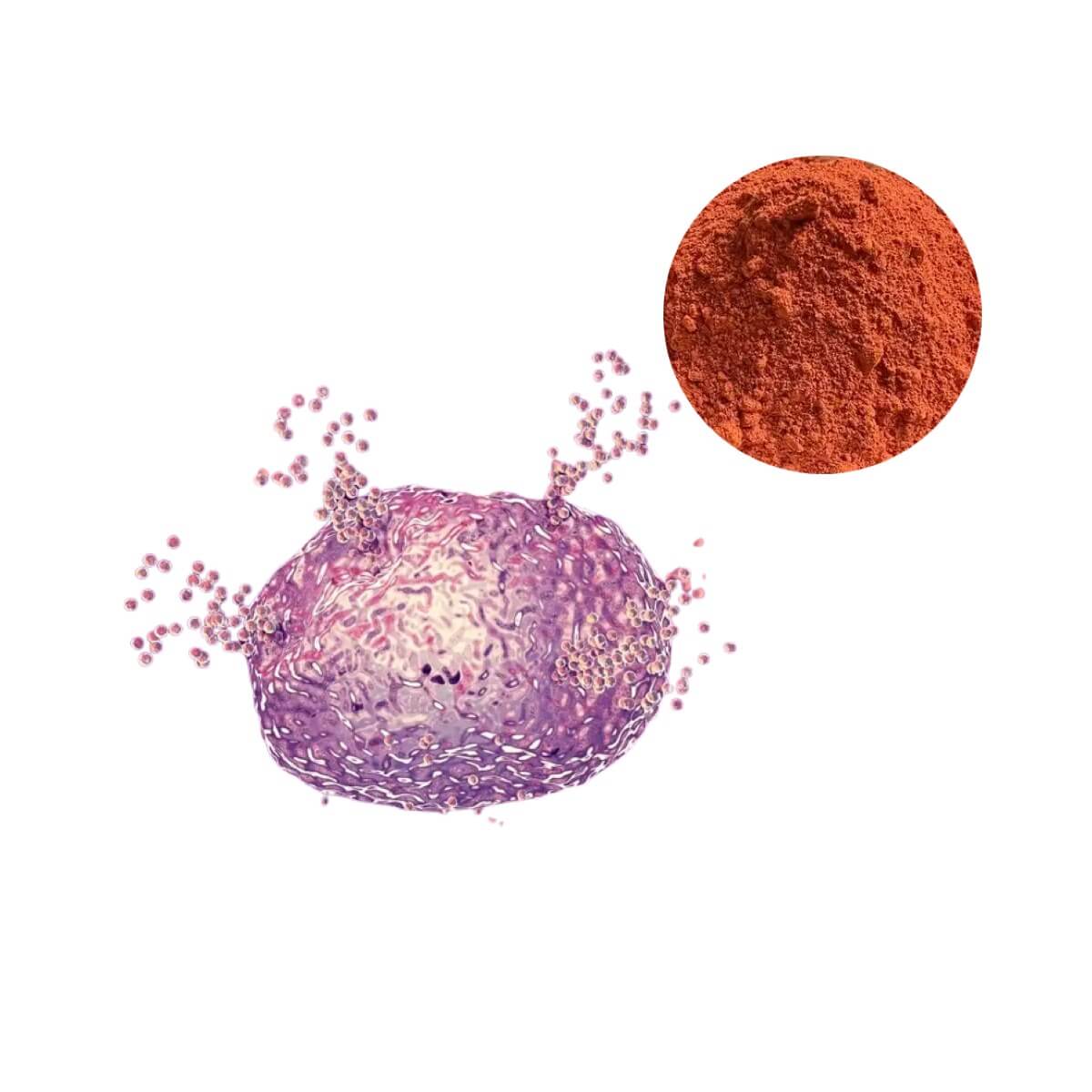
PQQ Disodium Salt Powder
| Product Name | Pyrroloquinoline Quinone Disodium Salt Powder |
| CAS Number | 122628-50-6 |
| Appearance | Reddish-brown to dark red crystalline powder |
| Purity | ≥ 99.0% (by HPLC) |
| Packaging | 1 kg/bag, 5 kg/bag, 25 kg/drum |
| MOQ | 1 kg |
Clinically-Validated Cognitive Support Ingredient: PQQ Disodium Salt Powder for Premium Nutraceutical Formulations
Bulk PQQ Disodium Salt Powder from a spec-verified distributor directly addresses the brand owner's dual mandate: substantiating cognitive health claims with human clinical data while enabling rapid scale-up across capsules, gummies, and ready-to-drink formats. This fermentation-derived material eliminates solvent residues and delivers a 24-month shelf life, supported by lot-to-lot COA traceability and compliance with FDA GRAS and EFSA Novel Food frameworks-transforming R&D validation into procurement confidence.
Human Clinical Evidence Driving DTC Cognitive Health Claims
Translating clinical endpoints into marketable consumer benefits begins with the randomized, double-blind, placebo-controlled trial where 20 mg/day PQQ disodium salt administered over 12 weeks produced statistically significant composite memory and verbal recall improvements across both younger and older cohorts (Food & Function, 2023; doi: 10.1039/D2FO01515C). Age-stratified analysis further revealed that younger adults (20-40 years) experienced enhanced cognitive flexibility, processing speed, and execution speed within 8 weeks, while older adults (41-65 years) demonstrated complex memory gains at 12 weeks-data that directly supports multi-generational product positioning.
- 20 mg/day dosage establishes a clear, research-backed serving size for finished product labels, reducing formulation trial iterations.
- 8-week efficacy onset in younger cohorts supports rapid-claim marketing campaigns for focus and productivity segments.
- 12-week memory improvement in older adults provides a science-backed foundation for healthy aging and brain longevity positioning.
This clinical profile enables DTC brands to deploy compliant structure/function claims-such as "supports memory and cognitive function" and "promotes mitochondrial health"-without overstepping into drug territory. The quantifiable endpoints justify premium retail pricing, differentiating finished products in a crowded nootropic market where consumers increasingly demand peer-reviewed validation over vague "brain booster" messaging.
Formulation Compatibility and Synergistic Pairings for High-Growth Dosage Forms
Once cognitive support data establishes the ingredient's efficacy, formulation strategies must preserve the compound's integrity across diverse delivery systems. PQQ Disodium Salt exhibits aqueous solubility exceeding 50 mg/mL and maintains stability within pH 7-9, making it compatible with vegetarian capsules, effervescent tablets, and functional beverages. However, its pronounced light sensitivity-in near-water beverages, photodegradation reaches 92.29% within 4 weeks of light exposure (Packaging and Food Machinery, 2024; doi: 10.3969/j.issn.1005-1295.2024.04.008)-mandates opaque packaging or amber-tinted containers for liquid-based products to maintain label claim accuracy throughout shelf life.
| Dosage Form | Compatibility Profile | Time-to-Market Impact |
|---|---|---|
| Vegetarian Capsules | Direct fill; requires LOD <12.0% and 80-mesh particle size | Accelerated scale-up (no secondary processing) |
| Chewable Gummies | pH 5.5-6.5 formulation; pair with CoQ10 or vitamin C | Premium children's and adult health segments |
| Ready-to-Drink Beverages | Amber packaging mandatory; pH 4.0-8.0 stability range | Differentiated RTD portfolio; extended shelf life |
Synergistic formulation stacks amplify the end-user benefit: combining PQQ (20 mg) with CoQ10 (ubiquinone form) (100 mg) in an oil-based softgel creates a mitochondrial "energy and cognition" duo, while integrating Acetyl-L-Carnitine and B-complex vitamins in powdered drink mixes supports both neurological and metabolic pathways. These pairings not only enhance the product's value proposition but also provide natural anchor points for cross-linking to complementary ingredient pages, strengthening the internal content architecture.
Physical Powder Properties and CMO Line Efficiency for Accelerated Production
With formulation concepts defined, high-volume production demands tight control over powder rheology. Loss on Drying must stay within the ≤12.0% USP <731> limit as the foundational raw material specification; during high-speed encapsulation, environmental relative humidity below 40% is additionally required to prevent moisture-induced flow failure. When humidity exceeds 60%, the powder transitions from free-flowing to a sticky mass within minutes, causing hopper bridging, encapsulation pin jamming, and weight variation. Engineering the particle size so that ≥95% passes through an 80-mesh screen reduces the specific surface area, directly improving bulk flow and enabling direct-compression tableting without costly wet granulation steps.
- LOD controlled to ≤12.0% eliminates the need for secondary drying, cutting processing time and energy costs.
- 80-mesh particle size standardizes feeding rates on high-speed capsule fillers, reducing reject rates below 1.5%.
- Consistent bulk density (0.35-0.45 g/mL) ensures reproducible die fill weights, minimizing batch-to-batch variability.
For brand owners, these physical controls translate into shorter time-to-market by bypassing lengthy re-engineering cycles when switching between CMO partners. Eliminating moisture-induced production stoppages lowers the total cost of ownership, as line uptime improves and scrap rates from weight deviation or stuck tooling are virtually eliminated-protecting margins on scale production.
Global Regulatory Pathways and Label Claim Safety Zones
With formulation and production parameters established, the next critical checkpoint is securing market access across key regions. The ingredient holds FDA GRAS determinations (GRN 641, 694, 701) for use in specified beverage categories at levels up to 5-20 mg per serving. Mitsubishi Gas Chemical filed a New Dietary Ingredient Notification (NDI) for PQQ disodium salt in 2008, which was subsequently complemented by the GRAS framework. In the European Union, EFSA Novel Food approval (Commission Implementing Regulation (EU) 2018/1122) permits 20 mg/day for adults, while China's National Health Commission confirmed PQQ disodium salt as a new food ingredient in 2022 (synthetic route, No. 1 of 2022) and 2023 (fermentation route, No. 8 of 2023)-creating a regulatory passport that bypasses lengthy novel-food re-evaluation processes.
- US: GRAS-covered; allows "supports cognitive health" and "promotes mitochondrial function" claims.
- EU: EFSA Novel Food status; label claims must align with authorized conditions of use.
- China: New Food Ingredient approval (2022 and 2023); applicable for functional foods.
These clearances directly accelerate market entry-brands can deploy finished products without navigating country-by-country safety petitions, reducing regulatory overhead by an estimated 12-16 weeks. Moreover, the harmonized 20 mg/day ADI across major jurisdictions simplifies global SKU development, allowing a single formulation to serve multiple markets while avoiding region-specific dosage adjustments that complicate supply chain planning.
Authentication, Traceability, and Impurity Control for Brand Protection
Market access and production efficiency mean little if the supply chain cannot guarantee material integrity. Two production routes exist-chemical synthesis and microbial fermentation-but the former introduces residual solvents and unknown trace impurities that increasingly fail clean-label audits under tightened 2026 FDA and EFSA scrutiny. Fermented PQQ, produced via controlled Hyphomicrobium denitrificans or Methylovorus strains, delivers the identical molecular structure to synthetic material with a substantially cleaner impurity profile-no residual organic solvents above USP <467> quantitation limits-providing the clean regulatory profile that premium brands require. HPLC purity verification (≥99.0%) combined with ICP-MS heavy metal screening (Pb ≤1.0 mg/kg, As ≤1.5 mg/kg) and residual solvent testing per USP <467> constitutes the essential quality audit package.
- Full-chain COA traceability from fermentation batch to finished powder ensures audit readiness.
- HPLC fingerprinting differentiates fermented material from synthetic mimics, preventing adulteration.
- Third-party Eurofins/SGS testing at LOD/LOQ limits provides independent quality verification.
This authentication shield protects brand equity by eliminating the risk of counterfeit or sub-potent material entering the finished product. For procurement teams, the complete documentation package-including strain provenance, processing logs, and third-party test results-streamlines supplier qualification and reduces the due diligence cycle, while R&D benefits from reproducible lot-to-lot consistency that preserves clinical efficacy data across production batches. Replacement of sub-potent or adulterated lots with specification-grade material meeting Oclean Nutra analytical benchmarks ensures that clinical efficacy data remains reproducible across every production batch.
Expedite R&D Validation and Procurement Qualification
Securing representative material for internal testing is the fastest path to de-risking formulation development and supply chain integration. A 10-20g sample aliquot, shipped with full technical and regulatory documentation, enables in-house dissolution, stability, and compatibility studies without large-order lead times. Procurement teams simultaneously receive the compliance dossier-COA, GRAS/Novel Food references, and traceability records-eliminating back-and-forth information requests. Request a pre-qualified PQQ Disodium Salt sample to compress the evaluation cycle and move confidently toward commercial-scale production.
Frequently Asked Questions
Share this product
Related Products
Ready to get started?
Contact our team for technical specifications, pricing, and customized solutions.