
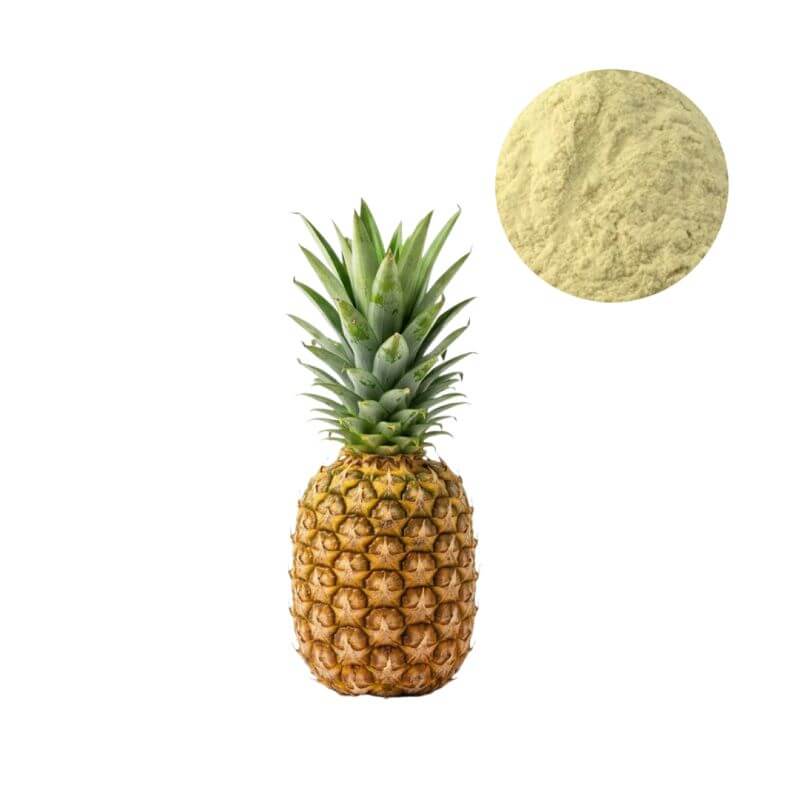
Bromelain Powder
| Product Name | Bromelain Powder |
| CAS Number | 9001-00-7 |
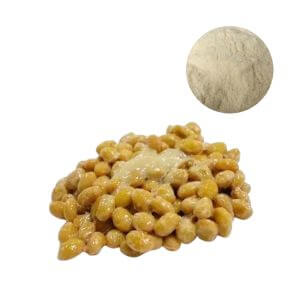
| Appearance | Light yellow to off-white fine powder |
| Activity | 2400 GDU/g min. / 1200 GDU/g min. |
| Packaging | 1 kg/bag, 5 kg/bag, 25 kg/drum |
| MOQ | 1 kg |
Bromelain Powder: Standardized Enzyme Activity for Predictable Anti‑Inflammatory Formulations
For brands developing sports nutrition and joint health supplements, achieving consistent anti‑inflammatory support without resorting to synthetic compounds remains a formulation challenge. The answer lies in selecting an ingredient with well‑characterized biological activity and rigorous quality controls. A stem‑derived bromelain powder standardized to 2400 GDU/g offers precisely that—delivering batch‑to‑batch enzymatic consistency that translates directly into predictable clinical performance. For brands sourcing bulk bromelain, this level of standardization is the foundation for reliable product claims and global market acceptance. In an era of tightening regulatory scrutiny and crowded sports nutrition categories, this standardization serves as the strategic lever for brands to build credible science‑backed claims and command premium positioning.
Understanding Bromelain’s Multi‑Targeted Anti‑Inflammatory Mechanism
Bromelain’s efficacy as an anti‑inflammatory agent is rooted in its proteolytic activity, but its mechanism extends far beyond simple protein breakdown. As a cysteine protease, it cleaves cell surface adhesion molecules such as CD44 and CD8, thereby modulating leukocyte migration and reducing the accumulation of inflammatory cells at sites of stress or injury. A 2024 systematic review synthesized over three decades of research, confirming that bromelain consistently downregulates key pro‑inflammatory cytokines—IL‑1β, IL‑6, and TNF‑α—while also suppressing prostaglandin E₂ (PGE₂) synthesis (doi: 10.1080/14786419.2024.2342553).
What makes this mechanism particularly valuable for formulators is its multi‑pathway nature. Instead of relying on a single target, bromelain simultaneously addresses the inflammatory cascade at multiple points—a feature that aligns with the growing demand for “clean‑label” alternatives to non‑steroidal anti‑inflammatory drugs (NSAIDs). From a strategic formulation perspective, this allows brands to develop products that support both acute post‑exercise recovery and chronic joint comfort using a single, well‑documented ingredient. It also opens opportunities for synergistic blends where bromelain amplifies the effects of complementary botanicals like curcumin or boswellia. From a product differentiation standpoint, leveraging this multi‑pathway mechanism enables brands to formulate proprietary blends that address both acute and chronic inflammation—a clear advantage in a market seeking targeted, multi‑functional solutions.
Quality Benchmarks: What Defines a Premium Bromelain Powder
In a market where bromelain is often treated as a commodity, true differentiation begins with quality specifications that go beyond the headline GDU number. A premium bromelain powder must demonstrate three non‑negotiable attributes: source traceability, activity stability, and comprehensive safety data. The distinction between stem‑derived and fruit‑derived bromelain is particularly critical—stem sources provide a more consistent enzyme profile and higher achievable GDU activities, which is why they dominate commercial dietary supplement applications.
Recent clinical evidence underscores the importance of source consistency. A 2025 randomized controlled trial using 400 mg/day of fruit‑derived bromelain showed significant improvement in disease activity scores (SCCAI reduction of -3.29 ± 2.17 vs. placebo, p < 0.001) (doi: 10.1038/s41598-025-26975-1). While the study validates bromelain’s clinical potential, it also highlights why specifying stem origin and requiring batch‑specific COAs is essential—variability in source can introduce unpredictable differences in enzyme composition and performance. For procurement teams, this directly translates to reduced risk of formulation failure and smoother regulatory submissions, as stem‑derived bromelain aligns with the specifications expected by global authorities like the FDA (21 CFR 184.1024).
| Quality Attribute | Why It Matters for Formulation Success |
|---|---|
| Enzymatic Activity (2400 GDU/g min.) | Ensures predictable potency per dose; allows lower inclusion rates, minimizing capsule size. |
| Stem Source (Ananas comosus) | Provides consistent enzyme profile and superior stability compared to fruit‑derived alternatives. |
| Loss on Drying (≤5.0%) | Prevents enzymatic degradation during storage; extends finished product shelf life. |
| Heavy Metals (Pb ≤2.0, As ≤1.0 mg/kg) | Critical for compliance with USP, EP, and FDA GRAS requirements. |
It’s worth noting that a truly premium bromelain powder also comes with a comprehensive Certificate of Analysis (COA) that includes microbiological limits and residual solvent data—documents that are indispensable for qualifying suppliers and accelerating product development timelines. For development teams, this translates directly into shorter R&D cycles and reduced risk of batch rejection, as every quality parameter is verified before production begins.
Formulation Strategies: Stability, Synergy, and Delivery Considerations
Translating bromelain’s mechanistic benefits into a marketable finished product requires an intimate understanding of its physical‑chemical behavior. As a thermolabile enzyme, bromelain begins to lose activity when exposed to temperatures above 40°C for extended periods—a factor that makes dry blending preferable over wet granulation for most supplement formats. The enzyme also exhibits optimal stability in a slightly acidic to neutral pH range (4.0–6.0), which makes it ideal for capsules, enteric‑coated tablets, and powder blends where the final pH can be controlled.
Practically speaking, moisture control during manufacturing is one of the most overlooked variables. Maintaining relative humidity below 50% in the production environment and using desiccants in primary packaging can significantly extend bromelain’s shelf life. This kind of detail is where expert formulation guidance adds tangible value—it directly reduces the risk of potency loss that would otherwise lead to consumer complaints or batch recalls.
Synergy is another lever formulators can pull to maximize value. Pairing bromelain with complementary ingredients creates formulations that address multiple facets of inflammation:
- Bromelain + 95% Curcumin Extract: Combines proteolytic activity with COX‑2 inhibition for comprehensive joint support.
- Bromelain + Quercetin Dihydrate Powder: Blends anti‑edema effects with mast‑cell stabilization—ideal for sports recovery powders.
- Bromelain + Trypsin: Enhances overall proteolytic activity, often used in post‑surgical or trauma recovery protocols.
These combinations not only improve efficacy but also allow brands to create proprietary blends that stand out in a crowded market. From a strategic formulation perspective, the ability to offer such synergistic profiles can become a key point of product differentiation.
Sourcing Intelligence: Mitigating Risk Through Supplier Selection
Even the best‑designed formulation will fail if the raw material supply chain is unreliable. For brands sourcing bulk bromelain, the cost of a supply disruption—delayed launches, reformulation expenses, lost market share—far outweighs any short‑term savings from a lower‑priced supplier. A robust risk‑mitigation framework should include the following elements:
- Full traceability: Suppliers must document the origin of pineapple stems (country, harvest dates) and provide chain‑of‑custody records.
- GMP certification: Facilities should be certified for dietary supplement manufacturing, ensuring rigorous control over cross‑contamination and hygiene.
- Batch‑specific COA: Every lot should be accompanied by a COA detailing enzymatic activity, heavy metals, microbiological limits, and residual solvents.
- Regulatory support: Reliable partners supply technical files for FDA GRAS self‑affirmation and EU Novel Food or enzyme status documentation.
- Stability studies: Data on storage conditions (below 20°C, cool & dry) confirm shelf‑life claims and help customers design appropriate packaging.
Adopting this sourcing framework shifts the procurement focus from a transactional cost‑per‑kilo mindset to a total‑cost‑of‑ownership (TCO) model, where supply continuity and quality consistency deliver far greater long‑term value than any short‑term price concession. For procurement teams, this directly translates to lower total cost of ownership—fewer rejected batches, faster regulatory approvals, and reduced R&D cycles. When a supplier can provide all of the above as standard practice, it signals a commitment to quality that ultimately protects the brand’s reputation.
Next Steps: Accelerate Your Product Development with Expert Support
Integrating a high‑activity, stem‑derived bromelain powder into your next sports nutrition or joint health product is a proven way to deliver clinically relevant anti‑inflammatory support. By partnering with a supplier that prioritizes full traceability, GMP manufacturing, and comprehensive COA documentation, you eliminate variability and can confidently support structure/function claims with peer‑reviewed science. To evaluate the ingredient for your specific formulation, request a complimentary sample and the complete technical dossier—including batch‑specific COA, stability data, and formulation guidelines. Request your complimentary sample and technical dossier to begin your risk‑free evaluation today.
Frequently Asked Questions
Share this product
Related Products
Ready to get started?
Contact our team for technical specifications, pricing, and customized solutions.