
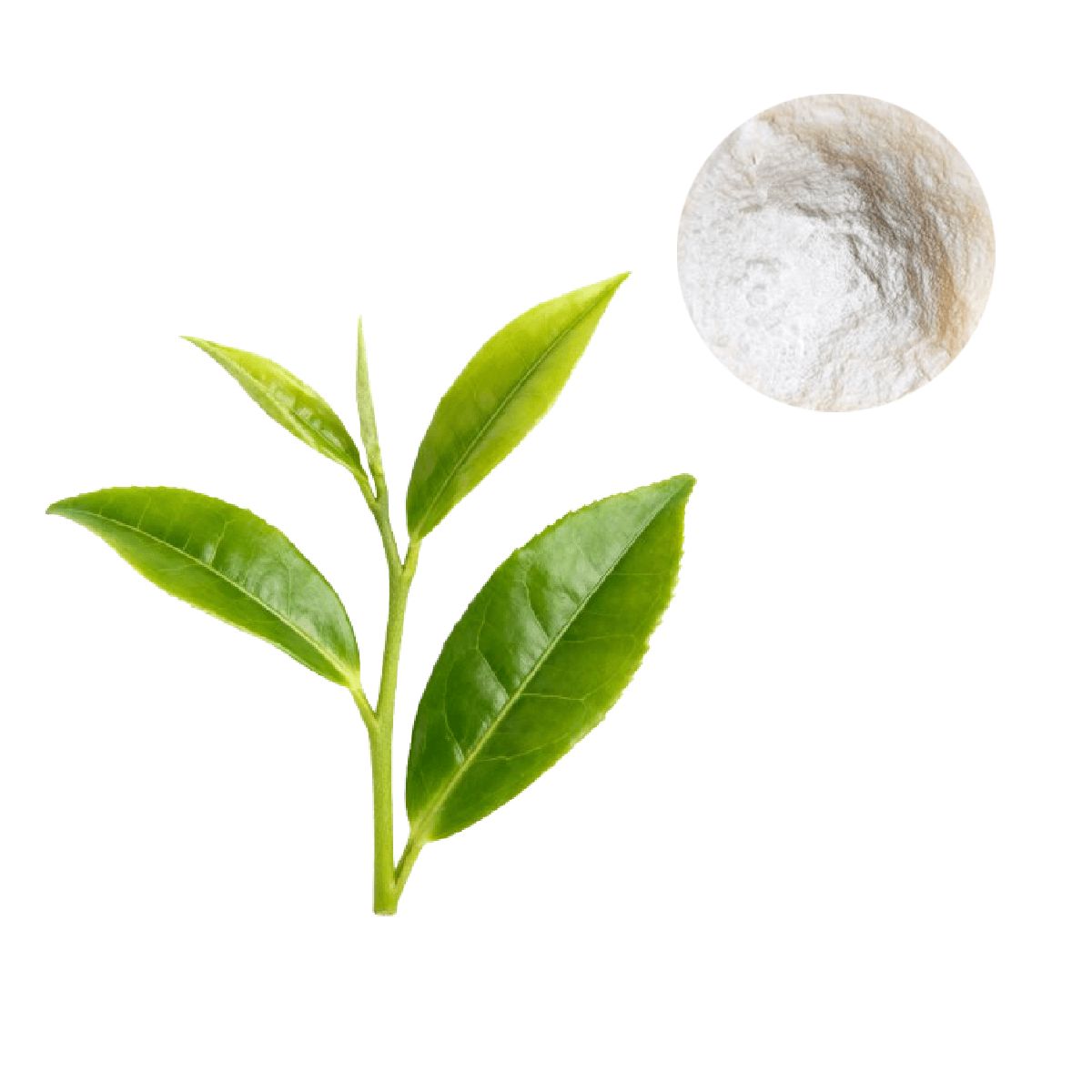
Epicatechin Powder
| Product Name | (-)-Epicatechin Powder |
| CAS Number | 490-46-0 |
| Appearance | Off-white to white crystalline powder |
| Purity | 90.0% min., 95.0% min., 98.0% min. (by HPLC) |
| Packaging | 1 kg/bag, 5 kg/bag, 25 kg/drum |
| MOQ | 1 kg |
(-)-Epicatechin Powder: The Precision Antioxidant for Next-Generation Sports & Longevity Formulations
Differentiating sports nutrition and healthy aging products now demands more than generic ingredient lists; it requires clinically-substantiated mechanisms. The global epicatechin market, valued in the hundreds of millions, is projected to grow steadily. Formulators must balance sophisticated consumer demand for proven bioactivity with the complex regulatory landscape for botanicals. (-)-Epicatechin Powder meets this need as a well-researched, single-molecule compound that delivers targeted benefits beyond basic antioxidant claims. Its value is anchored in reproducible human data - including the targeted regulation of key myogenic factors - and stringent physical specifications, including purity grades up to 98%. This profile provides a credible foundation for efficacy claims in high-growth segments like performance recovery and metabolic longevity. This framework details how to evaluate, formulate, and source bulk Epicatechin Powder to mitigate development risk.
Decoding the Mechanism: From Antioxidant to Metabolic Regulator
Justifying a premium positioning and dosage begins with understanding the precise physiological action of (-)-Epicatechin. This knowledge allows brands to build compelling, science-backed narratives that resonate with informed consumers and distinguish products from those using commodity ingredients.
Although commonly grouped with antioxidants, the active compound in (-)-Epicatechin Powder drives value through specific downstream metabolic effects, acting as a priming agent for cellular efficiency. Clinical research highlights two quantifiable pathways:
- Myostatin-Follistatin Axis Modulation: A 2024 systematic review confirms that (-)-Epicatechin suppresses myostatin expression and downregulates atrogenes MAFbx, FOXO, and MuRF1 while upregulating follistatin and stimulating myogenic factors MyoD, Myf5, and myogenin (Nutrients, 2024; doi: 10.3390/nu16020326). For formulators, this translates directly into a scientific basis for claims supporting muscle maintenance and recovery - core benefits for sports nutrition formulations.
- Mitochondrial and AKT/mTOR Pathway Activation: The same review confirms that (-)-Epicatechin stimulates mitochondrial biogenesis in muscle fibers and activates AKT/mTOR signaling for protein production. This points to a direct role in supporting cellular energy and exercise-induced fatigue reduction, moving beyond general antioxidant claims toward specific support for endurance and training adaptation.
Consequently, for brands targeting active aging or post-exercise recovery, this mechanism links directly to measurable consumer goals like improved endurance and reduced muscle catabolism. Prioritizing an ingredient with this clinical granularity is a strategic decision that builds brand credibility and defends against market commoditization.
Quality Decoded: Why Purity and Identity Go Beyond a Certificate
The Certificate of Analysis (CoA) serves as the primary quality assurance document. Interpreting its parameters strategically reveals their impact on final product efficacy, compliance, cost-in-use, and market positioning.
| Critical Parameter | What It Indicates | Strategic Formulation Impact |
|---|---|---|
| Caffeine Content (by HPLC) | Reflects purification rigor from sources like green tea. A spec of ≤0.1% denotes high-grade material. | Essential for "stimulant-free" or "night-time" positioning. It prevents unintended side effects that could alienate your target audience and erode brand trust. |
| Elemental Impurity Profile | Shows adherence to strict limits for metals like Lead (Pb ≤1.0 mg/kg), aligning with risk-based guidelines. | Proactive control at the ingredient level reduces the burden and cost of finished product testing, streamlining time-to-market and simplifying regulatory submissions. |
From a compliance and sourcing perspective, the total cost of ownership for (-)-Epicatechin Powder extends beyond price per kilogram. A supplier's ability to provide a comprehensive dossier - including full traceability, toxicological references, and clear regulatory guidance - directly impacts your development timeline and risk. For procurement teams, this makes documentation quality a critical vendor selection factor, often outweighing minor price differences.
Notably, (-)-Epicatechin differs significantly from EGCG (epigallocatechin gallate) in regulatory terms - a key consideration for global formulation compliance. The European Commission Regulation (EU) 2022/2340 imposes restrictions on green tea extracts rich in EGCG, while high-purity (-)-Epicatechin monomers require separate Novel Food assessment in the EU, depending on botanical source and purity. Cocoa-derived epicatechin has pre-1997 history; green tea-derived isolates may require EFSA review. This shapes EU market access planning and addresses a core compliance concern for B2B buyers.
Formulation in Practice: Overcoming Bioavailability and Stability Hurdles
Moving from a specification sheet to a stable, efficacious finished product is where many formulations face costly delays.
For bulk Epicatechin Powder, the main hurdle is metabolic profile: about 20% of intake is excreted as small-intestine metabolites, while 42% is excreted as 5C-ring fission metabolites after microbiota-mediated conversion. Address this through synergistic ingredients and smart delivery:
Synergistic Combinations for Enhanced Activity: Effective formulation designs a system, not just adds an active. Pairing (-)-Epicatechin Powder with complementary actives such as Quercetin Dihydrate (supporting antioxidant defense and recovery) or Berberine HCl (activating AMPK for glucose disposal) enhances the overall metabolic and performance profile. A classic bioavailability enhancer like standardized Piperine extract remains a proven strategy to improve absorption. Alternatively, brands emphasizing a "whole-food" philosophy might use it within a standardized cocoa extract matrix to leverage an "entourage effect," though this trades precise dosing for a different marketing angle.
Critical Stability and Processing Protocols: Protecting your ingredient investment during manufacturing ensures label claims remain valid at the point of consumption. Thermal processing data confirm that (-)-epicatechin degrades by approximately 65.2% within the first 10 minutes and over 99.5% within 30 minutes under boiling aqueous conditions (Food Chemistry, 2025; doi: 10.1016/j.foodchem.2024.142038). Practical variables are ambient moisture and temperature. Key protocols include:
- Process Control: Maintaining a mixing environment below 45% RH is often more critical for preventing caking and degradation than final packaging alone. This operational detail directly influences production yield and batch consistency.
- Delivery System Selection: Encapsulation offers superior protection from oxygen and moisture compared to loose powder sticks, directly extending shelf life and reducing return risk.
- pH Compatibility Awareness: Avoid co-formulating the powder with highly alkaline compounds without prior stability testing to prevent late-stage development setbacks.
For R&D teams, partnering with a supplier that provides formulation guidance and stability data alongside the powder itself accelerates development cycles and reduces post-launch issues.
Mitigating Sourcing Risk: The Expert Checklist for Procurement
In a global market, securing a reliable Epicatechin Powder wholesale supply is as crucial as its technical specs. A rigorous procurement process mitigates business continuity risk and protects brand equity.
Selecting an Epicatechin Powder supplier is a strategic decision affecting product efficacy, compliance, and supply continuity. A thorough due diligence checklist should extend beyond price to include:
- Documentation Transparency: Does the supplier provide a batch-specific CoA detailing all identity, purity, and safety tests? Can they supply a valid GMP certificate and a full allergen declaration?
- Clinical-Grade Consistency: Is the powder produced to the same stringent specifications as material used in published human trials? This alignment is the strongest guarantee of physiological activity.
- Technical Partnership: Beyond the product, can they offer stability data, formulation guidelines, or compliance support for target markets?
- Supply Chain Resilience: What is the protocol for batch traceability from raw plant to finished powder? Is multi-tier, audited sourcing in place to guard against agricultural volatility?
The true cost of a supplier encompasses not just the invoice price, but the potential expense of a failed audit, regulatory detention, or product recall. A rigorous procurement checklist thus acts as an insurance policy, making a supplier's technical and operational support depth a core component of total value.
Validate Performance Under Your Processing Conditions
Rigorous quality documentation - including batch-specific CoA, heavy metal profiling, and full traceability - supports global regulatory filing. Before scaling, confirm compatibility with your encapsulation line or blend matrix. Secure a spec-verified Epicatechin sample with complete technical dossier to streamline R&D validation and procurement audit trails.
Frequently Asked Questions
Share this product
Related Products
Ready to get started?
Contact our team for technical specifications, pricing, and customized solutions.