
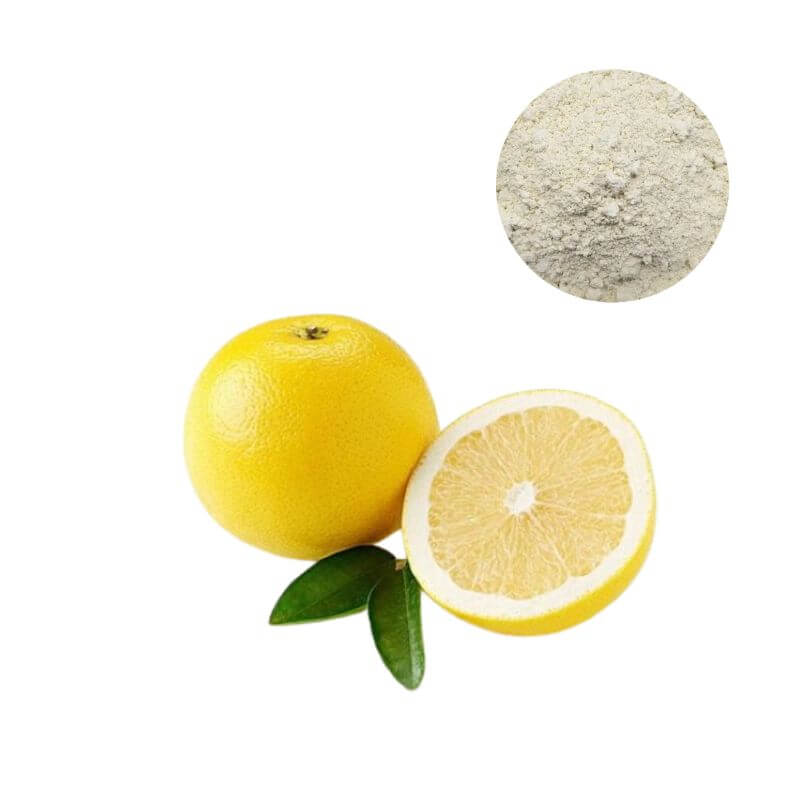
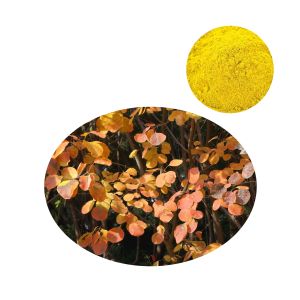
Naringenin Powder
| Product Name | Naringenin Powder |
| CAS Number | 480-41-1 |
| Appearance | White to off-white crystalline powder |
| Purity | 98% min. (by HPLC) |
| Packaging | 1 kg/foil bag, 5 kg/tin, 25 kg/cardboard drum |
| MOQ | 1 kg |
Naringenin Powder (98% HPLC): Clinical‑Backed Metabolic Support for Advanced Antioxidant Formulations
Brands aiming to differentiate their metabolic health or clean‑label antioxidant lines face a common hurdle: generic vitamin blends no longer impress informed consumers. Naringenin, a citrus‑derived flavanone, offers a science‑driven alternative. Premium naringenin powder, standardized to ≥98% purity by HPLC with full COA traceability, delivers batch‑to‑batch consistency essential for compliant, market‑ready supplements. This article provides the clinical rationale, quality benchmarks, and practical formulation insights needed to confidently source bulk naringenin and develop distinctive products. For brand owners, leveraging clinically validated naringenin creates a science‑based barrier against commodity ingredients, directly supporting premium pricing and consumer trust in metabolic health categories.
How Naringenin Supports Cardiometabolic Health: Human RCT Evidence
Naringenin acts through two principal pathways: inhibition of NF‑κB (reducing pro‑inflammatory cytokines) and activation of Nrf2 (enhancing endogenous antioxidant enzymes). The compound also directly scavenges reactive oxygen species while modulating lipid metabolism. The strongest human evidence comes from a randomized, double‑blind, placebo‑controlled trial involving 44 overweight/obese patients with nonalcoholic fatty liver disease (doi: 10.1097/MEG.0000000000002323). Subjects receiving 200 mg/day naringenin (100 mg twice daily) for four weeks demonstrated:
- Improved body composition – significant reductions in BMI (P=0.001) and visceral fat (P=0.039).
- Better lipid profiles – lowered non‑HDL‑C, total cholesterol/HDL‑C, triglycerides/HDL‑C, and LDL‑C/HDL‑C ratios.
- Marginal blood pressure improvement – systolic BP reduction (P=0.055).
From a strategic formulation perspective, these quantified outcomes translate directly into credible label claims for weight management and cardiovascular support supplements. Unlike generic antioxidants lacking human proof, naringenin provides measurable endpoints that brand owners can leverage to build consumer trust and regulatory dossiers. The broad bioactivity spectrum – including antidiabetic, anti‑obesity, and neuroprotective properties – is further supported by a narrative review (doi: 10.1016/j.nutres.2023.08.006). Having reviewed the clinical foundation, procurement teams next need to understand which quality parameters guarantee this performance across every batch.
Critical Quality Benchmarks Beyond “≥98% Purity”
While a high‑purity naringenin powder (≥98% by HPLC) is the industry norm, experienced formulators evaluate three additional metrics that directly impact final product stability and efficacy. A certified naringenin supplier provides batch‑specific COA covering these parameters:
| Quality Parameter | Typical Specification | Why It Matters for Your Production |
|---|---|---|
| Loss on Drying | ≤1.0% (USP <731>) | Low moisture prevents hydrolytic degradation, extends shelf life, and reduces clumping during blending. |
| Ash Content (Residue on Ignition) | ≤0.5% (USP <561>) | Low inorganic residues support clean‑label positioning and avoid catalytic side reactions in complex formulas. |
| Particle Size | ≥95% through 80 mesh (USP <786>) | Ensures uniform flow and blend homogeneity in high‑speed encapsulation or tableting lines. |
For procurement teams, this directly translates to reduced rework risk, fewer batch rejections, and consistent dissolution profiles. Moreover, compliance with EU regulatory standards (EFSA positive opinion 2024, inclusion in EU Food Flavouring Regulation FL No. 16.132) and US FEMA GRAS (No. 2769) provides a clear path for international market access. From a compliance standpoint, verifying these quality parameters also streamlines registration in markets like Canada and Australia, where finished product filings require raw material COA data. It’s worth noting that a trustworthy bulk naringenin distributor will also supply residual solvent analysis (USP <467>) and heavy metals testing (Pb ≤1.0, As ≤1.0, Cd ≤0.5, Hg ≤0.1 mg/kg via ICP‑MS). This level of analytical rigor means brand developers can bypass costly reformulation cycles caused by inconsistent raw materials, accelerating time‑to‑market for new product lines. With quality assured, the next challenge is successful incorporation into finished dosage forms.
Formulation in Practice: Overcoming Solubility & Synergy Challenges
Naringenin’s low aqueous solubility (≈475 mg/L) is the primary technical hurdle. However, practical formulation strategies exist that do not require nano‑encapsulation. For capsules and tablets, direct compression with microcrystalline cellulose and a small percentage of silica (0.5‑1%) works effectively when particle size is controlled. For liquid or powdered beverage mixes, consider these validated approaches:
- Use of cyclodextrins or gum arabic – improves dispersion and masks bitterness.
- Lipid‑based carriers – medium‑chain triglyceride (MCT) oil in softgels boosts bioavailability.
- Micronization – reducing particle size to ≤20 µm increases surface area and dissolution rate.
Expert formulators also leverage synergistic combinations. For example, pairing naringenin with vitamin C results in redox recycling, with the mixture's antioxidant activity exceeding theoretical values by up to 33% – a principle observed across multiple flavonoid studies. The table below illustrates clinically relevant pairings with proven additive effects:
| Co‑ingredient | Rationale for Synergy | Suggested Ratio (Naringenin:Partner) |
|---|---|---|
| Ascorbic acid (Vitamin C) | Redox recycling, regenerates naringenin’s antioxidant capacity | 1:2 to 1:5 |
| Quercetin Dihydrate | Complementary flavonoid; combined free‑radical scavenging exceeds individual effects | 1:1 |
| Standardized Hesperidin Powder | Citrus flavanone synergy for metabolic and vascular health | 1:2 |
From a strategic formulation perspective, addressing solubility through micronization or lipid carriers elevates naringenin from a “difficult” ingredient to a robust core component. An often‑overlooked practical insight: controlling relative humidity below 50% during dry blending is more critical than relying solely on desiccants in final packaging – a lesson from plant extract processing that prevents caking and retains potency. From a production efficiency standpoint, these moisture‑control practices directly reduce manufacturing waste and improve batch uniformity, which translates to higher consumer satisfaction and repeat purchases. Even with a well‑designed formula, consistent supply and risk mitigation remain decisive for commercial success.
Supplier Selection: A Risk‑Mitigation Checklist for Bulk Naringenin
Sourcing certified naringenin powder involves more than comparing unit prices. Use the following checklist to evaluate potential naringenin suppliers and ensure supply chain integrity:
- Batch‑specific COA – Must include HPLC chromatogram, loss on drying, ash content, particle size, residual solvents (USP <467>) and heavy metals (ICP‑MS).
- GMP certification – ISO 22000 or FSSC 22000, plus allergen and BSE/TSE statements.
- Full traceability – Documented botanical source (Citrus paradisi or mixed citrus) and extraction/hydrolysis process flow.
- Stability data – 24‑month shelf life under recommended storage (cool, dry, away from light).
- Regulatory support – Dossiers for NDI/GRAS in US, EFSA novel food alignment, and EU flavoring regulation compliance.
For procurement teams, this directly translates to eliminating downstream compliance surprises and reducing total cost of ownership. A reliable naringenin exporter will offer a free sample (10‑20g) alongside the complete technical data package, allowing your R&D team to validate blendability, stability, and organoleptic properties before committing to full production quantities. Investing in a partner that provides consistent, fully documented quality also lowers long‑term testing costs and minimizes the risk of batch rejections – a hidden but substantial saving for high‑volume buyers. Adopting a total cost of ownership approach, which includes assessing quality‑related downtime and re‑evaluation fees, prevents catastrophic batch failures that can delay market entry by months. This risk‑averse approach is standard practice among leading supplement brands and protects both timelines and budgets.
Next Steps: Validate Naringenin in Your Own Matrix
You now possess the clinical evidence, quality benchmarks, formulation strategies, and supplier evaluation framework to integrate naringenin powder into metabolic, antioxidant, or weight‑management products. The final step is primary validation: test the ingredient within your specific excipient system and manufacturing process. Bench‑scale trials allow you to assess blend uniformity, dissolution behavior, and final product stability under your actual production conditions – eliminating guesswork before scale‑up. Request a complimentary sample together with the complete technical dossier (batch‑specific COA, stability summary, and regulatory references). Request Your Complimentary Sample & Technical Dossier – your team can begin feasibility trials within days, de‑risking the development cycle while securing a clinically‑supported, GMP‑certified ingredient.
Frequently Asked Questions
Share this product
Related Products
Ready to get started?
Contact our team for technical specifications, pricing, and customized solutions.