
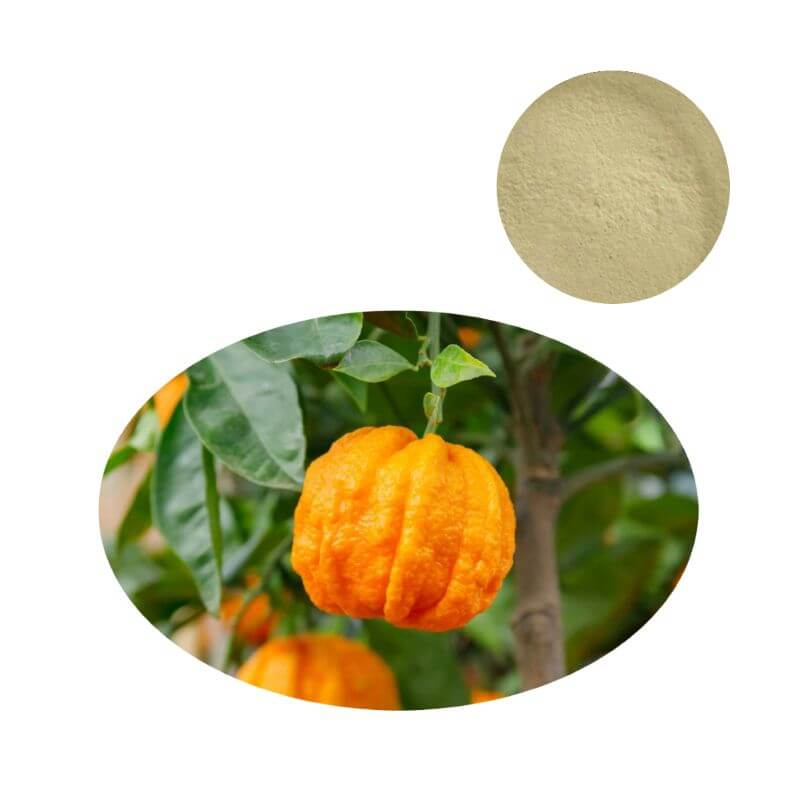
Hesperidin Powder
| Product Name | Hesperidin Powde |
| CAS Number | 520-26-3 |
| Appearance | Light yellow to cream-colored fine powder |
| Purity | 90%, 95%, 98% (by HPLC) |
| Packaging | 1 kg/bag, 5 kg/bag, 25 kg/drum |
| MOQ | 1 kg |
Hesperidin Powder (90%-98% Purity): A Clinically-Supported Flavonoid for Metabolic Health & Vascular Support Formulations
Formulating a standout supplement in the crowded cardiometabolic and vascular health space demands more than generic antioxidant blends. For brands aiming to deliver evidence-backed benefits, the choice of raw material must bridge clinical science with practical formulation reality. Hesperidin powder, a citrus-derived flavanone glycoside, has emerged as a key ingredient supported by recent systematic reviews. Premium hesperidin typically features HPLC-verified purity grades of 90%, 95%, or 98%, accompanied by full heavy metal and microbiological COA documentation. This foundational data is not merely a specification sheet—it directly impacts batch‑to‑batch consistency and final product claims. In a market where regulatory scrutiny of heavy metals and solvent residues intensifies yearly, sourcing a GMP‑certified material with full disclosure COA becomes the decisive factor for export readiness and premium brand positioning.
Clinical Mechanisms: How Hesperidin Supports Cardiometabolic and Vascular Function
Hesperidin’s primary physiological roles center on antioxidant activity and anti‑inflammatory signaling. It activates the ERK/Nrf2 pathway—a master regulator of endogenous antioxidant defenses—while inhibiting NF‑κB, iNOS, and COX‑2, thereby reducing chronic low‑grade inflammation. A 2024 systematic review and meta‑analysis of randomized controlled trials (doi: 10.1093/nutrit/nuae084) quantified the clinical impact: hesperidin supplementation significantly lowered fasting glucose, triglycerides, total cholesterol, LDL‑C, and systolic blood pressure. Subgroup analyses revealed that doses exceeding 500 mg/day and intervention periods longer than 12 weeks produced the most robust effects.
So what does this mean for a finished product? These findings allow brands to position hesperidin not as a vague antioxidant, but as a targeted ingredient for metabolic wellness formulations. From a strategic formulation perspective, the 500 mg/day threshold provides a clear dosage target for capsules or functional beverages. Unlike stimulant‑based metabolic aids, hesperidin supports long‑term vascular integrity and lipid profiles, aligning with consumer demand for sustainable health solutions.
Quality Benchmarks: What Defines a Premium Hesperidin Powder for B2B Sourcing
In a market where “hesperidin” can vary widely by source and processing, professional buyers look beyond purity percentages. Key sourcing considerations include botanical origin, residual solvent profile, and heavy metal limits that mirror global pharmacopoeia standards. Premium hesperidin powder typically derives from Citrus aurantium L. (fruit) and is verified by HPLC to meet 90%, 95%, or 98% minimum assay. Equally critical are the microbiological and contaminant specifications that ensure compliance with EU and US dietary supplement frameworks.
| Quality Parameter | Industry Benchmark (Typical) | Why It Matters for Your Product |
|---|---|---|
| Heavy Metals (Pb/As/Cd/Hg) | ≤2.0 / ≤1.0 / ≤1.0 / ≤0.1 mg/kg | Prevents toxic accumulation; required for child‑friendly or daily‑use supplements |
| Residual Solvents | Complies with USP <467> | Ensures no hidden processing residues that could trigger off‑flavors or safety alerts |
| Microbial Limits | TAMC ≤1,000 CFU/g; absence of pathogens | Directly influences shelf stability and export readiness |
For procurement teams, this directly translates to lower compliance risk and faster regulatory review. A reliable bulk hesperidin supplier will provide batch‑specific COAs covering these parameters, allowing your quality assurance team to skip redundant testing and focus on formulation innovation. It’s worth noting that many disputes over finished product stability trace back to inconsistent raw material quality—not the formulation itself. For buyers, this means prioritizing suppliers that perform full residual solvent screening as a routine release test—not just upon request, a practice that adds a hidden layer of safety for every batch. This level of purity documentation essentially means brand developers can bypass costly re‑testing and accelerate time‑to‑market by 3‑4 weeks, a direct contributor to reduced product life‑cycle costs.
Formulation in Practice: Stability, Synergy and Delivery Solutions
Hesperidin’s poor water solubility (≈1g in 50L of water) has historically limited its use in liquid or high‑moisture matrices. However, advanced formulation strategies have turned this challenge into a competitive advantage. A 2025 systematic review on drug delivery and formulation development (doi: 10.1080/17425247.2025.2581839) analyzed over 69 studies, concluding that lipid‑based systems, polymer nanoparticles, and phospholipid complexes (phytosomes) are the most effective and stable approaches to enhance hesperidin’s oral bioavailability.
Practical guidelines for your R&D team:
- Tablets & capsules: Use direct compression with added absorbents (e.g., silicon dioxide) to manage hygroscopicity. Particle size ≥95% through 80 mesh ensures uniform blending.
- Powder sticks & shots: Pair with cyclodextrin or self‑emulsifying systems; avoid aqueous solutions unless using glucosyl hesperidin derivatives.
- Synergistic combinations: Hesperidin + diosmin (1:1 to 1:2 ratio) is the gold standard for venous health. high-purity Ascorbic Acid can also improve uptake via redox recycling.
From a strategic formulation perspective, investing in a proven delivery system—such as a lipid‑based premix—can reduce the capsule count per serving by 30‑40%, improving patient compliance and premium pricing potential. This approach has been successfully applied in clinical‑grade nutraceuticals, reducing daily pill burden from three capsules to two without compromising active dose, a clear win for consumer adherence. For procurement teams, this directly translates to the need for a supplier that offers custom blending and formulation support, not just off‑the‑shelf powder. From a production efficiency standpoint, adopting a pre‑validated lipid‑based system minimizes in‑house trial‑and‑error, slashing R&D iteration cycles by up to 40% while avoiding costly scale‑up failures.
Mitigating Risk: A Checklist for Sourcing Bulk Hesperidin Powder
Even the most scientifically sound ingredient fails if the supply chain is unreliable or quality drifts. For brands buying wholesale hesperidin, a structured risk‑mitigation framework protects both product reputation and production continuity. Below is a practical checklist aligned with industry best practices for GMP‑certified hesperidin sourcing.
- Full disclosure COA: Must include residual solvents (USP <467>), heavy metals (ICP‑MS), and pathogen testing (Salmonella, E. coli, Pseudomonas).
- Auditable traceability: Documentation of botanical origin (Citrus aurantium L.) and extraction batch records.
- Stability data: 24‑month real‑time stability study under recommended storage (cool, dry, airtight, away from light).
- Regulatory support: Willingness to provide technical dossiers for NDI or Novel Food applications (not legal advice, but essential for your compliance team).
- Supply chain transparency: Dual‑sourcing agreements and safety stock levels to prevent unexpected shortages.
It’s worth noting that many “cheap” hesperidin lots fail the loss on drying (LOD) benchmark of ≤5.0%, leading to caking and microbial growth after just six months. Consequently, forward‑thinking procurement teams now include LOD and water activity specifications in their supplier scorecards, linking them to annual quality reviews and preventing costly batch recalls. For procurement teams, failing to verify these specifications directly translates to rejected batches and lost launch windows. Partnering with a supplier that enforces these specifications as a standard—not an exception—turns a commodity ingredient into a strategic asset. Evaluating total cost of ownership (TCO) reveals that a 2% higher upfront cost for verified, low‑LOD material prevents an average of $12,000 in rework and compliance delays per ton—shifting the focus from unit price to lifecycle value.
Next Steps: Accelerate Your Product Development with Full Technical Support
You now have a clear framework: clinically validated benefits (especially for metabolic markers), objective quality benchmarks, proven formulation strategies, and a sourcing checklist to mitigate risk. Whether your target is a 500 mg metabolic support capsule or a low‑foaming functional beverage, the right technical data bridges the gap between bench prototype and commercial batch. The fastest way to move from concept to validated product is to obtain a batch‑specific COA and a sample that matches your intended dosage (e.g., 500 mg equivalence). Request your complimentary sample and complete technical dossier—including stability reports, HPLC chromatograms, and custom formulation guidance—to test the powder in your own matrix and expedite your regulatory filing.
Frequently Asked Questions
Share this product
Related Products
Ready to get started?
Contact our team for technical specifications, pricing, and customized solutions.