
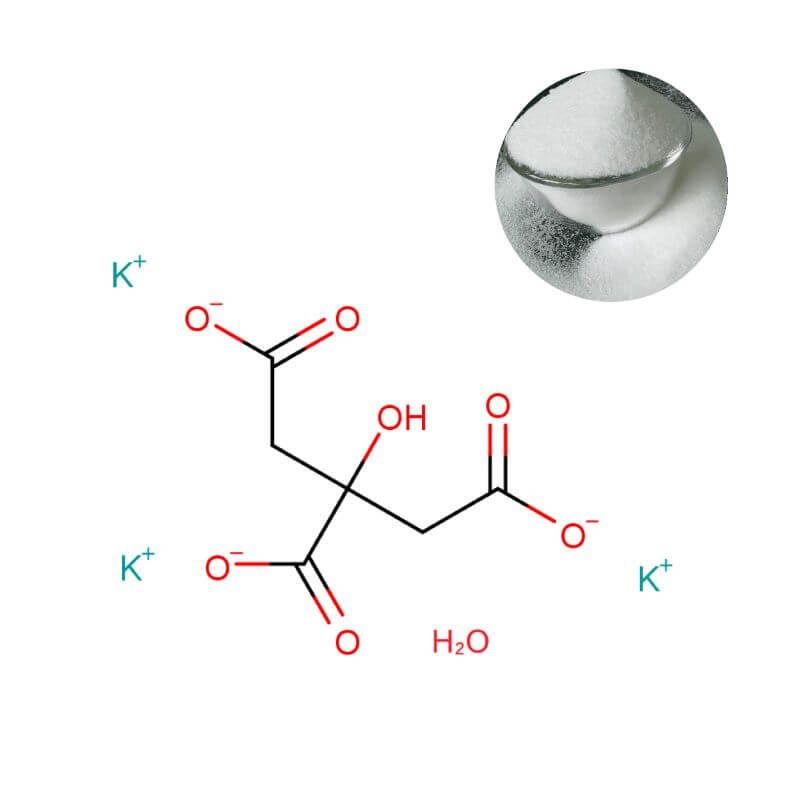
Potassium Citrate Monohydrate
| Product Name | Potassium Citrate Monohydrate Powder |
| CAS Number | 6100-05-6 |
| Appearance | White crystalline or granular powder |
| Purity | ≥99.0% (Food Grade, on dried basis) |
| Packaging | 25 kg/bag or drum |
| MOQ | 25 kg |
Potassium Citrate Monohydrate: The Strategic Ingredient for Credible Mineral & Electrolyte Formulations
Consumer demand is shifting decisively from basic supplementation to targeted, science-backed health support. This presents a core challenge for brands: selecting ingredients that deliver verifiable function alongside clear regulatory compliance. Potassium Citrate Monohydrate meets this challenge by combining a well-defined physiological mechanism with robust clinical evidence. It serves as a strategic foundation for sophisticated electrolyte, renal, and pH balance products. For brands competing on scientific credibility, this ingredient provides a tangible advantage. Specifications like the ≥99.0% assay and pharmacopeial-grade heavy metal limits are more than quality markers—they are prerequisites for batch-to-batch efficacy and streamlined regulatory review. The following analysis provides the framework needed to leverage this ingredient for genuine product differentiation.
Decoding the Science: From Urine Alkalinization to Systemic Mineral Support
Formulators must first understand the dual-action pathway of Potassium Citrate Monohydrate to justify its premium positioning over simpler salts. This knowledge translates directly into credible structure/function claims and targeted marketing. Upon ingestion, the citrate anion metabolizes to bicarbonate, increasing systemic alkaline reserves. This mechanism drives two measurable, formulation-relevant outcomes:
- A Foundation for Renal Health Formulations: Elevated urinary pH and citrate excretion directly inhibit certain types of kidney stone formation. This well-established physiological mechanism, rooted in the ingredient's ability to correct low urinary citrate (hypocitraturia), provides a defensible scientific narrative for products aiming to support a healthy urinary environment.
- Superior Electrolyte & Buffering Support: Beyond providing essential potassium, the ingredient's alkalizing effect is its key differentiator. In sports nutrition, this means addressing exercise-induced metabolic acidosis, which can impair performance and recovery. Consequently, products can promote “intelligent hydration” or “recovery pH balance,” creating a clear point of differentiation from those using basic potassium chloride.
The strategic imperative for R&D is clear: this defined mechanism enables a product story rooted in specific physiology, allowing for precise consumer communication and a stronger position during regulatory review.
Quality & Compliance: The Due Diligence Checklist for Strategic Sourcing
Sourcing this ingredient is an exercise in risk mitigation for procurement and quality teams. A specification of ≥99.0% purity is just the starting point. True assessment hinges on parameters that guarantee safety, stability, and consistent production-line performance. Treat the comprehensive, batch-specific Certificate of Analysis (CoA) as your primary due diligence tool. Prioritise these non-negotiable benchmarks:
| Parameter | Specification | Strategic Sourcing Implication |
|---|---|---|
| Loss on Drying | 3.0 - 6.0% | This validates the monohydrate form. Deviation indicates processing issues or moisture uptake, directly impacting dosage accuracy and risking caking during blending—a common cause of production downtime. |
| Heavy Metals (e.g., Lead) | ≤2.0 mg/kg (or lower) | Meeting FCC/USP limits is standard. However, leading brands now seek suppliers who consistently achieve levels well below the maximum. This proactive stance mitigates cumulative exposure risk in finished products and simplifies global market compliance. |
| Microbiological Purity | Pathogen-Free | A critical GMP checkpoint, especially for direct-to-consumer powder formats like stick packs that bypass the microbial reduction step of high-heat encapsulation. |
| pH (5% Solution) | 7.5 - 9.0 | This functional identity test confirms the material's core alkalizing property. Batch-to-batch variation here signals inconsistent quality that will inevitably affect end-product performance. |
Regulatory positioning further de-risks development. The ingredient's GRAS status in the US (21 CFR 184.1625) and approval as food additive E332 in the EU provide a stable foundation. In practice, a supplier's ability to provide seamless documentation for these standards serves as a reliable proxy for their overall operational excellence.
Formulation in Practice: Mastering Stability, Synergy, and Commercial Viability
Translating clinical data into a successful product requires practical handling knowledge. Overlooking these aspects can turn a premium ingredient into a production liability. Consider this commercial formulator's guide:
Dosage Strategy and Synergistic Combinations: While clinical doses for renal health (30-60 mEq daily) provide a benchmark, successful consumer products often employ effective lower doses within complexes. A powerful, research-backed strategy is combination with Magnesium Citrate. This synergy has demonstrated enhanced efficacy in raising urinary citrate, supporting a premium “advanced formula” positioning.
Critical Stability and Handling Insights: The ingredient's hygroscopic nature is the most critical operational factor. Managing it is a direct cost and quality control issue.
- Control the Manufacturing Environment: Conduct blending and encapsulation at a relative humidity below 45%. Proactive environmental control prevents clumping more effectively than any packaging solution, ensuring dosage uniformity and avoiding batch failure.
- Select Intelligent Excipients: Combine with moisture-scavenging carriers like microcrystalline cellulose and flow agents (e.g., silicon dioxide) to enhance powder flow and long-term blend stability.
- Align Packaging with Format: For hygroscopic drink mixes, specify high-barrier metallized film for stick packs. For tablets and capsules, standard HDPE bottles with desiccant plugs are typically sufficient, representing a lower packaging cost.
This operational knowledge directly influences your bill of materials, production SOPs, and stability protocols, preventing costly inefficiencies and protecting brand reputation.
Mitigating Sourcing Risk: The Strategic Partner Evaluation Framework
Your ingredient supplier effectively extends your quality system. Choosing based solely on unit cost introduces significant hidden risks. A strategic evaluation focuses on total cost of ownership and risk mitigation. Assess potential partners against this framework:
- Documentation Transparency & Traceability: Does the supplier provide a full, batch-specific CoA including heavy metals and microbiology? A clear audit trail back to the production batch is fundamental for your due diligence and for responding to external audits.
- Proactive Regulatory Support: Can they provide compliance statements or letters of guarantee for your target markets (FDA, EFSA, etc.)? A strategic partner anticipates and facilitates your compliance needs.
- Evidence of Consistency: Request CoAs from three consecutive batches. Consistency in key indicators like Loss on Drying and pH reveals sophisticated process control more reliably than a one-off “perfect” certificate.
- Technical Partnership Capability: Do they offer formulation support? A partner that helps solve problems adds value beyond the transaction and can accelerate your time-to-market.
- Supply Chain Resilience: Inquire about quality certifications (e.g., FSSC 22000) and business continuity plans. For a core ingredient, supply security is as critical as quality.
Selecting a partner that excels across this framework transforms a simple purchase into a strategic asset, protecting brand equity and reducing operational burden.
Next Steps: From Strategic Insight to Product Reality
Potassium Citrate Monohydrate represents a convergence of clinical validation, regulatory clarity, and functional versatility. The insights outlined here provide a roadmap for building differentiated, credible products in competitive health categories. The final step is empirical validation with material that meets the stringent benchmarks discussed.
Request Your Complimentary Sample & Technical Dossier: Evaluate the flow, solubility, and stability of premium-grade Potassium Citrate Monohydrate in your own lab. The accompanying technical dossier includes detailed specifications, application notes, and regulatory summaries to inform your development strategy. Access the technical dossier and initiate your sample request here to make a confident, data-driven sourcing decision.
Frequently Asked Questions
Share this product
Related Products
Ready to get started?
Contact our team for technical specifications, pricing, and customized solutions.