
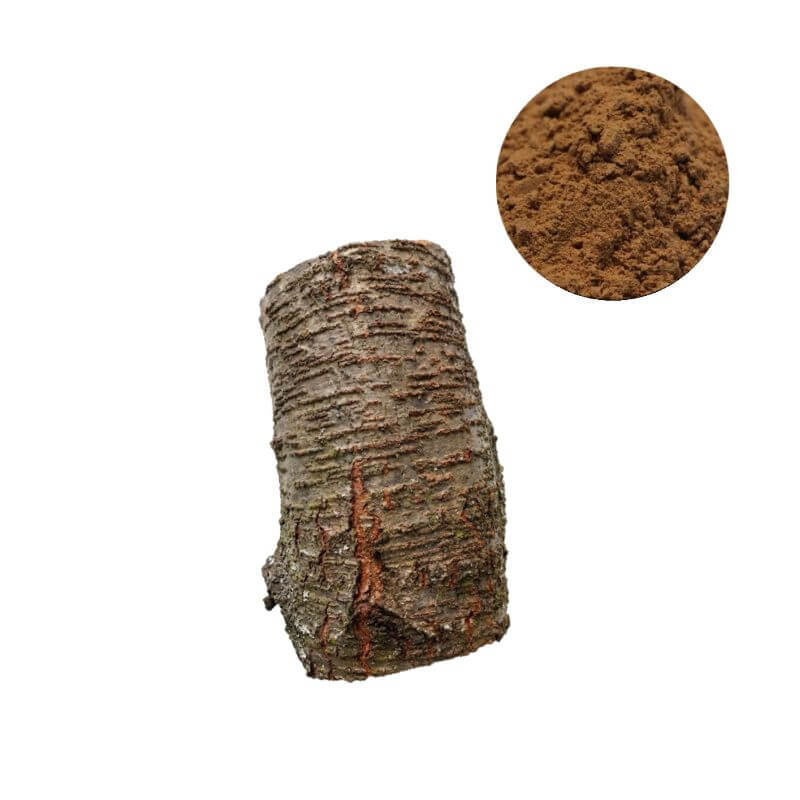
Pygeum Africanum Extract Powder
| Product Name | Pygeum Africanum Extract Powder |
| CAS Number | 85865-74-3 |
| Appearance | Brown to dark brown fine powder |
| Purity | 2.5% Phytosterols (HPLC) | 10:1 Ratio Extract (TLC) |
| Packaging | 1 kg/foil bag, 5 kg/tin, 25 kg/cardboard drum |
| MOQ | 1 kg |
Pygeum Africanum Extract Powder: Strategic Sourcing and Formulation Excellence for Men's Health
For supplement brands aiming to lead the competitive men's wellness sector, generic prostate health solutions no longer offer a distinct market advantage. Success in today's regulatory landscape requires a shift toward ingredients that provide both clinical validation and absolute supply chain transparency. Standardized Pygeum Africanum Extract, particularly grades featuring 2.5% Phytosterols and a 10:1 concentration ratio, provides the technical foundation for high-performance urinary support products. By utilizing advanced HPLC profiling to ensure batch-to-batch consistency, professional sourcing teams enable formulators to transition from traditional herbal claims to precise, science-backed solutions. This strategic approach addresses the dual challenge of consumer skepticism and rising compliance costs, positioning the ingredient as a critical driver of brand equity and long-term consumer trust.
Decoding Multi-Targeted Mechanisms: Clinical Efficacy as a Brand Value Driver
Understanding the physiological role of Pygeum Africanum requires looking beyond its traditional use toward specific biochemical interactions within the prostate and bladder. For a brand's R&D team, this scientific depth transforms a simple label claim into a high-retention consumer product. The extract functions through a synergistic matrix of phytosterols, triterpenes, and ferulic acid esters that target the underlying inflammatory pathways contributing to benign prostatic hyperplasia (BPH) symptoms. Specifically, the extract has been shown to modulate the release of pro-inflammatory cytokines, such as IL-6 and TNF-α, in human peripheral blood mononuclear cells (doi: 10.3390/ijms25158298). This anti-inflammatory potential is a vital consideration for brands targeting the "active aging" demographic, where cellular-level support serves as a key purchasing driver.
- Inhibition of Growth Factors: Triterpenoids help suppress bFGF (basic fibroblast growth factor) activity, preventing the uncontrolled prostatic cell proliferation that often leads to product dissatisfaction.
- Bladder Elasticity: By supporting the contractility of the bladder detrusor muscle, this extract offers a secondary benefit that many 5-alpha reductase inhibitors lack, providing a more comprehensive relief profile.
- Leukotriene Modulation: Inhibiting the 5-lipoxygenase pathway lowers the overall pelvic inflammatory load, reinforcing the formula's systemic health appeal.
Practically speaking, this multi-targeted approach ensures that Pygeum Africanum provides more comprehensive support than single-ingredient synthetics. For the brand owner, this translates into a finished product that addresses multiple consumer pain points—such as night-time frequency and urine flow velocity—simultaneously. From a marketing perspective, citing specific cytokine modulation allows for a more sophisticated, expert-level dialogue with increasingly informed modern consumers.
Establishing Quality Benchmarks: Mitigating Technical Risks Through HPLC Verification
In the wholesale Pygeum Africanum market, procurement experts recognize that not all extracts are created equal. A common pitfall involves over-relying on ratio-only claims (e.g., 10:1) without verifying the presence of active markers. While a 10:1 ratio indicates the mass of raw material used, it does not guarantee the potency of the final powder. A premium ingredient profile must provide HPLC-verified data confirming at least 2.5% total phytosterols. For high-growth brands, this technical rigor serves as the best insurance policy against batch-to-batch variance, which can otherwise lead to inconsistent consumer experiences and negative reviews.
| Quality Indicator | Standard Specification | Commercial & Technical Impact |
|---|---|---|
| Total Phytosterols (HPLC) | ≥ 2.5% | Standardizes dose-response; reduces the risk of sub-potent batches. |
| Extract Ratio (TLC) | 10:1 | Optimizes capsule real estate, allowing for "all-in-one" premium blends. |
| Particle Size | Min. 95% through 80 Mesh | Minimizes machine downtime and ensures uniform active distribution. |
| Heavy Metals (Pb/As) | ≤ 1.0 mg/kg | Ensures clean-label status and simplifies global regulatory filings. |
From a compliance and risk-management standpoint, a landmark meta-analysis of 18 randomized controlled trials confirmed that standardized Pygeum extract significantly improves peak urine flow by 23% and reduces nocturia by 19% (doi: 10.1016/s0002-9343(00)00604-5). For professional procurement teams, sourcing an ingredient that aligns with these clinical benchmarks removes the trial-and-error phase of product development, ensuring the final SKU is built on a foundation of proven success.
Formulation in Practice: Solving Challenges of Stability and Delivery
Optimizing the delivery of bulk Pygeum Africanum requires a deep understanding of its lipophilic nature. In practice, the primary technical challenge is preserving delicate sterols during manufacturing. A frequent mistake in contract manufacturing involves allowing ambient temperatures to rise above 40°C during high-speed blending, which can trigger oxidation and degrade efficacy before the product reaches the consumer. Maintaining humidity below 50% is equally critical to prevent powder clumping, which directly impacts the accuracy of fill-weights in automated encapsulation lines. By mastering these environmental variables, brands ensure their product maintains its labeled potency throughout its entire shelf life.
Strategic differentiation often stems from synergistic combinations that target multiple physiological pathways. When formulating for the premium segment, pairing Pygeum with complementary actives can justify a higher price point by offering a broader spectrum of benefits:
| Synergistic Partner | Target Health Outcome | Formulation Rationale |
|---|---|---|
| Saw Palmetto Extract (45% Fatty Acids) | Holistic Prostate Support | Pygeum's cytokine modulation complements Saw Palmetto's enzyme inhibition. |
| Stinging Nettle Root | Enhanced Flow Dynamics | Nettle root lignans synergize with Pygeum sterols for better urinary comfort. |
| Natural Lycopene Powder | Antioxidant Protection | Protects prostate tissue from oxidative stress while Pygeum manages volume. |
For brands targeting convenience-driven consumers, the use of a 10:1 ratio extract is particularly advantageous. This concentration allows a high-potency dose to fit into a Size 0 or Size 1 capsule rather than a bulky Size 00. This subtle choice in dosage form design significantly reduces pill fatigue, a key factor in long-term consumer adherence and subscription-based revenue models.
Supply Chain Resilience: Navigating CITES and Global Regulatory Compliance
In the international market for Pygeum Africanum, the most significant threat to brand continuity is not raw material cost, but regulatory exclusion. Because Prunus africana is protected under CITES Appendix II, every shipment must be accompanied by a valid CITES export permit. For a global distributor or brand, sourcing from a partner that lacks this documentation is a high-risk gamble. A single customs seizure can lead to massive financial losses and a permanent "red flag" on a company's import profile. Therefore, a professional Total Cost of Ownership (TCO) evaluation must prioritize legal and ethical sourcing as a non-negotiable quality gate.
- Full Traceability: Reliable suppliers must provide a transparent paper trail linking the bark harvest to sustainable, managed forestries, satisfying both legal and CSR requirements.
- Safety Stock Planning: Given the seasonal nature of bark collection and the 4-8 week lead time for CITES permits, resilient supply chains maintain a 3-month safety stock in regional hubs to insulate against market volatility.
- Analytical Rigor: Beyond the assay, every CoA should be vetted for microbiological purity and heavy metal compliance (USP/Prop 65), ensuring the ingredient is ready for production without additional purification steps.
Investing in a supplier that operates within these compliance frameworks reduces the hidden costs of supply chain disruptions. For an established supplement brand, the value of knowing a shipment will pass customs without delay far outweighs marginal savings offered by unverified sources. In the 2026 market environment, regulatory security is the ultimate competitive advantage.
Strategic Implementation for Your Product Roadmap
Pygeum Africanum remains a cornerstone of the global men's health category because it offers a rare combination of historical use and modern clinical validation. For brands ready to upgrade their product line, moving to a standardized 2.5% Phytosterol extract is a strategic decision that ensures the finished formula meets the highest standards of potency and safety. By aligning procurement with HPLC-verified quality and CITES-compliant supply chains, you effectively lower the barriers to international expansion and consumer trust. To help your team evaluate the specific technical advantages of our bark extract for your upcoming formulations, we invite you to Request Your Complimentary Sample & Technical Dossier. This resource provides the analytical and regulatory data necessary to accelerate your internal qualification process and reduce time-to-market.
Frequently Asked Questions
Share this product
Related Products

Ready to get started?
Contact our team for technical specifications, pricing, and customized solutions.