
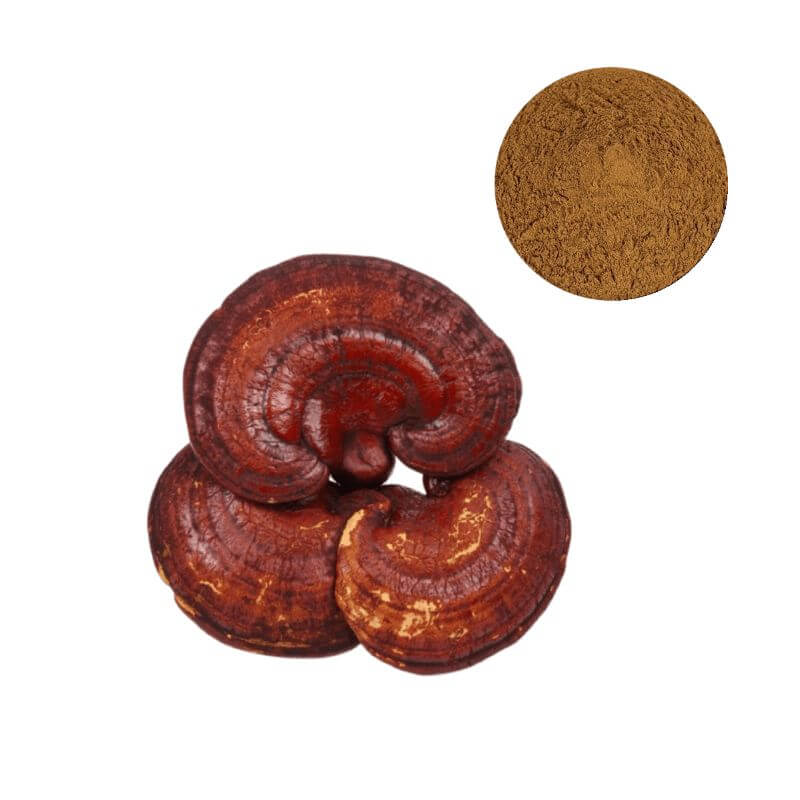
Reishi Mushroom Extract Powder
| Product Name | Reishi Mushroom Extract Powder |
| CAS Number | 223751-82-4 |
| Appearance | Fine brown to reddish-brown powder |
| Standard Grade | Polysaccharides 30% (by UV-Vis) |
| Dual-Extract Grade | Polysaccharides 30% + Triterpenes 2% (by HPLC) |
| Packaging | 1 kg/bag, 5 kg/bag, 25 kg/drum |
| MOQ | 5 kg |
Dual-Standardized Reishi Mushroom Extract Powder for Immune Wellness Formulations
The dual-standardization of bulk Reishi Mushroom Extract Powder to independent bioactive markers directly eliminates the formulation uncertainty that plagues single-spec ingredients, giving R&D teams a predictable baseline for finished product performance. For spec-verified distributors and wellness brands, this translates to reduced batch-to-batch variability risk. The rigor of this consistency is secured through orthogonal HPLC and UV-Vis methods applied to every production lot, ensuring lot-to-lot alignment with the validated specification profile.
The Science of Adaptation: Translating Bioactive Pathways into Credible Product Stories
For a brand's R&D and marketing teams, understanding the "how" behind an ingredient is the key to building credible, compliant structure/function claims. Reishi's (Ganoderma lucidum) efficacy stems from the complementary actions of its polysaccharides (notably beta-glucans) and triterpenes (like ganoderic acids). Their primary role is not acute stimulation but sophisticated modulation of the body's stress and immune responses.
Mechanistically, polysaccharides interact with immune cell receptors (e.g., TLR4), influencing pathways like NF-κB to help support a balanced and responsive immune system. For your product positioning, this makes Reishi an ingredient for year-round wellness and resilience, appealing to the growing "daily wellness" consumer segment beyond seasonal use. The triterpenes contribute strong antioxidant activity and support the body's normal inflammatory response, helping to maintain cellular redox balance.
This science is validated in human studies. A 2023 RCT showed that 200mg/day of a Reishi beta-glucan significantly increased key immune cells (CD3+, CD4+, CD8+ T cells) and enhanced NK cell activity in healthy adults (Foods, 2023; doi: 10.3390/foods12030659). For your brand, this provides a direct, quantifiable scientific anchor for claims related to immune support. Therefore, investing in a dual-standardized extract is not just a sourcing choice, but a foundational decision for building a product story that resonates with both scientifically-inclined retailers and end consumers.
Decoding Quality Specifications: Your Framework for Risk Mitigation and Compliance
In B2B sourcing, the most expensive cost is often a quality failure. A strategic procurement approach uses specifications not just as a checklist, but as a risk mitigation tool. For Reishi extract, this means looking beyond a single "high-potency" number to a holistic profile that ensures safety, consistency, and regulatory alignment.
| Quality Focus | Technical Meaning | Strategic Business Impact |
|---|---|---|
| Dual-Active Standardization | Guaranteed minima for both polysaccharides (UV-Vis) and triterpenes (HPLC). | Ensures predictable biological activity in your finished product, protecting against batch-related efficacy fluctuations that can damage brand trust. |
| Elemental Impurity Limits | Heavy metal specs (e.g., Pb ≤1.0 mg/kg, As ≤1.0 mg/kg) aligned with stringent global guidelines. | This serves as your primary safety gate. Specifications at this level significantly de-risk your regulatory submissions and protect against costly recalls. |
| Microbiological Control | Low total plate count (≤1,000 CFU/g) and absence of pathogens per USP methods. | Preserves ingredient stability and prevents spoilage in your final blend, directly supporting a longer, more reliable shelf life for your SKU. |
From a compliance standpoint, informed sourcing accelerates time-to-market. In the U.S., while a GRAS notice exists for mycelium-derived Reishi beta-glucans (GRN 413), full-spectrum fruiting body extracts typically require careful NDI review prior to marketing. In the EU, Reishi fruiting body extract is not classified as a Novel Food under the European Commission's Novel Food Status Catalogue, as it has a history of significant consumption prior to May 15, 1997. However, Reishi mycelium and spore powder derivatives may require Novel Food authorization. For this extract, the primary compliance consideration centers on heavy metal limits per EU 2023/915 and proper food supplement classification under Directive 2002/46/EC. A supplier that delivers clear, auditable documentation for each batch delivers a compliance asset that streamlines your path to market. For a brand entering multiple regions, this support can be as valuable as the ingredient itself.
Formulation in Practice: Engineering Stability, Synergy, and Consumer Experience
Translating a quality raw material into a successful finished product requires practical formulation intelligence. For Reishi extract, clinical dosing translates to a typical inclusion of 1 to 3 grams per daily serving to deliver effective bioactive levels.
Strategically pairing Reishi amplifies its value and your product's appeal. Consider these evidence-informed combinations:
- With Vitamin C and Zinc: This combination creates a comprehensive immune matrix. Reishi offers adaptive modulation, while Vitamin C and Zinc provide foundational nutritional support for immune function.
- Within an Adaptogen Complex: Combining Reishi with standardized ashwagandha root powder or high-potency rhodiola rosea extract creates a multi-target "stress resilience" formula, allowing for broader claims and meeting consumer demand for holistic solutions.
- In Antioxidant Blends: Its triterpenes synergize with other antioxidants like fermented coenzyme Q10 powder, offering a compelling "cellular defense" angle for longevity-focused products.
The formulation team's mastery is tested in managing physical and sensory challenges:
- Solubility & Delivery: While polysaccharides are water-soluble, full-spectrum extracts may contain insoluble fiber. For a clear functional beverage, a refined polysaccharide isolate is often a better technical fit than a whole extract, impacting sourcing strategy.
- Sensory Integration: The characteristic bitter, earthy taste requires proactive flavor masking. Savvy formulators pair it with strong, complementary flavors like cocoa, coffee, or chai spices, turning a challenge into a unique sensory profile.
- Stability by Design: Reishi's bioactives are sensitive to heat and moisture. Controlling the production environment (e.g., keeping RH below 45% during blending) is often more critical for maintaining potency than passive packaging solutions alone. This operational insight directly translates to lower variance in finished product testing and greater confidence in your stated shelf life.
The Strategic Sourcing Checklist: Auditing for Supply Chain Resilience
Selecting a Reishi supplier is a decision with long-term implications for product integrity and supply continuity. A transactional focus on price per kilo overlooks the total cost of ownership associated with quality inconsistency or regulatory delays. Here is a due-diligence framework used by experienced procurement teams to assess partners strategically:
- Transparency & Traceability: Does every batch come with a comprehensive CoA, and can the supplier trace material back to the cultivated source? This is non-negotiable for quality audits and building a transparent brand story.
- Analytical Ownership: Does the supplier conduct in-house HPLC/UV-Vis testing? This indicates direct control over quality, as opposed to relying on third-party certificates, which can introduce delays and obscure issues.
- Regulatory Partnership: Do they proactively provide documentation packages (GMP certs, allergen statements, regulatory overviews) tailored to key markets? This turns the supplier into a compliance ally, reducing your internal workload.
- Consistency History: Can they demonstrate batch-to-batch consistency over time, not just for potency but for impurity profiles? Reviewing historical CoAs is a critical step often missed.
- Agility & Customization: Can they accommodate specific requests, such as different polysaccharide-to-triterpene ratios or extraction methods? This flexibility can be crucial for creating a truly differentiated finished product.
Evaluating potential suppliers against this checklist transforms the selection process from a price negotiation into a strategic partnership assessment. The right partner functions as an extension of your quality assurance and R&D departments, mitigating the risks of product failure and supply disruption.
Supply-Ready Reishi Extract for Production Continuity
With tightening access to premium Ganoderma lucidum sourcing regions and extended cross-border logistics lead times, establishing a spec-verified compliance pipeline is no longer optional for production continuity. The most direct hedge against supply chain friction is hands-on material qualification. Request a sample of GMP-compliant Dual-Standardized Reishi Extract (≥30% Polysaccharides / ≥2% Triterpenes), accompanied by a full Technical Dossier with a sample COA and regulatory summary—packaged to accelerate your formulation prototyping and vendor validation workflow. Request Reishi Sample with Technical Dossier
Frequently Asked Questions
Share this product
Related Products
Ready to get started?
Contact our team for technical specifications, pricing, and customized solutions.