
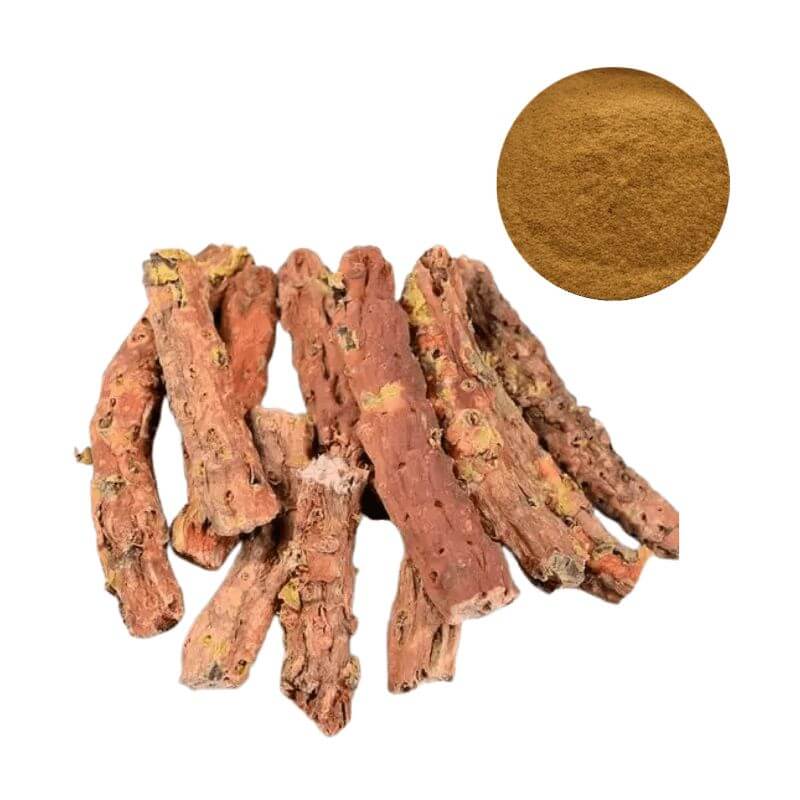
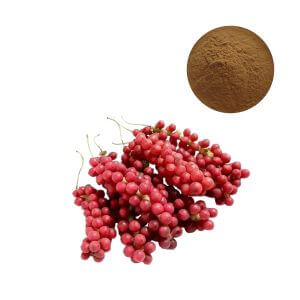
Rhodiola Rosea Extract Powder
| Product Name | Rhodiola Rosea Extract Powder |
| CAS Number | 97404-52-9 |
| Appearance | Brownish red to brown fine powder |
| Purity | ≥ 3.0% Rosavins & ≥ 1.0% Salidroside (by HPLC) |
| Packaging | 1 kg/bag, 5 kg/bag, 25 kg/drum |
| MOQ | 25 kg |
Standardized Rhodiola Rosea Extract for Performance Nutrition & Cognitive Adaptogen Formulations
Bulk Rhodiola Rosea Extract Powder (3% rosavins, 1% salidroside) delivers a clinically quantified adaptogen ingredient to formulation scientists and procurement specialists. Dose-dependent improvements in anaerobic power and cognitive processing—recently established in human trials—address the two primary consumer drivers in active nutrition. Integrated HPLC species-authentication and CITES-compliant sourcing convert this botanical into a brand-protecting asset with documented batch-to-batch consistency and complete audit-ready supply chain documentation.
Human Clinical Trial Data Defines Dose-Response Performance Benchmarks for Brand Differentiation
Traditional adaptogen marketing relied on vague "stress support" narratives without human performance data. The 2025 randomized, double-blind, crossover trial in 27 resistance-trained athletes changes this paradigm. High-dose (1500 mg daily) supplementation with the standardized 3% rosavins / 1% salidroside extract for seven days delivered leg press 1RM increases of 47.7 kg (p<0.001). The low-dose (200 mg daily) regimen produced significant gains in bench press performance: 1RM +5.59 kg (p=0.003), set 3 repetitions +4.30 reps (p<0.001), set 3 training volume +168.6 kg (p<0.001), and mean power output +29.7 W (p=0.026). Stroop interference scores improved by +10.2 to +18.9 counts (p<0.001) relative to placebo across the cognitive testing battery.
R&D teams obtain precise effect-size metrics from these quantifiable endpoints, enabling DTC labels with genuine competitive edge. Clinical outcomes translate into consumer-facing claims such as "supports muscular power output during high-intensity training" and "helps maintain cognitive processing speed under physical stress"—claims that command higher retail positioning. The 3:1 rosavin-to-salidroside ratio mirrors the study material, removing batch variability as a finished-product variable. Product developers can construct pre-workout, recovery, or cognitive endurance concepts around a validated dose-response curve, while procurement gains a scientific rationale for selecting this specific ratio over generic adaptogen alternatives (Nutrients, 2025; doi:10.3390/nu17233736).
Nanoemulsion and Orally Disintegrating Tablet Technologies Overcome Palatability and Processing Hurdles
Clinical efficacy fails commercially if the active cannot be formulated into consumer-preferred formats without stability or taste compromises. Rhodiola extract presents two obstacles: characteristic bitterness that consumer panels reject, and hygroscopicity that complicates high-speed tableting. Systematic surfactant screening using response surface methodology identifies Tween 80-based O/W systems as optimal for Rhodiola rosea nanoemulsion formulation, with optimized formulations (Opt D) achieving high desirability scores (0.98) and demonstrating favorable colloidal stability characteristics. Encapsulation efficiency and storage stability of the optimized systems were quantitatively confirmed through standard pharmaceutical characterization protocols.
| Formulation Parameter | Conventional Extract | Nanoemulsion-Optimized |
|---|---|---|
| Mean Particle Size | ~200 μm | sub-200 nm range |
| Polydispersity Index | variable | low dispersity |
| Zeta Potential | N/A | negative surface charge |
| Storage Stability | sedimentation observed | colloidally stable |
Orally disintegrating tablet (ODT) formulations with 500 mg tablet weight (20% extract) disintegrate within three minutes while masking bitterness via specialized excipients, meeting USP <701> disintegration standards for orodispersible dosage forms. The direct-compression ODT approach eliminates wet granulation steps entirely, reducing single-batch processing time by 18-24 hours and unlocking annual capacity gains that drive unit production cost reductions of 6-9%. These advances enable entry into high-growth segments—RTD shots, gummies, stick packs—without wet granulation, reducing CMO processing time by 4-6 weeks and cutting batch rejection rates. Synergistic blends with high-purity L-theanine support cognitive clarity during high-intensity output, while combining with Ashwagandha root extract (5% withanolides) or micronized caffeine anhydrous creates "focus + endurance" formulations that leverage multiple neuroendocrine pathways, providing a clear DTC story and reducing separate ingredient qualification across complex blends (Colloids and Surfaces B: Biointerfaces, 2024; doi:10.1016/j.colsurfb.2023.113692).
HPLC Rosavin Cluster Fingerprinting Authenticates Species and Protects Brand Reputation
Formulation and clinical investments lose value if incoming material derives from substitute species rather than authentic Rhodiola rosea. Third-party testing reveals that only ~40% of commercial products contain detectable rosavin markers. The primary adulterant—Rhodiola crenulata—contains salidroside but zero rosavins, yet the clinical trial validated the combined rosavin/salidroside profile. HPLC multi-marker analysis distinguishes authentic R. rosea through the four-peak rosavin cluster (rosavin, rosarin, rosin, salidroside) with consistent ratios; samples showing salidroside ≥1% but rosavin below 1.5% indicate fraud. Less than one-quarter of tested products meet both label claims for salidroside and total rosavins.
- Authentic R. rosea displays rosavin, rosarin, and rosin peaks in reproducible ratios
- R. crenulata substitution detected when rosavin peaks fall below 1.5% despite normal salidroside
- HPLC retention-time alignment against reference standards provides species-level verification at batch release
- This analytical barrier prevents adulteration that UV-only methods cannot detect
- Multi-marker fingerprinting correlates raw identity directly with clinical study material
For procurement, requiring HPLC rosavin cluster verification as a conditional release specification shifts authentication burden to the source and protects finished-product integrity. Brands avoid reputational damage and financial losses from adulterated batches—FDA warning letters and recalls tied to botanical substitution have increased substantially. The 3% rosavins threshold specifically excludes the "high salidroside, zero rosavin" profile of cheaper substitutes, giving developers confidence that finished goods match trial performance. This authentication protocol becomes a defensible quality narrative supporting premium retail pricing and consumer trust, with analytical standards and species-verification protocols characterized by the Oclean Nutra specification framework.
CITES Compliance and Region-Specific Regulatory Frameworks Secure Global Market Access
Functional beverages and gummies represent commercial opportunities, but regulatory compliance—particularly CITES Appendix II (effective 2022)—determines which brands can ship internationally without customs seizures. Every commercial Rhodiola rosea raw material shipment requires an official CITES export permit from the harvest country, documenting legal and sustainable collection. Processing times typically span 2-8 weeks. Regulatory frameworks diverge: EFSA has rejected 18 health claim applications, and the 2025 European Court of Justice ruling on botanicals health claims further clarifies the boundary between authorized health claims and soft advertising language, providing brands with a workable compliance framework for EU market label development. US FDA enforces drug-claim prohibitions, while EMA's HMPC recognizes traditional use with 30-year documentation.
Wild-harvested material still exceeds 60% of global supply, and populations have declined 60-70% in some regions. This supply constraint, combined with CITES permitting, has increased raw material acquisition costs 12-15% annually over five years. Procurement managers benefit from multi-year agreements with documented CITES permits and legal harvest verification, insulating supply chains from spot-market volatility that reaches 15-25% annual swings. Brands transparently communicating CITES compliance gain dual advantage: assured authentic material and a compelling sustainability story for retail buyers and consumers.
Accelerate R&D Qualification and Procurement Risk Assessment with Fully Documented Samples
Formulation scientists require physical samples for feasibility testing, while procurement teams need compliance documentation for audit files before production commitments. Requesting evaluation samples automatically triggers release of complete technical documentation: three-lot COA including HPLC rosavin cluster data, heavy metals and microbiology results, 24-month stability summaries, and CITES export permit copies. This integrated package eliminates the sequential document-request cycle that typically extends supplier qualification by 4-6 weeks, allowing R&D to proceed directly from sample testing to pilot production. This same documentation package directly satisfies Tier-1 brand audit requirements for botanical traceability and CITES due diligence, compressing compliance review cycles. Procurement gains confidence in supply continuity before volume orders, and regulatory teams receive pre-verified documentation for audit dossiers upon requesting a Rhodiola Rosea Extract certified sample.
Frequently Asked Questions
Share this product
Related Products
Ready to get started?
Contact our team for technical specifications, pricing, and customized solutions.