
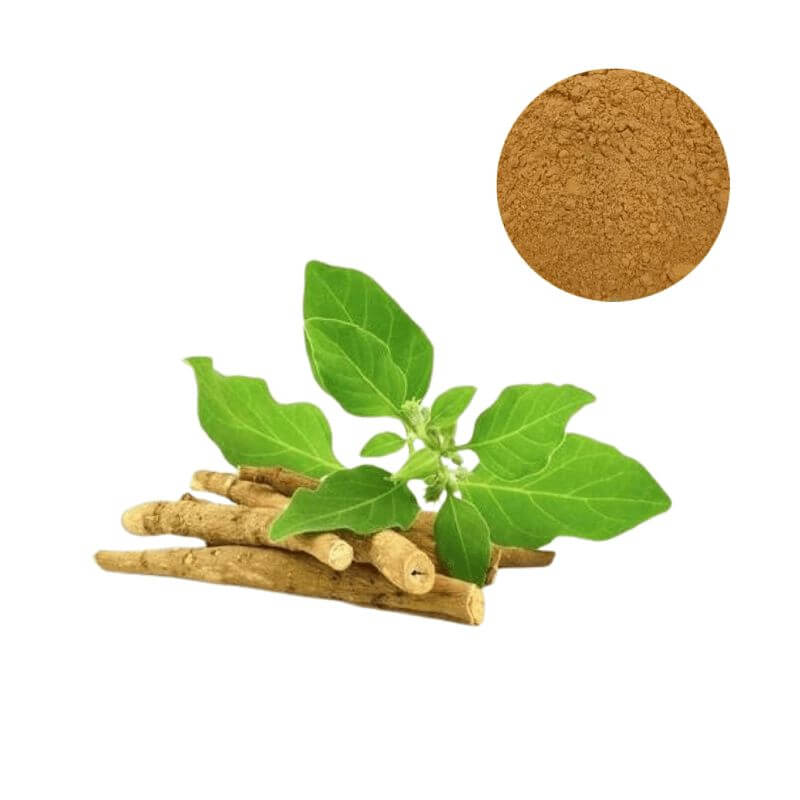
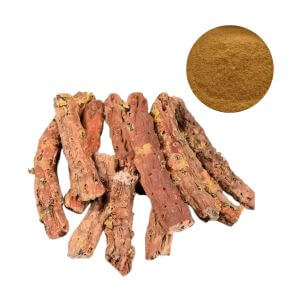
Ashwagandha Root Extract Powder
| Product Name | Ashwagandha Root Extract Powder |
| CAS Number | 90147-43-6 |
| Appearance | Light yellow-brown to brown fine powder |
| Purity | 2.5%, 5.0%, 10.0% Withanolides (by HPLC) |
| Packaging | 1 kg/bag, 5 kg/bag, 25 kg/drum |
| MOQ | 1 kg |
Standardized Ashwagandha Root Extract Powder for Premium Adaptogenic Stress & Sleep Formulations
Standardized bioactives redefine formulation economics for premium stress-support products. Sourcing bulk Ashwagandha Root Extract Powder through a verifiable Ashwagandha Root Extract Powder supplier directly impacts batch-to-batch reproducibility in gummies and RTD shots. The functional adaptogen market demands clinically validated endpoints—cortisol modulation and sleep architecture improvement—not generic ingredient checklists. Lot-to-lot COA traceability and audit-ready compliance dossiers form the procurement baseline for global brand owners aiming to de-risk R&D pipelines and secure supply chain integrity.
Clinical Endpoints and Pharmacokinetic Validation for DTC Brand Claims
Clinical proof substantiating adaptogenic efficacy distinguishes market leaders from commodity suppliers. A 2026 randomized, double-blind, placebo-controlled trial (n=40, 50-70 years, 200 mg bid, 180 days) provides the foundational evidence for direct-to-consumer (DTC) marketing strategies. The study quantified a 15.7% increase in serum testosterone (p < 0.05) and a 51.1% reduction in high-sensitivity CRP, alongside a 28.70% decrease in NT-pro BNP, with all hematological and hepatic markers remaining within normal ranges across the six-month intervention.
| Clinical Endpoint | Quantified Change | Significance |
|---|---|---|
| Serum Testosterone | +15.7% | p < 0.05 |
| High-sensitivity CRP (Inflammation) | -51.1% | p < 0.01 |
| NT-pro BNP (Cardiac Stress) | -28.70% | p < 0.05 |
These quantified biomarker improvements directly support structure/function claims such as "supports healthy cortisol balance" and "helps maintain normal stress responses," enabling brands to command premium retail pricing of $1.00+ per serving. For brand owners preparing New Dietary Ingredient (NDI) or Novel Food submissions, quantified biomarker changes of this magnitude reduce the burden of substantiation during regulatory review. Leveraging this 180-day safety and efficacy dataset within a bulk Ashwagandha Root Extract Powder procurement strategy transforms a standard botanical ingredient into a clinically differentiated asset that anchors consumer trust and justifies higher shelf placement (Food Science & Nutrition, 2026; doi: 10.1002/fsn3.71388).
Overcoming Sensory and Stability Hurdles in High-Growth Gummy & RTD Formats
Robust clinical data drive consumer interest, yet the inherent bitterness, hygroscopicity, and thermal sensitivity of withanolides introduce formulation bottlenecks that cannot be ignored. These physical characteristics directly challenge the stability of Ashwagandha Extract 5% Withanolides in high-moisture systems—gummies and ready-to-drink (RTD) beverages being prime examples. Translating clinical efficacy into consumer-friendly delivery requires strategic mitigation of off-notes and degradation pathways without compromising active payload.
- Soft Chews (Gummies): Thermal degradation during cooking demands advanced encapsulation and lipid-based coating to preserve withanolide integrity under heat.
- RTD Beverages & Shots: Solubility limitations require water-dispersible formats and multi-layer flavor systems to eliminate earthy notes without excessive sweetener loading.
- On-the-Go Powders (Sachets): Hygroscopicity control is non-negotiable; precise moisture management ensures instant dissolution and acceptable mouthfeel for end consumers.
A 2022 nanocapsule platform study demonstrated 79% encapsulation efficiency with a +25.2 mV zeta potential, achieving 92.6% cumulative release over 48 hours (in vitro release profile)—a technical benchmark for sustained delivery in liquid-filled capsules and sachets. For formulators, pairing this standardized root extract with complementary calming agents such as L-theanine supports the development of proprietary blends that reinforce the overall relaxation response. The inclusion of magnesium glycinate further enhances neuromuscular relaxation, while GABA contributes to balanced neurotransmitter activity—together, these synergists create formulations that support sleep architecture and cognitive recovery. Resolving these physical-sensory conflicts collapses development timelines by 8-12 weeks, eliminates costly re-formulation cycles, and positions brands to capture the 27% year-over-year sales growth documented across mainstream multi-outlet channels (MULO) for the 52 weeks ending November 30, 2025 (SPINS data) (Drug Delivery and Translational Research, 2022; doi: 10.1007/s13346-022-01181-y).
Navigating EU Article 8, Novel Food, and Cross-Border Labeling Safe Zones
Successfully formulated products must then clear divergent global regulatory frameworks. The regulatory landscape for Ashwagandha root extract powder wholesale is undergoing a critical transformation in 2026, with the European Parliament convening a dedicated Article 8 review under Regulation (EC) No 1925/2006. This process, driven by EFSA safety concerns, could impose restrictive measures, mandatory labeling, or a potential union-wide ban. Denmark prohibited ashwagandha in dietary supplements in April 2023, following a 2020 risk assessment by the Technical University of Denmark (DTU) that concluded a safe lower intake limit could not be established; Sweden and Finland are evaluating similar measures. Simultaneously, the EU maintains stringent "under review" status for adaptogen-related health claims, prohibiting explicit disease risk reduction language while permitting structure-function statements.
- United States (FDA): Regulated as a dietary supplement under DSHEA; extracts with a documented history of marketing in the U.S. prior to October 15, 1994, qualify as Old Dietary Ingredients and are exempt from NDI notification.
- European Union: Subject to Article 8 scrutiny (2026); adaptogen claims disallowed; extracts produced via novel manufacturing processes or with significantly altered compositional profiles may trigger Novel Food categorization under Regulation (EU) 2015/2283.
- Scandinavian Region: Denmark enacted a full ban (2023); Sweden and Finland are evaluating similar restrictions—critical exclusion zones for logistics.
Proactive investment in pre-market authorization dossiers, including toxicological profiles and proposed use levels, directly translates to a 22-58% export price premium over non-compliant competitors. For brand owners, securing a comprehensive Novel Food or GRAS dossier not only prevents catastrophic 20-30% revenue loss from sudden market withdrawal but also creates a first-mover advantage. When EFSA finalizes a positive opinion on stress-reduction claims (projected post-2030), compliant brands will command an additional 20-30% pricing uplift, turning regulatory compliance into a primary margin expansion lever for bulk Ashwagandha Root Extract Powder procurement.
Authenticity, Heavy Metal Profiling, and Geographic Supply Chain Resilience
Regulatory clearance is only effective if the physical material meets rigorous purity and authenticity standards. Commercial ashwagandha supply is overwhelmingly concentrated in India (primarily Madhya Pradesh and Rajasthan), accounting for essentially all global export volumes (industry data), exposing global buyers to geopolitical tariff risks, such as the proposed 50% import duty on Indian goods in 2025, and significant batch-to-batch variability in natural withanolide content (0.3-3% in raw roots). This geographic concentration demands a robust authenticity and contaminant control strategy to protect brand equity from adulteration risks, where colorimetric assay methods systematically overestimate withanolides by 30-50% compared to USP-mandated HPLC analysis.
- Heavy Metals (ICP-MS): Pb ≤ 2.0 mg/kg, As ≤ 1.0 mg/kg, Cd ≤ 1.0 mg/kg, Hg ≤ 0.1 mg/kg.
- Process Residues: Loss on Drying ≤ 5.0% (USP <731>); Residual Solvents compliant with USP <467>.
- Fingerprint Authentication: UHPLC-PDA multi-detector analysis and Orbitrap-HRMS metabolomics differentiate geographic origin and detect adulteration at 98% accuracy.
Selecting an Ashwagandha Root Extract Powder supplier that employs multi-detector analytical platforms (UHPLC-PDA, ICP-MS) delivers immediate brand protection. This technical diligence prevents costly FDA import alerts and product recalls, which severely depreciate consumer trust. Furthermore, diversifying sourcing through contract farming in South Africa or Morocco can reduce dependency on a single geography, cutting supply lead times by 10-15% while mitigating tariff-induced margin shocks. This dual-pronged approach—analytical authentication coupled with geographic diversification—fortifies the supply chain against disruption and provides a verifiable "seed-to-extract" traceability narrative that resonates with Tier-1 retail buyers.
Accelerate R&D Timelines with Verified Samples and Full Technical Dossiers
Transitioning from technical validation to procurement action requires direct material verification. Ordering a development sample initiates immediate access to batch-specific COAs, HPLC chromatograms, and cross-reference compliance dossiers required for label claims and master file submissions. This eliminates the standard 4-6 week supplier qualification bottleneck, allowing R&D to simultaneously test flow properties, blend uniformity, and taste-masking efficacy in commercial CMO trials. Obtain certified development samples with full compliance dossiers to bridge the gap between ingredient specification and market-ready innovation, securing both supply chain resilience and margin protection from the very first batch.
Frequently Asked Questions
Share this product
Related Products
Ready to get started?
Contact our team for technical specifications, pricing, and customized solutions.