
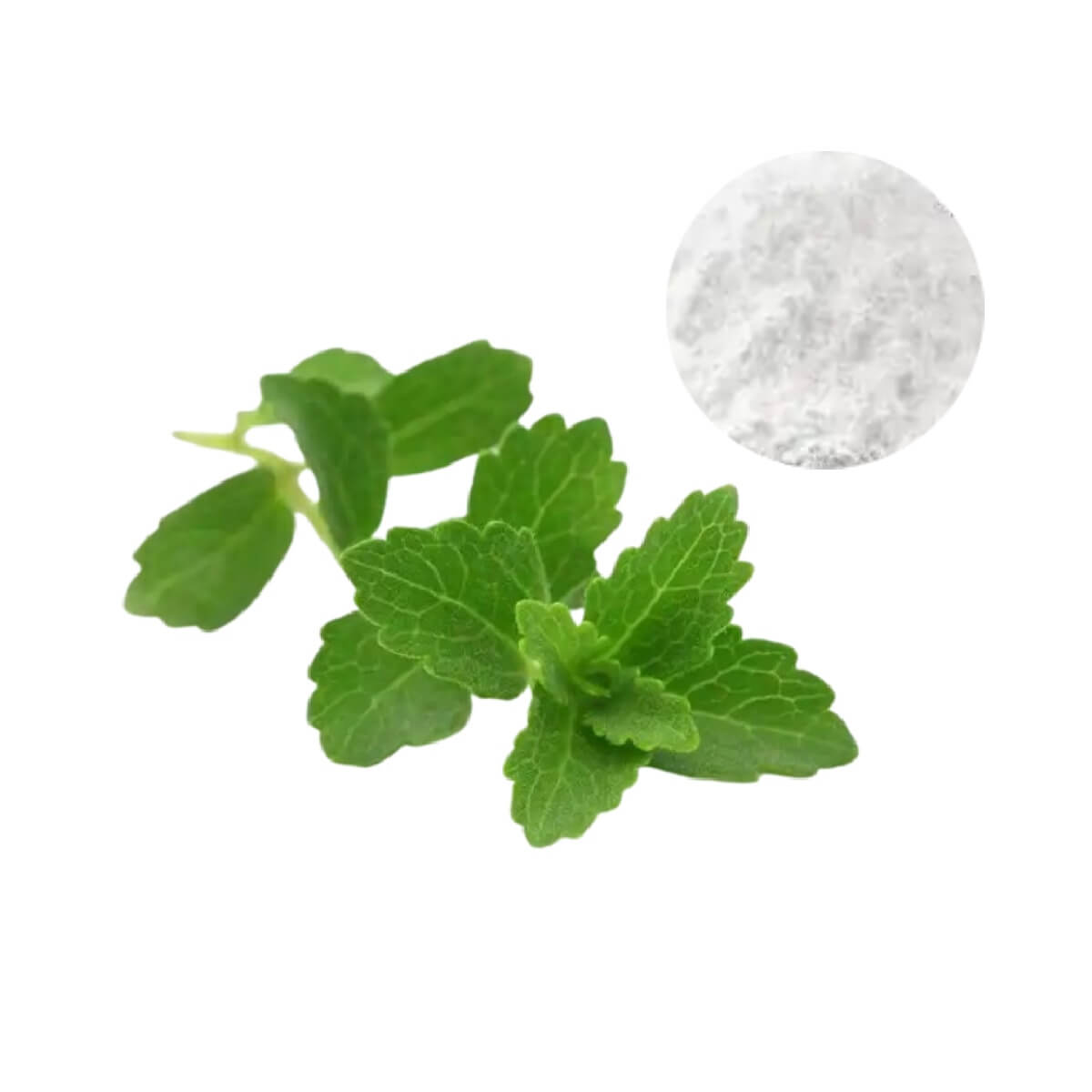
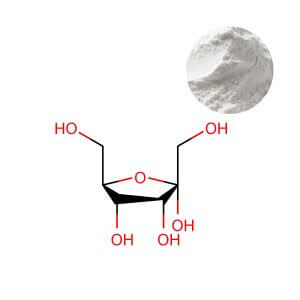
Stevia Extract Powder
| Product Name | Stevia Extract Powder |
| CAS Number | 58543-16-1 (Reb A) / 91722-21-3 (SG) |
| Appearance | Off-white to white fine powder |
| Total Glycosides (TSG) | 90%, 95%, 98% (by HPLC, dry basis) |
| Active Glycosides | Reb-A 40/60/80/95/98%, Reb-M 95% of TSG |
| Packaging | 1 kg/bag, 5 kg/bag, 25 kg/drum |
| MOQ | 1 kg |
Zero-Calorie Sweetener Steviol Glycosides Powder for RTD Beverages & Gummy Supplements
Bulk Steviol Glycosides Powder enters the formulation supply chain as a high-purity, plant-derived sweetener that directly addresses clean-label consumer demand. This Steviol Glycosides Supplier provides spec-verified material with lot-to-lot COA traceability, allowing R&D teams to bypass protracted supplier validation cycles. The compound's 200-300x sucrose sweetness intensity (Reb-A; up to 450x for select glycosides), combined with FDA GRAS no-objection status and EFSA E960 authorization, establishes a regulatory safety net that protects brand equity and accelerates international market entry from the first production batch.
Clinical Pharmacokinetics of Rebaudioside A: Human Absorption Data for Formulation Benchmarking
In a placebo-controlled crossover trial involving 30 type 2 diabetes patients, the oral pharmacokinetic profile of Rebaudioside A was established at a 3 g single dose. Plasma detection occurs within 1 hour post-administration, confirming rapid absorption. Key benchmarks for formulation scientists include a Cmax of 178.5 ± 86.0 ng/mL at a Tmax of 2.0 hours, and a terminal elimination half-life of 5.2 ± 1.6 hours (Table 5). The primary metabolite, steviol glucuronide, reaches substantially higher systemic exposure at 3,440.7 ± 1,817.8 ng/mL with a Tmax of 19.5 hours.
| Pharmacokinetic Parameter | Rebaudioside A (3 g oral dose) | Steviol Glucuronide (metabolite) |
|---|---|---|
| Cmax (ng/mL) | 178.5 ± 86.0 | 3,440.7 ± 1,817.8 |
| Tmax (hours) | 2.0 (1.0-18.5) | 19.5 (18.5-23.0) |
| Terminal t½ (hours) | 5.2 ± 1.6 | - |
For formulation scientists, this pharmacokinetic fingerprint provides quantitative boundaries for predicting systemic exposure and designing appropriate dosing intervals in functional beverages or solid-dose supplements. Glycemic perturbation at peak metabolite concentration was absent - OGTT AUC analysis yielded -0.7 h·mg/dL (95% CI: -22.3 to 20.9) - validating Reb-A's safety profile for metabolic health applications (European Journal of Drug Metabolism and Pharmacokinetics, 2022; doi: 10.1007/s13318-022-00792-7). Brand owners gain a substantiated scientific foundation for DTC claims around zero-glycemic-impact sweetening, a distinct advantage in the crowded sugar-reduction category.
Formulation Synergy: Reb-A & Reb-M Integration in High-Growth Dosage Forms
The sensory limitations of individual steviol glycosides must be addressed through deliberate formulation engineering. Reb-A delivers rapid sweetness onset but carries a characteristic licorice-like aftertaste, whereas Reb-M - naturally occurring at low levels (less than 1%) in conventional leaf extracts, but now commercially available via fermentation at scale - offers a cleaner, sucrose-like profile with markedly reduced bitterness. Strategically combining high-purity Reb-A (≥95% of TSG) with Reb-M 95% (≥95% of TSG) allows formulation scientists to construct sweetness curves that closely mimic sucrose across the entire sensory timeline, from initial perception through lingering aftertaste.
- RTD Beverages: Reb-M dominant blends (Reb-M ≥95% of TSG) maintain flavor clarity at pH 2.5-4.5 with <0.5% degradation over 18 months.
- Gummy Supplements: Reb-A with erythritol co-crystallization achieves 30% faster dissolution and eliminates sugar bloom.
- Powder Sticks: Reb-A plus organic stevia leaf extract with silica carrier improves flowability and prevents clumping.
Co-formulation with complementary sweetener systems - D-allulose powder (≥99% purity) for bulk volume and thermal stability, and organic erythritol (granular, 40-80 mesh) for crystallization control - enables complete sugar replacement while preserving processing parameters. This multi-ingredient strategy delivers three commercial advantages. First, it supports "no artificial sweeteners" and "naturally sweetened" DTC claims that command 10-20% retail premiums. Second, it allows brand owners to address three distinct consumer segments - performance nutrition (post-workout recovery), general wellness (daily sugar reduction), and functional beverages (metabolic support). Third, demonstrated stability across pH and temperature ranges broadens application scope without incremental formulation costs, compressing the NPD cycle by 8-10 weeks.
Controlled Particle Physics: CMO Line Efficiency & Air-Freight Physical Protection
Physical powder characteristics determine CMO-scale success or failure. Steviol Glycosides Powder exhibits inherent hygroscopicity and electrostatic charge - factors that, without active mitigation, produce caking, bridging, and flow obstruction during high-speed tableting or encapsulation. At typical inclusion rates of 0.2-0.5% w/w, particle size distribution - specifically the ≥95% through 80-mesh specification - directly governs blend uniformity and dissolution kinetics. Carrier system selection and agglomeration control thus become critical processing parameters that separate production uptime from sustained downtime.
- Direct compression efficiency: Controlled particle morphology eliminates pre-compression granulation, cutting production time by 25%.
- Dedusted format availability: Reduces airborne fines by >90%, minimizing filtration system loading and operator exposure.
- Air-freight protection: Dual-layer LDPE liners with oxygen scavengers maintain LOD within spec after 14-day ocean transit.
Protective packaging architectures - low water-vapor-transmission-rate films, airtight self-locking seals, and desiccant integration - keep loss on drying (LOD) below 5.0% throughout the distribution chain, even under the low-pressure and thermal-cycling conditions encountered during air freight. For brand owners, this physical reliability eliminates the 10-15% raw material rejection rate observed with standard packaging, ensures formulations run without viscosity modification or rework, and protects launch timelines from transport-related quality deviations. For procurement teams, this physical reliability translates into measurable TCO compression through reduced buffer stock requirements and fewer freight-related quality claims. This engineering-level quality provides supply chain resilience - reducing buffer stock needs and enabling shorter, more responsive procurement cycles.
Total Cost of Ownership: Batch-to-Batch Consistency as Margin Protection
Beneath formulation and physical handling lies the procurement reality: raw materials that require rework, requalification, or production line adjustment erode margin before the finished product reaches retail shelves. Spectroscopic analysis across commercial sweetener samples reveals significant brand-to-brand spectral variability - with near-infrared class acceptance rates averaging 61% - underscoring the need for rigorous supplier qualification and batch-to-batch verification. For procurement directors, the hidden costs of batch inconsistency include formulation recalibration, production stoppages, and delayed market entry - all of which consume working capital and brand equity without delivering consumer value.
| Cost Factor | Standard Grade Impact | High-Purity Grade (≥98% TSG) |
|---|---|---|
| Re-testing & requalification | 10-20 additional working days per batch | Eliminated via spec-verified COA |
| Line stoppage due to caking | Loss of 3-5 production hours per event | Prevented by controlled particle size |
| Formulation rework | Avg. 5-8% overage consumption | Eliminated (direct substitution) |
Specifying high-purity Steviol Glycosides (TSG ≥98%, dry basis, HPLC-verified) functions as a margin protection strategy. It eliminates the 10-20 working days typically consumed by re-testing and compliance documentation, reduces overage consumption by 5-8%, and prevents the brand equity erosion associated with variable taste profiles. This compound also supports DTC claims around "consistent quality" and "premium ingredient sourcing", enabling brand owners to justify premium pricing in competitive clean-label categories. The analytical rigor applied to batch-to-batch characterization - including HPLC-verified glycoside profiling and residual solvent screening - aligns with specification-grade material standards as defined by the Oclean Nutra quality framework. Consistent material translates to predictable manufacturing schedules, lower safety stock requirements, and improved negotiation leverage with CMOs - all of which contribute directly to EBITDA preservation.
Direct Technical Sampling: Streamlined R&D Validation & Procurement Evaluation
Moving from specification review to commercial confidence requires hands-on evaluation that addresses both formulation feasibility and supply chain integrity. A technical sample program that includes comprehensive documentation - 3-lot COA with HPLC chromatograms, stability data across accelerated and ambient conditions, and a full compliance dossier covering FDA GRAS, EFSA E960, and JECFA specifications - eliminates the 4-6-week delay typical of multi-vendor qualification processes. This approach validates physical parameters for specific production environments and provides procurement teams with the audit-ready evidence required for contract negotiations.
Request evaluation sample and Steviol Glycosides Powder compliance dossier for direct validation against your existing formulation standards and production line parameters.
Frequently Asked Questions
Share this product
Related Products
Ready to get started?
Contact our team for technical specifications, pricing, and customized solutions.