
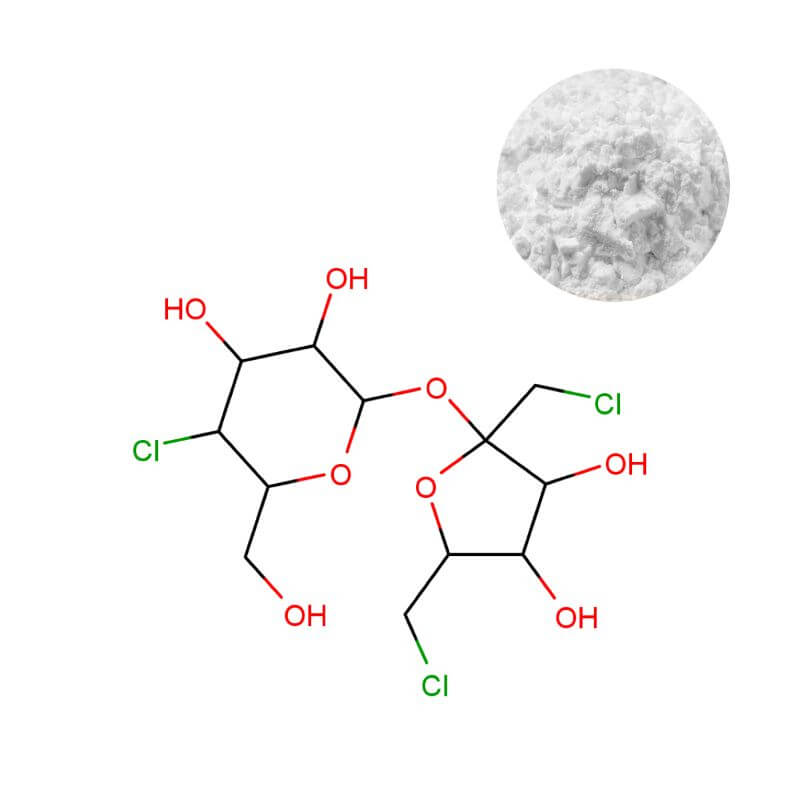
Sucralose Powder
| Product Name | Sucralose Powder |
| CAS Number | 56038-13-2 |
| Appearance | White crystalline powder |
| Purity | 98.0% – 102.0% (by HPLC) |
| Packaging | 1 kg/bag, 5 kg/bag, 25 kg/drum |
| MOQ | 5 kg |
Zero-Calorie Sweetener Backed by Regulatory Approvals for Functional Beverage & Supplement Formulations
EFSA's 2026 re-evaluation and FDA's established food-additive status (21 CFR 172.831, initially approved in 1998) provide sucralose supplier credibility that removes preliminary safety studies from R&D timelines. Lot-to-lot COA traceability and stability data further de-risk procurement, enabling formulation teams to scale from concept to production.
Clinical and Regulatory Evidence Defines Defensible DTC Claim Boundaries
EFSA reaffirmed sucralose's safety at 15 mg/kg/day ADI in February 2026, while FDA maintains 5 mg/kg/day — a threefold disparity that impacts maximum usage levels for transatlantic product launches. A 2025 randomized controlled trial (Clinical Nutrition ESPEN, n=10 healthy lean male volunteers) reported a 20.3% decrease in insulin sensitivity (Matsuda index) after 30 days at 30% of the EFSA ADI (equivalent to 4.5 mg/kg/day), with increased glucose, insulin, and GLP-1 AUC during mixed-meal testing, with the caveat that findings from this small exploratory cohort require further validation in larger, more diverse populations. For brand owners, these data establish clear claim boundaries: "sugar-free" and "zero-calorie" remain compliant, whereas "manages blood sugar" or "promotes weight loss" carry litigation risk and lack evidentiary support. BfR's advisory (Opinion No 012/2019, published April 2019) against heating above 120°C under prolonged thermal conditions (e.g., baking, roasting, deep-frying) further constrains applications, distinguishing these from the short-duration, high-temperature processes typical of beverage pasteurization and UHT treatment.
- EFSA ADI of 15 mg/kg permits higher EU usage than FDA's 5 mg/kg, requiring dual formulation strategies for global SKUs
- Clinical insulin-sensitivity data inform the boundary between structure/function claims and disease-risk reduction communications
- BfR's 120°C heating limit restricts prolonged thermal processing, guiding appropriate application selection at the R&D stage
Procurement teams evaluating bulk sucralose powder benefit from a complete clinical and regulatory archive that accelerates internal approval workflows. R&D bypasses foundational toxicology reviews — already established by EFSA and FDA — and proceeds directly to application-specific stability testing. This evidence-backed positioning supports premium retail pricing through science-based trust, differentiating sugar-reduction platforms through regulatory rigor.
Microdosing Precision and Carrier Engineering Enable Premium RTD and Powder Applications
Clinical safety establishes the perimeter, yet commercial viability depends on solving the delivery challenge. With sweetness 600 times that of sucrose, sucralose typically appears at 0.01% to 0.1% in finished formulations — turning every milligram into a formulation asset. Such extreme potency demands controlled pre-dispersion: pre-dissolving in a small water fraction to create a master batch solution remains the industry standard for liquids, ensuring uniform sweetness without localized "hot spots." For dry blends, carriers such as maltodextrin or erythritol provide the dispersion medium necessary for homogeneous mixing across protein powders and meal-replacement shakes. The 80 mesh powder specification (0.45-0.70 g/mL bulk density) delivers predictable flow for volumetric filling equipment.
Strategic synergies with steviol glycosides (Rebaudioside M or D) or monk fruit extract enable clean-label ternary blends that maintain full sweetness while reducing synthetic sweetener dependency — a key differentiator for premium wellness brands transitioning toward "natural-first" sweetening systems. This approach preserves the 3- to 5-fold cost advantage over premium stevia grades on a sweetness-equivalent basis while supporting clean-label positioning. The non-reducing nature of sucralose prevents Maillard browning in heat-processed systems — a distinct advantage over sucrose or glucose syrups in clear protein shakes and flavored waters, reducing the reliance on additional stabilizers and lowering total ingredient costs. This formulation simplification directly reduces supply chain qualification overhead and total cost of ownership, accelerating speed-to-market.
| Application Format | Typical Usage Range | Carrier / Pre-mix Strategy |
|---|---|---|
| RTD beverages | 0.01% - 0.03% w/v | Pre-dissolve in water phase; pair with citric acid for taste modulation |
| Protein & meal-replacement powders | 0.02% - 0.05% | Blend with maltodextrin; high-shear mixing prevents sweet spots |
| Chewable gummies & tablets | 0.02% - 0.10% of formulation | Premix with bulking agents; consider compression characteristics |
Particle Physics and CMO Line Optimization Cut TTM and Reduce Production Scrap
Moving from formulation to production confronts a physical barrier: sucralose can exhibit an acicular crystal habit with aspect ratios ranging from 4:1 to 10:1, depending on crystallization conditions, which impairs flow and compactibility. At typical 80 mesh (0.45-0.70 g/mL bulk density), direct compression suffers from weight variation, sticking, and picking during high-speed tableting. For brand owners, these attributes translate into scrap rates, extended line changeovers, and delayed market entry — costs that erode margins before the first retail unit ships. Controlled particle-size distribution eliminates secondary granulation, removing a full unit operation from the production flow. When combined with appropriate excipients (e.g., mannitol, microcrystalline cellulose) that constitute the bulk of the formulation, 80 mesh sucralose with controlled particle size distribution can support direct compression processes.
- Controlled particle size and density, combined with suitable excipients, enable direct compression, eliminating granulation and cutting 8-12 weeks from development timelines
- Moisture-activity control (aw ≤ 0.30) prevents clumping during air freight, reducing inbound material rejection rates
- Consistent physical properties minimize volumetric feeder recalibration and support automated high-speed tableting lines
Air-freight-ready packaging protects powder integrity. For CMO partners, reduced line stoppages translate into higher OEE and faster turnaround on brand owner orders. The combined effect of improved line efficiency and reduced scrap directly enhances margin retention, freeing brand resources for consumer marketing rather than production troubleshooting.
Navigating ADI Disparities and Application-Specific Approvals for Global Market Access
The final commercial hurdle remains regulatory clearance across target jurisdictions. Sucralose's regulatory landscape presents a tripartite compliance matrix: FDA food-additive status (21 CFR 172.831) with 5 mg/kg ADI; EFSA E 955 approval with 15 mg/kg ADI (2026 re-evaluation); and China's GB 25531-2010 (National Food Safety Standard for Food Additive Sucralose, with Amendment No.1, XG1-2024, effective since February 2024). The 3-fold ADI gap between the US and EU requires formulation adjustments for dual-market launches. EFSA could not conclude on the safety of sucralose for fine bakery wares (FC 7.2) due to uncertainties around chlorinated compound formation under baking conditions, underscoring the importance of application-specific authorization.
| Regulatory Body | Status | ADI | Key Application Restriction |
|---|---|---|---|
| FDA (United States) | Food Additive (21 CFR 172.831) | 5 mg/kg/day | Approved for 15 food categories in 1998, with general-purpose sweetener status added in 1999 |
| EFSA (European Union) | E 955 Approved | 15 mg/kg/day | No conclusion for fine bakery new uses; current categories remain authorized |
| BfR (Germany) | EFSA-aligned with advisory | — | Advises against heating above 120°C under prolonged thermal conditions (e.g., baking, roasting) |
| China (NHC) | GB 25531-2010 (including XG1-2024, effective Feb 2024) | — | National Food Safety Standard for Food Additive Sucralose |
Cross-border compliance demands case-by-case verification beyond ingredient-level approval. Belgian RASFF notification 2025.5964 illustrates this precisely: unauthorized sucralose use in a US-produced lemonade triggered regulatory actions in multiple member states, reinforcing that global brand owners must map application-specific authorizations per target market. Compliance officers benefit from audit-ready documentation packages that consolidate regulatory approvals per jurisdiction, mitigating customs delays and downstream market withdrawal risks. Dual-market launches can leverage the higher EU ADI for premium European positioning while carefully calibrating US formulations to remain within the lower FDA limit.
Technical Documentation Accelerates Supplier Qualification and Sample Validation
Specification alignment is the cornerstone of procurement confidence. Certified documentation — batch-specific COAs, USP/EP/FCC compliance data, residual solvent profiles, and heavy-metal ICP-MS results — eliminates redundant lab work and compresses R&D supplier qualification from weeks to days. The traditional 4- to 6-week ingredient validation cycle reduces to 7-14 days when complete analytical dossiers accompany sample requests, enabling faster market entry for new product pipelines. For procurement managers, documented compliance with EU Regulation (EC) No 1333/2008 (Food Additives Regulation) authorization and EU Regulation (EC) No 178/2002 traceability requirements ensures global regulatory alignment.
Frequently Asked Questions
Share this product
Related Products
Ready to get started?
Contact our team for technical specifications, pricing, and customized solutions.