
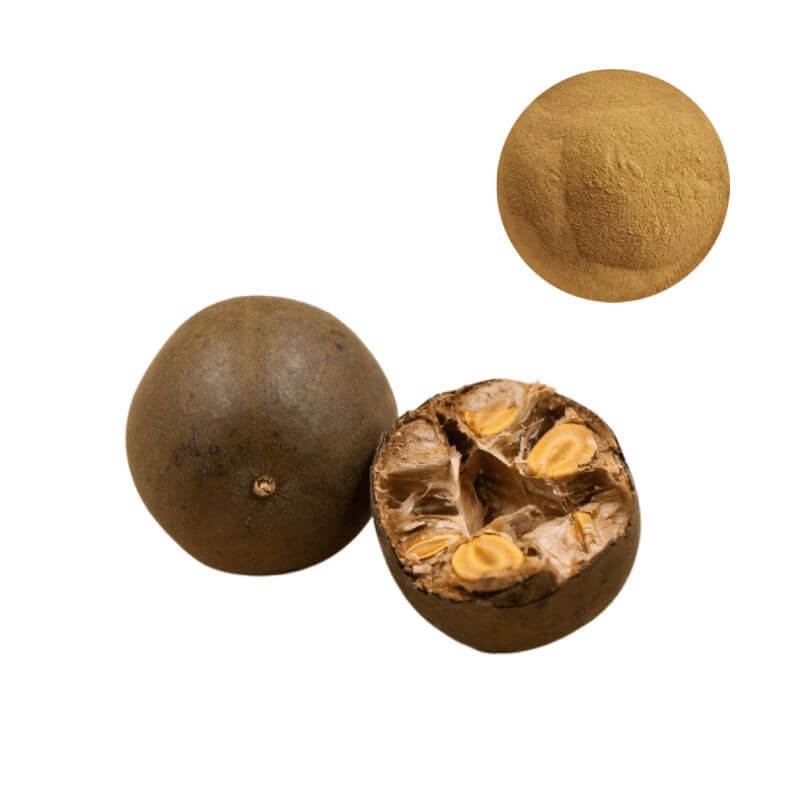
Monk Fruit Extract Powder
| Product Name | Monk Fruit Extract Powder |
| CAS Number | 88901-36-4 |
| Appearance | Light yellow to off-white fine powder |
| Purity | 25.0%, 50.0% Mogroside V (by HPLC) |
| Packaging | 1 kg/bag, 5 kg/bag, 25 kg/drum |
| MOQ | 1 kg |
Standardized Monk Fruit Extract Powder for High-Speed Formulation Lines
The low-hygroscopicity profile of bulk Monk Fruit Extract Powder directly eliminates column-binding and caking during high-speed encapsulation, translating into uninterrupted production runs for contract manufacturers. Spec-verified distributors now prioritize physical flowability over assay alone, as this parameter dictates downstream processing efficiency. This physical robustness is quantitatively verified through standardized lot-release protocols under the Oclean Nutra specification, ensuring that each shipment delivers consistent particle behavior and maintains the documented Hausner ratio across multiple batches. Controlling physical specification parameters for this ingredient constitutes a strategic moat for finished product differentiation, directly elevating brand equity in an otherwise commoditized sweetener segment.
Hygroscopicity and Bulk Flow Dynamics in High-Speed Rotary Presses
During high-speed rotary tablet pressing (exceeding 80 rpm), the feedstock's tendency to absorb atmospheric moisture causes bridging in the feed frame and sticking to punch faces. This physical instability directly correlates with increased die-fill variation and elevated rejection rates. The critical relative humidity threshold for this extract lies below 40% RH at 25°C; exceeding this level accelerates surface moisture adsorption and degrades powder flowability. Avoiding quarantine delays at port-of-entry requires alignment with USP <786> and EP 2.9.31 particle size criteria, which this specification meets through routine in-process sieve analysis. Bulk Monk Fruit Extract Powder with controlled particle size distribution (≥95% through 80 mesh) depresses these flow-related deviations, directly protecting the CMO from unscheduled stoppages and material waste. Maintaining optimal Carr's index values ensures consistent die fill and prevents screw feeder torque variability in high-speed compaction. Reduced punch wear and extended tooling life span are achieved when maintaining the prescribed particle size distribution, lowering per-tablet die fill variation and boosting overall equipment effectiveness.
Total Cost of Ownership: Direct Compression Economics
Standard spray-dried extracts often require an additional wet granulation step to improve flow, adding 12-18% binder materials (maltodextrin or MCC) and consuming 2-3 hours of drying time per batch. The direct-compression ready specification of this product eliminates these intermediate processing stages. This physical-grade selection removes auxiliary raw material procurement and thermal drying energy expenses from the operational budget, with an effective particle size Dv90 of 180-200 μm to preclude feeder segregation in hopper cones.
- Binder material elimination: Removing maltodextrin or microcrystalline cellulose from the formulation reduces raw material SKU count and simplifies inventory management for procurement teams.
- Thermal drying energy offset: Skipping fluid-bed drying conserves approximately 2.5-3.0 MWh per metric ton of finished blend, directly reducing the carbon footprint per production batch.
- Line utilization gain: Fewer unit operations translate into shorter campaign durations, enabling contract manufacturers to accommodate additional client orders within the same quarterly capacity.
The avoided wet-granulation step also suppresses the risk of thermally induced degradation of heat-labile glycosidic bonds, preserving the native sweetness profile without requiring overage adjustments. This granulation-skipping flow path directly defends the brand owner's gross margin by compressing the conversion cost per finished unit, yielding a net reduction in overall processing time of approximately 2.5 hours per metric ton of blended material.
Synergistic Blending and Multi-Component Formulation Stability
When co-processed with erythritol, D-allulose powder, or standardized steviol glycosides powder, this sweetener system achieves a sucrose-like temporal sweetness profile while suppressing the characteristic licorice-like linger of high-purity mogroside. However, blending with acidic co-ingredients (e.g., ascorbic acid, citric acid) at a pH below 3.2 accelerates the hydrolysis of mogroside V into bitter mogrol aglycones. This degradation pathway is temperature-dependent, with a 15% loss observed after 20 minutes at 85°C in aqueous systems, and maintaining the blend's water activity (Aw) at levels that inhibit osmophilic yeast proliferation.
- Erythritol (1:0.8 to 1:1.5 by weight): Provides crystalline bulk and cooling sensation, masking the delayed sweetness onset of mogroside while improving powder flowability in stick-pack formulations.
- Allulose (1:40 to 1:60 ratio): Enhances mouthfeel and browning reactions in baked applications; however, this combination requires strict pH control (target 4.0-5.0) to prevent Maillard-induced discoloration during thermal processing.
- Steviol glycosides (1:0.3 to 1:0.6): Extends the sweetness duration curve and reduces the total steviol glycoside usage by 20-25%, offering a cost-optimized natural sweetener system for ready-to-drink beverages.
Self-assembled nanomicelle formation by Mogroside V improves oral bioavailability of co-administered hydrophobic actives (Food Chemistry, 2025; doi: 10.1016/j.foodchem.2025.144870). This amphiphilic property positions MV as a dual-contribution excipient-delivering sweetness while simultaneously enhancing the systemic exposure of companion ingredients in multi-component formulations, with a documented critical micelle concentration (CMC) of approximately 2.64 mg/mL in deionized aqueous media. The structural diversity among mogroside variants (with sweetness potencies ranging from approximately 250× to 300× that of sucrose) provides formulation chemists with fine-tuning latitude for precise sweetness-to-bulk ratios, enabling the development of ketogenic-friendly electrolyte powders and evening relaxation zero-sugar beverage matrices with minimal caloric footprint.
Multi-Target Functional Framework Beyond Sweetness
AMPK pathway activation, anti-inflammatory and antioxidant activities, immunomodulatory effects, and gut microbiota regulation constitute the multi-target functional framework of Mogroside V (Phytomedicine, 2025; doi: 10.1016/j.phymed.2025.157250). This mechanistic profile elevates monk fruit extract from a mere sweetness provider to a metabolically active ingredient - a differentiation point directly translatable into premium brand positioning for functional food lines targeting healthy glucose metabolism support. The documented postprandial glucose modulation effect, mediated through delayed intestinal glucose absorption, provides brand owners with a science-backed narrative to counter consumer skepticism regarding sweetener-induced insulin responses, transforming a historical "zero-calorie" value proposition into a "metabolic health-supporting" claim framework, with glucose modulation effects documented in systematic reviews of monk fruit supplementation.
Supply Chain Risk Mitigation and Specification Validation
Geographic concentration of Siraitia grosvenorii cultivation in southern China introduces seasonal harvest volatility and logistics lead-time fluctuations into the procurement cycle. Brands that defer specification validation until after the harvest and initial processing window face significantly extended delivery windows and unpredictable spot-price premiums. Securing a spec-verified inventory position prior to the September-November harvest season protects downstream production schedules from raw-material gaps, applying a 12-month rolling stability protocol at 25°C/60% RH to validate real-time shelf-life claims prior to shipment. The complete technical dossier for this standardized extract includes particle size distribution profiles, moisture sorption isotherms, and accelerated stability data at 40°C/75% RH to support regulatory filings and master file referencing. Should a shipment deviate from the specified flow profile, the entire production campaign risks material waste and delayed retail launches; hence, the physical control protocols directly guard against these supply chain financial exposures.
Request Spec-Verified Monk Fruit Extract Powder with Full COA Packages
Frequently Asked Questions
Share this product
Related Products
Ready to get started?
Contact our team for technical specifications, pricing, and customized solutions.