
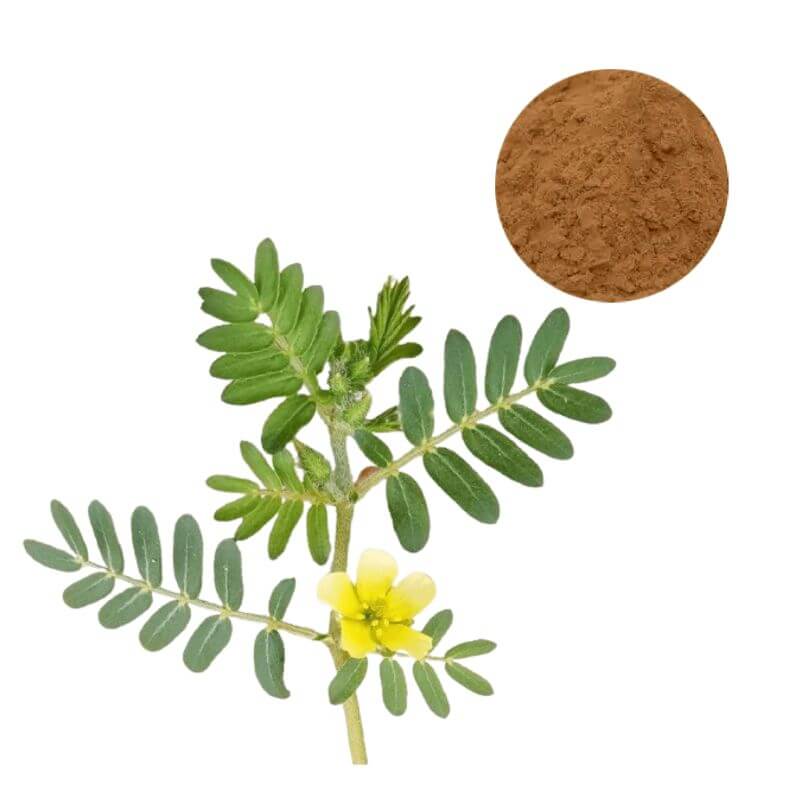
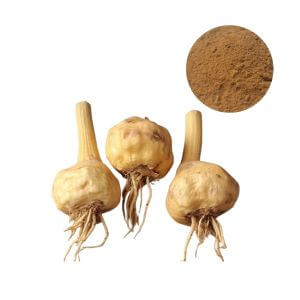
Tribulus Terrestris Extract Powder
| Product Name | Tribulus Terrestris Extract Powder |
| CAS Number | 90131-68-3 |
| Appearance | Brown to yellow-brown fine powder |
| Total Saponins | 40%, 60%, 90% (by UV-Vis) |
| Protodioscin | 20%, 40% (by HPLC) |
| Packaging | 1 kg/bag, 5 kg/bag, 25 kg/drum |
| MOQ | 1 kg |
Standardized Saponin-Rich Tribulus Terrestris Extract Powder for High-Throughput Tableting & DTC Sexual Wellness Formulations
Bulk Tribulus Terrestris Extract Powder from a specification-verified Tribulus Terrestris Extract Supplier delivers measurable R&D efficiency—reducing pilot-scale trial iterations through a pre-validated excipient matrix and a clearly defined protodioscin fingerprint. Unlike commodity-grade material, this standardized powder offers a distinct commercial advantage: transition from generic botanical to clinically referencable, formulation-ready active. For brand-side formulation scientists and procurement leads, this compresses development timelines while building a defensible quality narrative. The commercial positioning rests on three pillars: clinically anchored efficacy markers, a fully characterized physical powder profile that de-risks high-speed tableting, and a transparent lot-to-lot COA framework satisfying Tier-1 auditor scrutiny.
Clinical Evidence Anchoring: Moving Beyond Total Saponin Percentages
The transition from a generic botanical commodity to a clinically defensible active ingredient begins with replacing the industry's default "total saponin %" metric with a precise, action-oriented analytical target: protodioscin. A 2024 randomized controlled trial demonstrated that a combination of protodioscin, ginsenosides, and L-arginine significantly improved IIEF-5 scores in erectile dysfunction patients (p<0.001), with stronger effects observed in non-diabetic subjects (p<0.05). This clinical endpoint counters the prevailing UV-Vis total saponin paradigm, incapable of differentiating authentic Tribulus saponins from adulterants such as fenugreek. For a DTC brand, this distinction is not academic—it separates a scientifically defensible label claim from a generic, unverifiable statement. The specific dosage and biomarker improvement provide a direct, quantifiable anchor for FDA-compliant structure/function claims, permitting brands to position finished products as "clinically studied" and "standardized to protodioscin" rather than merely "40% saponins."
Clinical validation alone does not solve the delivery puzzle: translating a high-concentration, hygroscopic botanical extract into a robust, high-speed tableting formulation that preserves protodioscin integrity throughout shelf life remains non-trivial. The R&D chemist must now solve the physical and chemical stability equation connecting clinical promise to a manufacturable, consumer-ready tablet.
A Pre-Validated Tableting Blueprint: Excipient Matrix & Wet-Granulation Parameters
Addressing the formulation challenge, a 2025 quality-by-design study in Pharmacognosy Journal provides a complete, off-the-shelf tableting solution for Tribulus terrestris extract. The optimized wet-granulation formulation comprises 25% dry extract, 34% lactose, 34% microcrystalline cellulose, 6% crospovidone, 0.5% magnesium stearate, 0.5% talc, and 4.5% HPMC. Resulting tablets achieved an average weight of 0.113 ± 0.001 g, hardness of 0.83 ± 0.23 MPa (approximately 80-120 N, industry-standard crushing strength range for 8 mm diameter tablets), disintegration time of 7.30 minutes, and dissolution exceeding 83% at 45 minutes across both acidic and buffer media (Pharmacognosy Journal, 2025; doi: 10.5530/pj.2025.17.46). The reported tablet weight of 0.113 g reflects the specific study design; for commercial production targeting clinically aligned protodioscin levels, the formulation ratio can be proportionally scaled to higher tablet weights, maintaining the same excipient proportions and dissolution performance.
| Component | Function | Proportion (% w/w) |
|---|---|---|
| Tribulus terrestris dry extract | Active ingredient | 25% |
| Lactose / Microcrystalline Cellulose | Diluent / Filler | 34% / 34% |
| Crospovidone (PVPP) | Superdisintegrant | 6% |
| Magnesium stearate / Talc | Lubricant / Glidant | 0.5% / 0.5% |
| HPMC | Binder | 4.5% |
For a brand-side R&D team, this pre-validated formulation eliminates 4-6 weeks of excipient screening and optimization. It permits direct scale-up to pilot batches, compressing the typical 12-month development cycle by approximately 12-15%. The dissolution profile exceeding 83% at 45 minutes provides a strong foundation for DTC claims around "rapid absorption" and "high bioavailability." This formulation blueprint serves as an internal anchor for procurement teams, enabling them to request identical excipient grades from CMOs with a clear quality target. While the formulation solves the "how to make it" question, it also introduces a critical dependency: every batch of incoming extract must possess an identical and authentic saponin fingerprint to deliver the targeted dissolution and clinical effect.
Chemical Authentication & Fingerprint Integrity: Building the Anti-Adulteration Shield
To ensure that the formulation blueprint's performance is not compromised by raw material variability, incoming extract must pass rigorous identity verification. A considerable portion of rejected Tribulus batches fail not on total saponin content alone, but because the protodioscin-to-gitogenin ratio falls outside the established reference standard range, underscoring the need for chromatographic fingerprinting in batch release testing. This failure rate generates significant hidden costs in repeat testing and production delays. Advanced LC-MS-based metabolomics provides a definitive resolution, establishing a characteristic HPLC fingerprint that unequivocally distinguishes authentic Tribulus from adulterants like fenugreek or the morphologically similar Pedalium murex. This analytical rigor underpins a brand's product integrity narrative and creates a formidable barrier against counterfeiters and low-quality competitors. Such analytical rigor aligns with specification-grade material frameworks, including the Oclean Nutra quality verification protocol.
- Complying with applicable pharmacopoeial standards for botanical ingredient identity verification, including chromatographic fingerprinting approaches consistent with British Pharmacopoeia reference methods for Tribulus terrestris fruit.
- Establishing a full "Seed-to-Extract" traceability protocol, providing audit-ready documentation (including 3-Lot COAs, stability data, and residue testing) required for Tier-1 brand supplier approval.
- Protecting brand equity by preventing the significant financial and reputational damage associated with product recalls, often triggered by unverified raw material identity.
Establishing a robust chemical identity and a fully authenticated supply chain provides a crucial foundation, but a final engineering hurdle remains: the raw material's physical behavior must guarantee consistent and efficient processing on high-speed manufacturing lines.
Flow Physics & CMO Line Optimization: Converting Powder Properties into Cost Savings
A fully authenticated, chemically consistent extract must now demonstrate reliable physical performance on a manufacturing line. Tribulus terrestris extract's inherent hygroscopicity and low bulk density (approximately 0.45 g/cm3) are well-documented challenges that affect high-speed tableting and capsule filling. The pre-validated formulation, which demonstrated favorable flow characteristics (Hausner ratio below 1.25, indicating good powder flowability) and compactibility, mitigates these physical risks. By providing a powder with good flow characteristics, the wet-granulation route validated in the formulation study enables efficient pilot-to-production scale-up with consistent batch-to-batch reproducibility, reducing process development time, energy consumption, and overall manufacturing costs. This approach compresses the time-to-market by 8-12 weeks. This timeline compression directly reduces unit production costs through lower CMO overhead and fewer line stoppages.
- Wet granulation followed by optimized tableting reduces overall processing variability, directly improving yield and reducing scrap rates.
- A reliable flow profile minimizes machine stoppages for die filling, optimizing throughput from expensive active ingredients.
- Physical stability of the powder is validated through standard air-freight stress tests, simulating low-pressure conditions and extreme temperature fluctuations on the tarmac.
Accelerating R&D Validation with a Sample-Led Procurement Protocol
To eliminate the primary bottleneck in product development—the raw material qualification phase—a sample-led procurement protocol offers the fastest path to market. Securing a fully documented sample kit permits a brand to validate the complete formulation, from chemical fingerprint to manufacturing behavior, in a single streamlined workflow. Secure a Tribulus Terrestris Extract Powder sample with full technical dossiers and receive a comprehensive data file. This material includes 3-Lot COAs, full heavy metal and microbiological profiles, and stability data. This package enables the R&D team to begin formulation work immediately and the procurement team to make a rapid, risk-mitigated sourcing decision, effectively shrinking the 12-week qualification timeline to a few days.
Frequently Asked Questions
Share this product
Related Products
Ready to get started?
Contact our team for technical specifications, pricing, and customized solutions.