
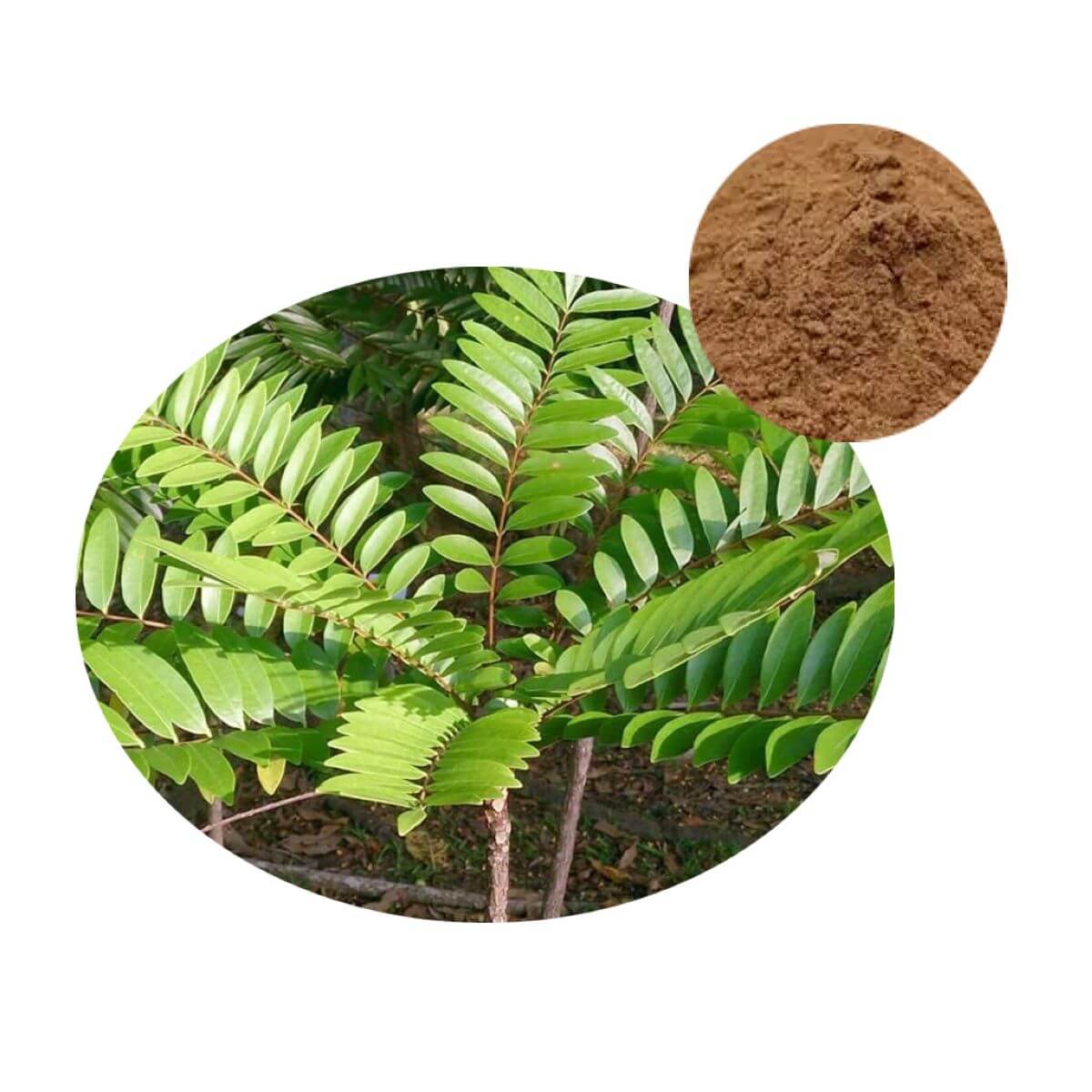
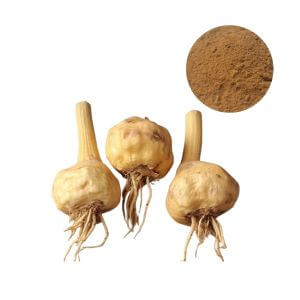
Tongkat Ali Extract Powder
| Product Name | Tongkat Ali Extract Powder (Standardized Eurycomanone) |
| CAS Number | 84633-29-4 |
| Appearance | Brown to reddish-brown fine powder |
| Purity | Standardized to 1%, 2%, or 5% eurycomanones (HPLC) |
| Packaging | 1 kg/bag, 5 kg/bag, 25 kg/drum |
| MOQ | 25 kg |
Tongkat Ali Extract Powder: Building Evidence‑Based Adaptogen Formulations for Sports & Vitality
For brand owners developing next‑generation stress management or male wellness products, the threshold for credible formulation has shifted—and with it, the criteria for selecting a strategic ingredient partner. Consumers and regulators no longer accept “100:1” as a proxy for quality; they expect documented bioactives, batch‑to‑batch consistency, and clinical substantiation that justifies premium positioning. Tongkat Ali extract, standardized to quantifiable eurycomanone content (1.0–5.0% by HPLC) and precision‑milled to ≥95% through 80 mesh, meets this elevated bar. These specifications directly influence pharmacokinetic predictability and formulation efficiency—two factors that determine whether a finished product delivers on its label claims. This article translates the science behind these parameters into actionable criteria for procurement and R&D teams, helping them navigate clinical evidence, regulatory nuances, and supply‑chain risk with confidence.
Clinical Anchors: From Immune Vigilance to Androgen‑Deficiency Management
For a finished‑good brand, the choice of which clinical endpoint to feature is not merely scientific—it is a strategic positioning decision. The distinct endpoints of Tongkat Ali’s human trials reveal clear options: target the androgen‑deficiency demographic with validated functional outcomes, or address broader immune and stress‑resilience needs. A 2021 randomised, double‑blind, placebo‑controlled trial in androgen‑deficiency of aging males (ADAM) administered 200 mg/day of a water‑extract standardised to 0.8–1.5% eurycomanones for six months. Participants received the extract either alone or combined with concurrent training. The group receiving both Tongkat Ali and exercise exhibited statistically significant improvements in total testosterone and the International Index of Erectile Function (IIEF‑5) compared to placebo, while the extract‑only arm showed more modest hormonal shifts (doi: 10.1016/j.maturitas.2020.12.002).
This translates into two concrete advantages for product developers:
- Dose confidence: The 200 mg dosage—aligned with the exposure level reviewed by EFSA—eliminates early‑stage dose‑finding guesswork, shortening development timelines.
- Synergistic positioning: The clear additive effect with physical training supports premium narratives around “active wellness” rather than passive supplementation, a distinction that commands higher retail margins.
Separately, an emerging body of network pharmacology and cell‑based work has characterised the anti‑inflammatory signature of Eurycoma longifolia. Using UPLC‑Q‑TOF‑MS/MS, researchers identified 37 constituents—mainly quassinoids and alkaloids—that modulate the JAK2/STAT3 pathway, significantly reducing nitric oxide in RAW264.7 macrophages (doi: 10.12122/j.issn.1673-4254.2023.06.02). While this mechanistic evidence is still at the cellular level, it provides a molecular rationale for immune‑support claims—a valuable secondary narrative for sports nutrition brands seeking differentiation beyond hormone modulation.
Quality Benchmarks: Why “Ratio” Is No Longer Sufficient
For procurement professionals, distinguishing truly standardized extracts from those labelled only by ratio is the first line of defense against batch‑to‑batch inconsistency and consumer‑facing claim failures. A substantial portion of bulk Tongkat Ali extract traded today is still labelled only as “100:1” or “200:1”. From a sourcing perspective, this convention hides more than it reveals. Two batches with identical ratios can differ five‑fold in their actual eurycomanone yield, rendering stability studies and consumer‑facing claims vulnerable. The professional procurement standard has therefore shifted to specification by validated HPLC assay, with 1.0%, 2.0%, or 5.0% eurycomanone being the most frequently requested commercial grades. Experienced buyers now treat a ratio‑only COA as a red flag, not a shortcut.
Yet even within this standardisation, a lesser‑known distinction exists. Pharmacokinetic work has demonstrated that 13α(21)-epoxyeurycomanone—a structurally similar quassinoid co‑present in the root—possesses nearly 10‑fold higher absolute oral bioavailability than eurycomanone itself, owing to its greater lipophilicity (log Kow −0.43 vs −1.46 at gastric pH)(PMID: 21485270). For a finished‑good manufacturer, this means that the full adaptogenic effect of Tongkat Ali is not captured by eurycomanone content alone. A sophisticated supplier will provide a full quassinoid fingerprint or, at minimum, disclose the eurycomanone/epoxyeurycomanone ratio. This level of analytical transparency directly reduces the risk of launching a product that underperforms despite meeting the label “purity” claim. For brands targeting clinically validated efficacy, requesting this extended profile is becoming a baseline expectation, not a premium add‑on.
When evaluating a Certificate of Analysis, formulation teams should verify:
- Eurycomanone content quantified by HPLC—not merely a ratio claim.
- Particle size distribution (≥95% through 80 mesh) to confirm blend compatibility.
- Loss on Drying ≤5.0% to anticipate hygroscopicity during tableting.
- Full heavy metals panel by ICP‑MS with limits aligned to international pharmacopoeias.
Formulation in Practice: Particle Physics, Bitterness & Synergy
Formulators often evaluate ingredients solely on assay values, overlooking physical characteristics that determine success—or failure—at commercial scale. The physical form of Tongkat Ali extract dictates its manufacturing success. Premium material is routinely milled to ≥95% through 80 mesh. This particle profile eliminates “bridging” in high‑speed encapsulation lines and ensures uniform dispersion in V‑blenders, a practical detail that distinguishes professional‑grade ingredients from commodities. In tablet compression, the extract’s inherent hygroscopicity (Loss on Drying ≤5.0% by USP <731>) requires attention to in‑process humidity; keeping the compression suite below 45% relative humidity is far more effective than relying on desiccant sachets post‑packaging. Specifying ≤5.0% LOD in the purchasing agreement—and verifying it via the batch COA—is a simple, often‑overlooked clause that safeguards processability from warehouse to finished good.
Taste remains the single greatest consumer‑acceptance hurdle. The quassinoid backbone delivers extreme bitterness detectable at low‑ppm concentrations. For stick‑pack powders or orally disintegrating tablets, fluid‑bed granulation with ethylcellulose or a simple film coating can achieve effective masking without sacrificing disintegration time. From a synergy perspective, while the clinical literature lacks controlled combination trials, many commercial sports formulas pair Tongkat Ali with Ashwagandha. The rationale is biologically plausible—Ashwagandha targets cortisol via HPA‑axis modulation, Tongkat Ali influences sex‑hormone binding and T‑cell activity—creating a broader adaptogenic footprint. From a formulation‑economics standpoint, this combination allows brands to command a premium “total stress management” positioning at a relatively modest incremental ingredient cost. An effective formulation requires approximately 200 mg of standardized Tongkat Ali and 300–400 mg of Ashwagandha root extract per daily serving, a combination that has shown favourable stability in accelerated studies when protected from direct light.
Mitigating Risk: The Compliance and Supplier‑Audit Checklist
For any brand with global distribution ambitions, the regulatory landscape for Tongkat Ali is uneven—any discussion of the ingredient is incomplete without addressing this status, a domain where many buyers encounter unforeseen barriers. Navigating it requires proactive intelligence, not reactive fixes. In 2021, the European Food Safety Authority concluded that Eurycoma longifolia root extract, at any proposed use level, does not meet the safety criteria for Novel Food authorisation, citing positive in‑vitro chromosomal aberration tests and a comet‑assay finding in rat stomach and duodenum (doi: 10.2903/j.efsa.2021.6937). Practically speaking, this means the ingredient cannot be lawfully placed on the EU market as a food supplement today. For North American and Asian buyers, however, the ingredient remains widely used, but the EFSA opinion should serve as a caution to perform thorough vendor due diligence. A responsible sourcing protocol for bulk Tongkat Ali extract should include the following verification points—each of which directly contributes to total cost of ownership:
| Verification Point | Specification / Acceptance Criteria |
|---|---|
| Full‑panel Certificate of Analysis | Quantified eurycomanone by HPLC; residual solvents by GC |
| Heavy metals (ICP‑MS) | Pb ≤1.0 mg/kg, As ≤1.0 mg/kg, Cd ≤0.5 mg/kg, Hg ≤0.5 mg/kg |
| Microbial screen | Total plate count ≤1,000 CFU/g; yeasts & moulds ≤100 CFU/g; E. coli, Salmonella, Pseudomonas aeruginosa absent in specified amounts |
| Undeclared adulterants | Third‑party verification for phosphodiesterase‑5 inhibitors (documented risk; Singapore HSA case, 2021) |
| GMP compliance & traceability | Written declaration of GMP compliance; harvest region and batch traceability documented |
Adhering to this checklist transforms the purchasing decision from a price‑per‑kilogram exercise into a total‑cost‑of‑ownership evaluation. The few extra dollars paid for certified, fully characterised material are consistently outweighed by avoided formulation failures, rejected shipments, and reputational damage—a calculation that mature procurement teams internalise as routine risk management.
Next Steps for Your Product Development
A well‑specified Tongkat Ali extract—backed by human clinical data, full analytical disclosure, and proactive risk communication—transforms an ingredient from a variable commodity into a de‑risked, ready‑to‑deploy asset. Instead of dedicating months to in‑house “guess and test” cycles, your formulation and QA teams can start from a verified baseline. To benchmark this ingredient against your current development pipeline, request a laboratory‑grade sample and the complete technical dossier. This package includes the cited clinical reprints, an exemplar Certificate of Analysis, and full quassinoid profile data—everything your team needs to verify performance claims before committing to bulk volume.
Frequently Asked Questions
Share this product
Related Products
Ready to get started?
Contact our team for technical specifications, pricing, and customized solutions.