
The Dark Side of the Functional Food Boom: An Honest Look at Epicatechin Claims and Controversies
The epicatechin market is surging, but hype obscures real science. We cut through the noise, analyzing controversies, bioavailability challenges, and how brands can build trust with transparent, high-quality ingredients for lasting success.

What happens when the search volume for a ‘miracle’ green tea-derived compound skyrockets—driving supplement launches across the market—while scientists debate the real significance of its clinical benefits? This is the defining tension of the epicatechin market. The ingredient stands at the exact intersection of genuine metabolic promise and unsustainable commercial hype. For industry professionals, this creates a critical dilemma: the consumer demand is undeniable, yet the path to market is mined with exaggerated claims, regulatory pitfalls, and complex science. Navigating this isn’t about choosing sides between hype and hope; it’s about dissecting the gap between them to build a credible, defensible, and successful product. This analysis provides the map.
The Evidence Chasm: Why “Potential” Is Not a Marketing Claim
The foundation of epicatechin’s appeal is scientifically plausible. Its role in influencing muscle protein synthesis and vascular function pathways provides a solid mechanistic story. However, the industry’s cardinal sin has been the short-circuiting of the scientific process—leaping from compelling biochemical *potential* directly to definitive consumer-facing *proof*.
This gap is starkly illuminated by recent research. A 2024 systematic review in *Nutrients* on epicatechin for muscular atrophy concluded that significant evidence gaps and contradictory results persist, underscoring the need for more rigorous clinical validation. This reinforces a landscape of small, often inconsistent human studies. For instance, while some trials show positive trends in specific groups, others, like a 2022 RCT, found no vascular benefit from 30mg/day in healthy young adults.
The crucial insight for brands is this: epicatechin is a context-dependent modulator, not a universal bullet. Its efficacy is filtered through a host of variables—individual health status, genetic factors, and critically, the formulation’s delivery matrix. Marketing that ignores this nuance and promotes universal, dramatic effects doesn’t just overpromise; it actively constructs commercial and regulatory risk, building a brand story that the next rigorous study could easily undermine.
Your First Strategic Fork: Source Integrity and Standardization
This scientific ambiguity forces a critical decision at the start of the supply chain: what exactly are you sourcing? A major industry challenge lies in moving from a “natural ingredient” story to a quantifiable, reliable actives supply.
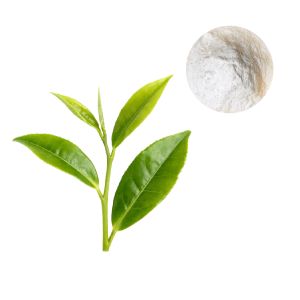
Epicatechin is predominantly derived from green tea. However, not all tea extracts are equal. This leads to a fundamental choice with direct cost and claim implications:
- Path A: The Mixed-Catechin Tea Extract. This leverages the broader profile of tea polyphenols. However, it means the actual epicatechin content can be a variable and minor component, complicating precise dosing and making specific health claims about epicatechin difficult to substantiate.
- Path B: The Standardized, High-Purity Isolate. This approach prioritizes a known, quantifiable molecule. It transforms epicatechin from a vague marketing buzzword into a measurable, reliable input. The upfront cost per gram of *active* may be higher, but it purchases predictability, simplifies formulation, and provides a clear, defensible link to the specific dosages used in clinical research.
The commercial translation is unambiguous: If your brand’s value proposition is built on predictability, transparency, and substantiated claims, then variability is your enemy. Consistency is your bedrock. This makes the initial sourcing decision the most critical step in de-risking your entire product pipeline. Opting for a high-purity epicatechin powder with a verified and consistent concentration isn’t just buying an ingredient—it’s buying control and establishing the foundation for trust.
Confronting the Biology: Why Your Delivery System Is the Real Product
Assuming you secure a pure and consistent source, a more formidable barrier emerges: human physiology. Epicatechin suffers from notoriously poor oral bioavailability. Rapid metabolism and excretion mean a significant portion of a standard dose may never reach systemic circulation. This renders any formulation that treats delivery as an afterthought not just suboptimal, but potentially wasteful and ineffective. In the modern market, the true innovation and competitive edge lie not in the ingredient itself, but in the technology that delivers it.
The Technological Arsenal for Bioavailability
This challenge is where advanced formulation science transitions from a niche advantage to a commercial imperative. Leaders are now competing on their delivery platforms, creating a tangible contrast in market position and perceived efficacy:
- Lipid-Based Delivery Systems (e.g., Phospholipid Complexes): Technologies like Phytosome® chemically bond the compound to phospholipids, dramatically enhancing its ability to cross cell membranes. Peer-reviewed studies on such forms have demonstrated multi-fold increases in bioavailability and subsequent biological activity compared to standard powders.
- Microencapsulation for Functional Foods: Here, the primary goal is protection. By shielding epicatechin from degradation by heat, pH, and oxygen, this technology unlocks its use in innovative applications like ready-to-drink beverages, nutrition bars, and powders—effectively moving it from the supplement aisle into vastly larger food and beverage categories.
- Synergistic Metabolic Inhibition: Strategic combination with bioactive compounds like piperine can slow the liver enzymes that break down epicatechin, effectively extending its therapeutic window within the body.
The business implication is clear: The discerning question from both B2B buyers and end consumers is evolving from “Does your product contain epicatechin?” to “How bioavailable is your epicatechin?” Investing in advanced delivery is no longer a premium option for top-tier brands; it is becoming a baseline requirement to meet the minimum efficacy expectations of an informed market.
The Trust Blueprint: Converting Market Skepticism into Brand Loyalty
In an era where consumers are weary of “miracle cure” claims and regulators are actively cracking down on “greenwashing,” the ultimate asset a brand can cultivate is trust. This cannot be achieved through marketing alone; it requires an operational strategy that turns the industry’s common weaknesses into your core strengths.
| Prevailing Market Pressure | The Unspoken Consumer Question | The Strategic Brand Response |
|---|---|---|
| Widespread “Greenwashing” & Doubt | “Is ‘natural’ just a feel-good label, or is there verifiable quality behind it?” | Operational Transparency: Publicly share supply chain details, provide access to Certificates of Analysis (CoA), and explain your choice of extraction method. Turn your sourcing ethics into a credibility asset. |
| Information Overload & Contradiction | “I see studies for and against. Why should I believe your specific claim?” | Educate, Don’t Exaggerate: Communicate the robust *mechanism* (e.g., “supports nitric oxide production”) and your *quality standards*. Acknowledge scientific nuance to build authoritative, rather than authoritarian, trust. |
| Commoditization & Price Wars | “Why should I pay more for this epicatechin product?” | Articulate the “Quality Premium”: Differentiate through verifiable purity levels, investment in delivery technology, and a commitment to evidence for your *specific formulation*, not just the generic ingredient. |
Marketing as Pedagogy: The New Engagement Paradigm
The most powerful form of social proof is shifting from celebrity endorsement to the proof of a transparent, science-backed methodology. This demands a fundamental shift in communication: from benefit-based declarations to process-based storytelling. The narrative evolves from “Boosts your energy and muscle growth!” to “Our formula delivers a precise 150mg dose of epicatechin, a flavonoid shown to support cellular energy pathways. We use a lipid-based delivery system to enhance its absorption, ensuring more active compound reaches your bloodstream. Here’s how that technology works…”
This approach directly addresses the confusion and skepticism prevalent in consumer forums and reviews. By educating, you build a community of informed advocates and create an authentic platform to highlight your commitment to superior raw materials as the non-negotiable first step in a credible process.
Future-Proofing: The Next Frontier of Application
The long-term opportunity for epicatechin extends far beyond the traditional supplement capsule. A data-driven commercial interpretation of trends points to high-growth potential in sophisticated, targeted applications where proof-of-concept and quality are paramount:
- Active Cosmeceuticals: This is the fastest-growing application segment for polyphenols. Topical serums leverage epicatechin’s antioxidant power and potential to support dermal collagen, aligning with the clean-beauty trend.
- Specialized Pet Nutrition: Formulations for aging companion animals, targeting mobility and vitality—a high-value, emotionally driven market segment with less tolerance for variability.
- Precision Sports Nutrition: Products tailored for specific athletic goals (e.g., endurance fuel vs. neural recovery), requiring exact, reliable dosing to produce measurable results.
The critical insight for forward-thinking brands: Success in these advanced, evidence-sensitive categories is fundamentally impossible with a commodity-grade, variable ingredient. The credibility required to compete and command a premium is built on the non-negotiable foundation of pharmaceutical-level rigor in purity, standardization, and documentation.
Conclusion: The Strategic Inflection Point
The narrative around epicatechin is at an inflection point. The initial wave of indiscriminate hype is receding, revealing a more mature landscape divided between commoditized, low-trust products and premium, evidence-based solutions. The path to sustainable success is now a conscious, strategic choice.
It is the choice to prioritize verifiable quality over vague “natural” marketing; to invest in delivery science as a core competency rather than an afterthought; and to communicate with a level of honesty and educational depth that respects the intelligence of today’s professionals and consumers. This path begins with the single most definitive decision you can make: selecting a raw material that serves as a known, controlled variable—a foundation of certainty upon which a truly trustworthy and successful brand can be built.
Share this article
Found this helpful? Share it with others!
Related Products
Products mentioned in this article
Related Articles
You might also be interested in

Beyond Muscle: Epicatechin’s Role in Epigenetic Aging and Sarcopenia Intervention
A 2026 network meta-analysis repositions epicatechin ahead of whey for sarcopenia, while new COSMOS data links it to delayed epigenetic aging. This R&D brief decodes global compliance and high-purity supply realities.

Epicatechin vs. EGCG for Sports Nutrition and Active Aging: A Technical Sourcing Guide on Bioavailability, Stability, and Mechanism Differentiation
Choosing between Epicatechin and EGCG impacts scale-up success. This guide dissects human pharmacokinetics, 25-fold chiral potency differences, and pH stability to de-risk encapsulation and optimize cost-in-use.

Meeting the Demand for Clean-Label Energy: Formulating with Natural Epicatechin
Consumers are demanding clean-label energy beyond caffeine. Discover how natural Epicatechin, a potent flavanol from green tea, supports sustained cellular energy and aligns with clean-label trends for innovative supplement and functional food formulations.
Want to learn more?
Explore our products or contact our team for personalized solutions and expert advice.