
Overcoming EGT Formulation Challenges: Leveraging Synergies with NMN and PQQ for High-Potency Longevity Supplements
The longevity market is shifting toward synergistic systems. This technical guide decodes the EGT-NMN-PQQ "iron triangle," providing actionable stability data and formulation roadmaps to help brands launch science-backed products.

The longevity supplement market is quietly undergoing a fundamental shift: single-ingredient “miracle” formulas are losing ground to multi-targeted systems that address mitochondrial health, NAD+ metabolism, and oxidative defense in a coordinated way. Yet for R&D and procurement leaders, the real bottleneck is not science—it's formulation. How do you stabilize three highly sensitive actives in one product? And more importantly, how do you turn a list of ingredients into a coherent cellular strategy?
This article moves beyond isolated stability data. It decodes the synergistic logic behind the EGT‑NMN‑PQQ “iron triangle,” translates instability risks into actionable formulation rules, and provides a roadmap for brands aiming to launch differentiated, science‑backed longevity supplements.
The Science of Synergy: Why EGT, NMN, and PQQ Belong Together
The term “mitochondrial support” has evolved. It no longer means a single antioxidant but rather a system that simultaneously enhances energy production, defends against oxidative damage, and regenerates cellular powerhouses. Recent research reveals that EGT plays a far more active role than previously thought.
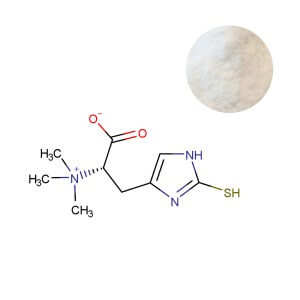
A groundbreaking 2025 study demonstrated that L-Ergothioneine increases NAD+ levels two‑fold through a CSE‑dependent persulfidation pathway—an effect comparable to NMN itself (doi:10.1016/j.cmet.2024.12.008). What this means for formulators: EGT is not merely a protector; it acts as a metabolic “multiplier” that can amplify the efficacy of NAD+ precursors. Adding EGT to an NMN formula does not just add an antioxidant—it fundamentally changes the product's mechanism of action.
When combined, the three components create a complementary cascade:
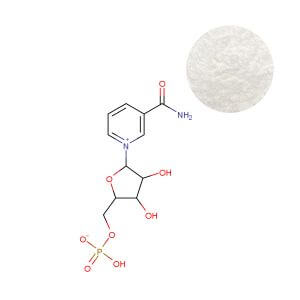
- NMN directly elevates NAD+ levels, supporting sirtuins and DNA repair.
- PQQ stimulates mitochondrial biogenesis (via AMPK/PGC‑1α), increasing the number of healthy mitochondria.
- EGT protects existing mitochondria from oxidative insult while also contributing to NAD+ regeneration.
A comprehensive 2026 review comparing PQQ and NMN/NR concluded that their mechanisms are distinct and additive, and that “possible combination use” could more effectively promote healthy aging (doi:10.1016/j.arr.2025.102992). The takeaway for brand owners: A single supplement can now address three pillars of mitochondrial health—biogenesis (PQQ), substrate supply (NMN), and oxidative defense/NAD+ recycling (EGT). This is not ingredient stacking; it is system design.
Formulation Roadblocks: Stability and Compatibility Profiles
Before celebrating synergies, R&D teams must confront practical instability issues. Each of the three ingredients has distinct vulnerabilities. The table below summarizes key stability parameters that directly influence bulk procurement and blending decisions.
| Ingredient | Optimal pH Range | Temperature Sensitivity | Major Degradation Factors |
|---|---|---|---|
| L-Ergothioneine | 4.0 – 7.0 | Stable at 20–25°C; degrades above 80°C | UV light, strong acid (pH<3), strong base (pH>9) |
| NMN (Nicotinamide Mononucleotide) | 5.0 – 7.0 (neutral) | Degrades rapidly >40°C; free NMN degrades almost completely within 30 days at room temperature in solution | Moisture, heat, liquid matrices without encapsulation |
| PQQ Disodium Salt | 6.0 – 8.0 (neutral to slightly alkaline) | Heat accelerates discoloration; hygroscopic | Aqueous solutions, light, high humidity |
What this means for procurement: A supplier who cannot provide stability data under these specific pH and temperature conditions is not ready for a multi‑active longevity blend. Standard wet granulation or high‑temperature drying will destroy NMN and discolor PQQ—wasting expensive raw materials and leading to label claim failures. The core insight: Incompatibility is not a dead end; it is a design constraint that forces formulators to adopt advanced delivery systems.
Practical Solutions: Overcoming Instability in Finished Products
Based on current industrial practices and peer‑reviewed literature, three proven strategies exist to stabilize the EGT‑NMN‑PQQ combination. Each strategy directly addresses the vulnerabilities listed above.
Encapsulation Technologies
- Liposomal encapsulation for NMN: Liposome‑encapsulated NMN retains 87–89% of its content after 180 days at room temperature, compared to almost complete degradation of free NMN under the same conditions. Implication: For liquid or gummy formats, liposomal NMN is not optional—it is essential.
- Microencapsulation for PQQ: Food‑grade microencapsulation systems dramatically improve the stability of PQQ Disodium Salt in aqueous solutions and protect against light‑induced color change. Microencapsulated PQQ remains stable in ready‑to‑drink beverages for over 12 months.
- Enteric‑coated capsules: This delivery system protects all three ingredients from gastric acid (pH ~1.5–2.0) and releases them in the small intestine (pH ~6.0–7.0), which is optimal for both stability and absorption. Commercial products like MAYSENSE MitoVantage use enteric vegetarian capsules to deliver NMN 500 mg, PQQ 20 mg, and EGT 25 mg per serving.
Dosage Form Selection: What Works and What Doesn’t
Not all supplement formats are suitable for high‑potency longevity blends. The following list provides quantitative guidance for formulators, based on real‑world failure patterns:
- Tablets (direct compression, low humidity): Suitable if processing temperature stays below 40°C; requires desiccant and tight packaging. Avoid wet granulation. Typical purity targets: EGT ≥98% by HPLC; NMN ≥99%; PQQ ≥98%.
- Two‑piece hard capsules (gelatin or HPMC): Preferred for blends. Keep moisture content below 8%. Fill weight tolerance ±5%.
- Liquid shots or ready‑to‑drink beverages: Not recommended for NMN unless liposomal or stabilized with cyclodextrins. PQQ can be used only if microencapsulated. EGT alone may be acceptable at pH 4.5–6.0.
- Gummies: High heat and moisture during manufacturing (>50°C) degrade all three actives. Avoid unless nano‑ or micro‑encapsulated forms are used. Key takeaway: If your brand’s go‑to‑market strategy relies on gummies, choose a different blend or be prepared for a significant stability investment.
Processing and Packaging Controls
Even the best encapsulation fails without strict manufacturing discipline. Procurement leaders should verify that their contract manufacturer adheres to:
- Blending temperature: ≤30°C (cooling jacket recommended)
- Relative humidity of manufacturing suite: ≤35% RH
- Primary packaging: Opaque, high‑barrier blister packs or HDPE bottles with induction seal and oxygen absorber
- Storage recommendation for bulk ingredients: 2–8°C for NMN and PQQ; room temperature for EGT, but all three benefit from cool, dry storage
The underlying insight: In longevity formulations, the difference between a premium product and a failed batch often lies not in raw material purity but in thermal and humidity control during blending and packaging.
Clinical Validation and Dosage Considerations for Brand Owners
When procuring bulk actives, buyers should request certificates of analysis (COA) that confirm potency and stability under accelerated conditions. The following dosages have been clinically tested and serve as reference points for product formulation:
- L-Ergothioneine: 8–25 mg/day. A 2025 RCT in older adults (147 subjects, 16 weeks) showed that 25 mg/day improved sleep onset and subjective memory, with a dose‑dependent increase in plasma EGT levels (3‑ to 16‑fold).
- NMN Powder: 250–500 mg/day. A 12‑week trial in adults over 65 (250 mg/day) demonstrated reduced fatigue, improved physical function, and enhanced insulin sensitivity.
- PQQ: 20 mg/day. Human studies indicate improved cognitive function, reduced fatigue, and increased skin cell regeneration (146% increase at 20 mg/day).
What this means for product positioning: A formula containing EGT 25 mg + NMN 250 mg + PQQ 10 mg sits at the lower end of clinical evidence—safe, cost‑effective, and suitable for daily longevity maintenance. A premium product can target NMN 500 mg + PQQ 20 mg + EGT 25 mg, a combination already commercialized in top‑tier brands. The decision point: Higher doses require superior stabilization (liposomes, enteric coating) and command a higher price point. There is no one‑size‑fits‑all dosage—only a trade‑off between efficacy, stability cost, and market positioning.
Sourcing Considerations: What Procurement Leaders Should Verify
For brands sourcing L-Ergothioneine Powder, NMN Powder, and PQQ Disodium Salt, due diligence should include:
- Fermentation‑derived vs. synthetic EGT: Fermentation‑based EGT offers better sustainability and lower heavy metal risk (typical lead <0.5 ppm, arsenic <1 ppm).
- NMN purity and residual solvents: Look for ≥99% purity by HPLC with less than 0.1% residual nicotine‑related compounds.
- PQQ form: Disodium salt is more stable than the free acid; microencapsulated grades enable liquid applications.
- Documentation: Full stability data (6‑month, 40°C/75% RH), heavy metal analysis, and GMP compliance certificate.
The final insight for procurement: The lowest‑cost supplier rarely works for high‑potency longevity blends. The hidden costs—failed stability tests, reformulation expenses, and delayed market entry—far outweigh the upfront savings. Reliable suppliers provide third‑party COAs for each lot and can supply custom blends under NDA. For brands developing proprietary formulas, requesting a pre‑formulation consultation is not a luxury; it is a risk‑management necessity.
Conclusion: From Single Ingredients to Integrated Systems
The longevity supplement market is moving decisively toward sophisticated, multi‑mechanism formulas. But science alone does not sell—stability does. By understanding the stability constraints and leveraging the proven synergies among EGT, NMN, and PQQ, brand owners can create high‑potency products that actually deliver on their label claims. The winners in this space will not be those with the longest ingredient list, but those who master the art of turning a list into a stable, synergistic, and clinically defensible system.
To explore full technical dossiers, including stability reports and custom formulation support, please contact our technical team or request samples directly from the product pages.
Share this article
Found this helpful? Share it with others!
Related Products
Products mentioned in this article
Want to learn more?
Explore our products or contact our team for personalized solutions and expert advice.