
Neuroinflammation & the Next Wave of Cognitive Health: Why Formulators Are Turning to Synergistic Botanicals
Neuroinflammation is the new frontier in cognitive health. This technical guide analyzes why the Luteolin-PEA synergy is replacing single-ingredient formulas, backed by 2023 clinical evidence and precise R&D specifications.
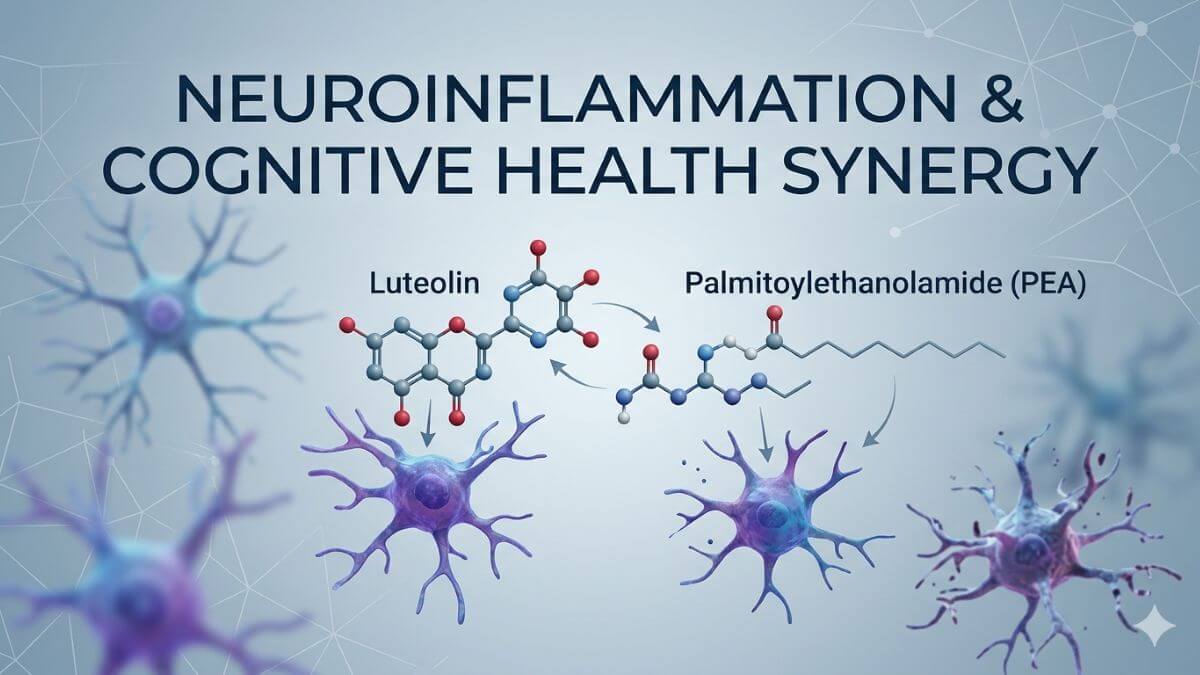
The global brain health supplements market is projected to exceed USD 15 billion by 2030, driven by rising consumer awareness of cognitive decline, stress, and long-term neurological well-being. Yet, amidst the surge, brand formulators face a common challenge: how to move beyond single‑ingredient “me‑too” products and deliver clinically relevant, multi‑target solutions. Recent advances in nutritional neuroscience point to a powerful answer—the strategic pairing of natural compounds that address distinct but complementary pathways of neuroinflammation.
For R&D and sourcing leaders evaluating the next generation of neuro‑health formulations, understanding the science behind ingredient synergy is no longer optional—it’s the key to differentiation. This article examines the growing demand for precision anti‑inflammatory formulas and introduces a science‑backed combination that is reshaping the category: Luteolin and Palmitoylethanolamide (PEA).
Market Drivers: From General “Brain Boosters” to Targeted Neuroinflammatory Support
Consumer demand for cognitive health products has evolved. While nootropics for focus and memory remain popular, a new wave of awareness is emerging around neuroinflammation—a root mechanism linked to brain fog, mood imbalances, and neurodegenerative risk. According to recent trend reports, searches for “brain inflammation” increased by over 60% in the past two years, signaling a shift toward more mechanistic, science‑driven formulations.
What this means for brands: The era of one‑size‑fits‑all “brain boosters” is ending. Consumers are now asking not just “what does this do?” but “how does it work?”. Formulations that can explain their mechanism—especially around inflammation—will command trust and premium pricing. This creates a clear opportunity for formulators: to combine ingredients that work through complementary biological pathways to achieve superior outcomes without relying on high doses of any single component.
Brands are now seeking ingredients with:
- Clinically documented anti‑inflammatory activity
- Multi‑pathway mechanisms (e.g., glial cell modulation, mast cell stabilization)
- Strong safety profiles suitable for long‑term use
- Clean‑label positioning
The Synergy Paradigm: Why Luteolin + PEA Outperforms Single‑Ingredient Approaches
Two compounds have emerged as standout candidates for next‑generation neuro‑health formulas: the flavonoid luteolin and the endogenous fatty acid amide palmitoylethanolamide (PEA). Individually, each offers robust anti‑inflammatory properties; together, they create a synergistic effect that addresses both the initiation and propagation of neuroinflammation.
| Pathway | Luteolin | PEA |
|---|---|---|
| Mast cell stabilization | Direct inhibition of degranulation | Indirect via PPAR‑α activation |
| NF‑κB suppression | Strong inhibition | Moderate / indirect |
| Direct antioxidant activity | High (radical scavenging, metal chelation) | None |
| PPAR‑α agonism | Weak | Primary mechanism |
| Glial cell modulation | Inhibits microglial activation | Reduces astrocyte reactivity |
As detailed in a 2020 systematic review (doi: 10.3390/antiox9030216), PEA exerts potent anti‑inflammatory and neuroprotective effects, but it lacks direct antioxidant capacity. Luteolin fills this gap by providing robust antioxidant activity and also acts on mast cells—key initiators of neuroinflammation—through a distinct pathway. The result is a dual‑action formula that tackles both oxidative stress and inflammatory signaling simultaneously.
The takeaway for formulators: Relying on a single pathway often leads to diminishing returns; the real opportunity lies in covering multiple biological checkpoints. This synergy allows brands to use lower, safer doses of each ingredient while achieving a broader therapeutic footprint—a win for both efficacy and label appeal.
Clinical Evidence: From Bench to Real‑World Application
The clinical relevance of this synergy has been validated in human studies. A 2023 randomized double‑blind placebo‑controlled trial (doi: 10.1016/j.clinph.2022.10.017) investigated the effect of co‑ultramicronized PEA/luteolin (700 mg PEA + 70 mg luteolin twice daily for eight weeks) in patients with long COVID‑19 syndrome. This condition is characterized by persistent neuroinflammation and cognitive impairment. The study demonstrated significant normalization of GABAB-ergic activity and cortical plasticity, providing direct clinical evidence that the combination can restore neural function in a pathological inflammatory environment.
What makes this finding especially valuable for product developers is the context: long COVID represents a real‑world, highly inflammatory model of neurological dysfunction. If the combination can restore neural plasticity in such a challenging condition, its potential in broader cognitive health applications is substantial. For formulators, these results are significant: they show that a well‑designed synergistic formula can achieve measurable physiological changes without the need for high, potentially risky doses of any single ingredient.
Formulation Considerations: Quality, Purity, and Bioavailability
When sourcing these ingredients for commercial products, technical specifications directly impact efficacy and consumer trust. Below are key parameters to consider when evaluating raw material suppliers.
Luteolin Powder
- Purity: ≥98.0% by HPLC (high‑purity extracts ensure consistent bioactivity)
- Solubility: Poor water solubility; co‑micronization or cyclodextrin complexes improve bioavailability
- Heavy metals: Must comply with USP/EP limits (Pb ≤2 ppm, As ≤1 ppm, Cd ≤1 ppm)
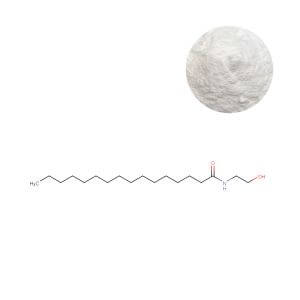
Palmitoylethanolamide (PEA) Powder
- Purity: ≥99.0% by GC (pharmaceutical‑grade quality preferred)
- Particle size: Ultra‑micronized (d90 <10 µm) for enhanced absorption
- Source: Non‑GMO, synthetic or plant‑derived; ensure allergen‑free certification
What this means for procurement: Purity is not the only specification that matters. Two batches of luteolin with identical purity can perform vastly differently in a finished product if their particle size distribution or residual solvents differ. Partnering with a supplier that provides full physical characterization—not just chemical purity—is essential for reproducibility. For brands formulating combination products, selecting ingredients that are already co‑processed (e.g., co‑ultramicronized blends) can simplify manufacturing and ensure consistent dissolution profiles. Sourcing from a reliable PEA supplier with full documentation (COA, stability data) is essential to guarantee batch‑to‑batch uniformity.
Similarly, formulators should verify the purity and particle size of luteolin to avoid variability in finished products. A standardized luteolin powder with tight specifications is the foundation of reproducible clinical effects.
Comparative Value: Why Synergy Beats Single‑Ingredient Marketing
From a commercial standpoint, synergistic combinations offer clear advantages over single‑ingredient formulations:
- Differentiation: A patented or proprietary combination creates a unique selling proposition that is harder to copy.
- Lower effective doses: Using two ingredients at moderate doses reduces the risk of side effects and allows for cleaner labels.
- Stronger IP position: Synergy‑based formulas can be protected by method‑of‑use patents or trade secrets.
- Consumer appeal: Modern consumers are drawn to “science‑backed” combinations that address multiple aspects of health.
When compared to other popular anti‑inflammatory flavonoids like quercetin, luteolin demonstrates superior mast cell stabilizing activity. In fact, many existing formulas combine quercetin with other ingredients, but emerging evidence suggests that quercetin dihydrate—while effective—lacks the direct neuro‑modulatory effects that luteolin provides.
The strategic implication: For brands aiming to lead in the neuro‑health segment, luteolin is the more targeted choice. While quercetin remains a workhorse for general immune support, luteolin offers a more precise fit for formulas targeting brain‑specific inflammation. Choosing the right flavonoid for the right application is what separates category leaders from followers.
Regulatory and Sourcing Outlook
Both luteolin and PEA are recognized as safe food ingredients in major markets. PEA has obtained Novel Food status in the EU, and luteolin is widely accepted as a dietary supplement ingredient in the US under DSHEA. However, brands must ensure their suppliers provide full traceability, GMP certificates, and third‑party testing for contaminants.
As the market for neuro‑health formulations expands, procurement teams should partner with suppliers that offer not only high‑quality raw materials but also formulation support—especially for challenging solubility and bioavailability issues. The use of co‑ultramicronization technology (as in the clinical trial cited above) represents a gold standard for maximizing the potential of the luteolin‑PEA combination.
The bigger picture: The next wave of competition in cognitive health will not be about who has the longest ingredient list, but who has the most intelligent one. Brands that invest in understanding mechanisms, synergy, and bioavailability science will create products that deliver measurable benefits—and those are the products that win repeat customers.
Conclusion: Building the Next Generation of Neuro‑Health Products
The evidence is clear: neuroinflammation is a central target for cognitive health, and the luteolin‑PEA synergy offers a scientifically robust, commercially differentiated platform for brands. By combining two ingredients that work through complementary mechanisms—antioxidant protection from luteolin and glial modulation from PEA—formulators can deliver superior outcomes with clean labels and strong clinical support.
For R&D and sourcing leaders ready to explore this approach, we invite you to review our comprehensive technical dossiers on luteolin powder, PEA powder, and quercetin dihydrate to see how they align with your next innovation. Our technical team is available to discuss custom formulations and stability testing.
Share this article
Found this helpful? Share it with others!
Related Products
Products mentioned in this article
Want to learn more?
Explore our products or contact our team for personalized solutions and expert advice.