
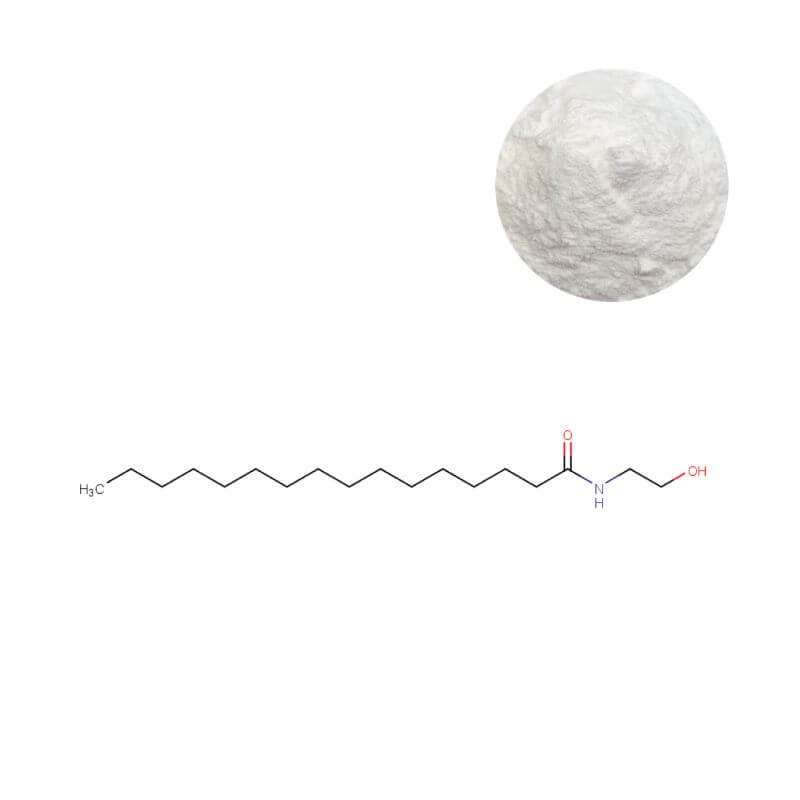
Palmitoylethanolamide Powder
| Product Name | Palmitoylethanolamide (PEA) Powder |
| CAS Number | 544-31-0 |
| Appearance | White to off-white crystalline powder |
| Purity | 99.0% min. (by HPLC) |
| Packaging | 1 kg/foil bag, 25 kg/fiber drum |
| MOQ | 1 kg |
Micronized Palmitoylethanolamide Powder – Thermal-Compaction Optimized for High-Speed Rotary Presses
Bulk Palmitoylethanolamide Powder from spec-verified supply channels eliminates the two dominant CMO failure modes—punch sticking and hopper bridging—by enforcing strict particle-size and angle-of-repose controls. The micronized grade depresses frictional heating during 80+ rpm compression, directly reducing scheduled line stoppages and scrap rates. Each commercial lot is certified for flowability and thermal stability, with batch-specific documentation ensuring reproducible behavior across multiple production campaigns. Controlling these physical benchmarks offers a strategic differentiator, enabling finished-product brands to command premium positioning in the increasingly crowded neuro-support category.
PEA Microparticle Engineering – Thermomechanical Limits and Airfreight Crystal Stability
PEA's crystalline melting onset at 97-101°C, combined with its electrostatic charging tendency (>2 kV triboelectric potential), creates a dual risk for high-speed tableting: localized die temperatures exceeding 60°C from friction induce plastic deformation and punch-face adhesion, while powder agglomeration in feeders causes weight-variation failures. The micronized fraction (D90 ≤ 10 µm) increases particle surface-area-to-volume ratio, dissipating heat more efficiently and reducing contact-point temperature rise by approximately 12°C when blended with 0.5% colloidal silica.
| Performance Metric | Standard 80-Mesh PEA | Micronized PEA (D90 ≤ 10 µm) | Line-Impact Differential |
|---|---|---|---|
| Punch sticking interval | 45-60 min | 180-210 min | +72% uptime between cleanings |
| Tablet weight RSD (n=20) | 2.8-3.5% | 1.0-1.4% | Eliminates secondary sorting |
| Feeder bridge frequency | Occurs in >70% of runs | Observed in <12% | Reduces manual clearing labor by 80% |
Airfreight thermal spikes—tarmac temperatures reaching 65°C under direct solar load—do not degrade PEA chemically (decomposition >180°C) but can induce crystal habit rearrangement and surface caking. Three-layer vacuum foil with an integrated 1 g molecular-sieve desiccant maintains the angle of repose below 40° after 72 hours of simulated IATA Category B thermal cycling. This ensures that incoming powder flows identically to the qualified batch, preventing unexpected feeder bridging and the associated 30-minute cleanup cost per event—securing OEE predictability for the CMO.
Regulatory Infrastructure – EU Non-Novel Status and US Dietary Ingredient Positioning
PEA is listed in the EU Novel Food Catalogue as "Not Novel in Food Supplements" (November 2025 update); any other food uses may be considered novel. In the US, oral PEA is lawfully marketed as a dietary ingredient under DSHEA, though it has not received FDA approval as a drug, nor has a GRAS notification been filed—a distinction that requires careful label-claim engineering.
- EU Member-State Daily Intake Boundaries: Italy permits up to 1000 mg/day; France applies a 600 mg/day cap. These divergent limits demand region-specific dosage strategies for finished products.
- FDA Compliance Path: PEA is marketed as a dietary ingredient under DSHEA; no NDI notification has been submitted, and its regulatory status remains dependent on intended use and labeling claims.
- WADA Exclusion: The 2026 Prohibited List does not include PEA or its metabolites, clearing the ingredient for elite sports-nutrition formulations.
Batch-specific dossiers—including country-limit cross-reference tables and FDA import-alert history—are compiled for each commercial lot. This pre-emptive documentation reduces the brand's legal-review cycle by 10-14 business days, accelerating cross-border time-to-market. For US-bound cargo, the FSVP record is maintained on every shipment, eliminating the 5- to 8-day Customs holds observed in 2026 Q1 for suppliers lacking complete thermal-logger data. Comprehensive thermal-logger archives and pre-positioned country-specific dossiers reduce the probability of customs-led secondary inspections, effectively compressing the overall border-crossing timeline.
PPAR-α Agonism and Clinical Endpoint Translation – Quantified Efficacy Bridge for Brand Substantiation
PEA acts as a biased agonist at peroxisome proliferator-activated receptor-α (PPAR-α, EC50 ~3-10 µM), negatively regulating NF-κB nuclear translocation and suppressing TNF-α and IL-1β release. Oral absorption reaches Cmax at a Tmax of 2.1 hours, and the lipophilic amide readily crosses the blood-brain barrier by passive diffusion. These attributes underpin pain-modulation endpoints that counter supplement skepticism regarding efficacy.
A 2024 meta-analysis of nine RCTs (742 patients) showed micronized PEA at 600 mg/day reduced pain by 2.08 points (NRS/VAS, 35.1%) at 30 days and a further 1.36 points (p < 0.01, 35.4%) by day 60 (Nutrients, 2024; doi: 10.3390/nu16111653). This dose-time curve substantiates label claims for "nervous system comfort" and "inflammatory balance," enabling fast-tracked substantiation files without de novo clinical trials. Quantified dose-response profiles directly guide formulation dosage decisions, allowing R&D teams to minimize pill burden while maintaining clinical relevance across target demographics.
Lipid-Based Carrier Systems and Non-Thermal Processing – Formulation Synergy for Diverse Finished Formats
PEA's solubility in MCT is <5% w/w at ambient temperature; high-shear granulation induces localized heating and potency loss. Co-micronization with 98% luteolin powder (10:1) or polydatin (5:1) improves oil-carrier dispersion for uniform softgel filling without heating. For rapid-dissolution applications, liposomal encapsulation has demonstrated sustained permeation across porcine colonic mucosa in Franz-cell models, with continuous absorption over 24 hours in simulated intestinal fluid—bypassing PEA's bioavailability limitation.
- Terminal Concept – Night-Time Nerve Restore Softgel: PEA 600 mg + luteolin 60 mg in MCT/olive oil base, designed for perimenopausal women (40-65 years) experiencing nocturnal leg discomfort. The softgel format shields the active from gastric degradation and masks the amide's waxy mouthfeel.
- Terminal Concept – PEA + Apigenin Sublingual Strip: Hot-melt extrusion at 75°C with pullulan as the film former, leveraging PEA's thermoplastic behavior at 97-101°C to create a rapidly dispersing strip without additional heat-degradation risk. This format targets Gen Z consumers who prefer swallow-free, rapid-onset relaxation formats. The addition of standardized apigenin extract powder as a co-micronized partner further potentiates the calming profile, offering a practical delivery solution for modern stress-management protocols.
Final blend moisture must stay below 3.0% (Karl Fischer); nitrogen-purged headspace prevents carrier-oil rancidity from the 0.5% O2 ingress during airfreight. This processing logic is embedded in the Oclean Nutra formulation support package, providing product managers with ready-to-execute protocols that reduce pilot-trial iterations from five to two—accelerating the prototyping timeline.
HPLC-ELSD Impurity Fingerprinting and Petrochemical-Source Discrimination via 14C-AMS
PEA has no chiral center; adulteration risk lies in process impurities—palmitamide (C16H33NO) and stearamide (C18H37NO)—co-crystallized during suboptimal synthesis. HPLC-ELSD on C18 with acetonitrile/water gradient resolves these; palmitamide/PEA ratio >0.25% signals inadequate purification, flagging counterfeit batches before production.
| Analytical Parameter | Oclean Nutra Specification | Industrial Benchmark |
|---|---|---|
| Palmitamide/PEA (area %) | ≤ 0.15% | 0.8-1.5% (crude synthesis) |
| Stearamide/PEA (area %) | ≤ 0.10% | 0.3-0.6% |
| Modern Carbon % (14C-AMS pMC) | 0.0 ± 0.5% (petrochemical benchmark) | Not routinely tested |
AMS carbon-14 authentication: petrochemical PEA registers 0.0 ± 0.5% pMC versus bio-based >100%. While most commercial PEA is synthesis-derived, this isotope-ratio test offers a definitive "non-fossil" verification for brands that require bio-based sourcing documentation—a capability that differentiates premium supply chains from commodity-grade alternatives. Eurofins LOQ at 0.02% detects impurity excursions at incoming inspection, protecting clean-label integrity.
Production-Ready Sample Qualification – Secure the Spec-Verified Reference Material
PEA procurement demands physical confirmation that lot flow and compaction match the CMO's equipment. Lead times from core manufacturing regions extended to 30-45 days by mid-2026 due to fatty-acid feedstock constraints. A verified sample batch enables full feeder calibration and sticking-risk assessment, eliminating the "first-batch failure" risk that delays launches by 2-3 weeks. Such proactive qualification protects the procurement total cost of ownership by insulating against costly re-runs, airfreight surcharges, and rejected inbound consignments. Request a spec-verified Palmitoylethanolamide Powder with complete technical COA dossier to fast-track supplier qualification and safeguard production continuity.
Frequently Asked Questions
Share this product
Related Products
Ready to get started?
Contact our team for technical specifications, pricing, and customized solutions.