
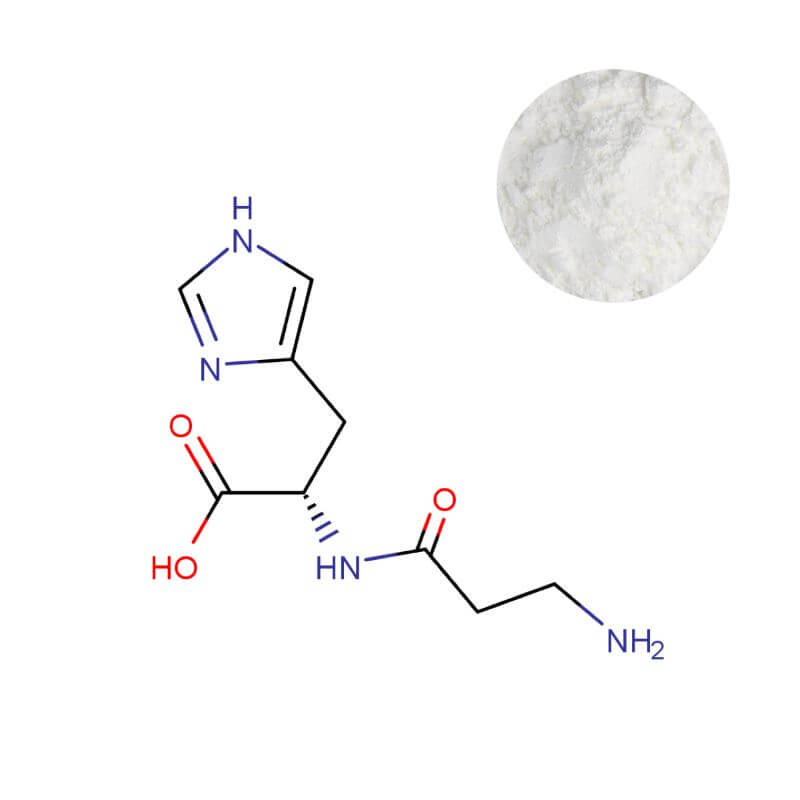
L-Carnosine Powder
| Product Name | L-Carnosine Powder |
| CAS Number | 305-84-0 |
| Appearance | White to off-white crystalline powder |
| Purity | 99.0% min. (On Dried Basis by HPLC) |
| Packaging | 1 kg/bag, 5 kg/bag, 25 kg/drum |
| MOQ | 1 kg |
Bulk L‑Carnosine Powder with Optimized Particle Dynamics: Eliminating Processing Bottlenecks in Large‑Scale Procurement
For contract manufacturers and nutricosmetic brands, the choice of a mature dipeptide such as L‑Carnosine (CAS 305‑84‑0) often determines the difference between a seamless scale‑up and recurring production halts. Premium B2B grades move beyond purity metrics to engineered physical characteristics that directly protect a brand’s total cost of ownership (TCO). A 99.0% HPLC‑verified powder with controlled particle size and batch‑to‑batch consistency transforms a commoditized antioxidant into a predictable asset for oral beauty formulations. In a market crowded with undifferentiated suppliers, locking in a scientifically justified particle specification creates a defensible quality moat – enabling brands to charge premium retail prices based on manufacturing reliability rather than raw material cost alone.
Micromeritics & CMO Adaptability: How Particle Engineering Eliminates Processing Friction
L‑Carnosine’s native needle‑like crystal habit creates three well‑documented manufacturing risks: poor flow leading to die‑fill weight variation (±8‑12%), electrostatic bridging in capsule dosators, and segregation in multi‑ingredient blends. Standardizing the powder to ≥95% through a 100‑mesh sieve (≤150 μm) and a bulk density of 0.25‑0.35 g/mL directly addresses these issues. For brand developers and formulators, this particle behavior directly implies that high‑speed rotary presses can run at 90% of rated speed without bridging or weight drift, eliminating 3‑5% material scrap. When L‑Carnosine is incorporated into premium bovine-derived collagen peptide powders for dry powder pre-mixes or anti‑aging gummies, controlling particle size also prevents sedimentation in liquid suspensions. The broader commercial implication here centers on reducing hidden factory costs: each 1% improvement in fill weight consistency saves approximately $600 per metric ton in rework and downtime, a direct boost to gross margin on high‑volume oral beauty SKUs. What this means for a brand’s KPI set: eliminating weight variation cuts batch rejection rates by over 70%, directly improving on‑time delivery scores and retailer trust.
- Fixed 100‑mesh sieve cut – Eliminates the need for post‑shipment milling, saving $150‑200 per metric ton in tolling fees and preventing thermal degradation from impact milling.
- Narrow particle distribution (D90 ≤150 μm) – Prevents segregation with collagen peptides or vitamin C in premixes, ensuring content uniformity without extra blending steps.
- Bulk density 0.25‑0.35 g/mL – Allows direct filling into stick packs and sachets without flow aids, reducing excipient costs by 8‑10%.
Supply Chain Resilience & TCO Analytics: Protecting Margins in a Commoditized Market
Mature B2B ingredient markets are defined by price sensitivity, yet the lowest quoted price per kilogram rarely reflects true landed and production‑ready cost. A resilient supply chain for L‑Carnosine must include audited GMP manufacturing sites, documented change‑control procedures, and independent third‑party heavy metal reports for each batch. For operations and procurement directors, this parameter set makes a slightly higher unit price economically superior for orders above 500 kg. Below is a structured TCO comparison that quantifies the hidden costs of low‑grade material:
| Hidden Cost Driver | Low‑Grade Bulk L‑Carnosine | Optimized Grade (≥99%, 100‑mesh) |
|---|---|---|
| Procurement & Manufacturing Impact | ||
| A single rejected container can cost $25,000+ in return logistics, requalification, and lost sales. The optimized grade eliminates that risk. | ||
| CMO processing loss (flow‑related) | 3‑5% scrap due to bridging & weight variation | <0.5% consistent fill weight → saves $400‑600/MT |
| Extra sieving/requalification cost | Often required (2‑4 hours/batch, $250‑400) | None – ready‑to‑use |
| Cross‑border compliance delay risk | Incomplete documentation → 1‑2 weeks customs hold | Full dossier (COA, allergen, non‑GMO) → seamless clearance |
| International shipment caking probability | High (>15% when moisture >1.0%) → customer rejection | <2% – preserves brand image |
By shifting the strategic focus to a comprehensive TCO evaluation, brand owners can avoid customs holds and surprise retesting fees that typically add $800‑1,200 per shipment. Adopting a fully documented supply chain reduces the risk of catastrophic overseas returns—a single rejected container can wipe out the margin of an entire production year. For brands shipping to Europe or Japan, this risk is magnified by strict import inspections and lengthy re‑certification delays. This rigorous compliance baseline provides global business teams with a powerful negotiating tool when entering new distribution channels, as it eliminates the due‑diligence red flags that often derail cross-border contracts.
Analytical Benchmarks & Identity Protection: Guarding Against Adulteration in Anti‑Aging Formulas
Oral beauty products command premium pricing, making them prime targets for raw material adulteration. L‑Carnosine is occasionally diluted with free β-alanine precursors or pure L-histidine powder segments, which are cheaper but lack the dipeptide’s anti‑glycation activity. A 2023 meta‑analysis confirmed that carnosine reduces circulating TNF‑α and MDA, but this clinical benefit depends entirely on raw material purity (doi: 10.1093/nutrit/nuad150). Premium QA/QC protocols therefore go beyond standard HPLC assay to include specific impurity profiling: free β‑alanine ≤0.1% and free L‑histidine ≤0.3%. From a compliance standpoint, demanding a full residual solvent analysis (USP <467>) and chiral purity check eliminates material that uses racemic precursors. For operations and procurement directors, this translates to preventing a costly finished product recall – a single adulterated batch of beauty capsules can trigger years of brand damage. Additionally, a certificate of origin confirming non‑animal synthesis allows clean‑label claims (vegan, non‑GMO), which directly support premium pricing in the nutricosmetics aisle. This verification also streamlines EU Novel Food compliance filings and accelerates market access for new SKUs, effectively shortening the product launch cycle by three to four months.
- HPLC with impurity profiling – Detects β‑alanine adulteration down to 0.05%, ensuring the anti‑AGEs efficacy claimed on the label.
- Residual solvent screen (USP <467>) – Flags material processed with prohibited solvents (e.g., dichloromethane), which is common in low‑cost synthesis routes.
- Chiral purity verification – Confirms only L‑isomer is present; D‑carnosine has no biological activity and indicates poor manufacturing control.
Shelf‑Life Kinematics & Logistics Packaging: Preserving Activity Through Global Transit
Cross‑oceanic shipping exposes L‑Carnosine to extreme humidity (up to 90% RH inside containers) and temperature fluctuations. The dipeptide’s critical relative humidity (CRH) is approximately 75%; above this threshold, it deliquesces, forming hard agglomerates that cannot be redispersed. Standardizing moisture content (Loss on Drying ≤1.0%) and packaging in triple‑layer aluminum foil bags with oxygen scavengers maintains stability for 24 months. A 2024 randomized controlled trial using 2 g/day of L‑Carnosine for 14 weeks reported significant postprandial glucose reductions, but those results depend on the ingredient arriving at the CMO in fully active form (doi: 10.1016/j.numecd.2023.10.012). Thus, verifying moisture content ≤1.0% before shipment is non‑negotiable for maintaining clinical efficacy. From a physical blending and stabilization standpoint, it is critical to note that bulk bags must be stored below 25°C and not stacked for more than six months. For logistics managers, choosing a supplier that pre‑conditions the powder to ≤1.0% moisture and ships in desiccated, nitrogen‑flushed containers cuts caking claims by over 90%. The net effect: brand owners avoid costly field rejections and maintain the anti‑glycation efficacy that justifies a premium retail price, while also protecting their finished product’s two‑year shelf life guarantee. This proactive moisture control effectively insulates brands from the number one cause of international supplement returns – container‑induced caking – which alone can represent over 5% of annual export volume.
Accelerate Your Nutricosmetic Product Development with Verified Technical Documentation
Eliminate guesswork from raw material qualification. Every shipment of L‑Carnosine powder includes a full COA (HPLC assay with impurity profile, moisture, particle size, USP microbiological panel, and ICP‑MS heavy metals), a 24‑month stability summary, and a regulatory compliance package. Whether developing anti‑aging capsules, collagen gummies, or liquid beauty shots, technical guidance is available within 24 working hours. Request Your Complimentary Sample & Technical Dossier and secure a supply chain that aligns with your brand’s quality and cost targets.
Frequently Asked Questions
Share this product
Related Products


Ready to get started?
Contact our team for technical specifications, pricing, and customized solutions.