
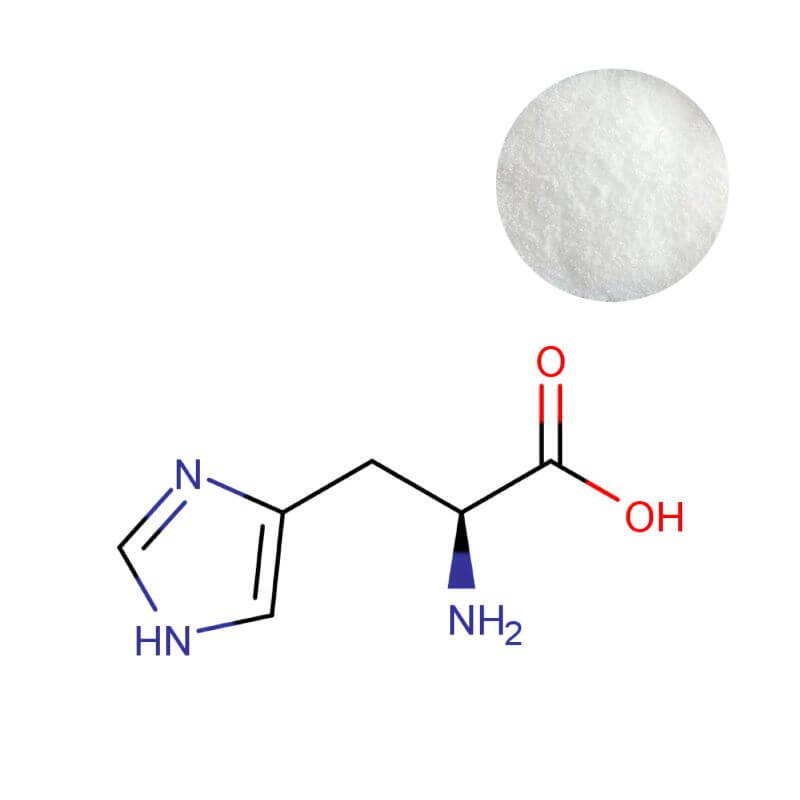
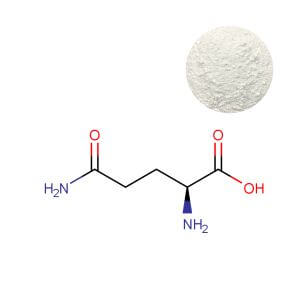
L-Histidine Powder
| Product Name | L-Histidine Powder |
| CAS Number | 71-00-1 |
| Appearance | White to off-white crystalline powder |
| Purity | 99.0% min. (by HPLC/Titration) |
| Packaging | 1 kg/bag, 5 kg/bag, 25 kg/drum |
| MOQ | 1 kg |
L‑Histidine Powder (≥99% Purity): A Clinically Supported Ingredient for Metabolic & Cognitive Health Formulations
Differentiating a sports nutrition or metabolic health product increasingly requires ingredients with dual‑action mechanisms and peer‑reviewed validation. Standard amino acid blends no longer satisfy sophisticated formulators or regulatory reviewers. L‑Histidine, an essential amino acid, offers evidence‑backed roles in glycemic control and mental fatigue reduction. Sourcing a GMP‑certified L‑Histidine Powder with ≥99% purity and full COA transparency provides the foundation for clinically aligned formulations. This ingredient moves beyond basic protein synthesis into targeted metabolic‑immune and neurological support. This level of purity enables brands to formulate at clinically validated doses (e.g., 4 g per serving) with batch‑to‑batch precision – directly translating into a defensible scientific positioning that commands premium pricing in crowded metabolic health and sports nutrition categories.
Two Distinct Clinical Pathways: From Gut‑MAIT Axis to Acute Mental Vigor
L‑Histidine serves as precursor to histamine and carnosine, but recent human trials reveal two commercially distinct mechanisms. A 2024 randomized controlled trial in type 2 diabetes patients used 4 g/day oral histidine for 7 weeks. The intervention improved postprandial glycemic control through gut microbiota modulation (enhanced riboflavin biosynthesis) and increased circulating MAIT cells – effects externally validated in the MetaCardios cohort (doi: 10.1080/19490976.2024.2370616). From a strategic formulation perspective, this opens a clean positioning for metabolic health products that extends beyond traditional “blood sugar management” claims.
Separately, a 2026 double‑blind RCT in high‑fatigue adults found that a single 4 g dose of L‑Histidine reduced fatigue‑inertia, confusion, and depression scores while increasing vigor – though only in the pre‑specified high‑fatigue subgroup (doi: 10.1038/s41598-026-48060-x). For procurement teams, this directly translates to the ability to create differentiated products for two growing consumer segments:
- Metabolic health formulations – targeting prediabetic individuals or those seeking weight‑associated glycemic support.
- Acute mental energy products – on‑the‑go sticks or ready‑to‑drink beverages for high‑stress professionals and shift workers.
The key insight is that a single ingredient can serve two distinct RTD or powder formats, reducing inventory complexity while addressing unmet clinical needs. This scientific duality also strengthens regulatory dossiers when citing human data. For a brand developer, having two independent human trials on the same ingredient means you can economically support two separate product lines (metabolic and cognitive) under one supply contract – reducing both R&D duplication and qualification costs.
Quality Benchmarks: What Defines a Premium L‑Histidine Powder for Global Compliance
Beyond a ≥99% assay, three analytical parameters distinguish a truly supply‑chain‑ready L‑Histidine ingredient. These metrics directly affect regulatory acceptance and finished product stability.
| Quality Parameter | Specification (USP) | Why It Matters for Your Brand |
|---|---|---|
| Specific Rotation [α]25D | +12.6° to +14.0° (c=11, 6N HCl) | Confirms optical purity (no D‑histidine), which is essential for biological activity and avoids off‑spec import rejects. |
| Loss on Drying | ≤0.20% | Prevents caking and microbial growth in powder blends; extends shelf life without anti‑caking additives. |
| Heavy Metals (Pb, As, Cd, Hg) | Pb ≤3, As ≤1, Cd ≤1, Hg ≤0.1 mg/kg (ICP‑MS) | Meets USP <232> and EU limits, eliminating downstream compliance risk for dietary supplements. |
Premium L‑Histidine suppliers provide a batch‑specific COA that includes these metrics plus residual solvents (USP <467>) and Staphylococcus aureus absence (USP <62>). For procurement teams, this directly translates to lower risk of customs holds and faster time‑to‑market. It is worth noting that some distributors only offer “typical” specifications – always request the actual COA for the lot you intend to purchase. This is especially critical when the ingredient will be used in a clinically dosed formulation (e.g., 4 g per serve), where even minor purity deviations can shift the active dose. From a total cost of ownership perspective, investing in a supplier that provides full heavy metals panel (ICP‑MS) and residual solvents testing prevents expensive batch recalls and retailer delisting events – a critical due diligence point often overlooked by buyers focused only on unit price.
Formulation in Practice: Stability, Synergy & Delivery Formats
L‑Histidine free base (CAS 71‑00-1) offers moderate water solubility (41.6 g/L at 25°C) and a near‑neutral pH (7.0‑8.5 in 1% solution). This makes it compatible with dry blends, capsules, and tablets. However, for liquid ready‑to‑drink (RTD) applications, the hydrochloride form (CAS 645‑35‑2) is preferred – its solubility quadruples to ~170 g/L and creates an acidic environment (pH 3.5‑4.5) that improves microbiological stability.
Formulators must also consider the imidazole side chain. It can chelate transition metals (Zn, Cu, Fe), potentially reducing mineral bioavailability in multi‑ingredient formulas. Practical mitigation strategies include:
- Encapsulating minerals separately or using coated mineral forms.
- Adding the chelate‑prone minerals at the end of the wet‑granulation process.
- Using L‑Histidine HCl in acidic RTDs, where chelation is reduced.
A proven synergy example: combine L‑Histidine (1 g) with pure Beta-Alanine powder (1.6 g) in a pre‑workout powder. The two act as co‑precursors for muscle carnosine synthesis – Beta-Alanine alone can deplete muscle histidine, making co‑supplementation more effective. From a strategic formulation perspective, this allows a “dual‑pathway carnosine support” claim without adding expensive dipeptides. The table below summarizes recommended formats and doses.
| Format | Recommended L‑Histidine Grade | Typical Dose per Serving | Key Stability Note |
|---|---|---|---|
| Tablets / Capsules | Free base powder (≥99%) | 500‑1500 mg | Stable at RH <60%; avoid direct compression with reducing sugars |
| Stick packs (powder) | Free base, agglomerated | 1‑2 g | Low moisture packaging required; water activity <0.25 prevents clumping |
| RTD beverages | L‑Histidine HCl | 1‑2 g | pH 3.5‑4.5; heat stable (121°C for 15 min) |
Mitigating Risk: A Sourcing Checklist for Reliable L‑Histidine Supply
For brands sourcing bulk L‑Histidine, the lowest price per kilogram rarely delivers the lowest total cost of ownership. Quality deviations, missed COA parameters, or supply disruptions cause reformulation delays and rejected shipments. Use this objective checklist when evaluating any L‑Histidine supplier or distributor.
- GMP certification – Preferably FSSC 22000 or an equivalent audit scheme with a publicly available scope.
- Full COA per batch – Must include specific rotation, heavy metals (ICP‑MS), loss on drying, and microbial panel (TPC, yeast/mold, E. coli, Salmonella, S. aureus).
- Non‑animal origin declaration – Fermentation‑derived L‑Histidine avoids BSE/TSE concerns and meets vegan/clean label trends.
- Allergen and GMO statements – Even though histidine is not a common allergen, downstream retail partners increasingly demand these documents.
- ICH stability data – 24‑month shelf life in original packaging (cool, dry storage) is the industry baseline.
- Regulatory package – For the U.S., a letter guaranteeing USP/FCC compliance; for the EU, a statement that the ingredient is not considered novel food.
From a procurement perspective, verifying these six items upfront reduces the risk of batch rejection at port or during customer audits. A transparent L‑Histidine supplier will provide a sample (10‑20 g) alongside the batch‑specific COA and technical dossier. This allows your R&D team to validate compatibility with your existing blend before committing to production quantities. Adopting a TCO (Total Cost of Ownership) model when sourcing L‑Histidine means prioritizing documented quality systems and full traceability over the lowest quoted price – a shift that typically prevents the severe cost of a single failed customs release or consumer complaint incident.
Next Steps: Validate Your L‑Histidine Formulation with Low‑Risk Sampling
You now have a complete framework – from dual clinical mechanisms (glycemic control via the gut‑MAIT axis and acute mental fatigue reduction) to quality benchmarks, formulation options, and a supplier evaluation checklist. The most efficient way to de‑risk your development project is to test the ingredient in your own matrix. Request a complimentary sample (10‑20 g) of GMP‑certified L‑Histidine Powder, together with the batch‑specific COA and technical datasheet. Request Your Complimentary Sample & Technical Dossier →
Frequently Asked Questions
Share this product
Related Products
Ready to get started?
Contact our team for technical specifications, pricing, and customized solutions.