
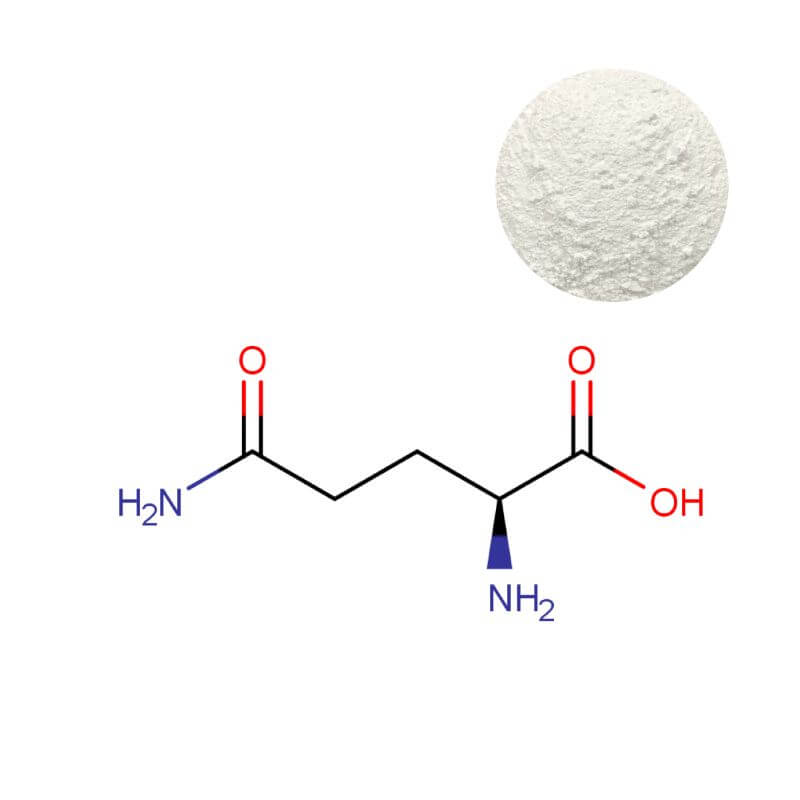
L-Glutamine Powder
| Product Name | L-Glutamine Powder |
| CAS Number | 56-85-9 |
| Appearance | White crystalline powder |
| Purity | 99% min. (by HPLC) |
| Packaging | 1 kg/bag, 5 kg/bag, 25 kg/drum |
| MOQ | 1 kg |
L-Glutamine Powder (≥99.0%): A Clinically‑Supported Amino Acid for Gut Integrity & Sports Nutrition Formulations
Formulating evidence‑based products in the competitive sports nutrition and gastrointestinal health segments demands more than a standard ingredient label. For R&D and procurement teams seeking to differentiate their supplement lines, the real value lies in the amino acid’s documented mechanism, batch‑to‑batch consistency, and strategic formulation stability. L‑Glutamine, produced via microbial fermentation (non‑GMO), offers a purity of ≥99.0% (by HPLC) and is available as a free‑flowing crystalline powder. This profile makes it a trusted building block for ready‑to‑mix protein shakes, capsules, and gut‑health blends. The following analysis bridges clinical evidence, quality benchmarks, and practical formulation insights — empowering brands to make informed sourcing decisions. Verifiable batch purity is a strategic lever for premium gut‑health and sports lines.
Clinical Rationale: How L‑Glutamine Supports Intestinal Barrier & Immune Resilience
L‑Glutamine is the most abundant free amino acid in the human body, playing a non‑negotiable role in enterocyte proliferation, tight‑junction regulation, and nitrogen transport. A 2024 systematic review and meta‑analysis (10 RCTs, 352 participants) examined glutamine supplementation’s effect on gut permeability in adults. While the overall effect did not reach statistical significance, a key subgroup analysis revealed that daily doses exceeding 30 g for less than two weeks significantly reduced intestinal permeability (WMD: –0.01; 95% CI: –0.10 to –0.08) (doi: 10.1007/s00726-024-03420-7). From a strategic formulation perspective, this finding informs dose‑responsive claims for advanced gut‑health products. For procurement teams, this directly translates to need for raw material that can support high‑dose applications (e.g., 15–30 g/day) without compromising purity or flowability. Beyond intestinal integrity, L‑Glutamine helps maintain immune cell function during metabolic stress — a critical secondary benefit for post‑exercise recovery blends. Key physiological roles include:
- Enterocyte fuel – supports mucosal regeneration and reduces bacterial translocation.
- Nitrogen shuttle – transports ammonia to the liver and kidneys for detoxification.
- Glutathione precursor – indirectly contributes to cellular antioxidant defense.
This multi‑target mechanism justifies L‑Glutamine’s presence in both clinical nutrition products and mainstream sports supplements. For brand owners, leveraging this clinically validated dose‑response window allows the formulation of truly evidence‑backed gut‑repair protocols, directly enhancing consumer trust and clinical credibility — two pillars of long‑term brand loyalty.
Quality Benchmarks: Beyond “High Purity” – Why Fermentation Source & COA Matter
For bulk L‑Glutamine buyers, purity ≥99.0% (by HPLC) is the industry baseline. However, true quality differentiation comes from the production process and the comprehensiveness of the Certificate of Analysis (COA). Premium L‑Glutamine is produced via controlled microbial fermentation (typically using Corynebacterium glutamicum) rather than chemical synthesis or extraction. This method yields a non‑GMO, allergen‑free powder with exceptional batch‑to‑batch consistency. Key quality parameters that a responsible L‑Glutamine supplier should document in every COA include:
| Quality Parameter | Typical Specification (Based on USP / FCC) | Why It Matters for Your Final Product |
|---|---|---|
| Specific Rotation [α]²⁰ᴅ | +6.3° to +7.3° | Confirms optical purity; low values indicate racemization or impurities. |
| Loss on Drying | ≤0.30% | Low moisture prevents caking and microbial growth during storage. |
| Heavy Metals (Pb, As, Cd, Hg) | Pb ≤3 ppm, As ≤1 ppm, Cd ≤1 ppm, Hg ≤0.1 ppm | Ensures compliance with global supplement safety standards (FDA, EFSA). |
| Particle Size | ≥95% through 80 mesh (standard), customizable to 60‑120 mesh | Directly influences flowability in capsule filling and dissolution in RTD powders. |
From a strategic formulation perspective, requesting a batch‑specific COA that includes these metrics is the most effective way to de‑risk your supply chain. It’s worth noting that some suppliers offer “pharmaceutical‑grade” claims – however, for dietary supplements, USP or FCC compliance is the appropriate benchmark. For procurement teams, this directly translates to fewer rejection risks during finished‑product stability testing and smoother international market entry. A COA‑first discipline reduces total cost by eliminating batch‑failure investigations.
Formulation in Practice: Stability, Synergy & Delivery Solutions
L‑Glutamine powder is remarkably stable in dry formulations (capsules, tablets, stick packs) when stored below 30 °C and away from direct light. However, its Achilles’ heel is aqueous environments – in ready‑to‑drink (RTD) liquids or high‑moisture matrices, glutamine undergoes slow deamidation, degrading into pyroglutamic acid and ammonia. Practical formulation strategies to overcome this challenge include:
- Dry‑format priority – recommend powder blends, two‑part capsules, or moisture‑proof sachets for instant mixing.
- If liquid is unavoidable – consider using L‑alanyl‑L‑glutamine dipeptide, which exhibits superior thermal and pH stability.
- Processing tip – when blending with other fine powders, control relative humidity below 50% to prevent electrostatic clumping.
Synergy is another lever for product differentiation. L‑Glutamine works particularly well with:
| Co‑ingredient | Proposed Application | Observed Benefit (Clinical or Mechanistic) |
|---|---|---|
| Instantized BCAA (2:1:1) | Post‑workout recovery powder | Glutamine spares muscle glutamine pools; BCAAs stimulate protein synthesis. |
| Zinc + Vitamin C (Ascorbic Acid) | Immune support sachet | Glutamine supports lymphocyte function; zinc and vitamin C enhance antioxidant defense. |
| Collagen peptides | Joint & gut health bar | Glutamine maintains intestinal barrier; collagen supports connective tissue. |
An effective formulation requires not only choosing the right partners but also managing inclusion rates. For a standard 5 g‑per‑serving powder, L‑Glutamine can constitute 100% of the active blend. In multi‑ingredient capsules (size 00), a typical dosage of 500–1000 mg per capsule is achievable when combined with flow aids like silicon dioxide. For procurement teams, this directly translates to the ability to create high‑potency, compact products that appeal to sophisticated end‑users.
Mitigating Risk: A Sourcing Checklist for Bulk L‑Glutamine Buyers
With many distributors offering “GMP certified L‑Glutamine”, the challenge is to separate robust supply chains from transactional resellers. To minimize quality and regulatory risk, adopt this objective checklist when evaluating a bulk L‑Glutamine supplier. Each item represents an industry‑accepted safeguard that a premium partner will readily provide.
- Full‑panel COA per batch – Includes assay (99.0‑101.0%), loss on drying, residue on ignition, heavy metals (ICP‑MS), and complete microbiological panel (TPC, yeast/mold, E. coli, Salmonella, S. aureus).
- Non‑GMO & fermentation‑origin declaration – Avoids hidden excipients or cross‑contamination with allergens (soy, wheat, dairy).
- GMP certification (NSF or equivalent) – Ensures the manufacturing site follows 21 CFR Part 111 for dietary supplements.
- Custom particle size capability – Standard ≥95% through 80 mesh, but can adjust to 60 mesh for better flow or 120 mesh for faster dissolution.
- Regulatory dossier support – Provision of technical data sheets, stability summaries, and statements for FDA (NDI exemption) and EU (Novel Food status).
From a strategic formulation perspective, requiring these deliverables before the first purchase order de‑risks your development timeline and protects your brand’s reputation. For procurement teams, this directly translates to predictable costs, fewer production stoppages, and faster speed‑to‑market. A reliable L‑Glutamine distributor will not hesitate to share these documents – it is the industry standard for serious partnerships. A COA with full heavy‑metal profiles prevents costly batch holds — a risk no brand can afford.
Next Steps for Your Product Development: Sample & Technical Dossier
Integrating L‑Glutamine powder into your next gut‑health or sports recovery line starts with validated material. Oclean Nutra provides a complimentary 10‑20 g sealed sample, accompanied by a batch‑specific COA and a technical dossier covering stability data, suggested use levels, and regulatory compliance notes for the US and EU. This enables your R&D team to conduct in‑house tests without upfront commitment. Request your complimentary sample and full technical dossier today – accelerate your formulation with an ingredient that combines clinical backing, rigorous quality control, and supply chain transparency.
Frequently Asked Questions
Share this product
Related Products
Ready to get started?
Contact our team for technical specifications, pricing, and customized solutions.