
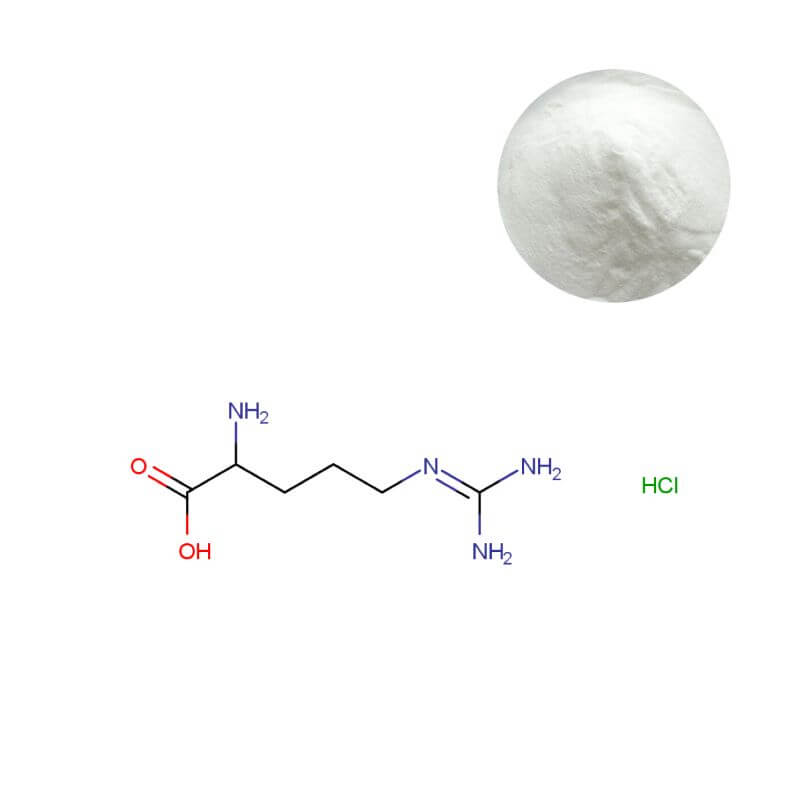
L-Arginine HCl Powder
| Product Name | L-Arginine HCl Powder |
| CAS Number | 1119-34-2 |
| Appearance | White crystalline powder |
| Purity | ≥ 99% (by HPLC) |
| Packaging | 25 kg/drum |
| MOQ | 25 kg |
L-Arginine HCl Powder: A Clinically-Supported Nitric Oxide Precursor for Performance & Vascular Health Formulations
In the sports nutrition and cardiovascular wellness markets, brand differentiation now depends on substantiating specific biological pathways, not just including trending ingredients. This shift elevates the importance of ingredients like L-Arginine HCl, where clinical validation and supply chain rigor directly impact product credibility. For formulation and sourcing teams, the strategic move is from a commodity purchase to securing a functional, reliable Nitric Oxide (NO) precursor. Premium L-Arginine HCl powder, characterized by specifications such as ≥99% purity and controlled particle size (≥95% through 80 mesh), delivers the consistent substrate required for endogenous NO synthesis. The key sourcing insight is that value lies beyond the assay in the supplier’s documentation and control of parameters like specific rotation (+21.5° to +23.5°), which are essential for replicating clinical outcomes. This analysis details how to leverage the science, quality, and application intelligence of L-Arginine HCl to make informed decisions that enhance product efficacy, mitigate supply chain risk, and support compelling, evidence-based positioning.
The Nitric Oxide Engine: Clinical Validation of L-Arginine's Mechanism
For brand owners and R&D leads, understanding L-Arginine's role as the direct precursor for Nitric Oxide (NO) synthesis is foundational for credible product storytelling. This biochemical mechanism enables a shift from generic “supports blood flow” claims to a specific, defensible health narrative. Recent clinical studies provide the tangible evidence for this narrative:
- A 2025 randomized controlled trial showed that oral L-Arginine supplementation (6g/day for 60 days) significantly increased plasma nitrite/nitrate levels and improved pain-free walking distance in patients with circulatory challenges (doi: 10.26402/jpp.2025.5.05). For a performance brand, this directly supports claims around oxygen delivery and exercise tolerance.
- Further supporting the core vascular benefit, a 2025 RCT in a pediatric population confirmed that L-Arginine supplementation effectively elevated serum NO levels and improved key hemodynamic measures (doi: 10.1007/s40272-025-00701-w).
The commercial implication is clear: brands anchoring their formulations in this level of clinical specificity can build greater trust and justify premium positioning. Therefore, your ingredient selection and partner validation must prioritize access to and understanding of this clinical data to ensure your product's promised benefits are documented, not just plausible.
Beyond Assay: Decoding the Certificate of Analysis for Premium L-Arginine HCl
For procurement specialists, the Certificate of Analysis (CoA) is a definitive risk-mitigation tool. Evaluating a bulk L-Arginine HCl supplier requires moving beyond the purity claim to scrutinize a suite of interlinked specifications that guarantee functionality and compliance. A strategic sourcing approach treats the CoA as a blueprint for the ingredient's performance in your finished product, not a mere compliance formality.
| Critical Parameter | Specification Example | Strategic Sourcing Insight |
|---|---|---|
| Specific Rotation [α]²⁰D | +21.5° to +23.5° | This non-negotiable identity test confirms the active L-isomer. A value outside this range indicates the inactive D-isomer, signaling a direct efficacy failure and potential production issues. |
| Particle Size Distribution | ≥95% through 80 mesh (180µm) | Consistent particle size predicts reliable blending and dissolution. Inconsistency can lead to segregation in powder blends or uneven content in tablets, creating batch-to-batch variation. |
| Heavy Metals & Residual Solvents | Complies with USP <467>, <2232> | This is your primary guard against regulatory and reputational liability. Rigorous testing here reflects the supplier's overall quality culture and GMP commitment. |
An experienced quality manager also monitors trends in parameters like Loss on Drying (LOD). While meeting the spec (e.g., ≤0.2%) is essential, a creeping upward trend across batches can be an early warning of inadequate supplier packaging or storage, potentially foreshadowing stability issues in your warehouse. Thus, a reliable partner provides transparent historical batch data demonstrating control, not just compliance.
Formulation Intelligence: Maximizing Efficacy in End-Product Applications
The transition from a quality-assured raw material to a successful finished product hinges on formulation intelligence. For product developers, understanding how to integrate L-Arginine HCl is key to achieving the bioavailability and stability needed to deliver promised clinical benefits. While its hydrochloride form offers advantages, it requires specific handling for optimal performance.
Synergistic Combinations for Enhanced Value:
- With Citrulline: This combination is strategic for brands targeting sustained effects. L-Citrulline recycles to extend plasma arginine elevation, supporting a more prolonged NO production window and enabling claims about duration of effect.
- With Antioxidants (e.g., Vitamin C, Vitamin E): This protective strategy adds value. Since NO can be degraded by free radicals, co-formulating with antioxidants safeguards your investment in the active ingredient, ensuring more reaches its target—a rationale supported by clinical trial design.
Dose and Delivery Decision-Making: Clinical studies show a range of effective doses. A 2020 meta-analysis indicates doses above 6.5g per day can yield more pronounced metabolic effects (doi: 10.1016/j.joim.2020.05.001). This presents a clear formulation choice: a lower dose for general wellness or a higher, clinically-substantiated dose for a premium, efficacy-driven product line. In practice, masking its slightly salty-bitter note in powder sticks requires robust flavor systems, typically using potent sweeteners and citrus/berry profiles. From a manufacturing standpoint, controlling blending room humidity below 45% RH is a critical, often overlooked step to prevent moisture pickup that can compromise powder flow and uniform capsule filling.
Mitigating Supply Chain Risk: A Checklist for Strategic Sourcing
Selecting a supplier for a foundational ingredient like L-Arginine HCl is a long-term strategic decision impacting your brand's consistency and reliability. The goal is to secure a partner whose operations and transparency act as an extension of your quality assurance. A disciplined procurement team uses a checklist that looks beyond price to evaluate total cost of ownership and risk:
- Documentation & Traceability: Does the partner provide a full, batch-specific CoA? Is there a seamless, documented chain of custody from your production batch back to their raw materials? This is essential for audit readiness and recall management.
- Quality Systems Auditability: Are their facilities certified to relevant GMP or food safety standards (e.g., FSSC 22000)? Can they provide valid, data-backed stability studies supporting the claimed 36-month shelf life?
- Regulatory & Technical Partnership: Do they offer more than a product? Can they supply documentation for regulatory filings (e.g., evidence of compliance with FDA 21 CFR 172.320) and provide application support? This layer reduces your internal development burden.
- Supply Resilience Indicators: Do they have demonstrable contingency plans and capacity flexibility? For a mature ingredient, consistent availability often outweighs marginal cost savings, as a single stock-out can be far more costly.
This framework shifts the procurement conversation from transactional to strategic. It directly addresses the brand leader's need to minimize hidden costs from quality failures, regulatory delays, and supply disruptions, thereby protecting market access and brand equity.
Next Steps for Your Product Development
L-Arginine HCl powder offers a proven opportunity to build scientifically-substantiated formulations in performance and vascular health categories. Strategic leverage comes from coupling this robust science with a sourcing and formulation approach that maximizes its commercial potential.
To de-risk your evaluation and accelerate development, the most effective step is hands-on validation. We recommend requesting a complimentary sample of our GMP-compliant L-Arginine HCl powder along with the complete technical dossier. This provides your team with the physical material for prototype testing and the detailed documentation—including full CoA templates, stability data, and regulatory overviews—needed for confident supplier qualification and formulation planning.
Frequently Asked Questions
Share this product
Related Products

Ready to get started?
Contact our team for technical specifications, pricing, and customized solutions.